

 Back to news
8,324 Languages - and Each One is Priceless: An International Session on the Future of Linguistic Heritage was held in Moscow
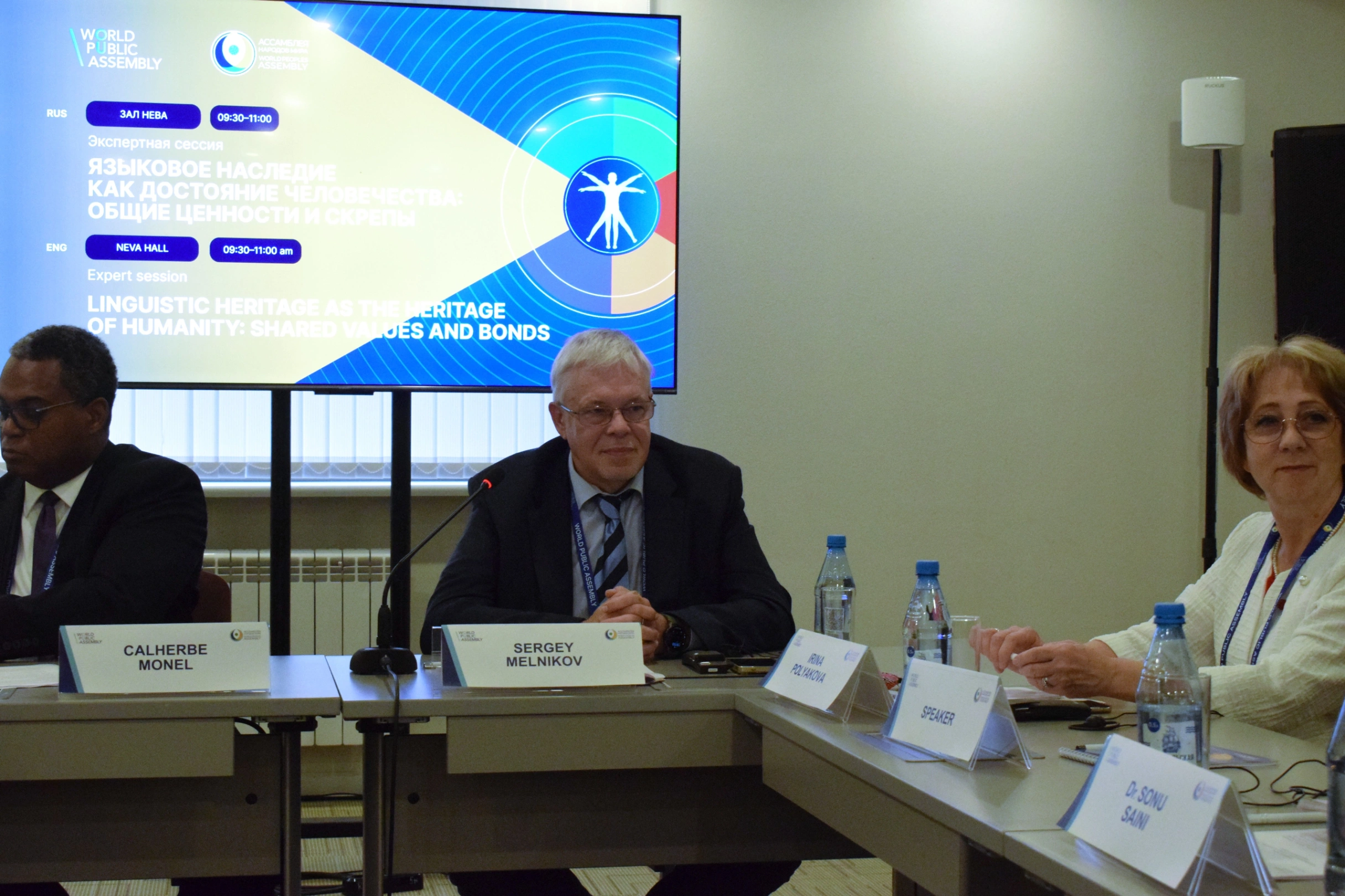
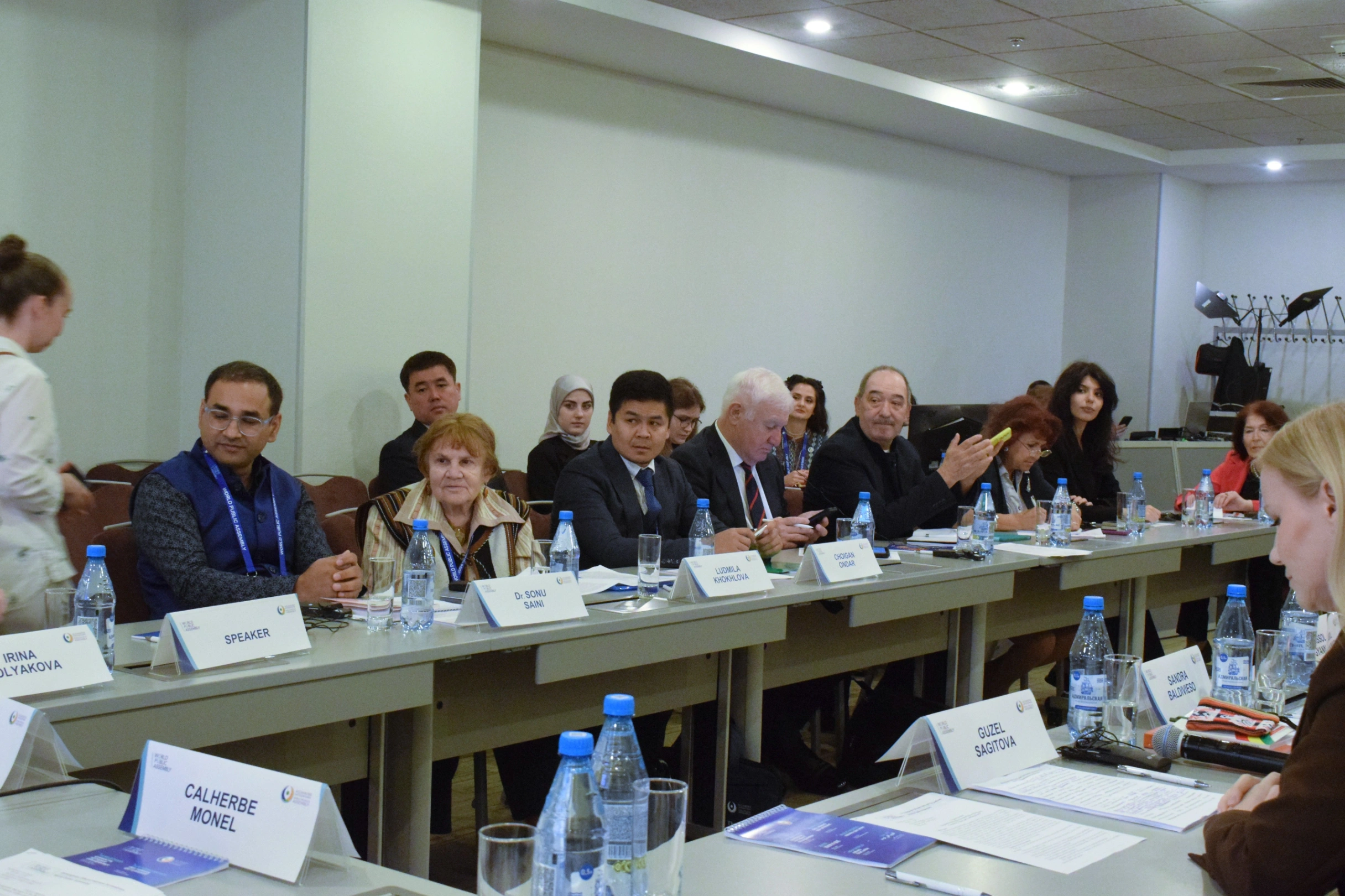
The expert session «Linguistic Heritage as the Heritage of Humanity: Shared Values and Unifying Bonds» was held on 19 September 2026 at the World Trade Center. The event was part of the Second World Public Assembly «New World: Values That Unite», which concluded in Moscow in September 2026.
The participants focused on key issues concerning preservation of linguistic diversity: how moral guidelines are conveyed and cultural identity is strengthened through one’s native language; what role indigenous peoples and the academic community play in safeguarding the linguistic code; and which tools - from artificial intelligence and online archives to social media - help pass living traditions on to future generations without losing their depth and meaning.
Special attention in the discussion was given to responsibility for the fate of linguistic heritage. The experts discussed how the voices of indigenous peoples and local communities can genuinely influence policy, finance and education.
The session was moderated by Sergey Melnikov, Doctor of Legal Sciences, Deputy Director for Research and Public Relations at the Order of Peoples’ Friendship Institute of Ethnology and Anthropology named after N.N. Miklouho-Maclay of the Russian Academy of Sciences, and Callerbe Monel, Special Adviser to the President of the Youth Government of Haiti, Adviser to the former Prime Minister of Haiti, President of the organization «Mouvman Zantray Ayiti» and President and Founder of the Russian-Haitian Council.
Opening the meeting, Sergey Melnikov outlined the session’s main objective: to develop common approaches to preserving linguistic heritage as the foundation of intercultural dialogue. He emphasized the vital role of education, science and public institutions in passing shared values on to future generations.
Callerbe Monel supported his colleague, noting that the participants’ focus was on integrating linguistic heritage into modern educational and digital environments, as well as on finding ways to overcome barriers in global communication.
- Language is what connects us not only as the living word, but also as the language of gestures, body, dance, art and theatre, - the speaker concluded.
Lyudmila Khokhlova, Associate Professor at Department of Indian Philology of the Institute of Asian and African Studies at Lomonosov Moscow State University, spoke in her address about the need to carefully preserve one’s native language, the loss of which means an irretrievable loss of a people’s unique creative potential.
This idea was developed in depth by Sandra Baldivieso, an activist of the movement of indigenous women of Bolivia, who drew on the experience of the indigenous peoples of the Americas. According to her, the disappearance of a language takes away not merely a means of communication, but the very memory of a people, its history and its profound connection with nature. It is through the native word that centuries of experience are passed on to future generations.
- Language serves as a reliable foundation for preserving values, solidarity, identity and human dignity. It is not simply a tool of communication. Language offers its own unique form of expressing thoughts and feelings, - the expert shared.
As an example, Sandra Baldivieso cited Brazil, where 38 indigenous languages are recognized at the state level:
- History lives in each of them. This is an invaluable wealth that we must value and protect.
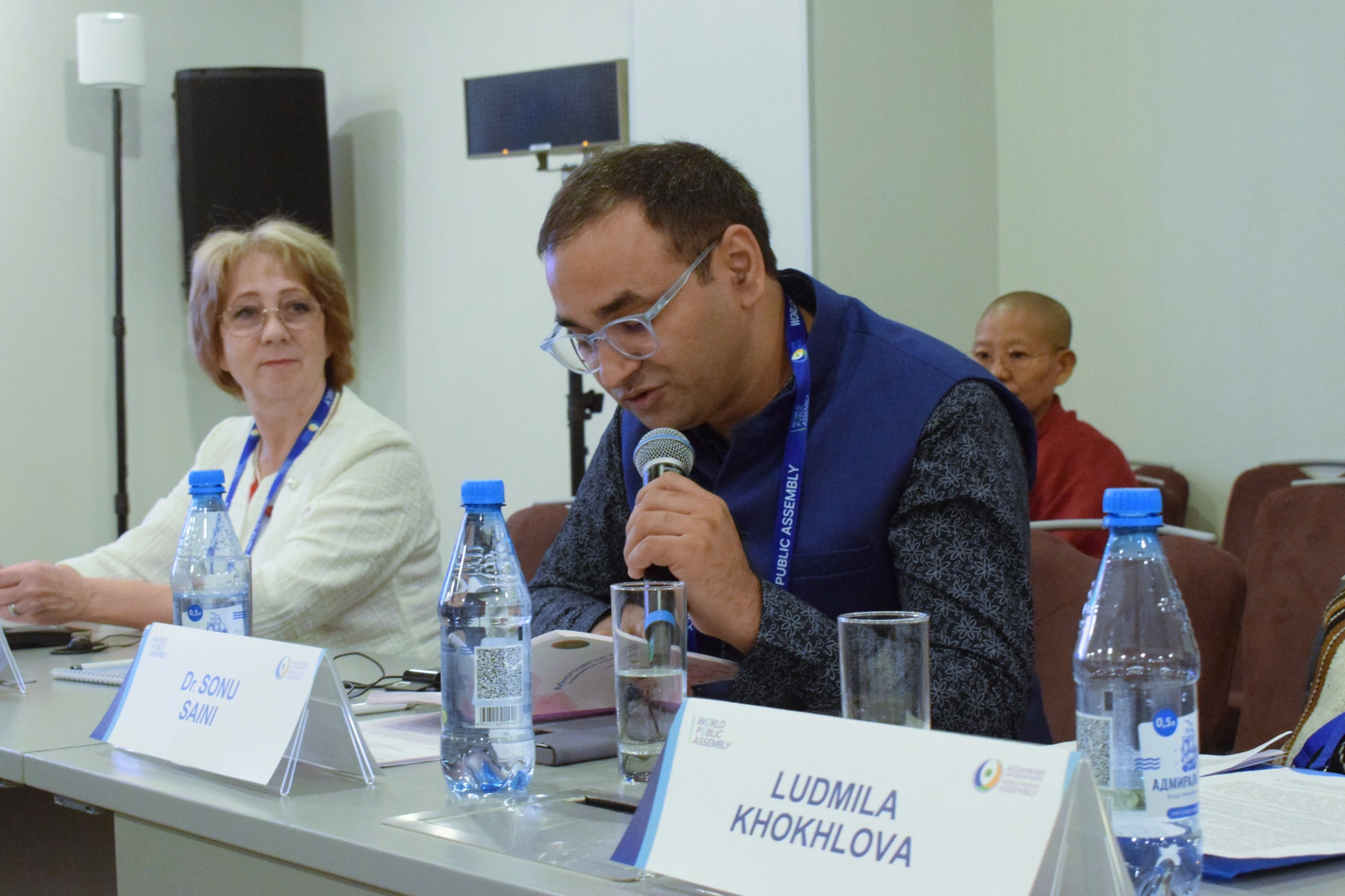
Sonu Saini, Chairman of the Union of Russian Translators of India and Senior Lecturer at the Centre for Russian Studies at, devoted his speech to the role of modern technologies in studying and preserving languages. He noted that India has approximately 20,000 dialects, many of which, unfortunately, are on the verge of extinction.
- Language is an open door to spiritual values and an entire world in which people live, - Sonu Saini emphasized.
According to the expert, the Jawaharlal Nehru University linguistics center operates successfully, making a significant contribution to language preservation. However, the efforts of one university are not enough to save the full diversity of languages. Sonu Saini called on session participants to study foreign languages, explaining that this is necessary not only for communication with the world, but also for profound personal development.
In conclusion, the speaker read his own poem, in which he expressed sincere gratitude to the Russian language - it was the Russian language that helped him discover, in a new way, the depth and beauty of his native word.
Guzel Sagitova, Deputy Head of the Municipal Entity of the municipality of Kazan, drew the participants’ attention to alarming UNESCO statistics: there are more than seven thousand languages in the world and approximately nine of them disappear irretrievably every year. She noted that globalization and the weakening of intergenerational ties have a destructive impact on linguistic diversity. As a global response to this challenge, the expert mentioned the International Decade of Indigenous Languages proclaimed by the United Nations (2022–2032).
Turning to the experience of Kazan, Guzel Sagitova spoke about the powerful infrastructure created in the Republic of Tatarstan to support national languages. She emphasized the key role of the Academy of Sciences of Tatarstan and Kazan Federal University, which trains highly qualified personnel for national education.
The speaker reminded that national theatres and the «New Century» television and radio company operate in the capital of the republic and that the House of Friendship of Nations, the main resource center of the Assembly of Peoples of Tatarstan, has been operating since 1998. On its basis, there is a municipal Sunday school unique to Russia, uniting 25 branches and approximately 500 students.
- All these institutions form an integral, multi-level system that works effectively to preserve and develop the republic’s languages, - Guzel Sagitova concluded.
Zhenishkul Khulkhachieva, Head of the Department of Languages and Cultures of the CIS Countries and Near Abroad at Moscow State Linguistic University (MSLU), presented a unique project of translating national fairy tales of the peoples of Russia, the CIS countries and the Near Abroad. According to the speaker, preserving linguistic heritage is not simply documenting languages themselves, but carefully safeguarding the experience of generations. Through the native word, lullabies, grandparents’ sayings and the intonations of fairy tales, a child learns fundamental moral guidelines: distinguishing good from evil, understanding love and betrayal, respecting elders and taking responsibility for loved ones.
- A fairy tale is not merely a children’s genre, but a reliable mechanism for transmitting a cultural code capable of uniting humanity across borders. Within our project, the fairy tale of one people finds its voice in the languages of others, while the Russian language serves as a fundamentally important bridge connecting cultures, - Zhenishkul Khulkhachieva concluded.
Assol Ovsyannikova, Senior Lecturer at Department of Languages and Cultures of the CIS Countries and Near Abroad at Moscow State Linguistic University (MSLU), spoke about the practical implementation of the project. She noted that the work had been carried out over two years, and the team now plans to scale up the project by involving partner universities from various regions of Russia. The speaker emphasized the visual component:
- Each fairy tale in the collection is accompanied by an original illustration and a brief ethnographic note about the people. Twenty students - artists from MSLU - contributed to the design of the book and some participants brought drawings made by their younger brothers and sisters. As a result, the publication acquired a truly family character, in which the older participants translated the texts while the younger ones illustrated them.
Assol Ovsyannikova added that the collection opens with the Russian folk tale about sister Alyonushka and brother Ivanushka. The scale of the work carried out is impressive: 160 students from five faculties took part in the project and 20 fairy tales were translated into 31 languages. The printed version of the book is currently in the layout stage, while students are simultaneously preparing an interactive online format.
Choigan Ondar, Candidate of Philological Sciences and Academic Secretary of the Tuvan Institute of Humanities and Applied Social and Economic Research under the Government of the Republic of Tuva, presented a report on the preservation and development of the Tuvan language, sharing regional experience and perspectives on the future.
- The Tuvan language faces the problem of language shift, which is not a local issue but part of the global process of language loss. The census data reveal alarming trends: whereas in 2001, 99.8% of Tuvans spoke their native language, by 2021 this figure had fallen to 87%. Particular concern is caused by the displacement of the language from the family - the main environment of natural transmission. Already, 51% of parents communicate with their children in Russian, which is a serious signal requiring a systemic response, - the speaker shared.
Choigan Ondar emphasized that the school remains the main - and for many, the only - instrument for preserving the Tuvan language. Under the strategy adopted in 2023 by decree of the Head of the Republic of Tuva, educational institutions in the region are moving from simply teaching the subject to creating a full-fledged natural language environment.
To further strengthen the language’s position, the speaker believes, a comprehensive approach is needed. It should include high-quality bilingual education, the development of digital resources and media, advanced training for teachers and efforts to motivate parents.
Gulzada Dzhumabaeva, Kazakh language translator and teacher and Head of the Kazakh Language Conversation Club in Moscow, spoke about the work of her platform. The club was created for live communication outside the formal framework of a lesson, where everyone can practice conversational speech in a warm and supportive atmosphere. The association is open to people of any age and level of language proficiency, and meetings are held both offline and online. The speaker called on session participants to join efforts and create similar conversation clubs in different cities.
Fridon Injia, Georgian politician and businessman, former Member of Parliament of Georgia and Chairperson of the public association «Council of Elders of Georgia» invited all session participants to visit Georgia, emphasizing that the Georgian language is one of the oldest in the post-Soviet space.
The speaker expressed hope that such international meetings would become a good tradition, enabling love and unity among peoples to be passed on through their native languages.
- Today, the Russian language has honorably fulfilled its unifying role! - the expert concluded with gratitude.
Irina Polyakova, Head of the Directorate of Spiritual Culture of the World Peoples Assembly, summarized the meeting. She noted that the expert session, which the organizers affectionately call the « World Languages Symphony», has for the second year brought together speakers of linguistic traditions, scholars and public figures for practical work to preserve the native word. The speaker invited everyone interested to join the working group and announced the geography of future meetings: in December 2026 the platform will be held in Uzbekistan and in March 2027, in India. Plans also include China, Mexico and Ghana.
Zhenishkul Khulkhachieva announced another major event — an International Youth Forum, which MSLU plans to hold in December 2026. The organizers are currently selecting the final theme from two conceptual directions related to the epic works of the world’s peoples and heroic legends.
The speakers agreed that preserving languages requires combining the efforts of the state, science, technology and the bearers of tradition themselves. Only through such a union is it possible to pass on to future generations not merely words, but an entire world of meanings, trust and mutual understanding.
Additional information is available on the official website of the World Peoples Assembly, on its VKontakte and Telegram accounts, and at media@world-assembly.org.