


"Banning AI is impossible — it must be led!" In Moscow, the role of technology and values in shaping a common future was discussed
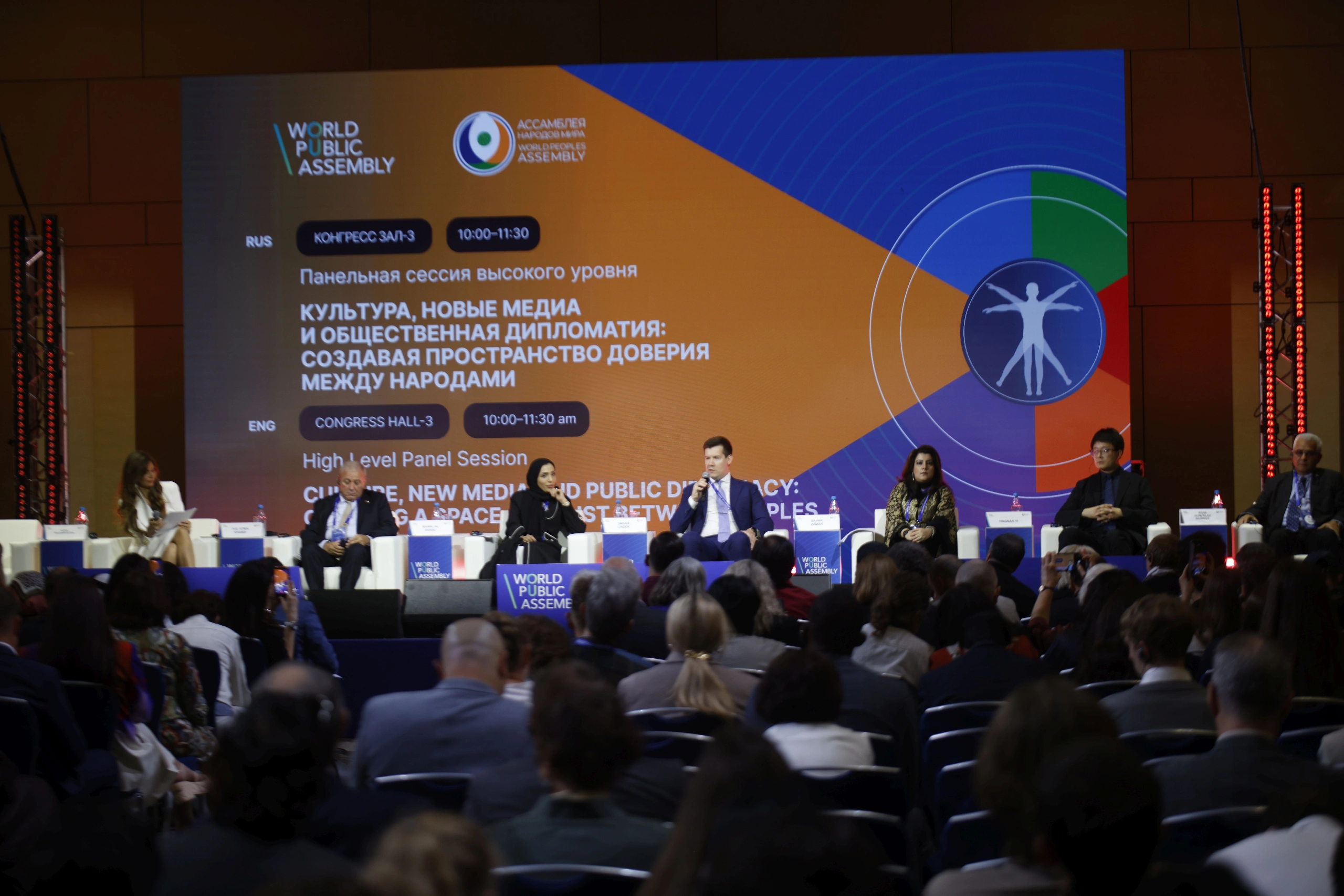
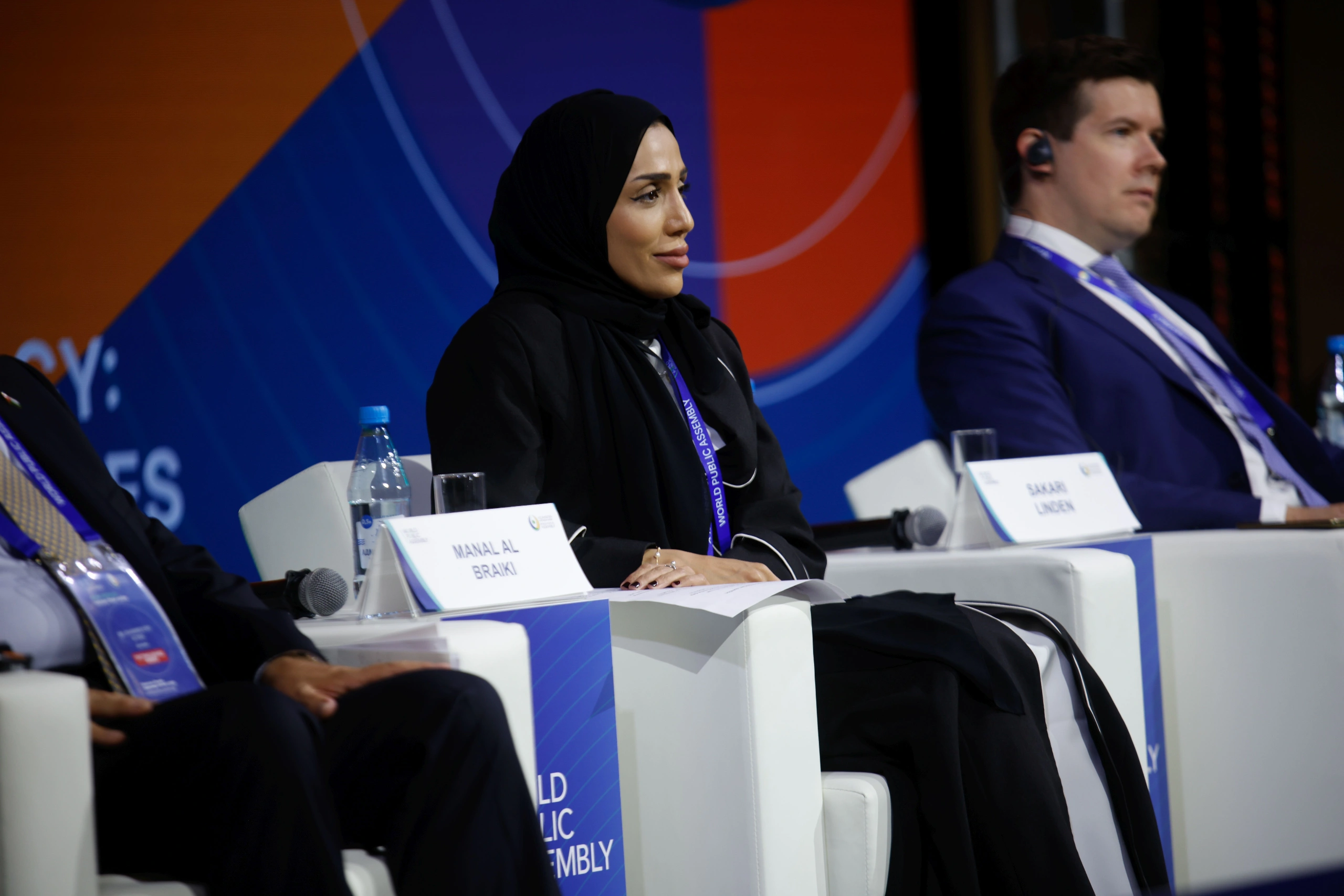
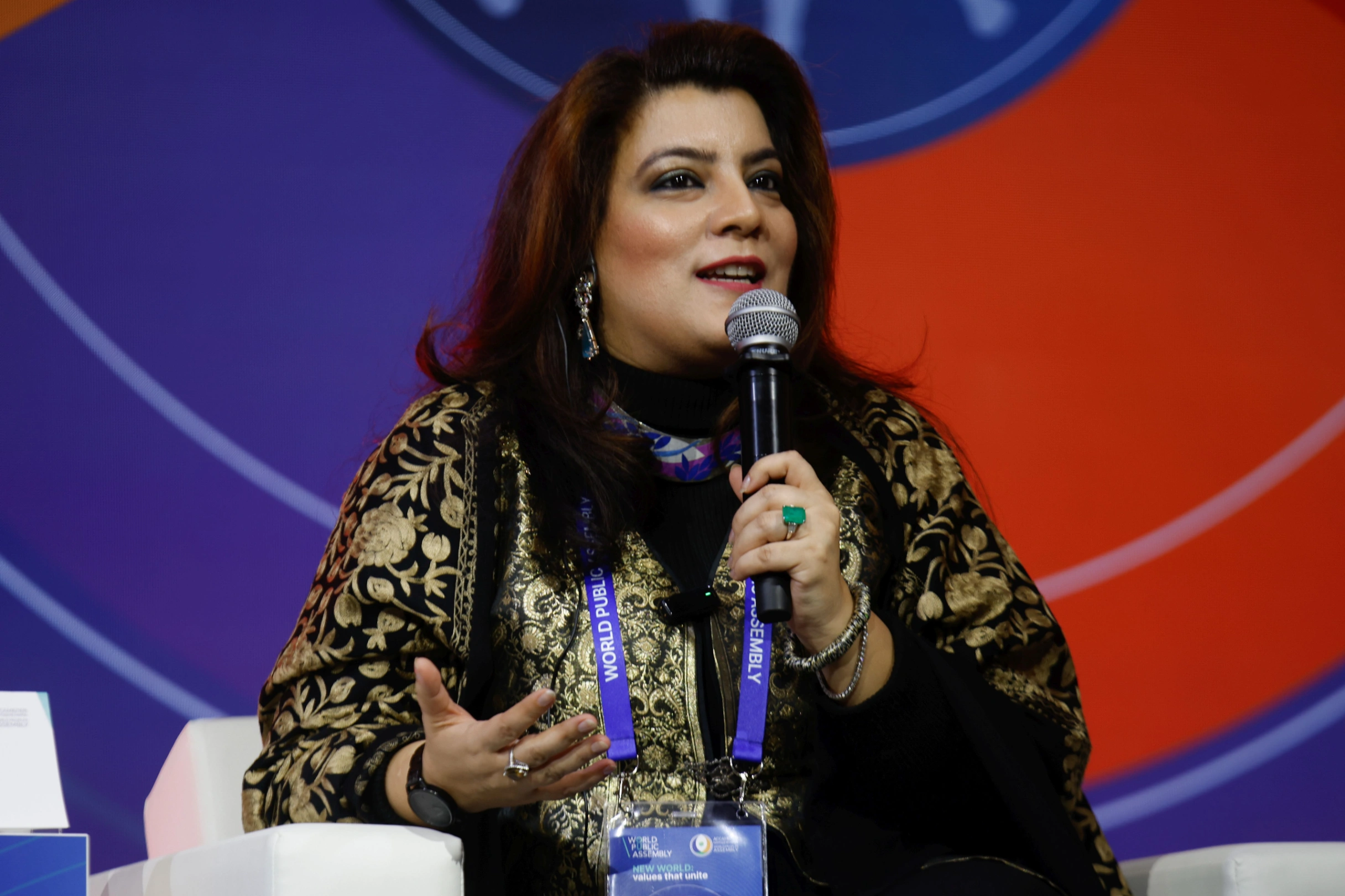
The high-level panel session "Culture, New Media and Public Diplomacy: Creating a Space of Trust Between Peoples" took place on 18 September 2026 at the World Trade Center. The event became part of the Second World Public Assembly "New World: Values That Unite", taking place in Moscow from 18 to 19 September.
Participants discussed the impact of artificial intelligence and new technologies on society, culture and international interaction, as well as issues of preserving dialogue and trust between peoples.
First Deputy Speaker of the House of Representatives (Lower House) of the Parliament of Jordan Khamis Hussein Khalil Atieh emphasized that artificial intelligence is not capable of fully replacing humans. Responding to a question about his readiness to give an interview fully generated by a neural network, the politician noted that he agrees to such an experiment, but only on one condition: his words must not be edited or distorted.
— I use AI, but with an understanding of all the consequences. All information provided by AI must be verified, as must the sources from which we obtain this information. We cannot rely on AI one hundred percent. But in the future, the development of AI and the information provided by AI, as well as the presentation of this information, need careful human control. It must be double-checked, — he said.
Khamis Hussein Khalil Atieh separately focused on the issue of building trust between countries. He noted that today ties between peoples are being built, yet at the same time disagreements and misunderstandings persist. According to him, the most important thing is to preserve space for diplomacy at all costs.
Secretary General of the World Peoples Assembly Andrey Belyaninov, continuing the conversation about artificial intelligence, stated that it is impossible to ban the development of technology. It is far more important to learn to use them in the interests of society. At the same time, he places his main bet on young people.
— It is impossible to ban the development of AI, so it must be led, so that technologies serve people, including — young people. The world is changing rapidly: every few weeks, more and more new solutions appear. Public organizations, including the World Peoples Assembly, work with young people, telling them about values and memory. If we can put these goals ahead of technology, then there will be no need to worry about the future, said Andrey Belyaninov.
The session was moderated by State Secretary of the World Peoples Assembly, journalist and public figure Alyona Dolgopolova.
The participants also included:
Mukesh Tyagi is an official representative of the Indian party Bharatiya Janata Party (BJP), a public figure, and an actor.
Sakari Linden — a geopolitical analyst and international consultant, former adviser to the European Parliament;
Yu Xiaogang — a director and producer, president of the China Television Drama Production Industry Association;
Joseph Schutzman — a journalist, entrepreneur, author of the media project Home in Russia: Big American Family in Russia.
Maksim Dreval — Director General of the Znanie society;
Salem Humaid Almazaini — founder and chairman of BIFA — the BRICS International Football Alliance;
Sahar Zaman is a television journalist, writer, founder and director of the digital media platform Hunar TV;
René González Barrios — Director of the Center for the Preservation of Fidel Castro's Heritage.
The session participants paid special attention to the risks of cultural isolation, the impact of technology on language and values, as well as the need to preserve human involvement in the process of creating and disseminating information. The event brought together representatives of culture, media, education, science, the diplomatic and expert community to discuss practical mechanisms of international humanitarian cooperation.
Additional information is on the official website of the World Peoples Assembly and at media@world-assembly.org.