

"Being a Leader Is Cool!": Moscow Discusses How Generation Z Is Changing the Rules of International Diplomacy
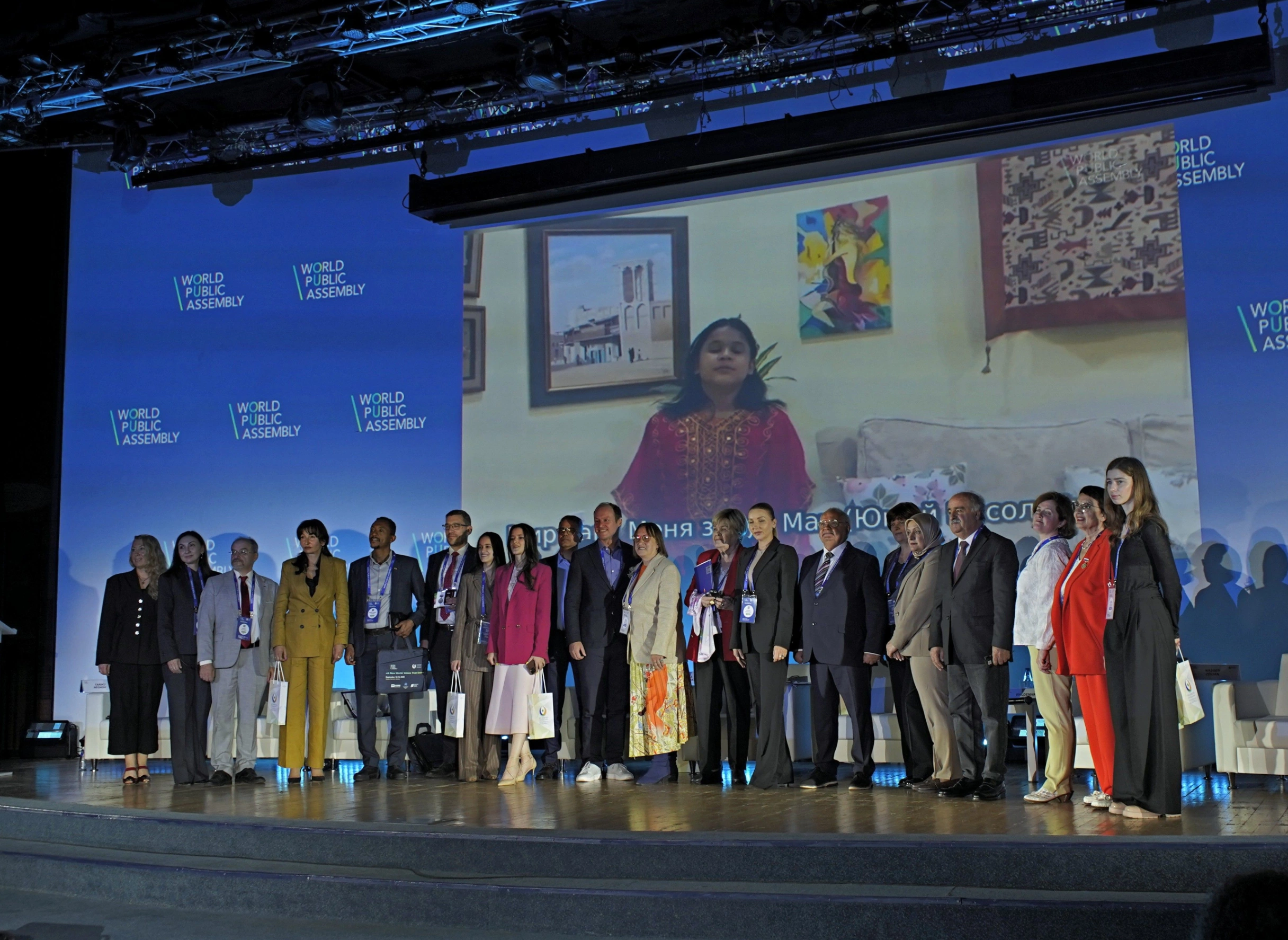
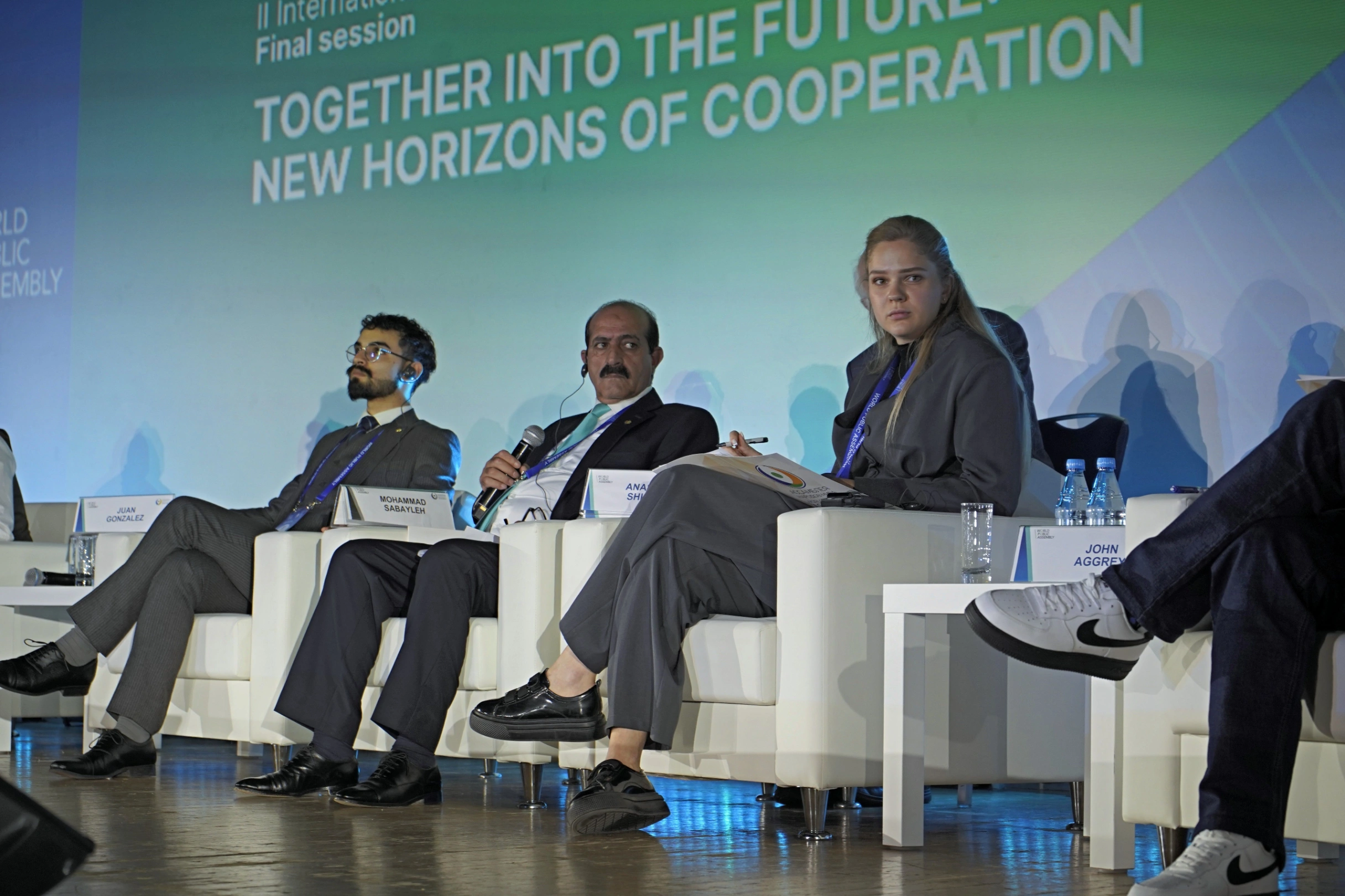
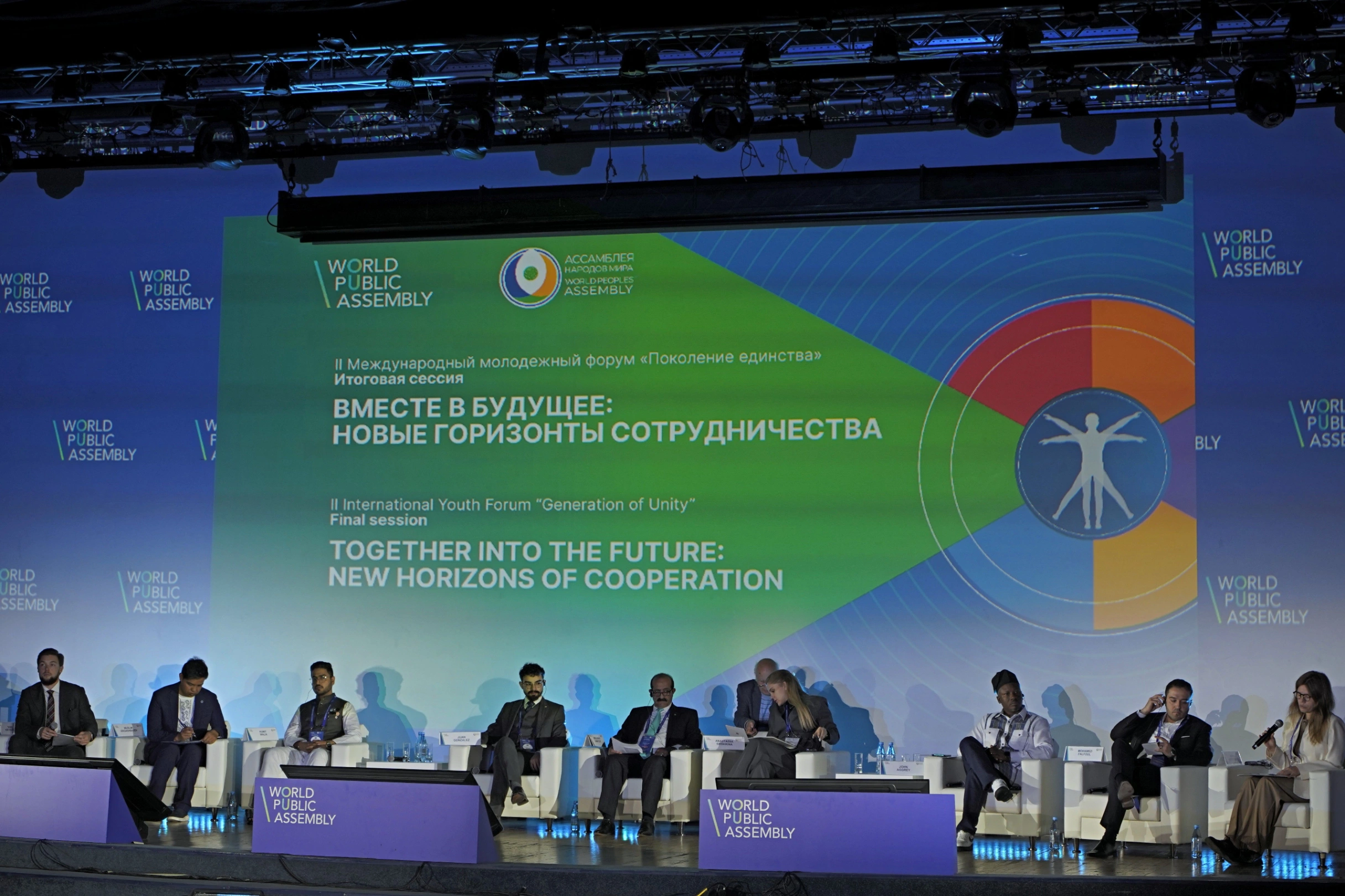
The Final Session "Together into the Future: New Horizons of Cooperation," was held on September 19, 2026 at the World Trade Center as part of the II International Youth Forum "Generation of Unity". The event became part of the Second World Public Assembly "New World: Values That Unite" held in Moscow in September 2026.
The key topics of discussion were public diplomacy in the context of the global crisis of trust and the emergence of Generation Z onto the world stage. Particular attention was paid to issues of unity and digital challenges - the impact of artificial intelligence, deep fakes, and social media.
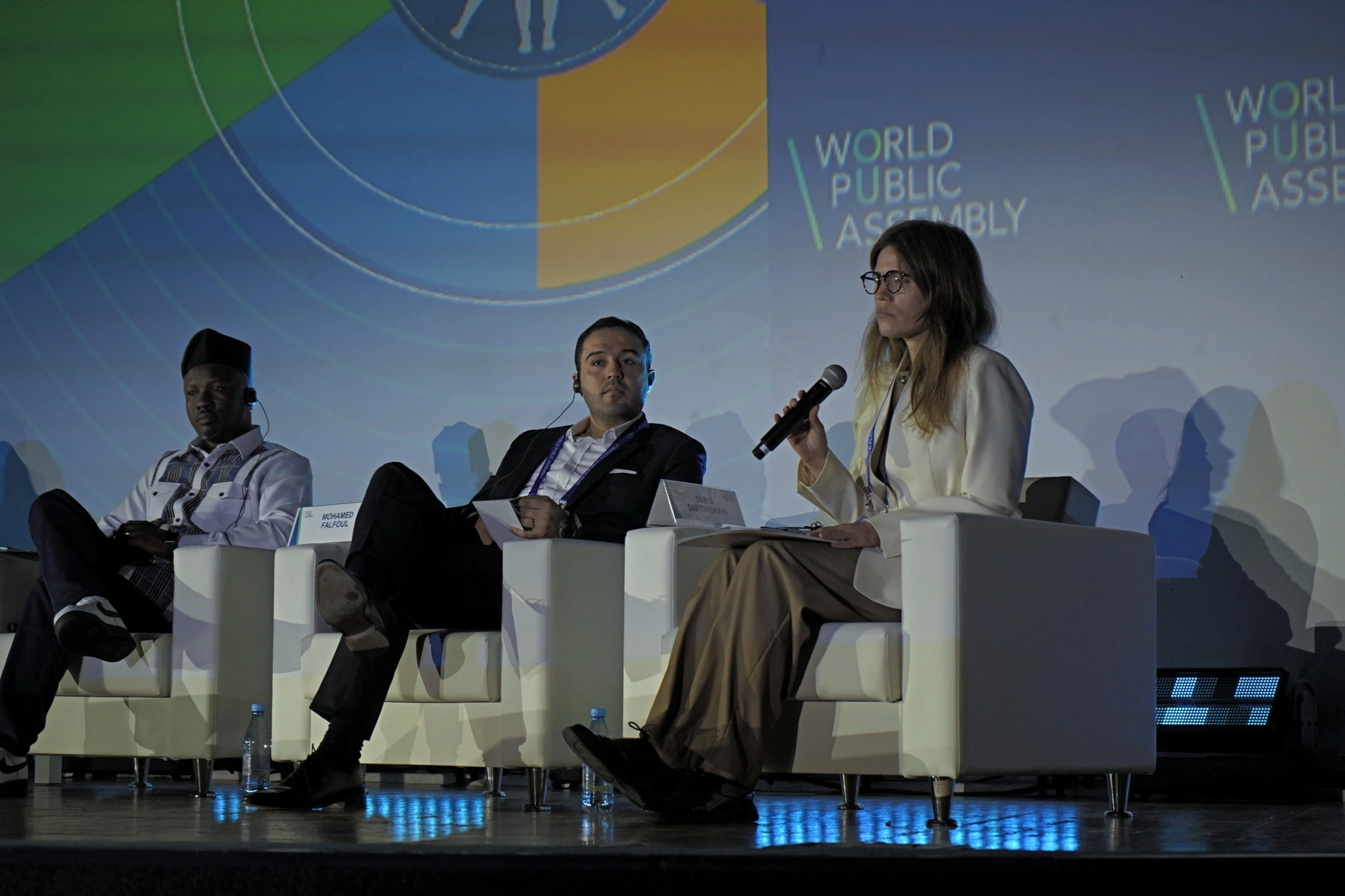
The event was moderated by Daria Saprynskaya, Co-Chair of the Coordination Council of the Youth World Peoples Assembly, and Ivan Kryazhev, Deputy Director for International Work at the "Diplomacy of Knowledge" Center of the Russian State University for the Humanities (RSUH).
Opening the discussion, Daria Saprynskaya noted that the modern world is facing a systemic crisis of trust both at the interstate level and in public consciousness. The destruction of familiar communication channels, polarization of sentiments, and the rapid development of technology create serious barriers to international dialogue. At the same time, the role of youth as an independent subject of international relations is growing on the global stage.
- The World Peoples Assembly is an organization capable of shaping new meanings and values for young people, which are directly reflected in the projects of our colleagues and participants, - Daria Saprynskaya emphasized.
Ivan Kryazhev added that in the context of the crisis of trust, polarization of societies, and rapid digitalization, public diplomacy and horizontal connections between young leaders are acquiring particular importance. They are becoming the instrument capable of restoring trust and shaping a common image of the future.
- Our panel discussion is intended to unite representatives of various countries and cultures to develop practical solutions aimed at finding ways to overcome disunity and confrontation in modern international relations at all levels, - the moderator noted.
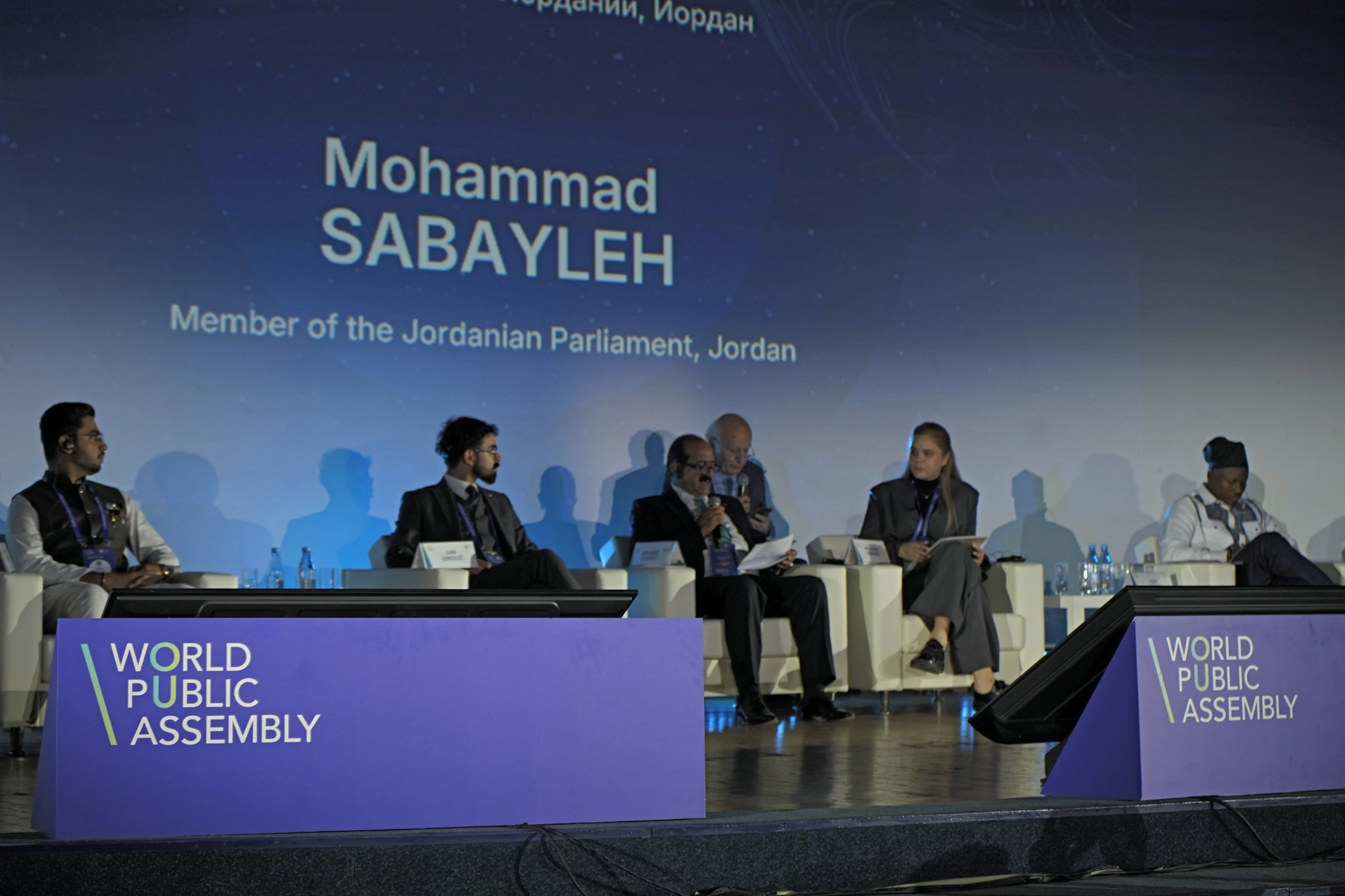
Mohammed Saballe, a member of the National Assembly of Jordan, set the tone for the meeting by thanking the organizers and personally Andrey Belyaninov, Secretary-General of the World Peoples Assembly, for the warm welcome. According to the speaker, the future is built not by a single state or institution but by a partnership that unites countries, youth, the private sector, universities, and civil society. The expert emphasized that modern challenges - from economic crises and environmental problems to wars - require joint efforts:
- In Jordan, we are convinced that partnership is the only real basis for a sustainable future. But genuine cooperation in our region is impossible without eradicating the causes of the current confrontation. A stable Middle East cannot be built without resolving the problem of the Palestinian people and creating a Palestinian state on its ancestral land.
Mohammed Saballe recalled that wars have depleted the resources of countries and entire generations, and the time has come to direct all efforts toward education, healthcare, energy, science, and infrastructure. The speaker called for partnership through knowledge between states and peoples, investment to create opportunities, the participation of the younger generation in creating solutions, and the use of culture as a bridge between peoples.
The theme of unity was continued by John Aggrey (Ghana), Director-General of the Ghana-Russia Center for Trade and Relations. He stated that the World Peoples Assembly has already taken an important step by uniting participants from different countries, but this is not enough - everyone must feel that this planet is our shared home:
- Every delegate in this hall is obliged to become an ambassador of the ideas of the Youth Assembly in their own country. We are young not only in body but also in soul. And cooperation is our common plan.
The expert called for abandoning prejudices, building digital platforms at the regional level, and, under the auspices of the World Peoples Assembly, solving real problems every day.
The idea of a "shared home" was taken up by Rumi Vahlia (India), founder and Director-General of the organization "Tears of the Earth," who noted that it is young people today who are becoming the main bearers of the values of unity.
- Sitting here in this hall, I see Generation Alpha united by a deep sense of belonging, and the spark in the eyes of the young people as soon as you talk to them about the world's problems - that means we are not working in vain. Our task is to give young people the opportunity to speak on international platforms so that they understand: being a leader is not scary, it is cool! - the expert summarized.
Developing the idea of unity in diversity, Juan Gonzalez (Colombia), President of the Center for Dialogue and Multipolar Cooperation "Domus" and Chairman of the National Preparatory Committee of Colombia for the World Youth Festival, suggested that participants pay attention to the very name of his organization. "Domus" in Latin means "house" - and this word sounds the same in Russian, which, according to the speaker, is no coincidence: the home is the center of dialogue, which can only be built on mutual respect, without stereotypes and prejudices.
- It is important to be proud of one's national values, to understand who we are, and through love for one's native land to bring its culture to the world. Many countries still suffer from the legacy of colonialism and neocolonialism, and it is humanitarian diplomacy that becomes the main instrument of resistance to external domination here, - the expert noted.
Gonzalez addressed colleagues from Venezuela, Chile, Ecuador, and other Latin American countries with a call to build this "shared home" together. As inspiring examples of regional unity, he cited Russia, which has built cooperation with post-Soviet countries, and the states of the Middle East, united by a common culture and language. The speaker named honest competition and fair actions as the key foundation of a multipolar world.
Mohammed Falfoul (Tunisia), a strategy and planning consultant at the Ministry of Youth Affairs of the Tunisian Republic, offered a philosophical view of the very nature of youth. He began with the question: "What is youth?" Doctors call it a transitional period between childhood and adulthood; others focus on the age of up to 35. Citing the French sociologist Pierre Bourdieu, the speaker recalled that youth is primarily vulnerability: lack of money, absence of financial autonomy, experience, and interaction skills. The expert emphasized that adults have already passed this path and learned to adapt to a difficult environment, and today it is precisely the ability to adapt that is becoming a key skill for everyone. At the same time, according to the speaker, it can be learned not only from elders.
- Young people are capable of teaching us much more than just recording a TikTok video or putting a new earring in one's ear. In our ministry, we teach the younger generation to understand themselves, and adults to cooperate with young people. Such a two-way dialogue becomes the basis of sustainable development, - Mohammed Falfoul summarized.
The discussion was shifted from philosophy to concrete practical steps by Muslim Ergashbaev (Uzbekistan), Head of the Department at the Center for Sustainable Development of Uzbekistan. He offered colleagues a set of tools that turn conversations about trust into real action. In his view, the main challenge of public diplomacy today lies not in the lack of contacts but in the fact that communication has ceased to generate trust:
- We communicate more than any previous generation, but we often remain inside our own information bubbles. Today, every member of the World Peoples Assembly must take a broader view of his role: on an international platform, they represent the public potential of their country, and the answer "That is not within my competence" is unacceptable in their lexicon.
The expert put forward a number of initiatives:
introduce national hubs on the basis of the World Peoples Assembly - volunteer groups of coordinators to find experts, involve young people, and support international contacts;
form an expert council on youth issues under the World Peoples Assembly, whose first project could be a "youth map of common challenges";
open a women's club of the World Peoples Assembly;
launch the project "Folk Tales of the World" with the translation of folklore into different languages and the involvement of AI;
hold a youth digital security dictation, an online course "Digitalization of Public Diplomacy," and a competition of youth digital solutions.
The theme of dialogue as the basis of trust was continued by Ranggapriadi Malvin Maulana (Indonesia), Vice-President of the Indonesian Community and a student at the Higher School of Management of RUDN University. He shared his reflections on how to communicate with the youth of the future:
- Dialogue is not imposing one's way of thinking but trying to feel what the other person is thinking about. We do not need to prove our superiority - we need to learn patience from each other.
Alexander Podobed, a student of the Faculty of Humanities and Social Sciences from Belarus, recalled that the ability to think and generate ideas is laid down at school - that is where young people learn to develop thoughts that later become the basis for business and social projects. In conclusion, he thanked the World Peoples Assembly for the opportunity to raise topics significant for young people and discuss them on a common platform.
The discussion was also attended by:
Christopher Helali - journalist for DD Geopolitics, researcher and analyst in the field of geopolitics;
Mugariri Sinclair - student at the Medical Institute of RUDN University.
Concluding the session, Anastasia Shishkina, Deputy Executive Director of the World Peoples Assembly and Co-Chair of the Youth World Peoples Assembly, noted that the organization does not stand still and is open to new cooperation - its coordination council already unites more than 30 representatives from different states. After the first "Generation of Unity" forum, the World Peoples Assembly held a series of regional summits in India, Ethiopia, Brazil, and Jordan. In addition, in 2026, a volunteer headquarters will be launched under the World Peoples Assembly - Anastasia Shishkina urged everyone who has projects and ideas to gather teams and contact the organizers.
The result of the discussion was a youth resolution that consolidated the proposals of the forum participants and laid the foundation for new international initiatives uniting young people around the values of cooperation, mutual respect, and responsibility.
Additional information is available on the official website of the World Peoples Assembly, on its VKontakte and Telegram accounts, and at media@world-assembly.org.