

Conscious Unity: The Second World Public Assembly Discussed the Russian Experience in Building the Architecture of a New World
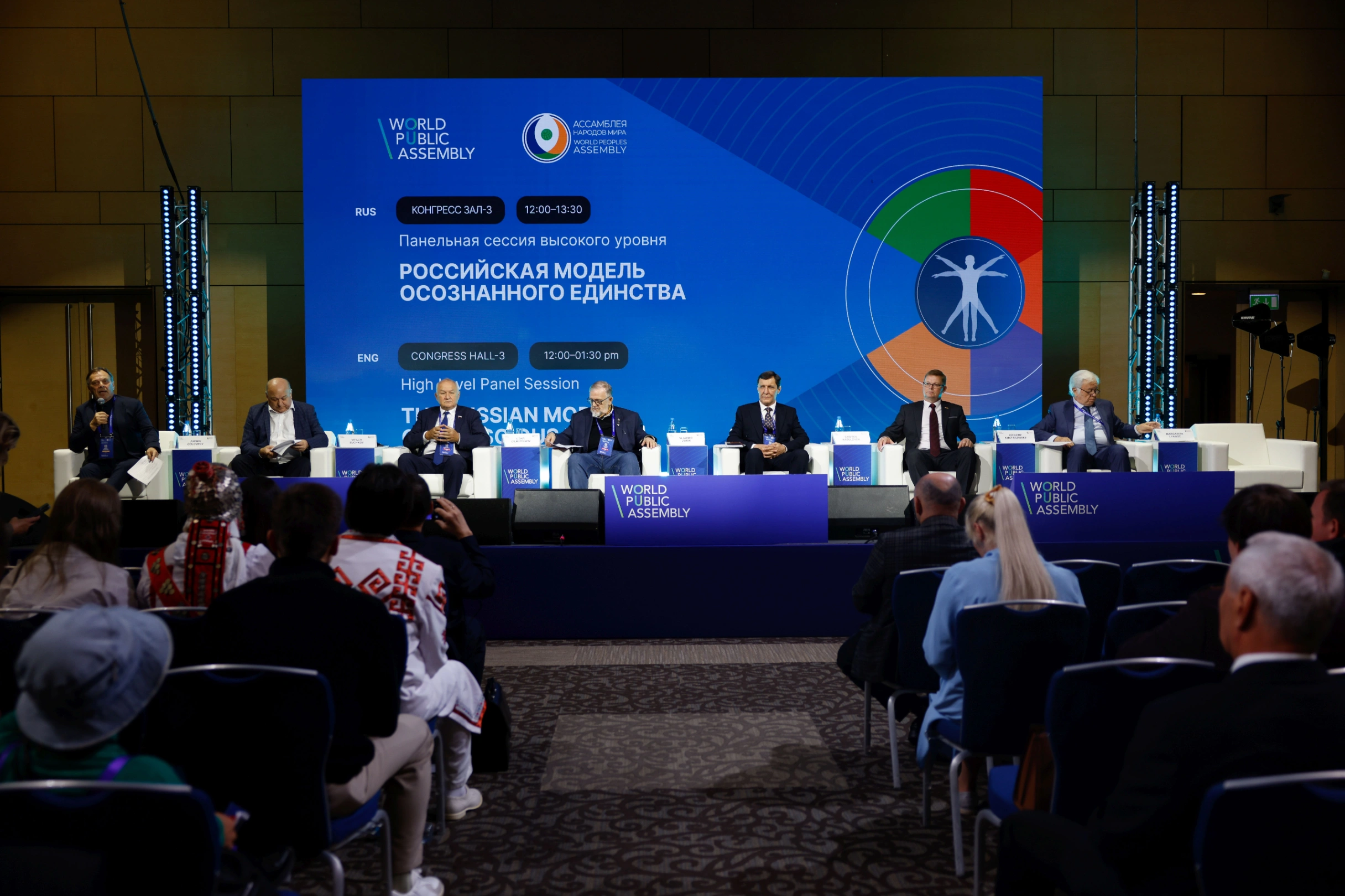
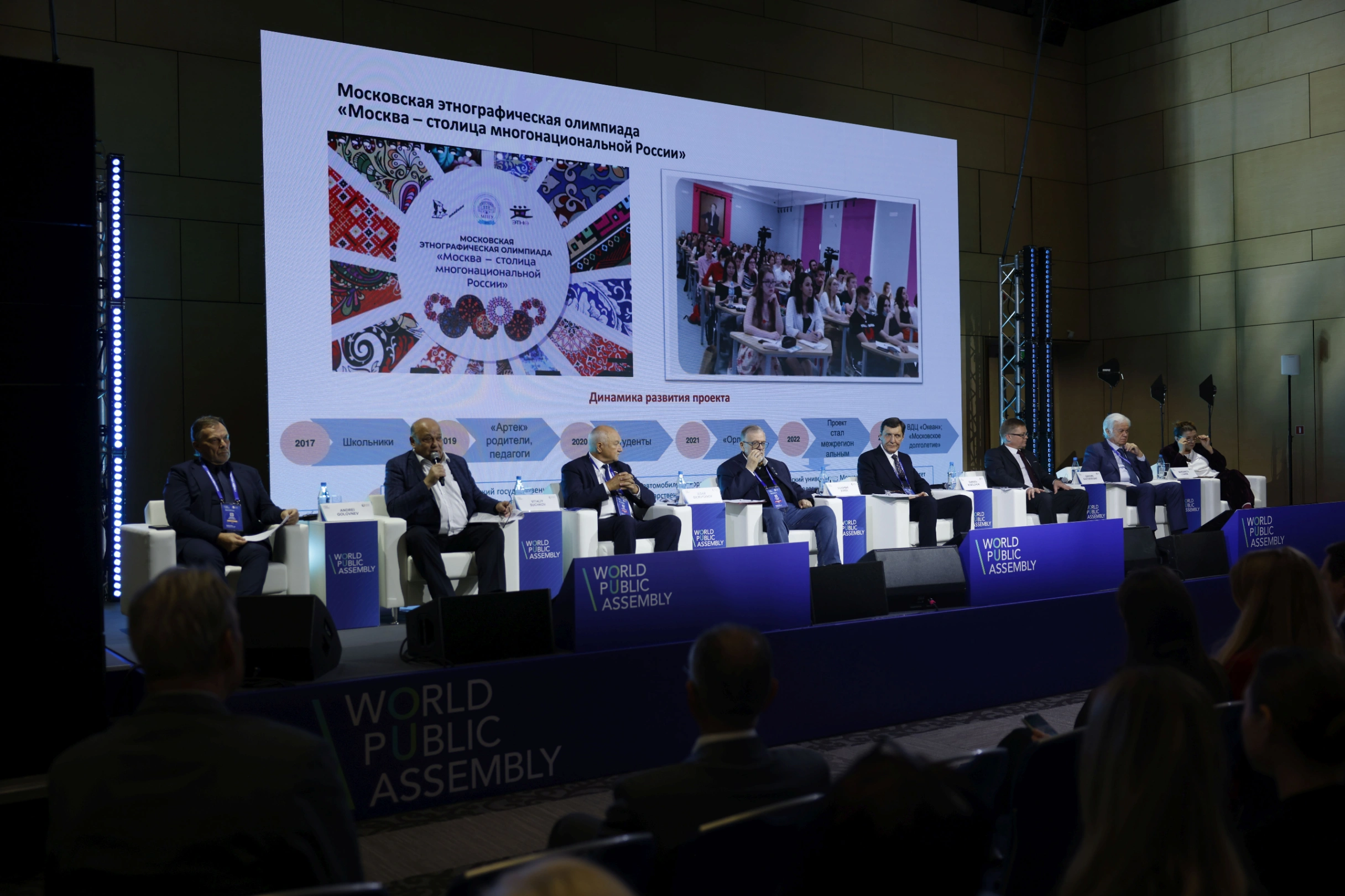
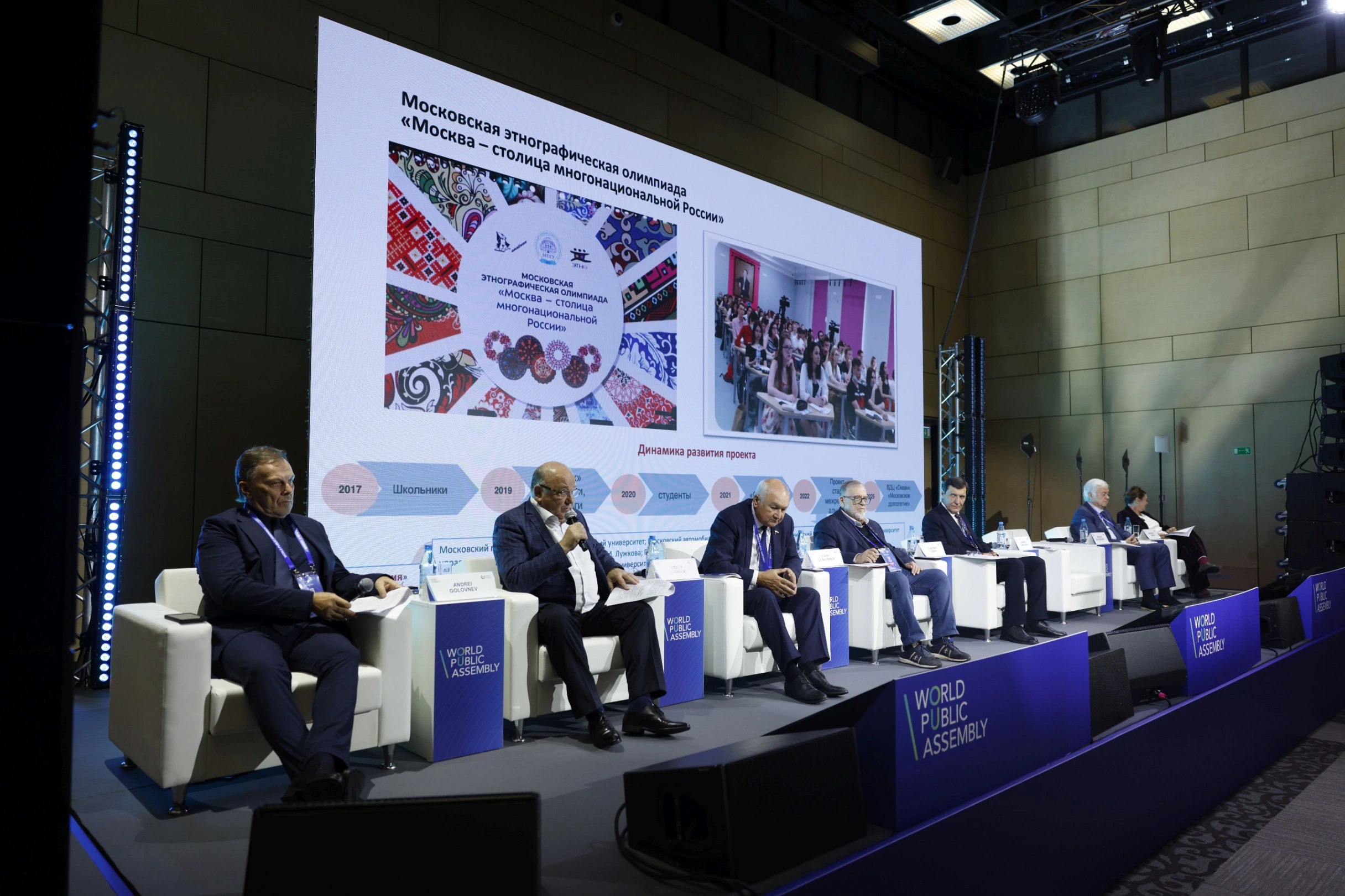
A High-Level Panel Session "The Russia’s Model of Conscious Unity" was held on September 18, 2026, at the World Trade Center as part of the Second World Public Assembly "New World: Values That Unite," which took place in Moscow from September 18 to 19. The event was dedicated to the Year of Unity of the Peoples of Russia.
The discussion centered on issues of self-identification, values and foundations, interaction, preservation of heritage, and a shared future.
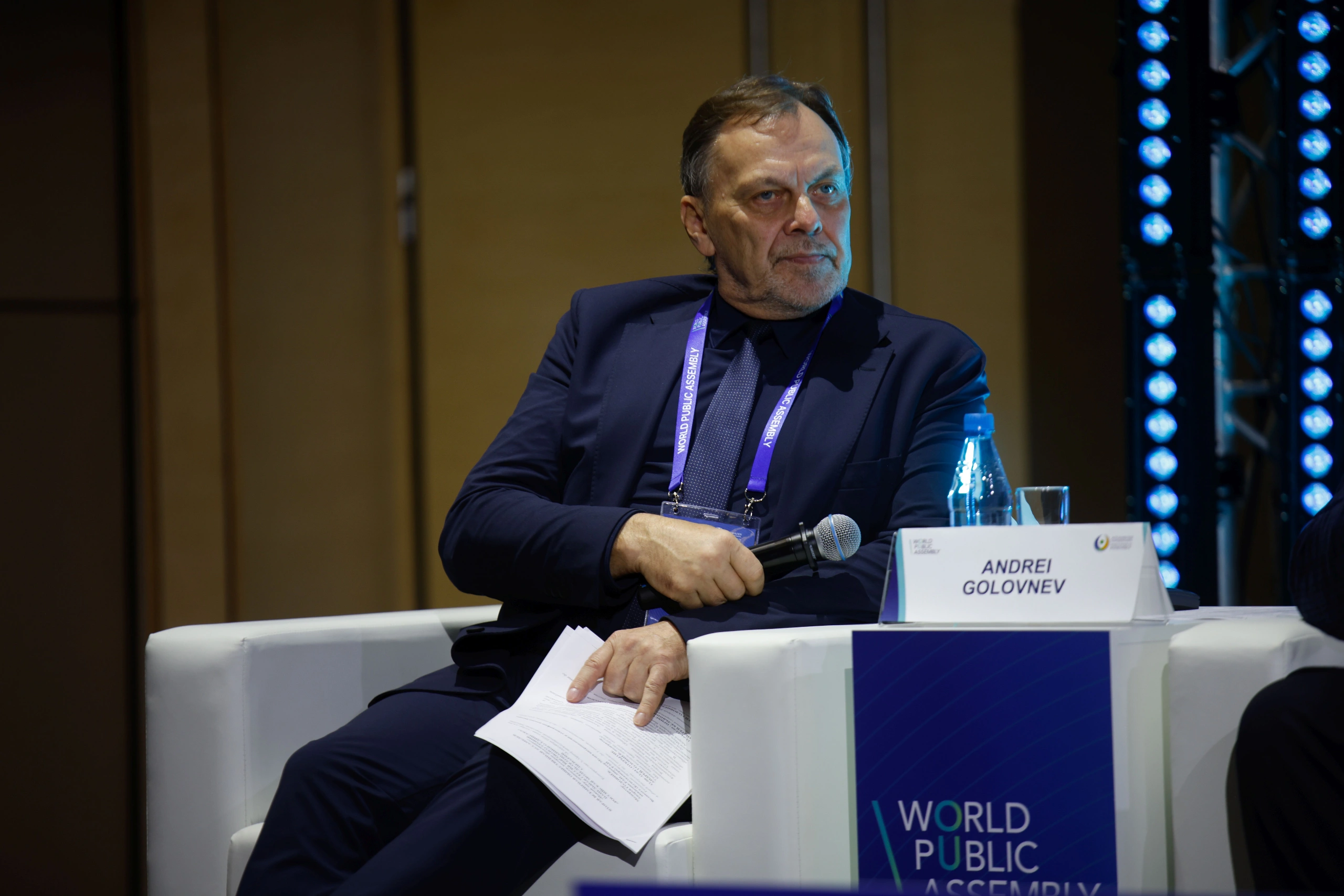
The session was moderated by Andrey Golovnev, Academician of the Russian Academy of Sciences, Director of the Peter the Great Museum of Anthropology and Ethnography (Kunstkamera) of the Russian Academy of Sciences. He reminded those present that Russia was the first country in the world to proclaim itself a multiethnic nation, and that this is an important part of our national idea.
Vitaly Suchkov, Head of the Department of National Policy and Interregional Relations of the City of Moscow, said in his remarks that representatives of 180 ethnic communities live in the capital, and that the system of national policy is structured through the Council for Nationalities Affairs and nine commissions.
— Multiethnicity is a successful model for maintaining interethnic peace and harmony, one that has proven its effectiveness through many years of practice, — he stated.
Tatiana Vagina, Head of the Department of National Policy of the Office of the President of the Russian Federation for Domestic Policy, noted that the title of the session reflects a fundamental principle of the state structure. She reminded the audience that 2026 has been declared the Year of Unity of the Peoples of Russia and coincided with the launch of the new Strategy of State National Policy through 2036. Its three guidelines are strengthening the all-Russian civic identity, preserving and supporting ethnocultural and linguistic diversity while reinforcing the unifying role of the Russian language, and ensuring interethnic and interreligious harmony.
— The unity of the multiethnic people of Russia is not a given. It is a value that must be cherished, strengthened, and protected every day, — she emphasized.
Rashid Alimov, former Secretary-General of the SCO and former Minister of Foreign Affairs of Tajikistan, continuing the theme, quoted Rasul Gamzatov:
— In Dagestan I am an Avar, in Russia I am a Dagestani, and abroad I am a Russian.
According to him, a person should not have to choose between their own culture and their common home.
— Cultural diversity is not an obstacle but a foundation for trust, social harmony, and joint creation, — he said, noting that SCO countries account for two-thirds of foreign students in Russian universities.
Andrey Belyaninov, Secretary-General of the World Peoples Assembly, emphasized that the Russian model of multiethnic coexistence has proven its viability in practice: the country has managed to preserve the cultures of many peoples, including small ones.
— The Russian model is good from the standpoint of nations and nationalities living together on one territory. We know how to respect and love one another, — he stated.
Ildar Gilmutdinov, First Deputy Chairman of the State Duma Committee on Nationalities Affairs and a member of the Council under the President of the Russian Federation for Interethnic Relations, supported the return of the "nationality" line in passports for those who wish to have it, and expressed hope that the new law on national-cultural organizations will set out concrete measures of support for associations that are actually working.
— The well-being of the country depends on the well-being of every people. If all of them are respected and supported by the state, the state will be strong, — he emphasized.
Vladimir Zorin, Chairman of the Commission of the Civic Chamber of the Russian Federation for the Harmonization of Interethnic and Interreligious Relations and a member of the Presidium of the Council under the President of the Russian Federation for Interethnic Relations, called the Russian model a "national treasure" and a "contribution to world humanitarian knowledge."
— The essence of the Russian model of conscious unity lies in the voluntary cohesion of many peoples around a common historical destiny, traditional values, and statehood while fully preserving their distinctiveness. We do not assimilate or erase differences; we integrate, uniting diversity into a harmonious whole, — he stated.
Grigory Khatanzeyevsky, Director of the House of Friendship of the Peoples of the Komi Republic and Chairman of the regional branch of the Assembly of the Peoples of Russia in the Komi Republic, said that the House of Friendship is home to more than 30 national-cultural associations and about 20 language and ethnographic schools, with more than 700 events held annually.
— Entering the House of Friendship, one can see the inscription: "Welcome home." This is our motto — so that a person who once crosses the threshold will certainly want to return, — he said.
Kabuljon Sabirov, Director of the SCO Center for Public Diplomacy in Uzbekistan, contrasted the "diplomacy of arrogance," which speaks the language of ultimatums, with public diplomacy, which builds bridges.
— There can be no lasting peace built on inequality. Justice is respect for the language, faith, and dignity of every people, — he emphasized.
The speaker also spoke about the projects "Public Diplomacy Leader" (more than 300 applications from Uzbekistan), the "School of Public Diplomacy," and the "Syr Darya — River of Friendship" campaign. According to him, six of the ten permanent members of the SCO already have public diplomacy centers in operation.
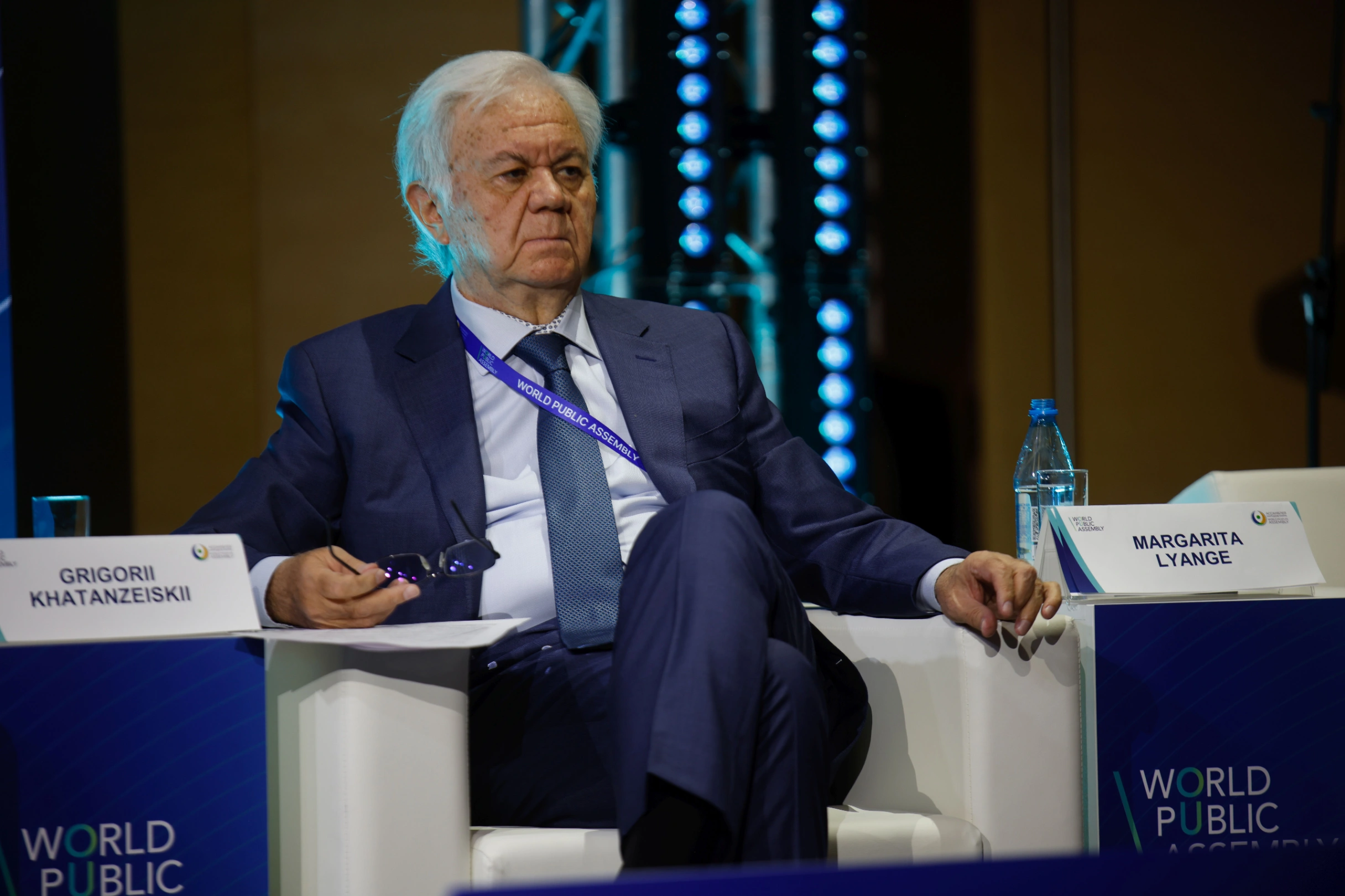
Margarita Lyange, President of the Guild of Interethnic Journalism, Deputy Chairman of the Commission of the Civic Chamber of the Russian Federation for the Harmonization of Interethnic and Interreligious Relations, and a member of the Council under the President of the Russian Federation for Interethnic Relations, presented a series of short vertical videos about the Chukchi, Mordvins, and Kalmyks as an example of promoting culture in modern formats.
— For the younger generation, a serious presentation of such information is not suitable. The information flow is large, and the decision to watch a video is made in the first five seconds. You have to evoke emotions first in order to then convey meanings, — she noted.
At the conclusion of the session, Svetlana Smirnova, Chairperson of the General Council of the World Peoples Assembly and a member of the Council under the President of the Russian Federation for Interethnic Relations, proposed holding international ethnoforums as forums of friendship among the peoples of the world.
Following the results of the session, a resolution was adopted, which will be published when the results of the Second World Public Assembly are summarized.
Additional information is available on the official website of the World Peoples Assembly and at media@world-assembly.org.