

 Back to news
From Cognitive Security to a Water-Nuclear Consortium: Moscow Sets a New Agenda for Eurasian Cooperation
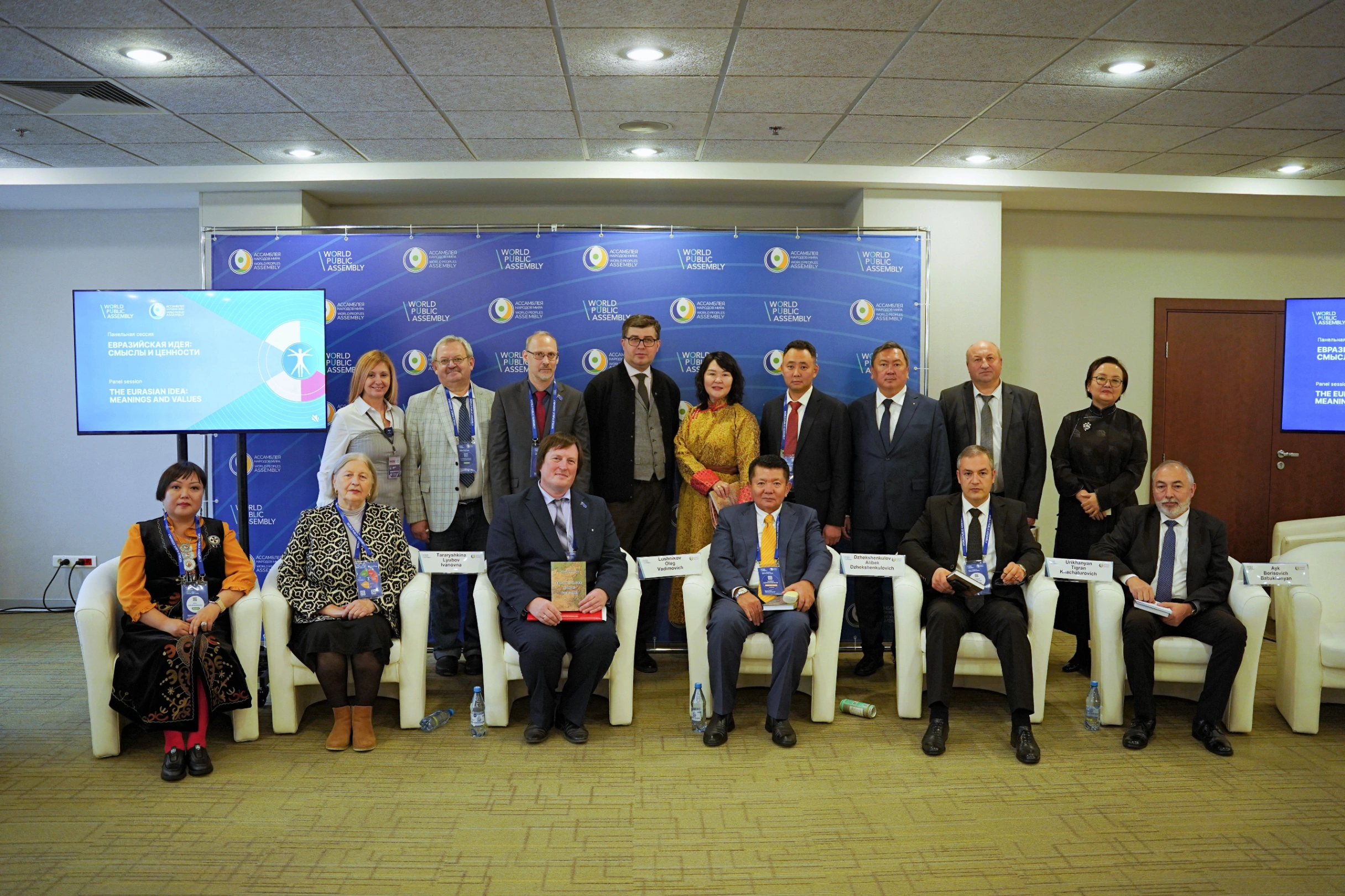
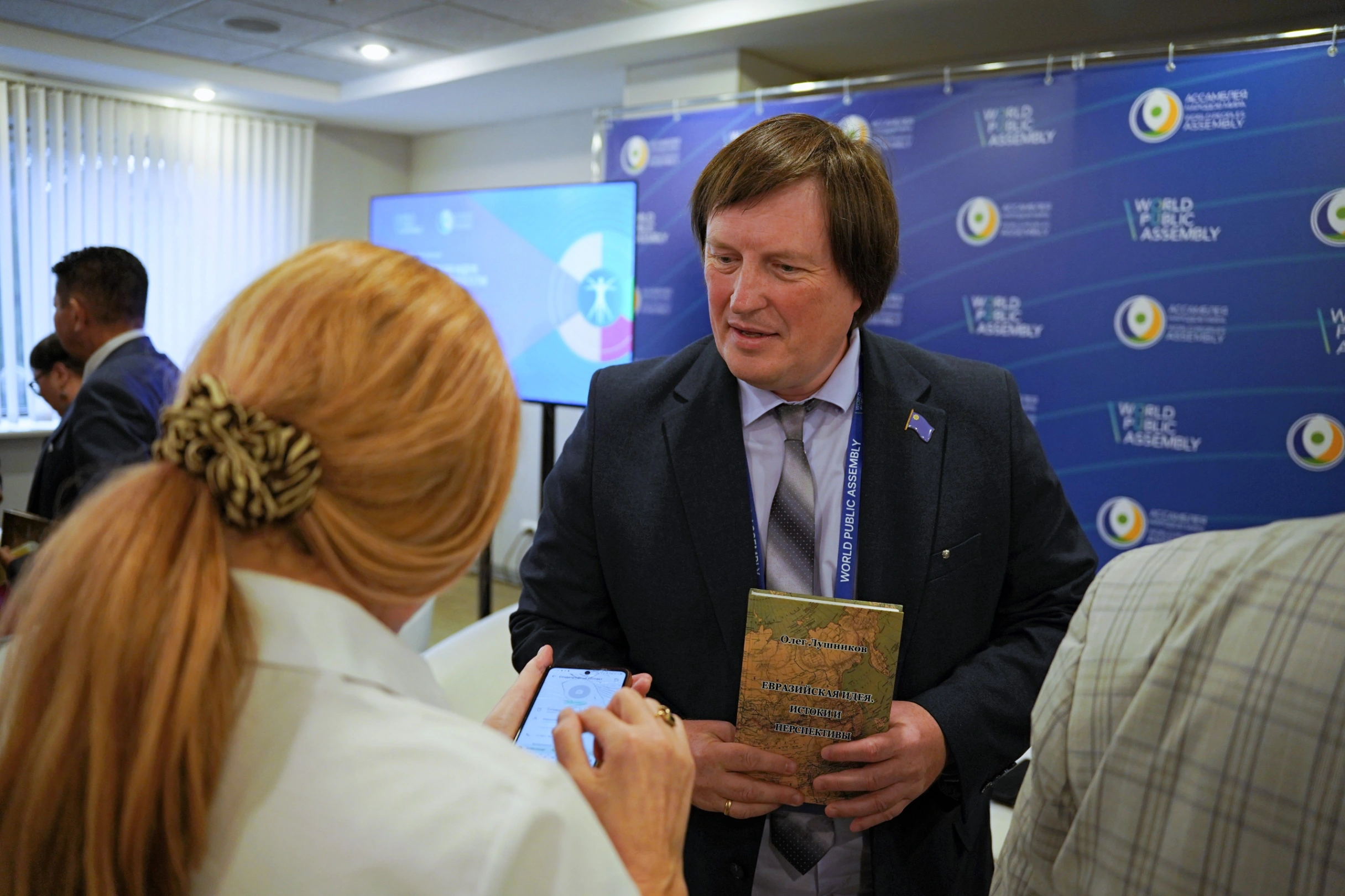
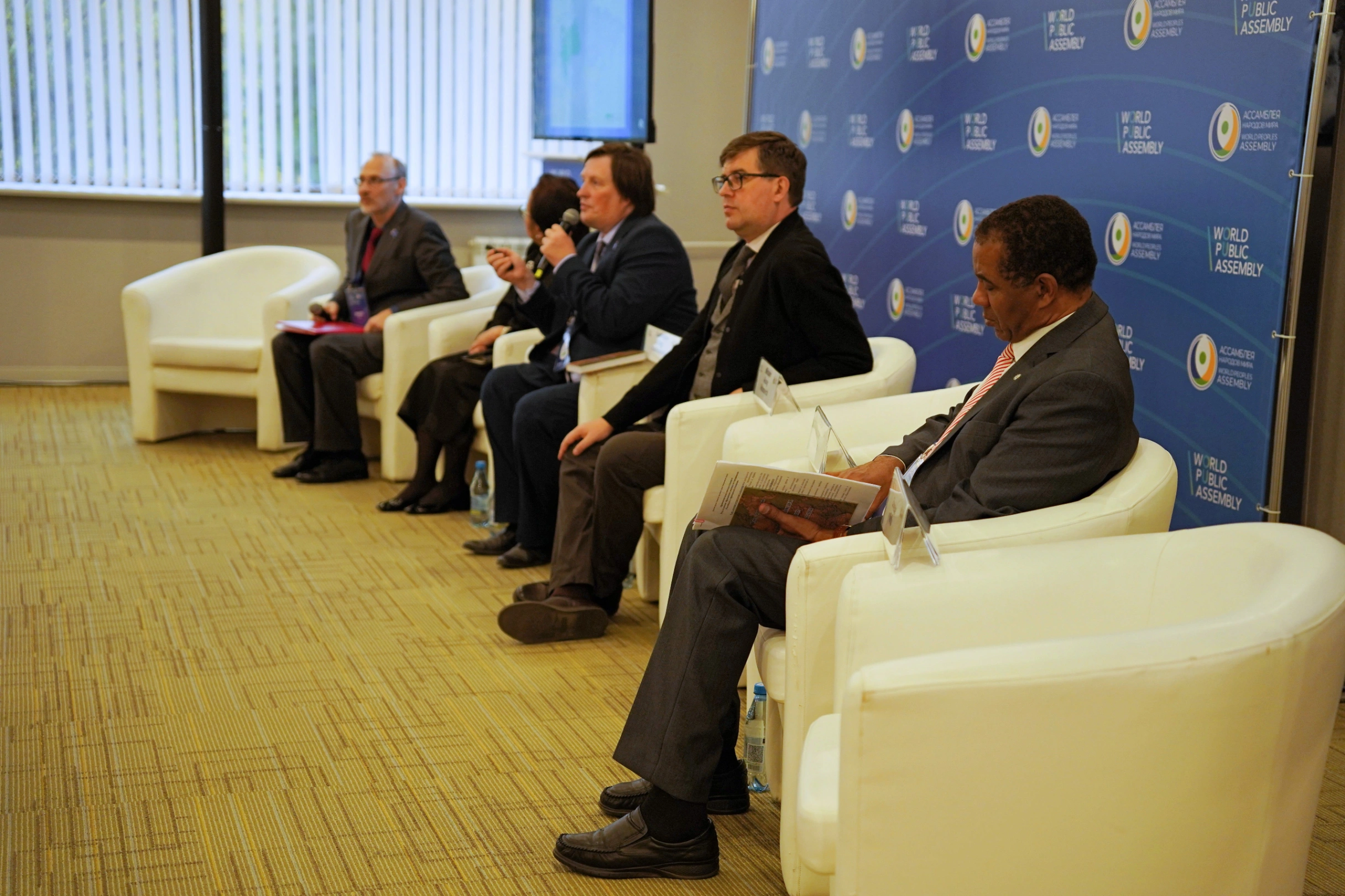
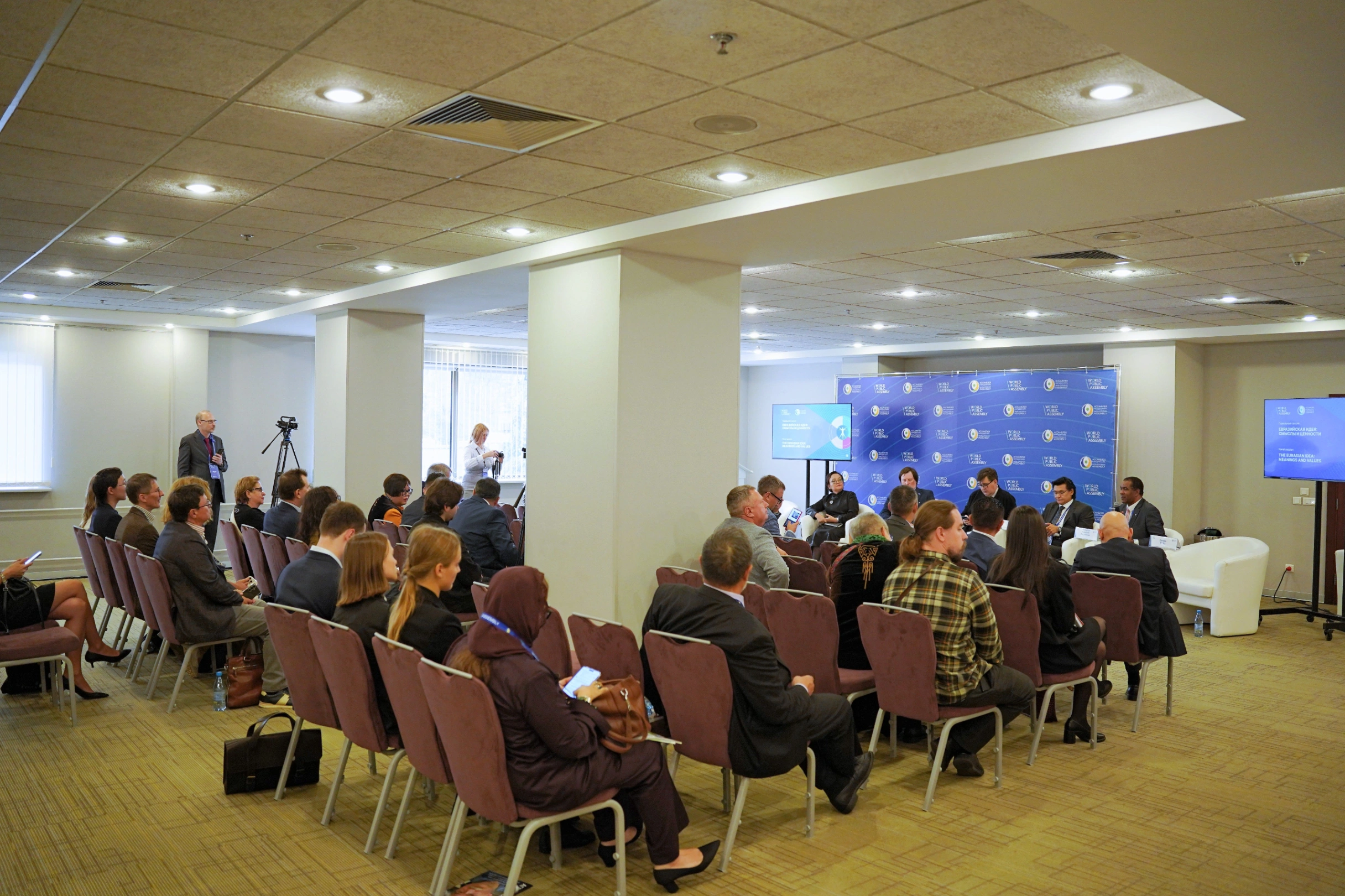
The Panel Session “The Eurasian Idea: Meanings and Values” was held on 18 September 2026 at the World Trade Center. The event was part of the Second World Public Assembly “New World: Values That Unite” held in Moscow in September 2026.
Participants focused on achieving a synergy of integral diversity, in which unique ways of life and lifestyles do not merely coexist but mutually enrich one another. In addition, the session launched a research program on cognitive security and presented a large-scale international initiative - the creation of the Eurasian Association of Historians and Political Scientists.
The event was moderated by Oleg Lushnikov, Director of the G.V. Vernadsky Center for Eurasian Studies, Chairman of the Eurasian Movement, Head of the Committee on International Relations and Diplomacy of the Public Chamber of the EAEU Countries, and PhD in History. Opening the meeting, he outlined the key vectors of work: to conceptualize the Eurasian idea as a value and worldview foundation and to find practical ways to reduce risks in Greater Eurasia. According to the speaker, this can be achieved through developing horizontal ties between societies and institutionalizing people’s diplomacy as a full-fledged instrument for building trust.
Also, the moderator emphasized that shaping the international humanitarian agenda of the future is impossible without a broad coalition - uniting the efforts of civil society, science, culture, education, youth and business.
The session was opened by Kirill Koktysh, Doctor of Political Sciences, Professor at the Department of Political Theory at MGIMO. He called for a “cognitive turn” in political science - a transition to a language cleansed of ideological clichés in order to rethink the Eurasian idea and its values.
The expert noted that the formal attributes of democracy largely coincide with those of authoritarianism, and the difference between them is purely functional: the only question is how many interest groups participate in decision-making. At the same time, in the speaker’s view, democratic procedure conserves reality and is not a driver of innovation - which is precisely why innovators often leave for places where their ideas can be quickly implemented. Kirill Koktysh named rational awareness of values as the main step toward the Eurasian idea.
- Eurasianism is vast expanses and a unique multicultural environment that creates fantastic growth potential. Eurasia is interesting in itself precisely because of this diversity, which makes it possible to achieve the most unexpected and striking results, - the expert summarized.
Alibek Dzhekshenkulov, Doctor of Political Sciences, Professor at the Kyrgyz-Russian Slavic University, former Minister of Foreign Affairs and former Ambassador of Kyrgyzstan to Russia, began his speech by thanking the organizers - he expressed hope that such meetings would become regular.
Building on the previous speaker’s points, the expert supported a rational approach to understanding the Eurasian idea. He recalled that the very idea of peaceful coexistence of peoples in the Eurasian space largely goes back to the ideas of Pyotr Stolypin.
According to Alibek Dzhekshenkulov, the Shanghai Cooperation Organization (SCO) is a natural continuation of Eurasian logic. The Bishkek SCO Summit and the World Nomad Games became vivid illustrations of this, demonstrating a high level of mutual understanding and an atmosphere of genuine friendship among peoples. The diplomat also noted that Central Asia is currently undergoing active consolidation, and the multipolar world has finally turned from a concept into reality.
- We - as scholars, politicians and public figures - must know history well, but not live in it. We must understand today, while also seeing and building a common future. This is extremely important, - the expert concluded.
Tigran Urikhanyan, Deputy Chairman of the Permanent Commission of the CIS Interparliamentary Assembly on Culture, Information, Tourism and Sport, shared an alarming assessment of the situation in Armenia: according to him, the country is currently going through a difficult period, which the speaker figuratively compared to an oncological disease. The speaker recalled that he had stood at the origins of the formation of the Eurasian Economic Union: back in 2012 in Kyiv he signed one of the first Eurasian documents.
- Eurasian values for me and my compatriots are “ours,” close and kindred, - Tigran Urikhanyan noted.
As a response to current challenges, the expert reported an important political initiative: an appeal for a constitutional referendum has been registered with the Central Electoral Commission of Armenia. Its goal is to enshrine at the highest legislative level a ban on signing international agreements that contradict treaties already ratified by the country.
Political scientist and expert on political processes in Central Asia Asel Omurakunova recalled that Kyrgyzstan is located in the very heart of Eurasia - at the crossroads of cultures and civilizations. It was the nomadic heritage that cultivated in this people openness to the world. At the same time, the speaker emphasized: the Eurasian idea must not be reduced to attempts to dictate to other peoples how they should live. It is far more important that people see practical results from it - protection of the rights of compatriots working and studying abroad, clear and fair rules for entrepreneurs, and joint programs for scholars and students.
- The Eurasian idea of the 21st century is not a return to the past but a common look into the future. Not unification against someone, but cooperation for common development. Not a search for a common enemy, but a search for a common cause, - Asel Omurakunova stated.
Aik Babukhanyan, Chairman of the “Union Constitutional Law” party of the “Strong Armenia with Russia - for a New Union” movement and Deputy Chairman of the Coordination Council of the International Association of Friends of Crimea, cited concrete figures: the Soviet Union accounted for 17 to 20% of world GDP, whereas today the former Soviet republics together barely reach 5%. According to the speaker, while the country remained united it was a full-fledged world center, and after its collapse its parts themselves became an object of economic and cultural expansion. That is precisely why the expert called the common future of post-Soviet countries “a form of restoring a geopolitical center”.
To confirm the civilizational commonality of peoples, Aik Babukhanyan recalled that post-Soviet countries are united by a common language, a common history and the Great Patriotic War, through which every family passed. At the same time, he reported a practical step: in November 2025 in Yerevan, a prototype of a common media space - the Eurasian Media Platform - was created.
The expert is convinced that Armenia must defend its civilizational foundations and, relying on them, build a union state modeled on the union of Russia and Belarus. As a concrete step along this path, Aik Babukhanyan proposed creating an Armenian-Russian organizing committee to celebrate the 200th anniversary of the entry of Yerevan and adjacent territories into the Russian Empire.
Lyubov Tararyshkina, Doctor of Economics, Professor and Head of the Department of Eurasian Studies at Belarusian State University, continued the theme of integration, noting its strategic significance for all post-Soviet countries. According to the speaker, the Soviet Union demonstrated to the world a successful model of such association. The expert emphasized the need to defend common historical memory, which European politicians are now trying to rewrite, and spoke about systematic work with young people in Belarus.
- We should not hope for the West or the United States. We must stick together. Such an approach leads to great success. Why? Because an old friend, your own neighbors, are truly always better. And acquiring new partners in today’s turbulent world is extremely difficult, - Lyubov Tararyshkina summarized.
Tsend-Ayush Natsagdolgor, Counselor of the Trade Representation of the Embassy of Mongolia in the Russian Federation and PhD in Psychology, recalled that on 22 July 2026 Mongolia moved from observer status at the EAEU to the level of full partnership, receiving tariff preferences for 367 types of goods.
- The modern world requires us to look not for differences but for what unites us. This is precisely the principle that determines the development of Mongolia’s relations with the Eurasian Economic Union, - the expert noted.
Alexey Mikhalev, Director of the Center for Political Transformations at Buryat State University named after Dorzhi Banzarov and Doctor of Political Sciences, presented the concept of a “Eurasian Commonwealth of Nations,” which relies on the classic work by historian Dmitry Obolensky on Byzantium. The speaker drew a parallel: if Orthodoxy served as the foundation of Byzantine integration, then a secular value project should become the basis of future Eurasian unity. At the same time, Alexey Mikhalev warned against nostalgic illusions and attempts to construct an artificial identity.
- We should not expect integration to mechanically restore the Soviet Union. The future of our commonwealth is not in everyone declaring: “I am a Eurasian.” It is important to share common values. If they are close to you, you become part of the community standing at the origins of integration anyway, without the need to artificially impose this label on yourself, - the speaker explained.
Kubatbek Rakhimov, Doctor of Economics, Professor at the Diplomatic Academy of the Ministry of Foreign Affairs of the Kyrgyz Republic named after K. Dikambaev, proposed a model of a “water–nuclear energy consortium.” The expert noted that the classic Western formula “water–energy–food” does not work in the arid territories of Eurasia, and put forward an alternative configuration: “water–energy–biomass–security.”
According to the speaker, Russia is capable of ensuring regional security and acting as an integrator of the space through the accelerated construction of nuclear power plants. This solution will remove the problem of winter water releases in Kyrgyzstan and Tajikistan and transfer hydropower stations to irrigation mode.
- Whoever controls water resources in the upper reaches controls the situation throughout the region, and Western structures are already trying to seize the initiative in the hydropower sector. Therefore, Russia cannot be merely a broker - it must be a player, - Kubatbek Rakhimov warned.
Zanebe Kinfup, President of the Union of African Diasporas of Russia, emphasized that the peoples of Eurasia need a unifying idea for productive coexistence. And such an initiative is already working at the international level: on 28 October the third Russia - Africa Summit will take place, in which all Eurasian states will participate.
The lively discussion touched on the most diverse facets of the Eurasian agenda: from culture and values to politics, education and ecology. The result of the session was a resolution in which participants enshrined the key principles of a common future: respect for cultures, religions and traditions; rejection of unification and the imposition of alien models; orientation toward humanitarian modernization; openness and conscious partnership.
An important practical decision was the creation of the Eurasian Association of Political Scientists - a permanent platform that will unite experts, international affairs specialists, historians, philosophers, sociologists and analysts from Eurasian countries. The speakers called on states, scientific, educational, cultural, religious and public institutions to support this initiative.
Additional information is available on the official website of the World Peoples Assembly, on its VKontakte and Telegram accounts, and at media@world-assembly.org.