

 Back to news
Generational Memory, Family History, and a Circle Dance to the Gusli: Moscow Discusses How Ancestral Roots Help Build a New World
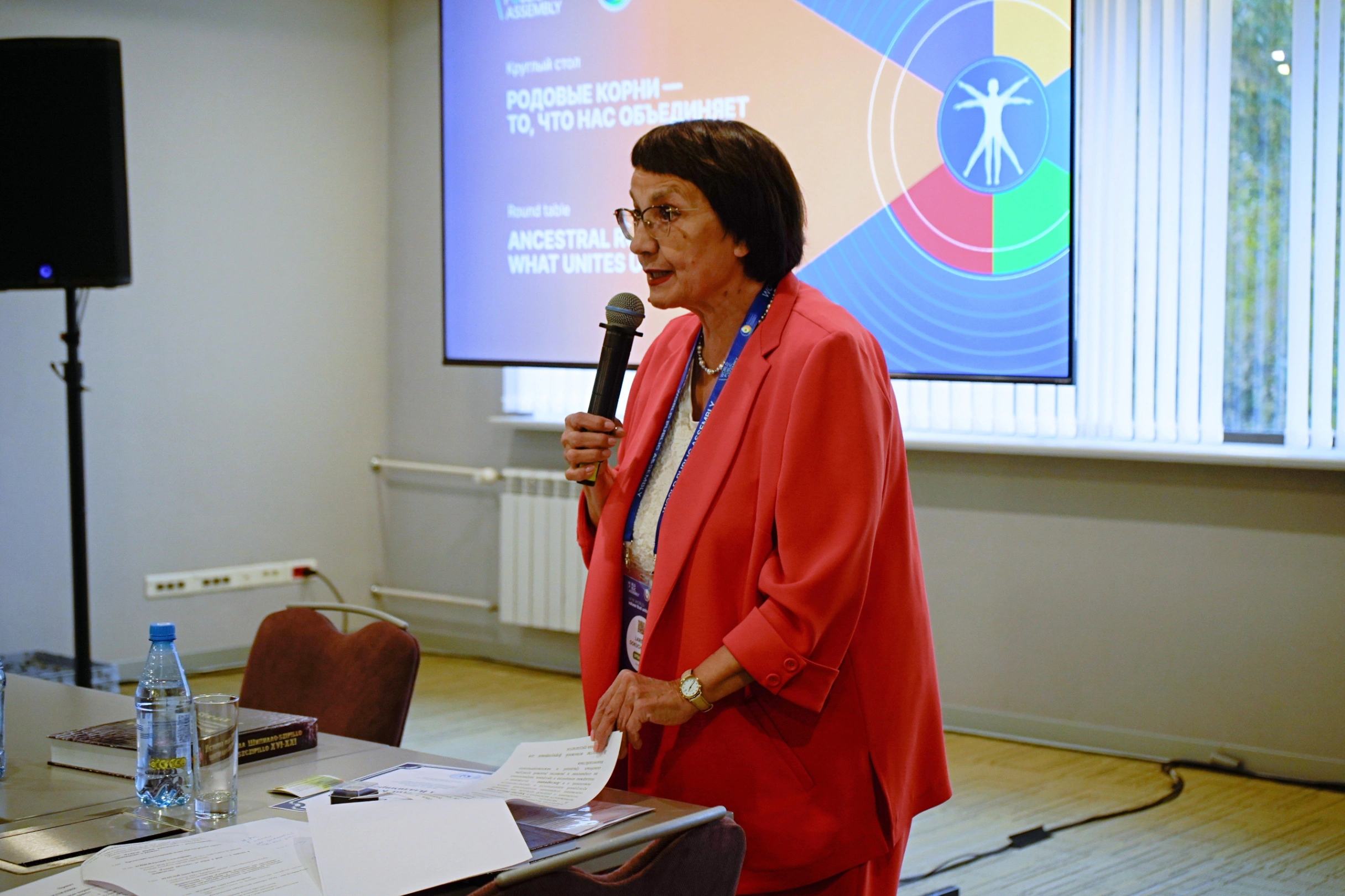
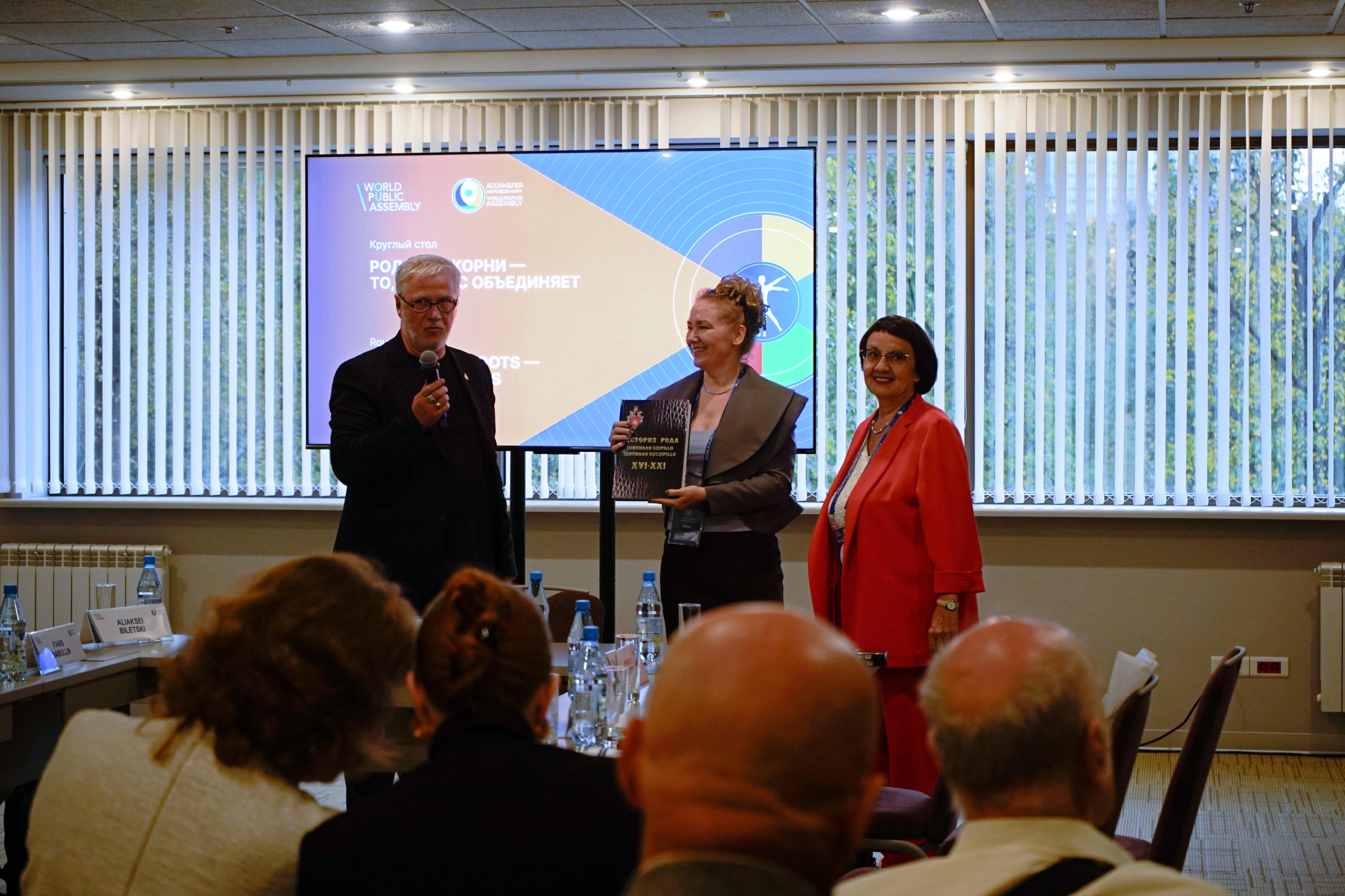
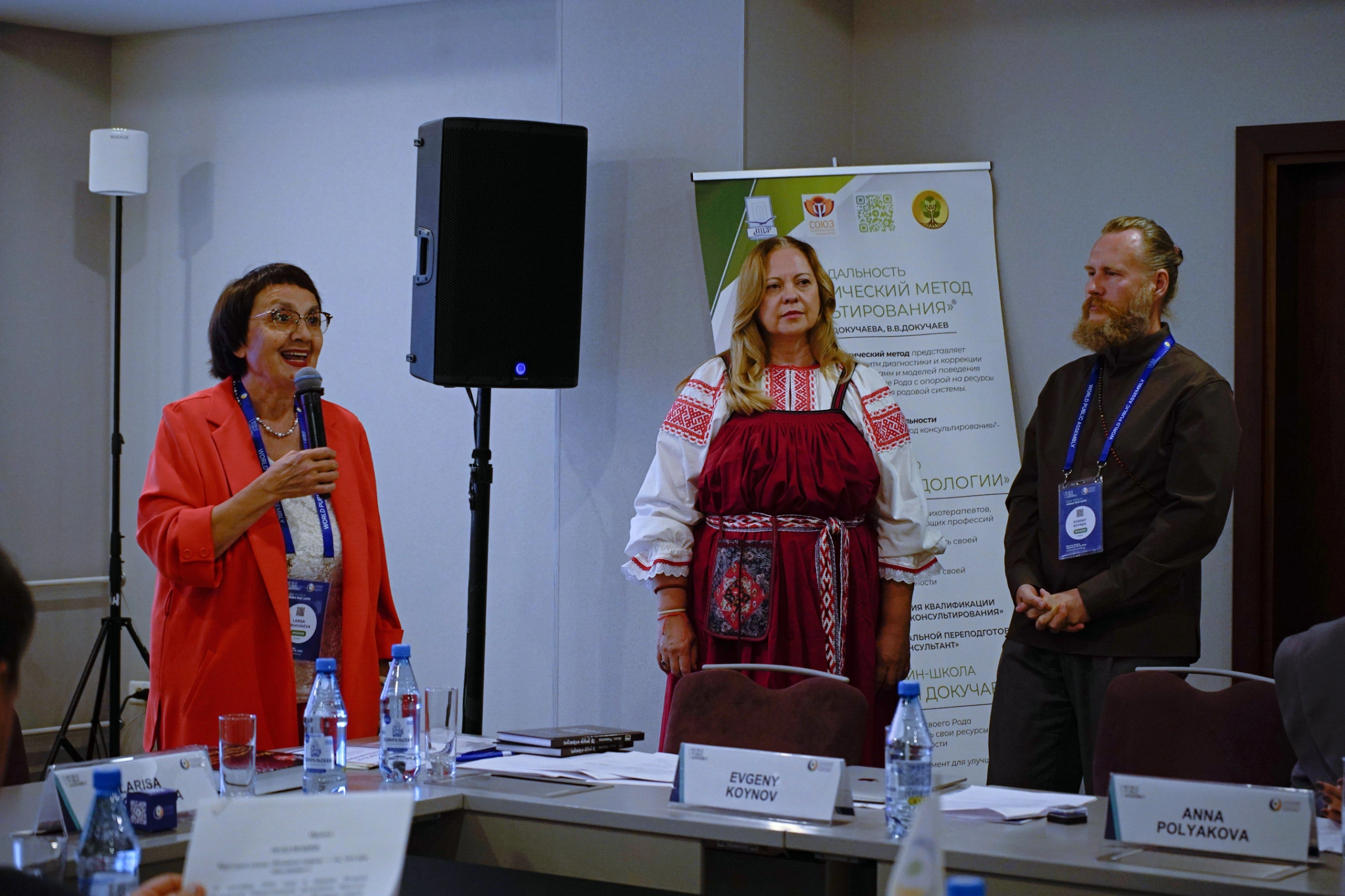
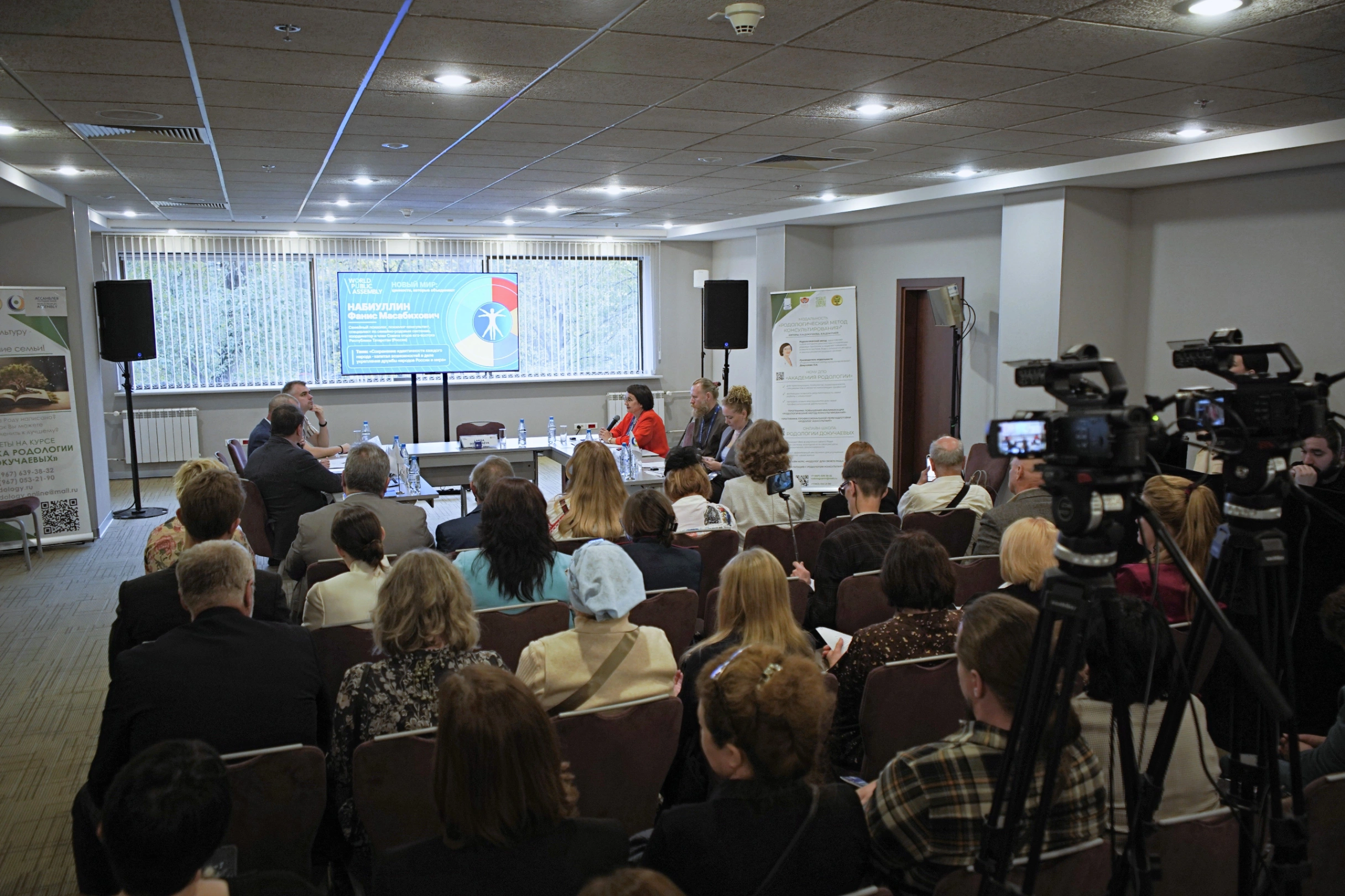
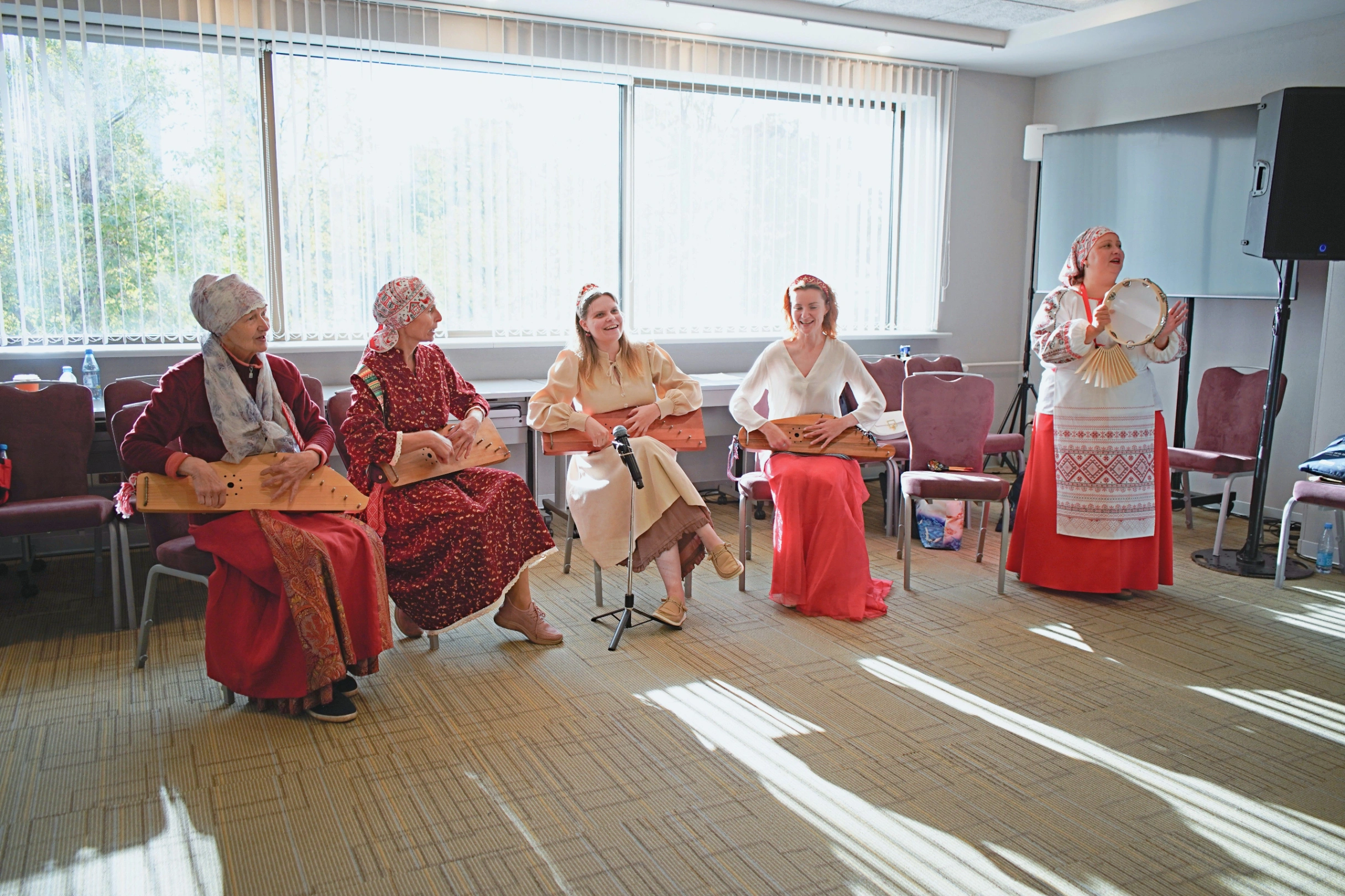
The Round Table "Ancestral Roots - What Unites Us" took place on September 18, 2026, at the World Trade Center. The event was part of the Second World Public Assembly "New World: Values That Unite", which concluded in Moscow in September 2026.
Discussion participants explored what ancestral memory means for people today and how it helps people of different nationalities find common ground. Special attention was given to the challenges families face in emigration: how to maintain a connection with one's lineage, language, and culture far from home, and how to pass on family history to children growing up in a different cultural environment.
The moderator of the meeting was Larisa Dokuchaeva, Chair of the Council for Ancestral Culture of the World Peoples Assembly. Opening the round table, she emphasized that in the modern world people increasingly live far from their birthplace, move to other countries, and start families outside their native cultural environment. In such conditions, the issue of preserving ancestral memory, language, family traditions, and intergenerational connection becomes especially important.
- Ancestral roots are the foundation of personal identity, a source of inner stability, that sense of support that allows a person to understand their place in the world. We have no power over the past, but we can choose what our legacy will be: wisdom instead of fear, understanding instead of enmity, respect instead of division, memory instead of oblivion, responsibility instead of indifference, - stated Larisa Dokuchaeva.
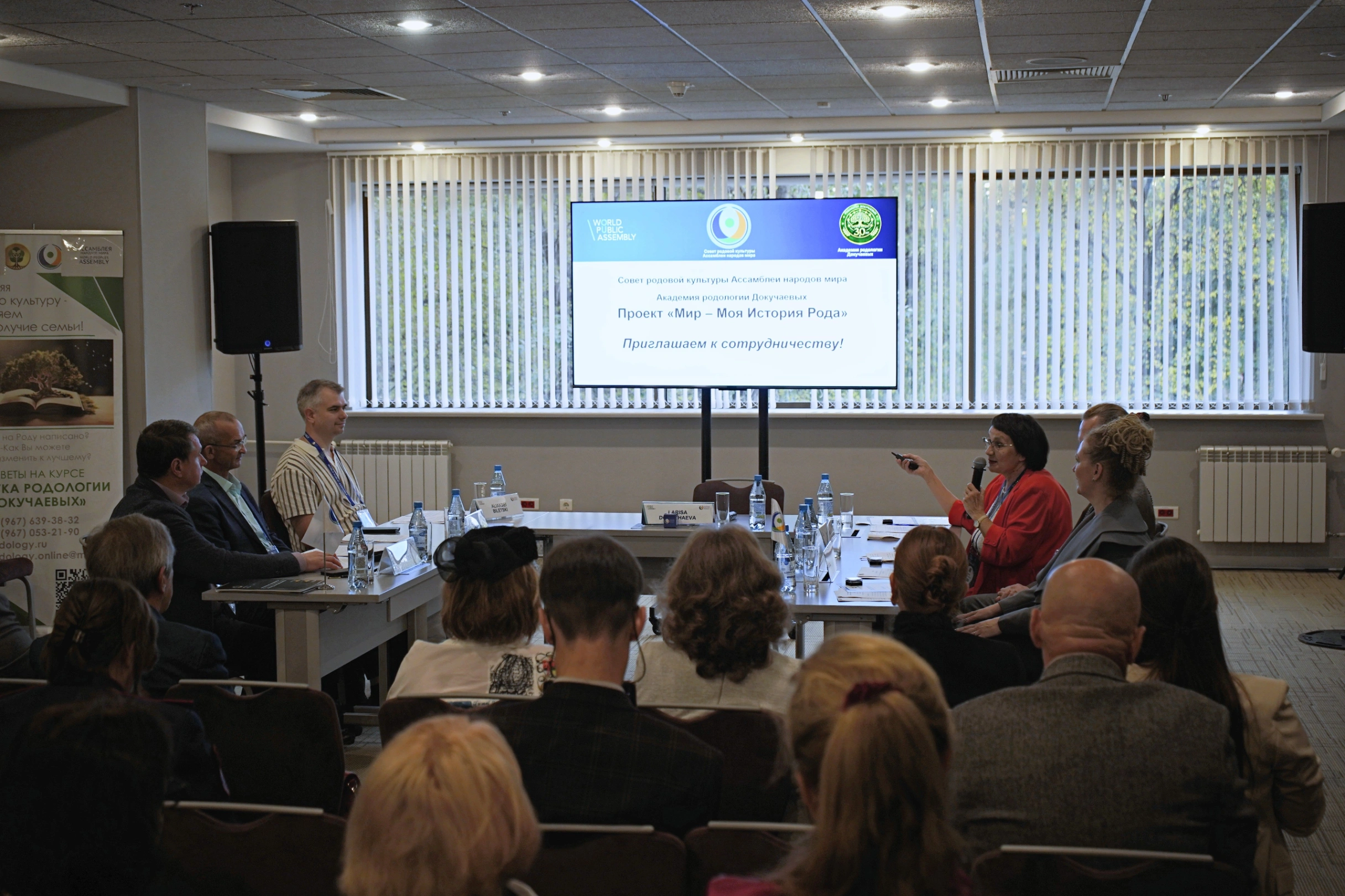
The speaker presented the project "My Family History" and, on behalf of the Council for Ancestral Culture of the World Peoples Assembly and the Dokuchaev Academy of Genealogy, invited all those present to cooperate.
The official part of the round table began with an inspiring video greeting from Tatyana Zotova, Doctor of Pedagogical Sciences, founder and rector of the International Cultural and Educational Center "World of Literacy." Addressing the audience, she reminded them that each of us speaks our first words in our native language, having heard them from our parents. It is the family, preserving its unique traditions, that lays the universal foundation common to all peoples, blesses and gives a person a start in life.
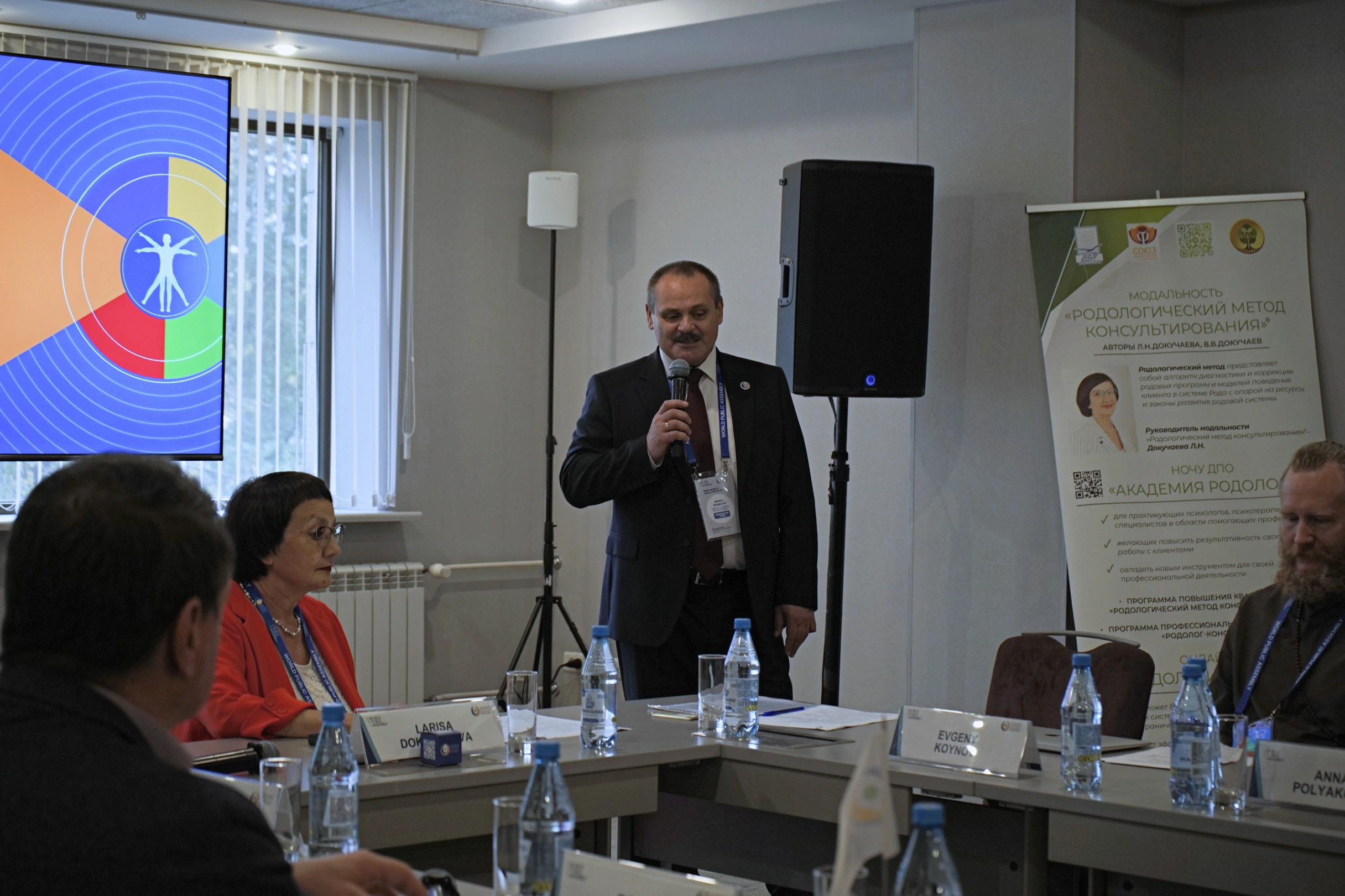
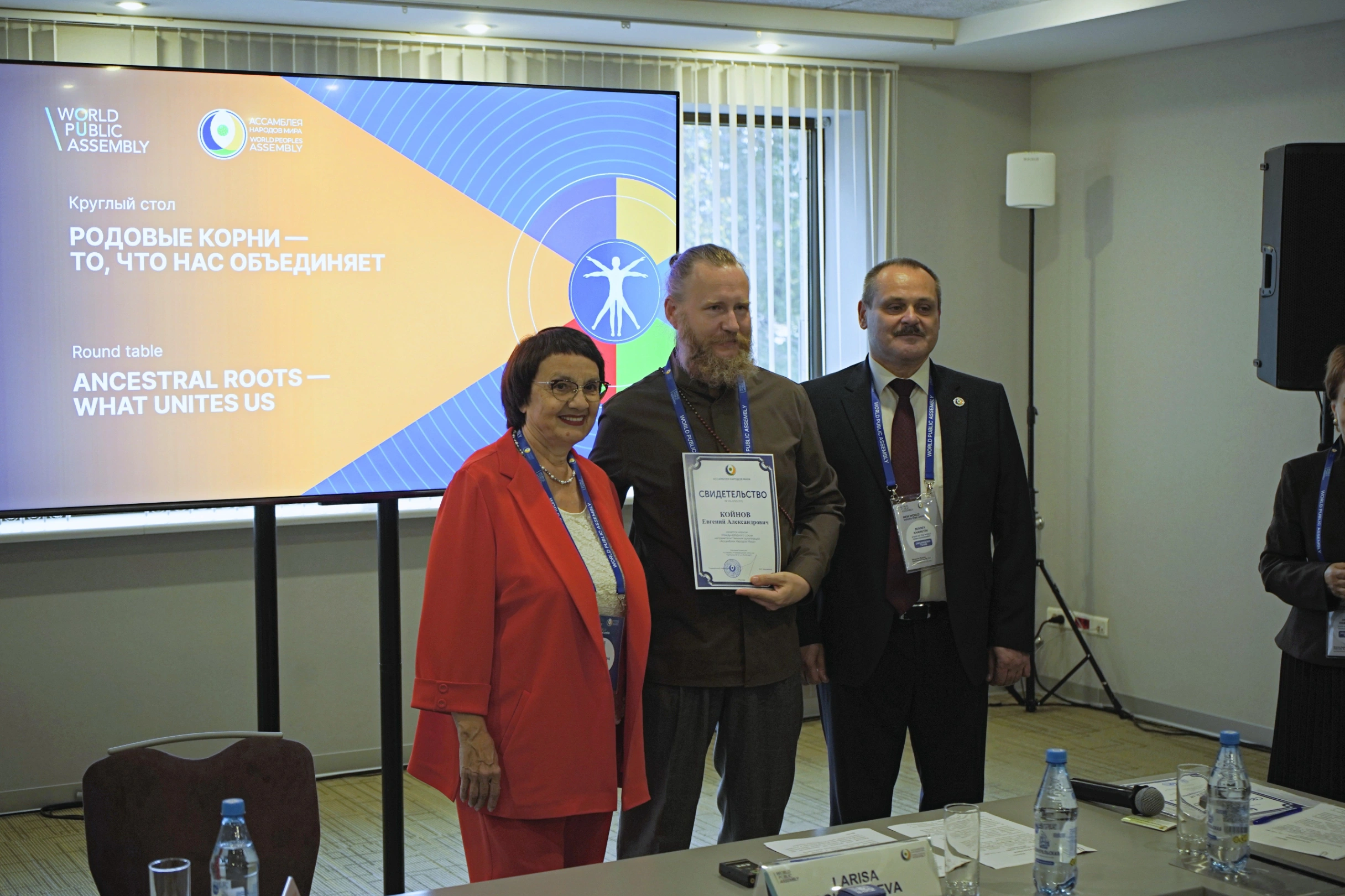
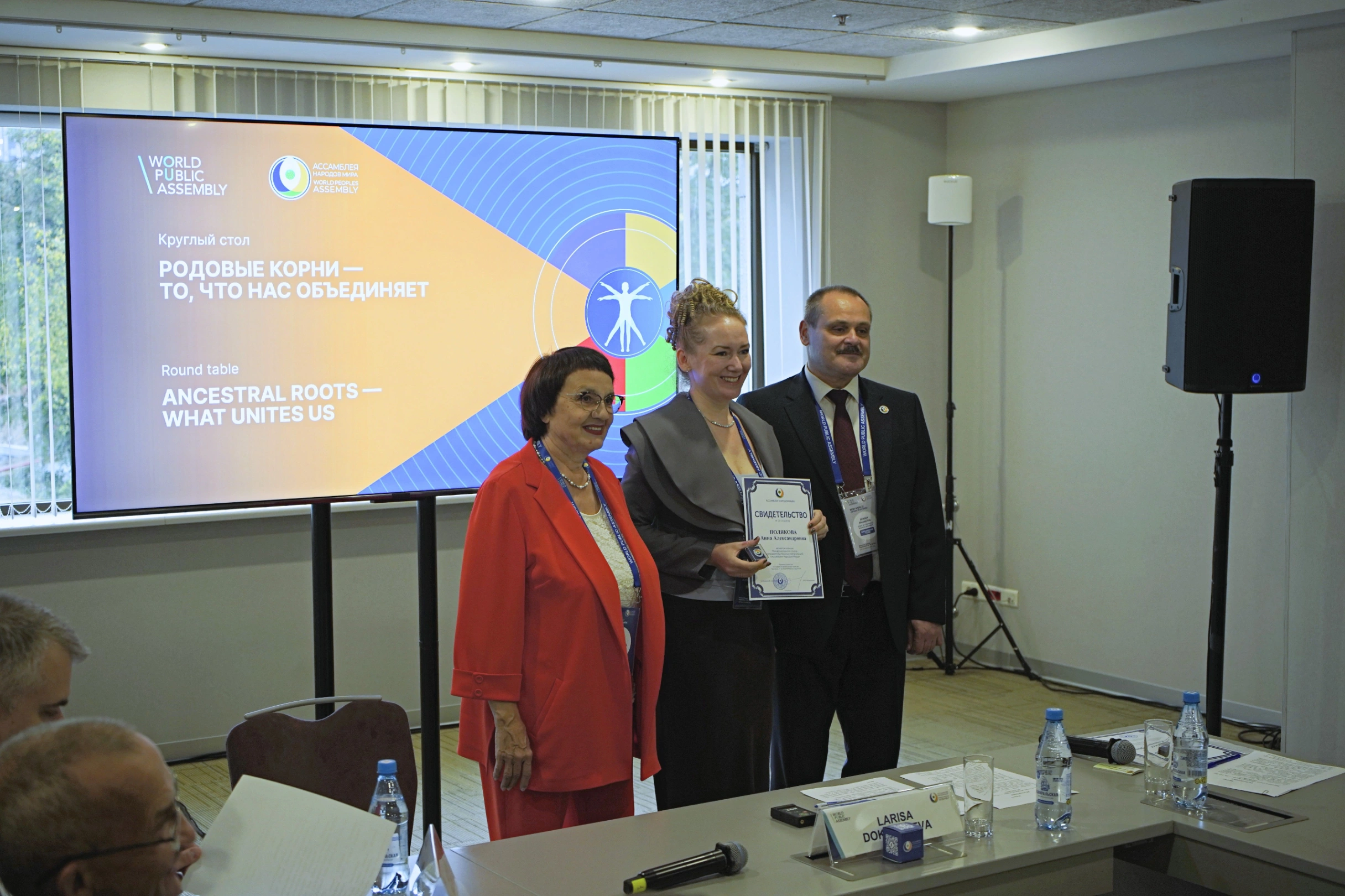
Sergei Khanutin, Executive Director of the World Peoples Assembly, in turn spoke about the Assembly's development dynamics. He noted with joy that every day its ranks are replenished with new caring people. During the meeting, a ceremonial presentation of certificates took place for new members: Oksana Tsibulskaya, Anna Polyakova, and Evgeny Koinov.
Sergei Khanutin expressed deep gratitude to the round table participants for their devotion to the common cause, assuring that the World Peoples Assembly is always open to comprehensive support and cooperation.
Lyudmila Koshetarova, ancestral consultant, Candidate of Philosophical Sciences, member of the Russian Philosophical Society and the All-Russian Professional Psychotherapeutic League, drew the attention of those present to the fact that under any "climatic clothing" - the external differences created by nature - all people remain the same:
- We have an identical internal structure and brain, a universal ability to create culture. Racial differences are merely external diversity existing within the framework of our fundamental biological unity.
The speaker emphasized that the dependence of the human genome on culture, proven by the classics of coevolutionary theory, means one thing: human biology cannot function in isolation from the sociocultural context. Culture has become a "second nature" for us - we are biologically programmed to absorb the traditions, languages, and values of our ancestors. It is this need for culture built into the genome that unites all ethnic groups on the planet and points to common ancestral roots.
Historian-genealogist, author and ideological inspirer of the project for preserving the documentary historical heritage of Belarus, Alexei Biletsky, reminded the audience that just 20 years ago genetics was the domain of scientists, but today anyone can learn the history of their family through a DNA test. Modern research shows an amazing thing: "any nation is formed from the remnants of ancient populations." This proves that we are all relatives, simply living in different corners of one large family.
The round table was also attended by:
Stoyana Natseva - founder of the international academy Happy Life Academy (Bulgaria);
Fanis Nabiullin - family psychologist, consulting psychologist, specialist in family-ancestral systems, coordinator and member of the Council of Fathers of the southeast of the Republic of Tatarstan (Tatarstan);
Elena Leontyeva - Candidate of Philosophical Sciences, ancestral consultant, Master of Humanities from the University of Barcelona (Spain);
Evgeny Koinov - psychologist, author of the reconstruction "We Are 127," member of the Council for Ancestral Culture of the World Peoples Assembly (Russia);
Denis Nefyodov - writer, public figure, co-founder of the project "Keepers of Times" (Russia);
Evgenia Stukalina - secretary of the Council for Ancestral Culture of the World Peoples Assembly (Russia);
Ekaterina Vorobyova-Kotlinskaya - member of the Gusli Players Ensemble "Drevo" (Russia);
Maria Garbuzova - member of the Gusli Players Ensemble "Drevo" (Russia);
Olga Stupak - member of the Gusli Players Ensemble "Drevo" (Russia);
Elena Antonova - member of the Gusli Players Ensemble "Drevo" (Russia).
A special moment of the meeting was the awarding of the winners of the international competition "My Family History." Diplomas were presented by Anna Polyakova, co-chair of the Council for Ancestral Culture, to:
Liana Romanova (Russia) - in the nomination "Most Creative Work Covering the Largest Number of Generations";
Alexander Shchepilo (Belarus) - in the nomination "Most Historically Accurate Detailed Work."
The round table became a lively space for dialogue, where participants shared personal experience and together sought an answer to the main question: how, without losing one's roots, to build a new world - a world in which the values of family and generational memory remain the main unifying force.
Experts agreed that language, family legends, photographs, and relics are not just archives, but the main resource for strengthening the family and educating the new generation. The most important conclusion of the meeting was the idea that it is genuine interest in the history of one's own family that teaches us to respect the traditions of other peoples and becomes the basis for genuine interethnic dialogue.
Summarizing the meeting, Larisa Dokuchaeva announced the proposals that will be reflected in the final documents of the World Public Assembly:
in the Charter of the New World - the addition of a Provision on Ancestral Culture as a significant foundation for preserving historical memory, cultural identity, and continuity of generations;
in the Declaration – the introduction of a Provision on support for initiatives and programs aimed at preserving and developing ancestral culture, family traditions, and intergenerational interaction.
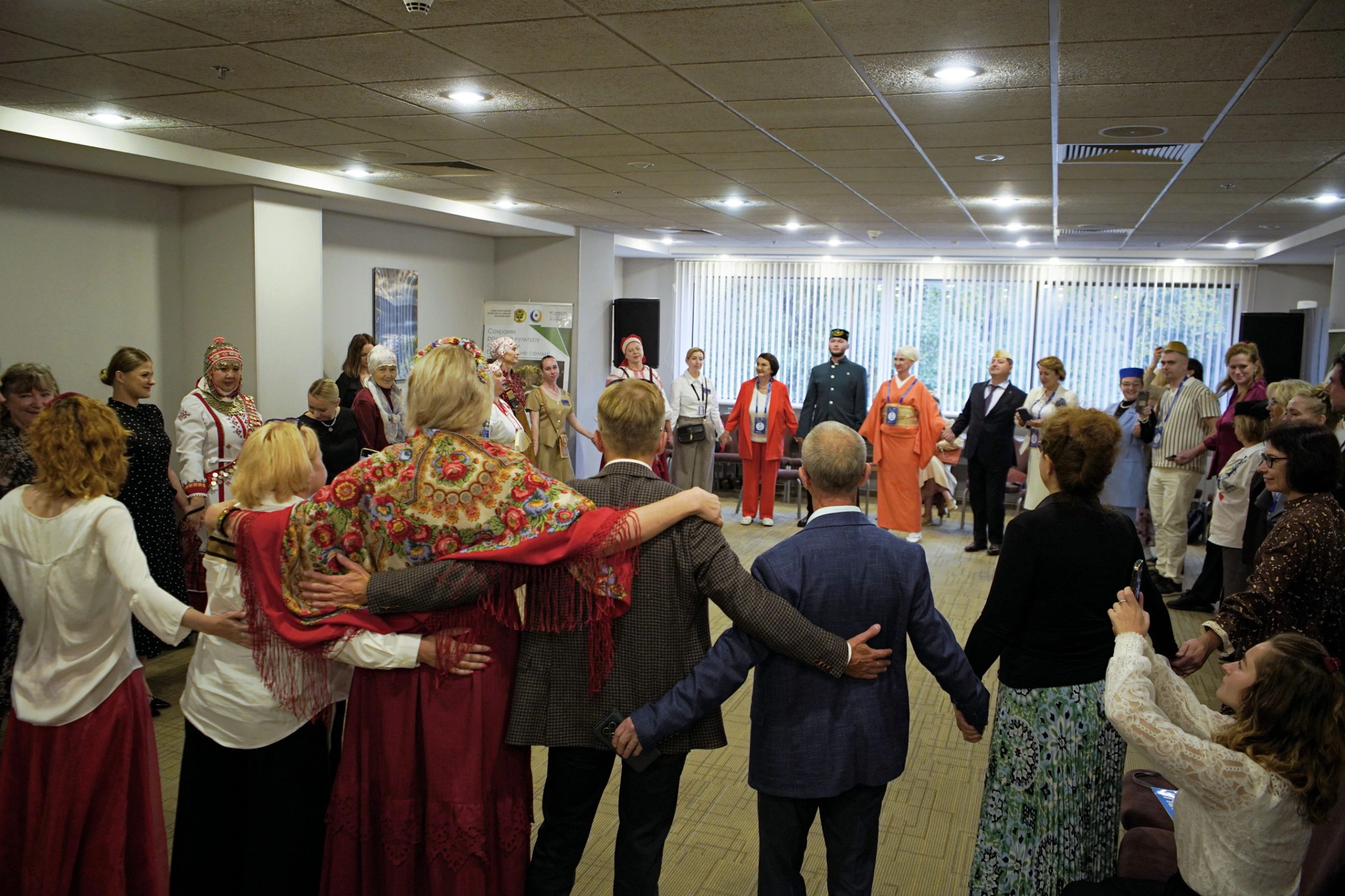
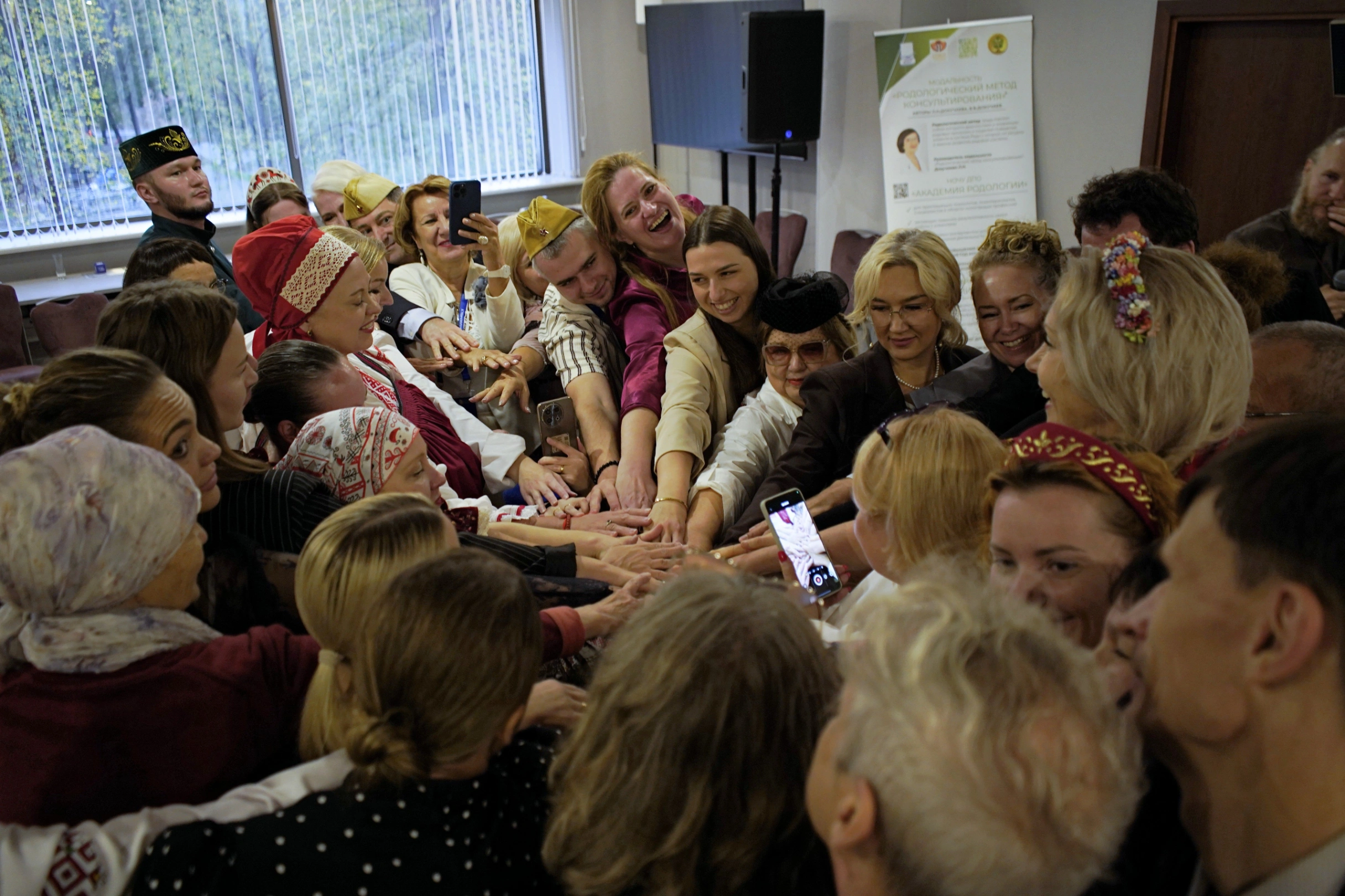
Having concluded the official part of the meeting, the participants moved on to a traditional interactive action - a circle dance to the sounds of the gusli. For those present, this became not just a dance, but a genuine ritual of unity. In the circle, each person found a sense of their own essence, character, and calling, felt their place in the family line, and recognized themselves as part of the great chain of generations - the single human family.
The circle dance was organized by Elena Sindyaeva, clinical psychologist, fairy-tale therapist, and social entrepreneur, while the musical accompaniment was provided by Anastasia Metelik, leader of the Gusli Players Ensemble "Drevo."
Additional information is available on the official website of the World Peoples Assembly, on its VKontakte and Telegram accounts, and at media@world-assembly.org.