

Moscow Discusses How to Remove Barriers in Transport Between CIS and EAEU Countries
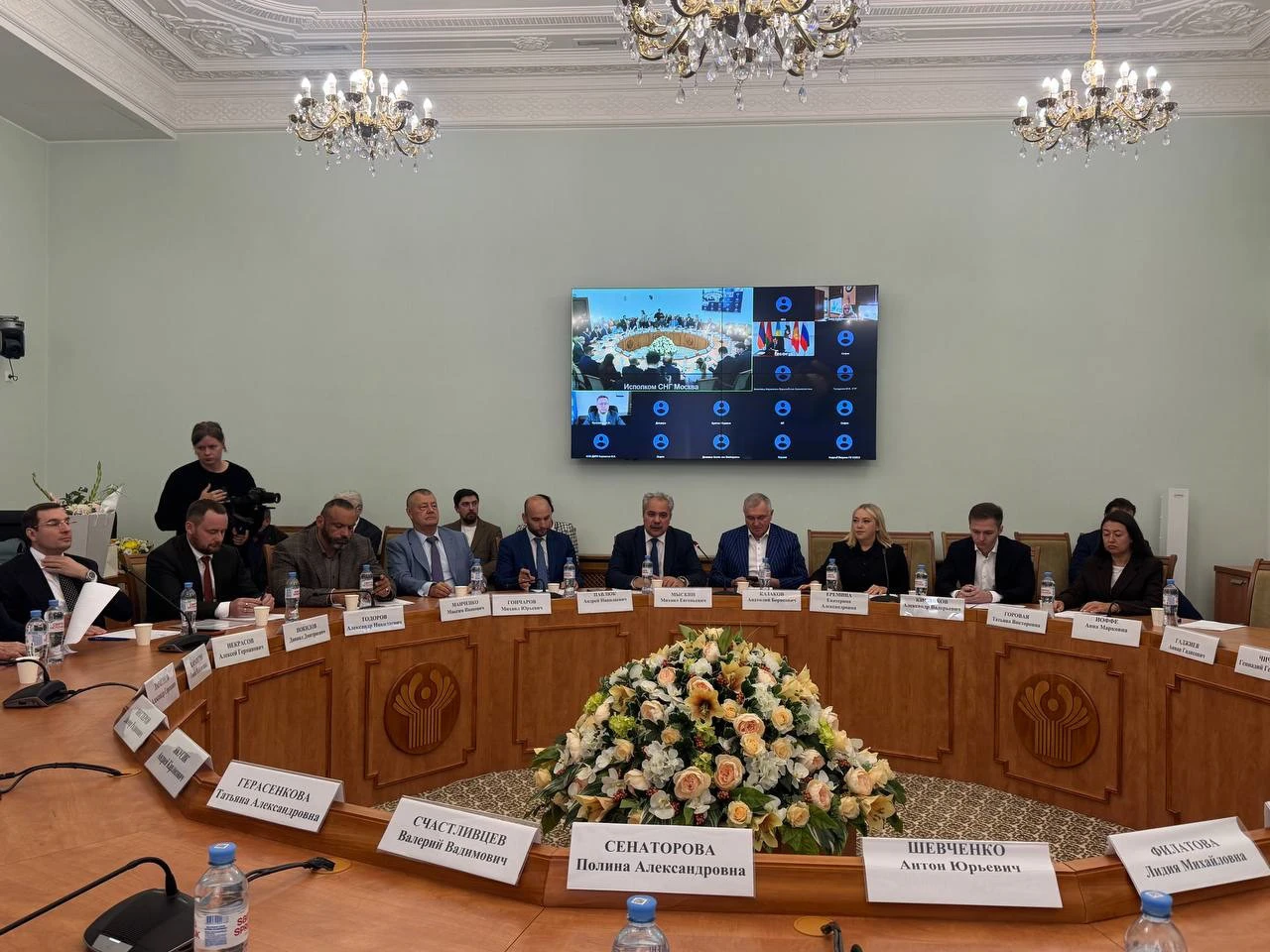
A joint working meeting of the Transport and Logistics Committee of the CIS Business Center for Economic Development and the Department of Transport and Infrastructure of the Eurasian Economic Commission was held on 2 October 2026 at the CIS Executive Committee in Moscow. The discussion focused on a common transport and logistics space of the CIS and the EAEU, including new mechanisms for interaction between the state and business.
The meeting was held in person and via videoconference, bringing together representatives of government bodies, transport and logistics companies, industry associations and the expert community.
The meeting was attended by:
Anatoly Kazakov - Chairman of the Coordination Council of the CIS Business Center for Economic Development;
Anna Ioffe - Adviser to the Minister of Transport of the Russian Federation;
Andrey Pavlyuk - Head of the Road Transport Division of the Department of Transport and Infrastructure of the Eurasian Economic Commission;
Alexander Kislyakov - Director of the Situational Information Center of the Russian Ministry of Transport;
Dmitry Kalashnikov - General Director of Iteco Russia;
Roman Budyugin - General Director of Romion Group;
as well as representatives of relevant agencies, business and professional associations.
Participants discussed the factors determining the effectiveness of international transport: speed, cost and predictability; they examined in detail ways to develop transport corridors, mechanisms for removing administrative barriers, the introduction of electronic document management and the harmonization of transport standards between states.
A key vector of work was building logistics bridges between Russia and India. Alexander Todorov, Chairman of the Council for International Economic Activity of the World Peoples Assembly, focused attention on the practical needs of Indian partners and existing logistics challenges.
- Indian business has specific requests for cooperation with Russian companies, but logistics remains a difficult task. I propose including in the road map concrete measures for developing transport toward India with reliance on the North–South corridor. For our part, we are ready to help Russian business establish contacts with Indian partners, – the speaker summarized.
Continuing this theme, participants discussed the existing route for transporting goods from India through Iran to Russia—via the port of Bandar Abbas and Astara, with the participation of Iranian and Russian carriers. The discussion concerned the further development of this direction and a systematic elaboration of transport conditions.
The discussion linked the general agenda of transport integration of the CIS and the EAEU with specific business tasks. Practical outcomes included proposals on developing electronic transit procedures, modernizing border checkpoints and expanding transport in the Indian direction.
Additional information is available on the official website of the World Peoples Assembly, on its VKontakte and Telegram accounts, and at media@world-assembly.org.