

"Peace Belt" Action in Tunisia has received New Areas of Development
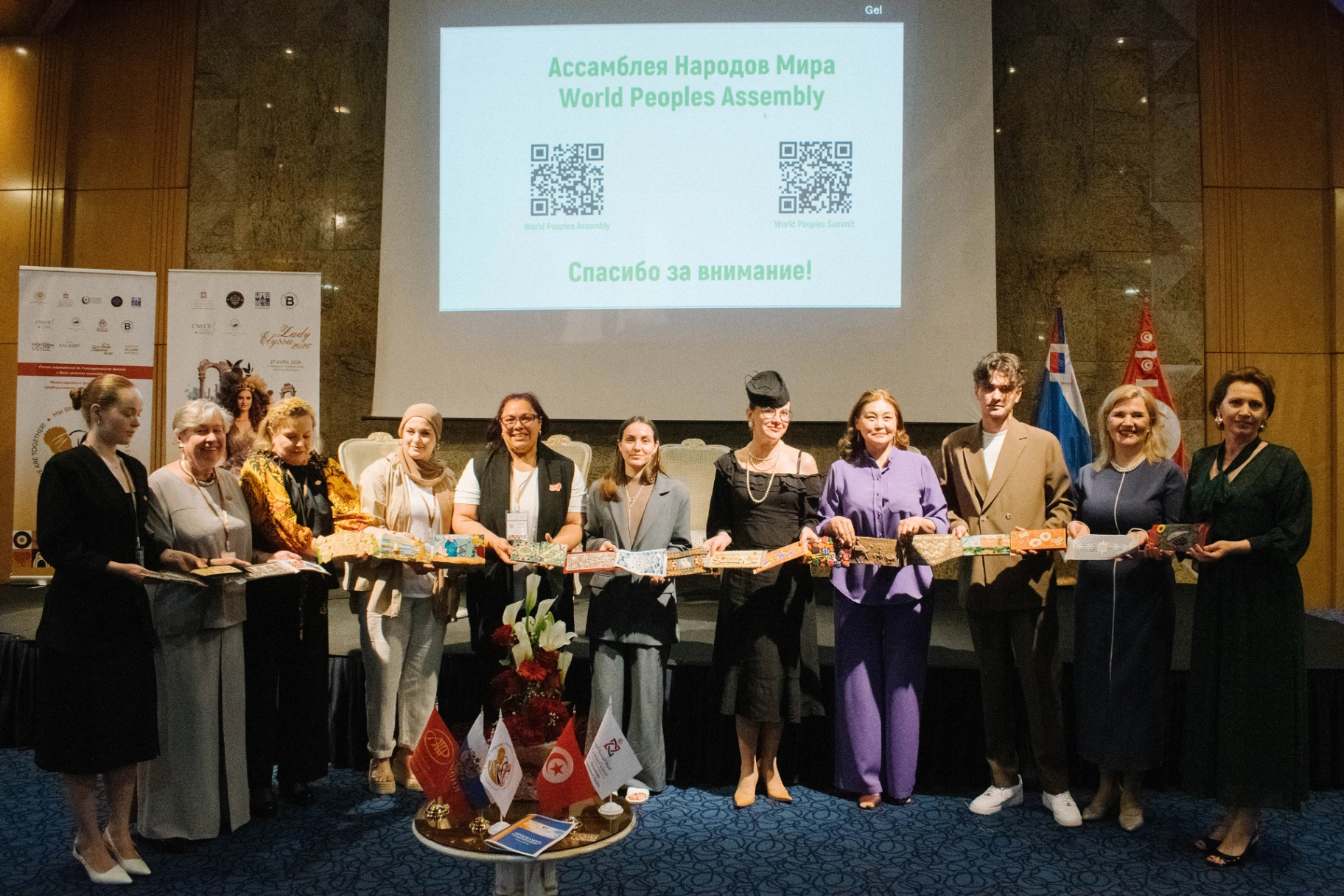
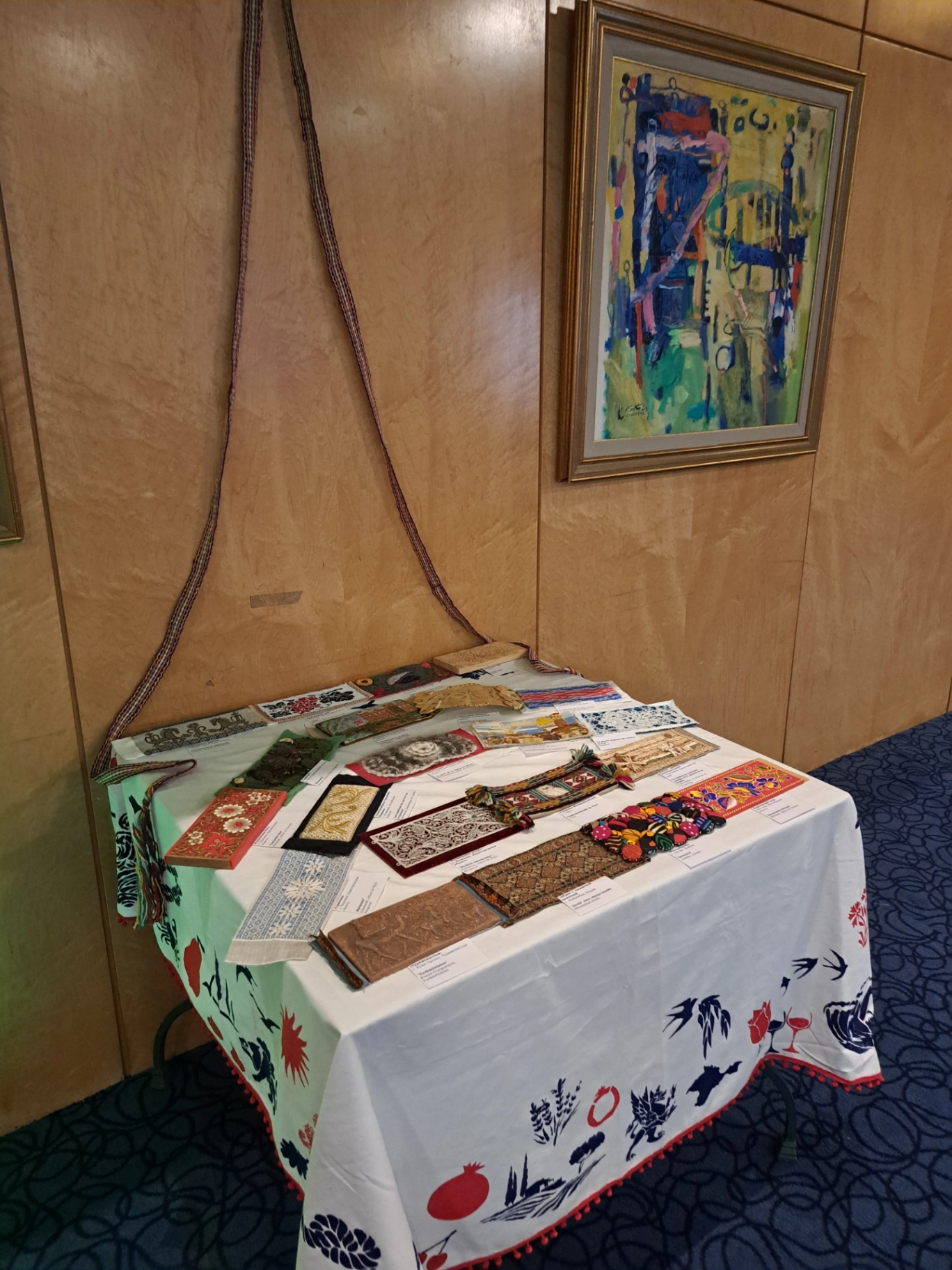
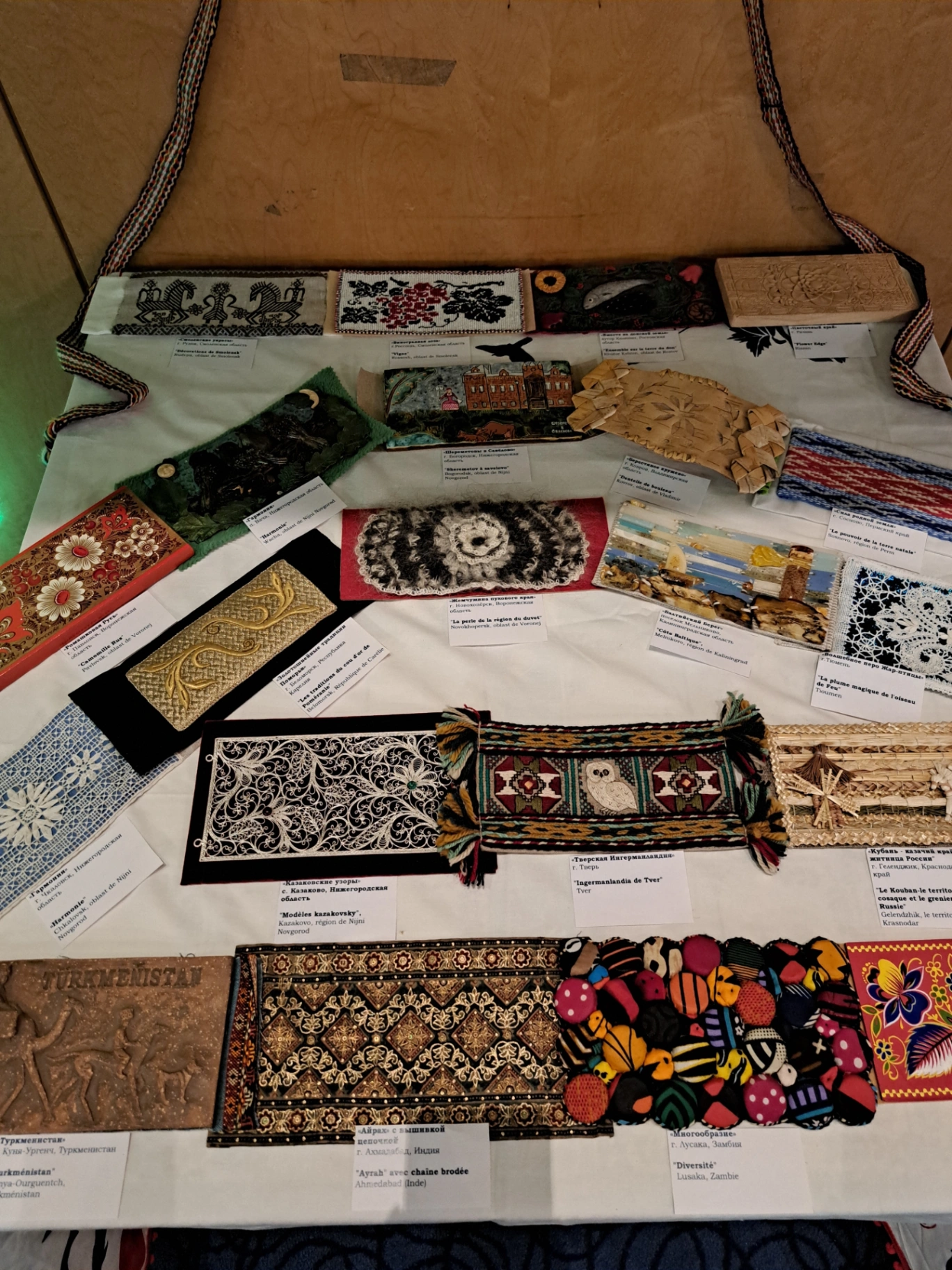
The presentation of the International Creative Action "Peace Belt" took place within the Days of the World Peoples Assembly in Tunis on April 27, 2026. The event became part of the International Forum of Women's Entrepreneurship "We are Together" and the VI Conference of Russian-speaking Fellow Entrepreneurs "Lady Elissa 2026".
The presentation was conducted by Olga Nefedova, Deputy Executive Director and Chief of Staff of the Chairperson of the General Council of the World Peoples Assembly.
– In the context of global turbulence, it is traditions that become a fulcrum, a source of sustainability and development. Tradition is not the past, but a "technology for transmitting the future," she noted. – It is this approach that underlies the activities of the World Peoples Assembly that implements projects aimed at unlocking the potential of cultural heritage as a resource for the development of territories, communities and international cooperation.
The International Creative Action "Peace Belt" has been held since 2024 in partnership with the Center for Social Technologies "Business with Meaning" and the administration of the Vacha Municipal District of the Nizhny Novgorod region. This is a logical continuation of the project "Heritage of Eurasia: Rural Communities". Working with local territories, the Assembly revealed an important pattern: where traditions are preserved, sustainability remains. Traditions include knowledge, skills, cultural codes and form the basis of identity.
The “Peace Belt” has become the next stage – not just a creative initiative, but:
· a model for the development of territories;
· a tool for working with cultural identity;
· an educational platform;
· a space for international dialogue;
· the basis for the formation of a creative economy.
Each element of the "Belt" is not just a product, but a meaning embodied in a material form, reflecting the cultural code of a particular territory.
The presentation in Tunis received a lively and sincere response. The topic of the development of crafts, the preservation of cultural codes and their modern reinterpretation turned out to be close to the participants of the forum.
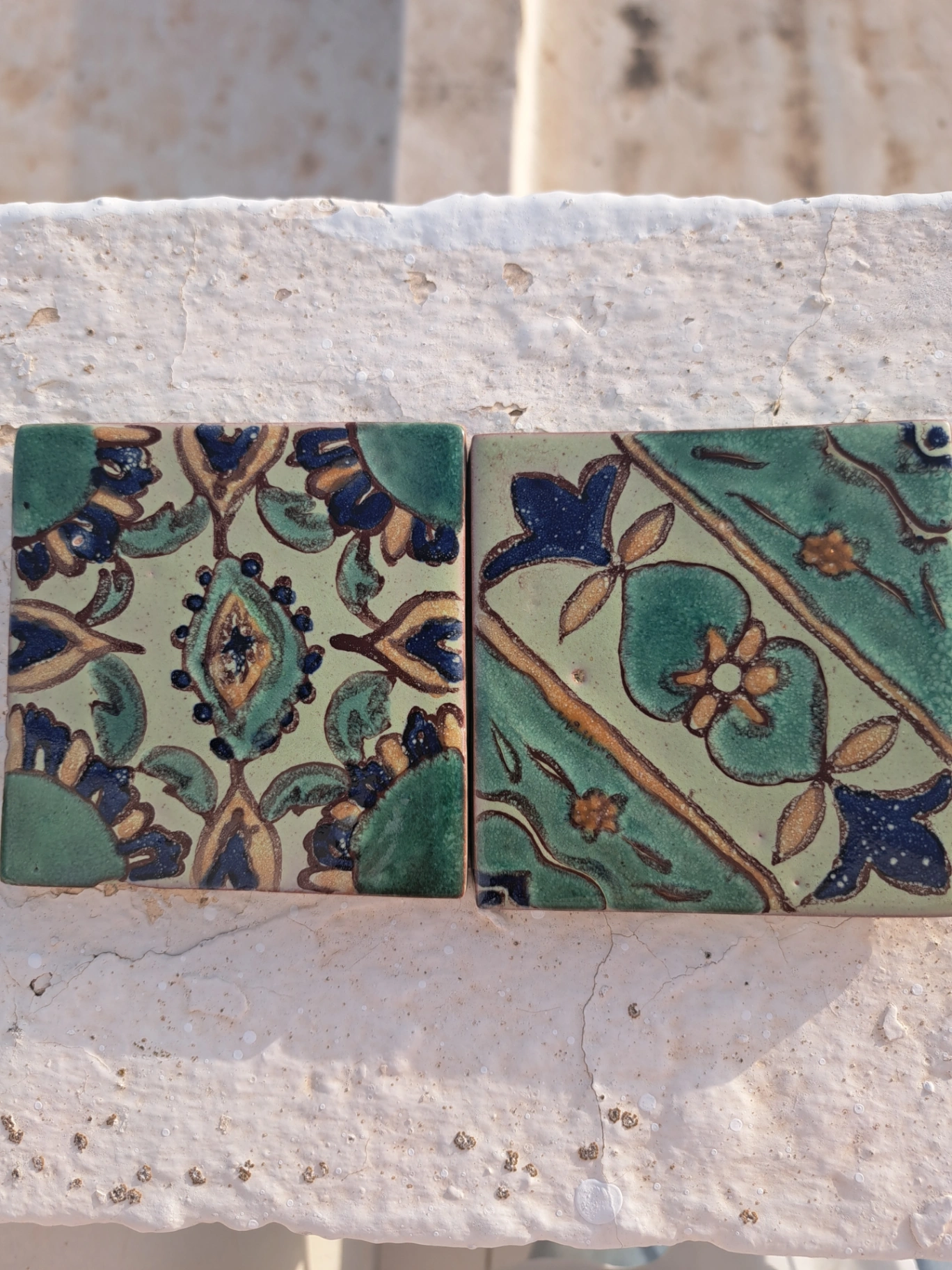
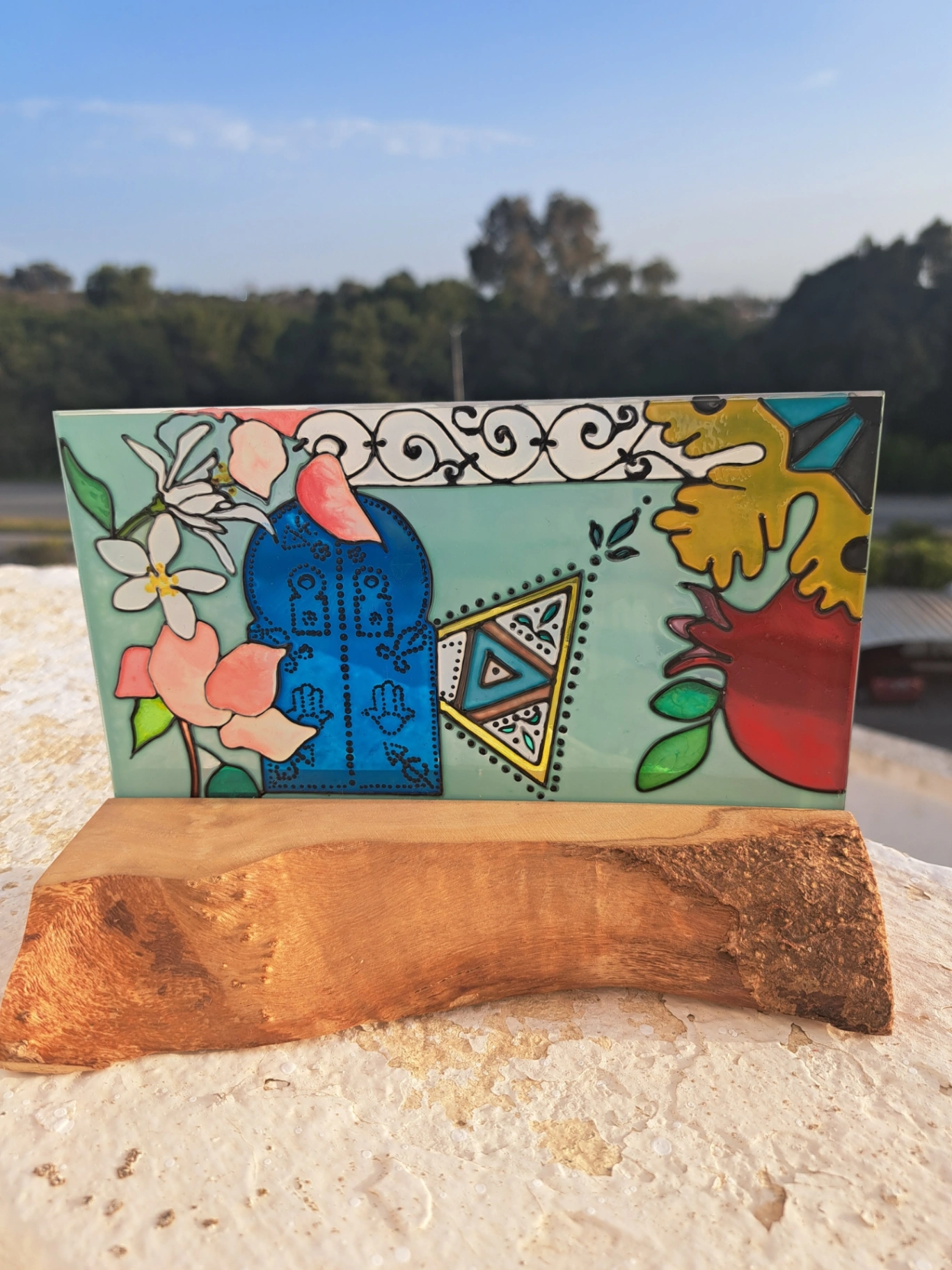
Tunisian craftsmen joined the International Action "Peace Belt". Their works have become new elements of the global canvas of the dialogue of cultures.
· Shuruk Laribi (Nabeul)
The work of the craftswoman is made in the technique of glass painting and relief printing, has a stand made of olive wood. The composition is inspired by the symbols of Tunisian cultural heritage – the motifs of Sidi Bou Said, the image of a pomegranate and traditional ornaments. The work symbolizes protection, peace and prosperity, combining aesthetic expressiveness and deep cultural meaning.
· Nur Bellaluna (Beni Hyar)
The craftswoman presented a ceramic product – a diptych of two glazed tiles made in traditional technique. In her work, ornament becomes the language of memory: fine lines and rhythms of patterns continue an ancient tradition that combines symbol, beauty and cultural identity. Even in a small format, a whole world is revealed, reflecting the richness of Tunisian heritage.
These works are an important step in the development of the Peace Belt, emphasizing its truly international character.
– It is important to note that the presentation of the "Peace Belt" took place as part of the women's entrepreneurship forum. This gave additional depth to the discussion," notes Olga Nefedova. – It is women – craftsmen, keepers of traditions, bearers of cultural codes – who become key participants in such initiatives. Their work combines economics, culture and social development.
The active participation of Russian-speaking compatriots developing craft practices in Tunisia has confirmed that cultural diplomacy is implemented through specific projects created by people.
A separate important substantive focus of the “Peace Belt” Action was the proposal of Ashraf Eldaly (Egypt), a writer, poet, translator and researcher, member of the international delegation of the World Peoples Assembly in Tunis. He presented the concept of creating an Atlas of Craft Villages in Russia and the Arab World, in which he described models of craft communities in Egypt, Tunisia and Russia. The researcher justified the need for systematization and visualization of such practices as the basis for:
· preservation of cultural heritage;
· tourism development;
· formation of local brands;
· strengthening international cooperation.
This approach turned out to be conceptually close to the philosophy of the "Peace Belt". There is no All-Russian atlas of craft villages in Russia yet, but there is regional experience. In 2022, the Ulyanovsk Region released the Atlas of Crafts, a print publication that combined information about the types of applied arts being developed in the region and their geographical location.
The World Peoples Assembly will support the creation of an international Atlas. Thus, the “Peace Belt” project has a new area of development – research and analytical, aimed at a systematic understanding of craft practices as a resource for global interaction.
"Tunisia has become an important point on the project's map – a point where traditions, culture and public diplomacy come together in a lively, sincere and promising dialogue," - notes Olga Nefedova. – It is precisely such initiatives that shape a new architecture of international cooperation based on culture, trust and human connections. The “Peace Belt” continues to grow – as a symbol, as a project, and as a space where culture becomes the language of the future.
More information is on the official website of the World Peoples Assembly and at media@world-assembly.org.