

Representatives of 154 Countries Gathered in Moscow at the Second World Public Assembly to Find a Formula for the Unity of Humanity
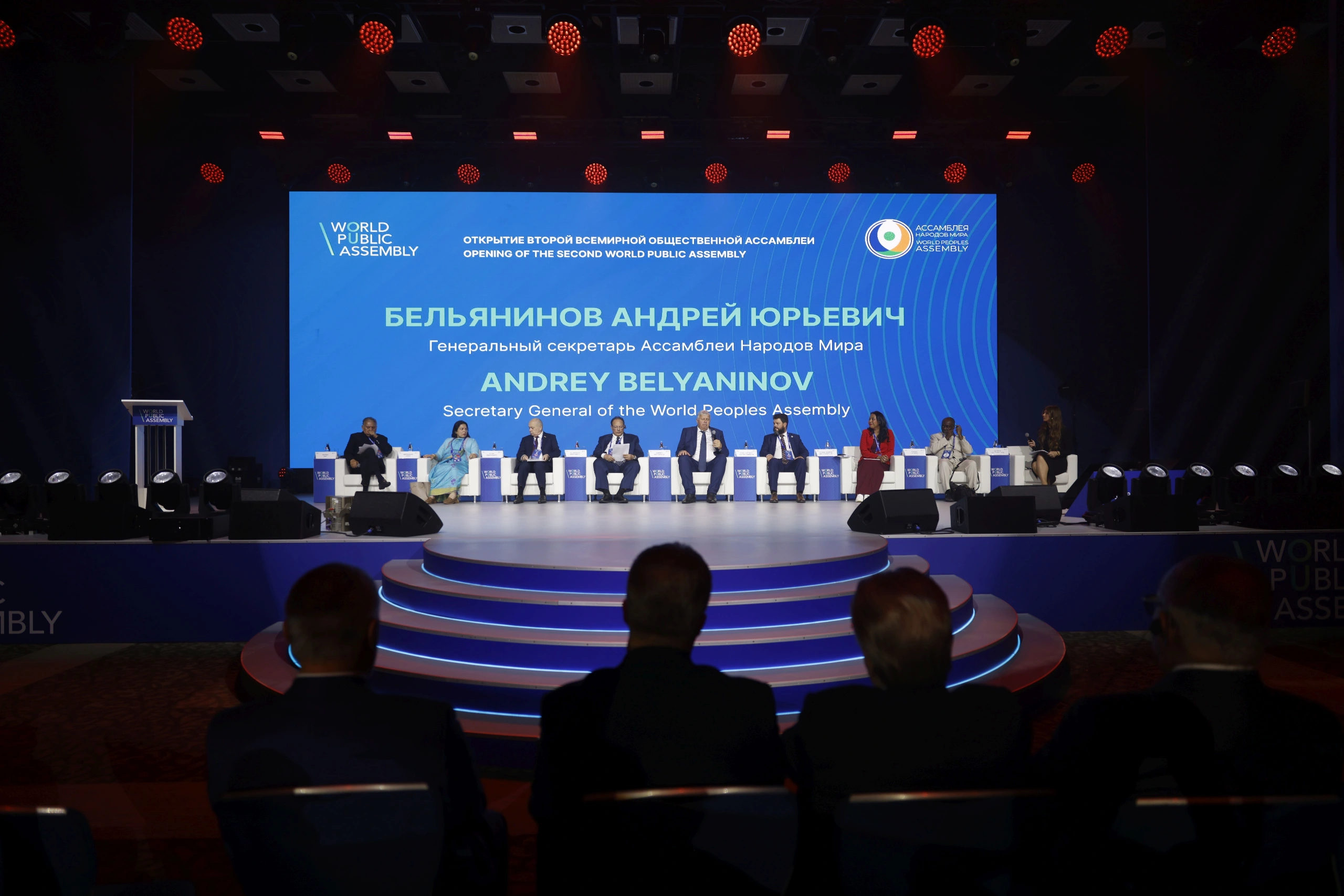
The ceremonial opening of the Second World Public Assembly "New World: Values That Unite" took place on September 18, 2026, at the World Trade Center. Following the official part, a plenary session of the same name was held.
Recall that the First World Public Assembly "New World of Conscious Unity" became a landmark event of 2025, launching a broad international dialogue on the possibilities of public diplomacy. The Second Assembly continues this dialogue, developing the ideas of conscious unity through reflection on shared values capable of becoming the foundation of trust and cooperation between people and nations.
The opening ceremony and plenary session were hosted by Satish Jha — journalist, public figure and social entrepreneur, co-founder of the newspaper Jansatta, and former editor-in-chief of the weekly Dinaman — and Alyona Dolgopolova — Official Secretary of the World Peoples Assembly, journalist, public figure, and expert in international cultural cooperation.
Andrey Belyaninov, Secretary-General of the World Peoples Assembly, addressed the assembled guests with a welcoming speech. He noted that in 2025 the World Public Assembly brought together more than 5,000 people from 153 countries, and in 2026, 5,528 people from 154 countries registered for the event:
— Dear friends! We are all here for only one reason: to rejoice for one another and to show how serious obstacles can be overcome together. We will succeed!
In his video address to the guests of the World Public Assembly, Minister of Foreign Affairs of the Russian Federation Sergey Lavrov emphasized that they all represent different continents, civilizations, cultures, and religions, yet remain firmly committed to the enduring spiritual and moral values bequeathed to us by our ancestors. These are love for the Motherland and loved ones, care for children, justice, and dignity. He drew attention to the fact that the Assembly's program includes a broad range of issues — from cooperation on the Eurasian continent to countering the glorification of Nazism.
— I am confident that the Assembly will proceed in a constructive spirit, will serve to strengthen interaction along public lines, and will make a substantial creative contribution to strengthening friendship between peoples. I wish you fruitful discussions, — concluded Sergey Lavrov.
Secretary General of the Shanghai Cooperation Organization Nurlan Yermekbayev particularly noted the contribution of Andrey Belyaninov and the World Peoples Assembly to the formation of a public platform for the Greater Eurasian Space, uniting more than 60 countries on the basis of mutual trust among peoples:
— We welcome your efforts aimed at developing international public dialogue, strengthening mutual understanding, strengthening trust, and uniting representatives of different cultures.
He also recalled that during the days of the SCO's 25th anniversary in Bishkek, a meeting of the Council of Heads of State was held, at which a declaration was adopted emphasizing the importance of people's diplomacy.
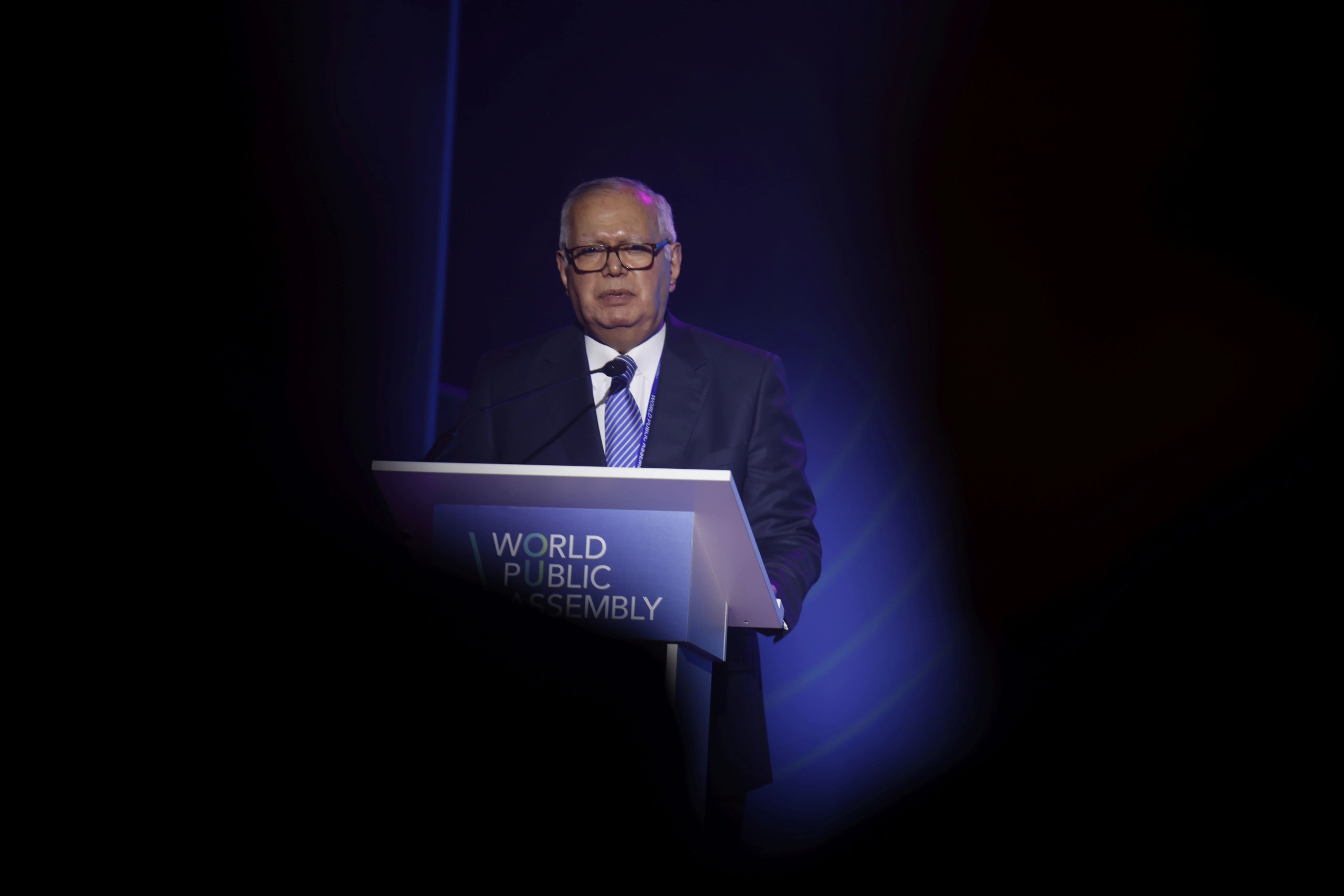
Secretary General of the Commonwealth of Independent States Sergey Lebedev also sent greetings to the participants of the event. He stated that holding the event for the second time demonstrates Russia's significant role in shaping a multipolar world order. He also emphasized that the Second World Public Assembly is timed to coincide with the International Day of Peace and is being held in the year of the 35th anniversary of the CIS, and that one of its priority areas is the humanitarian sphere — strengthening good-neighborly ties, preserving shared cultural heritage, and expanding educational and youth contacts.
President of the Organization of Solidarity of the Peoples of Asia and Africa, Minister of Foreign Affairs of Egypt (2011–2012) Mohamed El-Orabi, in his address, recalled that he represents the Afro-Asian Peoples' Solidarity Assembly, founded in 1957. He noted that today the world faces a great question: whether we live in an era of the power of authority or the authority of power:
— Our responsibility before future generations is great, and we must declare to all that we have gathered for the reign of peace and prosperity of all nations.
From greetings and the ceremonial part, the participants immediately moved on to work. The central question of the plenary session and the cross-cutting theme of the entire Assembly was the definition of values capable of uniting humanity in the 21st century.
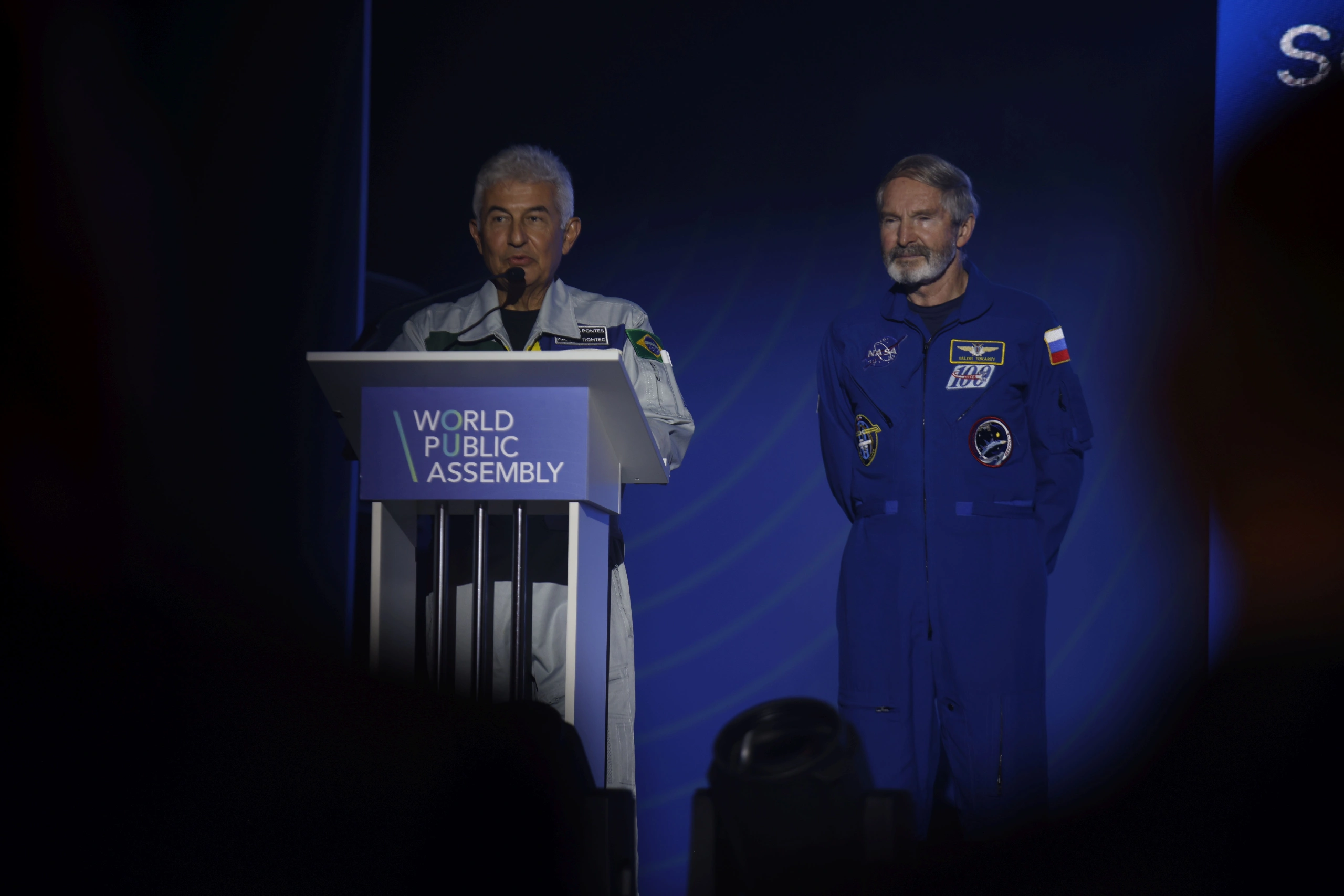
From space it is especially clear: Earth is our common home. That is precisely why the first to be invited to the stage were those who have seen this with their own eyes: the first Brazilian astronaut, Senator of the Federal Senate of Brazil Marcos Pontes, and pilot-cosmonaut, Hero of the Russian Federation Valery Tokarev. They spoke together, just as in 2006, when they were participants in the same space mission.
Marcos Pontes said that people of different cultures and religions work together on the ISS, and the most important part of their work is to listen to and respect one another. Valery Tokarev, in turn, recalled the Russian saying: "What you sow, so shall you reap." However, not everyone in the world sows goodness. Andrey Belyaninov drew attention to the alarming themes of the modern global agenda: good coexists with evil, and evil manifests itself especially actively. He spoke of the ongoing genocide of the Palestinian people and called for this tragedy to be given a worthy assessment. In conclusion, the speaker announced the recent appointment of Fidel Antonio Castro-Smirnov as Deputy Secretary General of the World Peoples Assembly.
During the discussion of the central questions of the plenary session, the speakers expressed their opinions on what constitutes true values, impervious to the changes of time; what can ensure a person's right to a dignified life; what the role of spiritual and moral choice is on the path to the future; and what lies at the foundation of building trust and the ability to take responsibility for the shared future.
Malaysian activist, entrepreneur, expert in communication and human rights, founder of the Fearless Foundation Nurul Ashikin Binti Shamsuri proposed a “3H” formula that will never be replaced by artificial intelligence — "head, heart, and hands": "head" implies knowledge and critical thinking, "heart" implies kindness and openness in communication, and "hands" implies concrete practical skills.
Professor of Pan-African Studies at Lincoln University in the USA, founder of the Ubuntu Philosophy Foundation Gnaka Lagoke presented a philosophy according to which nothing in the world grows in isolation; we all develop through relationships with family, society, culture, and historical memory. According to him, it was Africa that developed a philosophical language that responds to these challenges. Gnaka Lagoke recalled the philosophy of Ubuntu, which Nelson Mandela formulated after 27 years of imprisonment. It is a teaching about collectivism and interdependence, about the fact that a person becomes a person only through other people.
— "I am because we are" — this concept can be found in practically all African countries. Similar ideas exist in other communities as well. In China, for example, it is modern communism based on Confucianism. In Russia we also observe a similar philosophy. And in India we find a formula that advances the same values, — assured Gnaka Lagoke.
Senator of the Russian Federation from the Republic of Dagestan Ilyas Umakhanov spoke about the experience of the Caucasian republic — the most multiethnic region of Russia. On a relatively small territory live more than a hundred ethnic groups, including more than 30 indigenous peoples; dozens of languages are spoken; Islam, Christianity, and Judaism are practiced. Ancient Derbent has for millennia been called the city of three religions. That is precisely why the region is often compared to a scaled-down model of Russia, in which representatives of more than 190 ethnic groups belonging to 60 faiths live in peace and harmony.
— Centuries of history have taught us the main thing: diversity is not an obstacle to unity. As our president Vladimir Putin has repeatedly emphasized, diversity is a source of the spiritual strength of the people of Russia! It is impossible to make one's people happy at the expense of infringing on the rights of other peoples. Peace begins with respect for a person's right to be different. The peace we will leave to our descendants will be what we create today, — stated the senator.
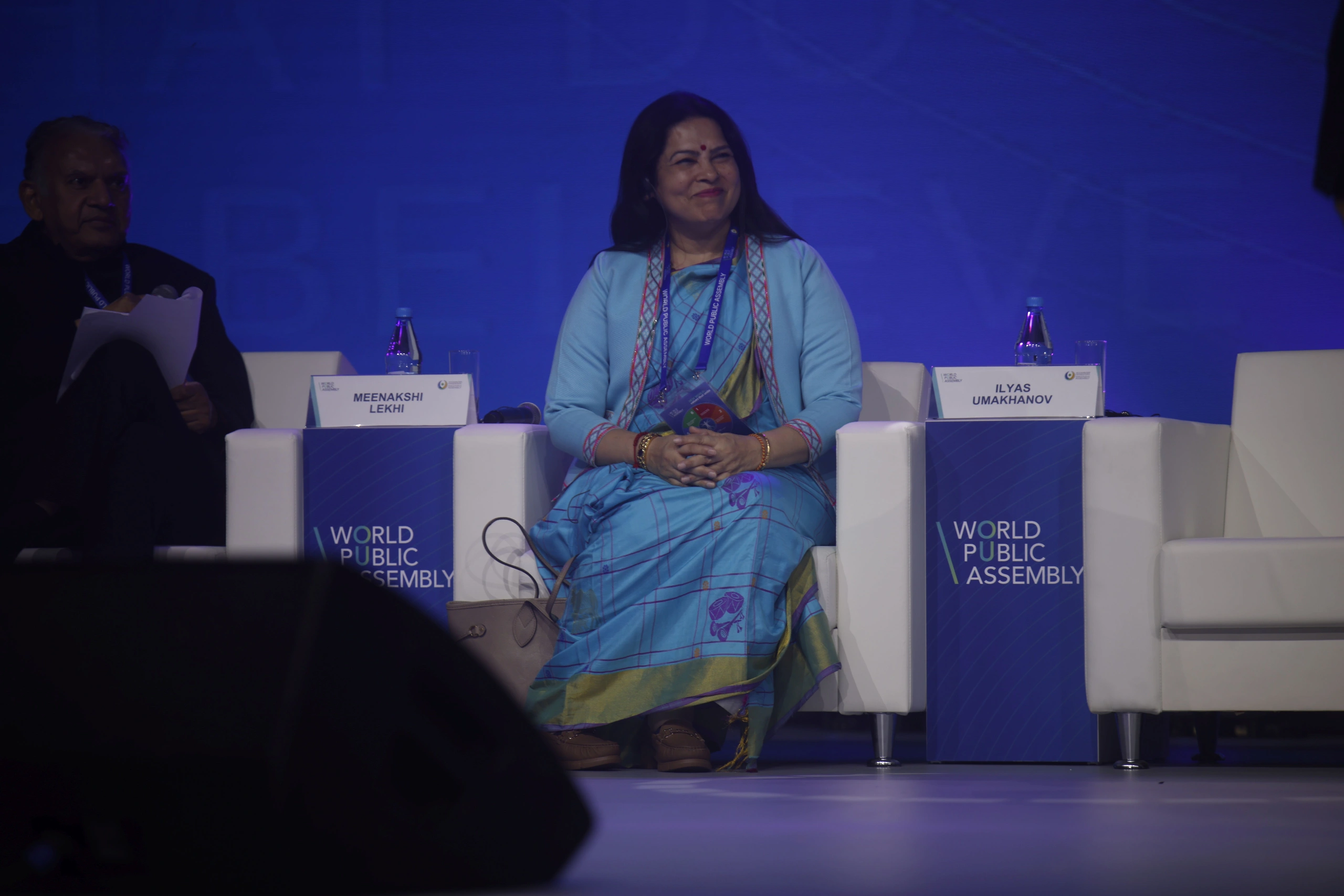
Former Minister of State for External Affairs and Minister of State for Culture of India (2021–2024), former Member of Parliament of India (2014–2024) Meenakshi Lekhi spoke about India's diversity. Her country has 22 official languages and hundreds of dialects; people worship different gods; all branches of Christianity, Islam, and Judaism are represented. The politician raised the question of the value of diversity and trust:
— It is dangerous to see the world in black and white. This happens when we begin to generalize and simplify everything. It is important for humanity to reach the truth and live consciously. And on this path we need trust.
President of the Arab Peace Group, President of the People's Democratic Republic of Yemen (1980–1986) Ali Nasser Mohammed expressed the view that challenges can be met primarily by developing education and science. In this vein, joint research and the exchange of knowledge and technology with developing countries are of great importance. The speaker also touched on the topic of the genocide of the Palestinian people, stating that peace can come to the Arab region only when the Palestinian people obtain their own state with its capital in Jerusalem.
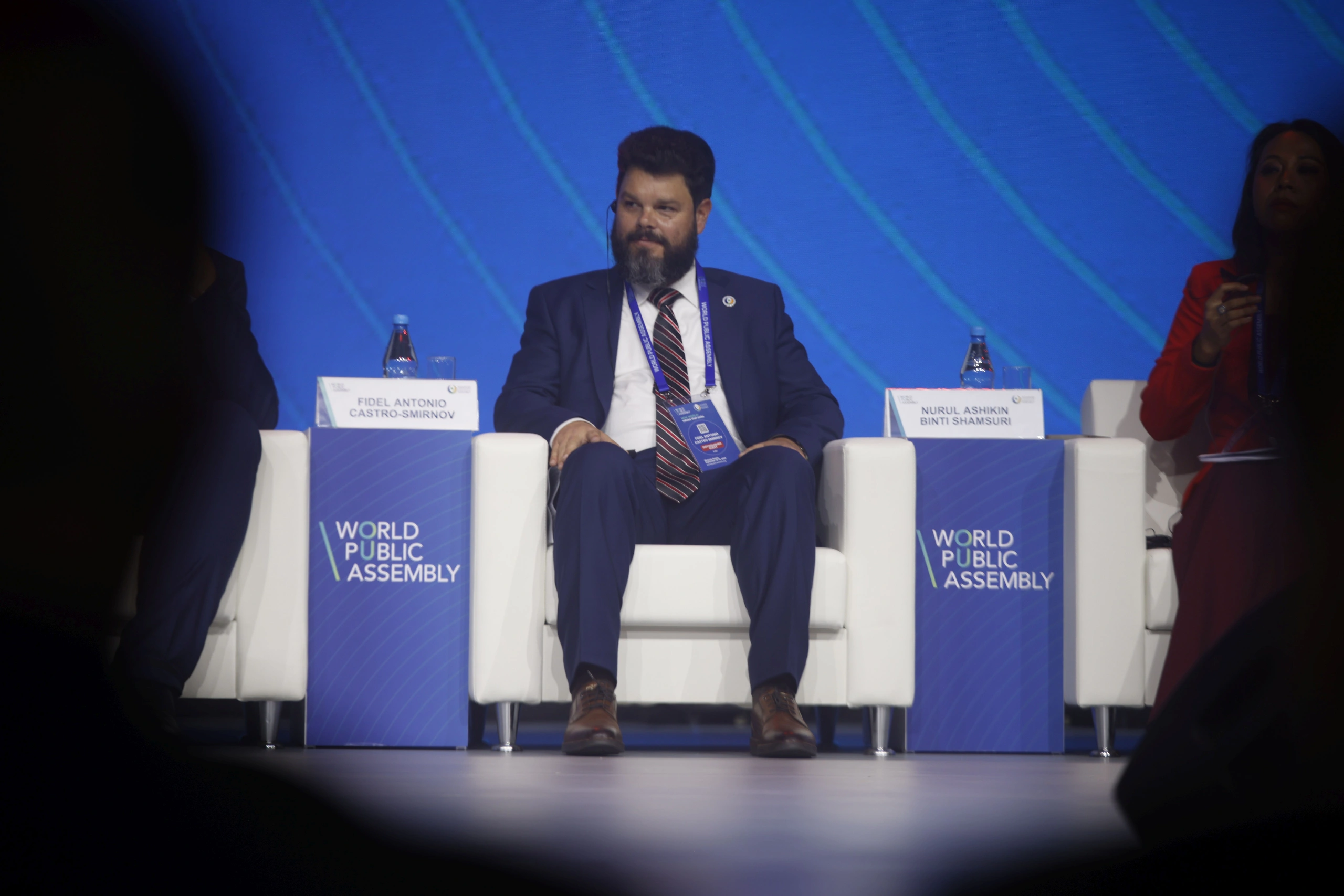
Academician of the Cuban Academy of Sciences, Deputy Secretary General of the Assembly of Peoples of the World Fidel Antonio Castro-Smirnov raised the question of the moral responsibility of science. In his conviction, science acquires meaning only when it serves people — not the chosen few, but everyone. The products of scientific labor must become common property, not the privilege of a few. The speaker emphasized that technology and algorithms have no conscience — decisions are always made by people, and no innovation can be placed above human dignity. Speed without direction, in his words, is not yet progress. It is especially important to take into account that ethics develops more slowly than technology, which means that the more powerful the tools, the more responsible the moral guidelines of those who use them must be. Fidel Antonio Castro-Smirnov devoted particular attention to the role of the younger generation: young people should not passively wait to inherit a world created by others — young people must be present at every table where the future is discussed. Science is developing at an unprecedented speed, and Fidel Antonio Castro-Smirnov believes that the main question today is: in the name of what and whom do we act?
— Solidarity cannot remain merely a feeling. It must turn into the ability to act together. This is precisely the main responsibility of science — that its fruits reach everyone, — concluded the academician.
Director General of the Islamic World Educational, Scientific and Cultural Organization (ICESCO) Dr. Salim Al-Malik, continuing the theme, confirmed Fidel Antonio Castro-Smirnov's thesis and stated that technologies by themselves do not guarantee progress. He emphasized that education, science, and culture are interconnected, and international cooperation must serve to build trust and create opportunities for future generations:
— Young people are not merely recipients of our decisions, but their co-authors. They must be among those who determine the future.
Acting Head of the Social Affairs Sector of the League of Arab States Enas El-Fergani, in her video address, recalled the adoption of the Arab Declaration on Tolerance and Peace, emphasizing the need to cultivate these values in the new generation.
President of the Parliament of the Hashemite Kingdom of Jordan Mazen Turki Sauda Al-Qadi also touched upon issues of education and conveyed greetings to those assembled on behalf of the Council of Deputies of Jordan. According to him, King Abdullah II of Jordan regards tolerance in religious and national relations as the cornerstone of international cooperation:
— We all strive to raise our youth on values connected with protecting the human being, his dignity, and ensuring him a happy future and peace.
At the conclusion of the plenary session, the results of a survey conducted by the organizers during registration for the Second World Public Assembly were presented. Respondents were asked to answer an open question: "Which value capable of uniting humanity do you consider most important for the future?" An analysis of 1,023 detailed responses from representatives of 97 countries showed that most often respondents named peace and non-violence, dialogue and mutual understanding, respect and dignity, cultural diversity, kindness, mercy, and empathy, as well as unity and solidarity, cooperation and partnership, and responsibility before future generations.
Experts fruitfully discussed the pressing issues of uniting humanity in the 21st century around these values. The outcome of the Second World Public Assembly will be the Charter of Values of the New World.
Additional information is on the official website of the World Peoples Assembly and at media@world-assembly.org.