

“We Need Human Centralism”. The Second World Public Assembly has found the Formula for Uniting Civilizations
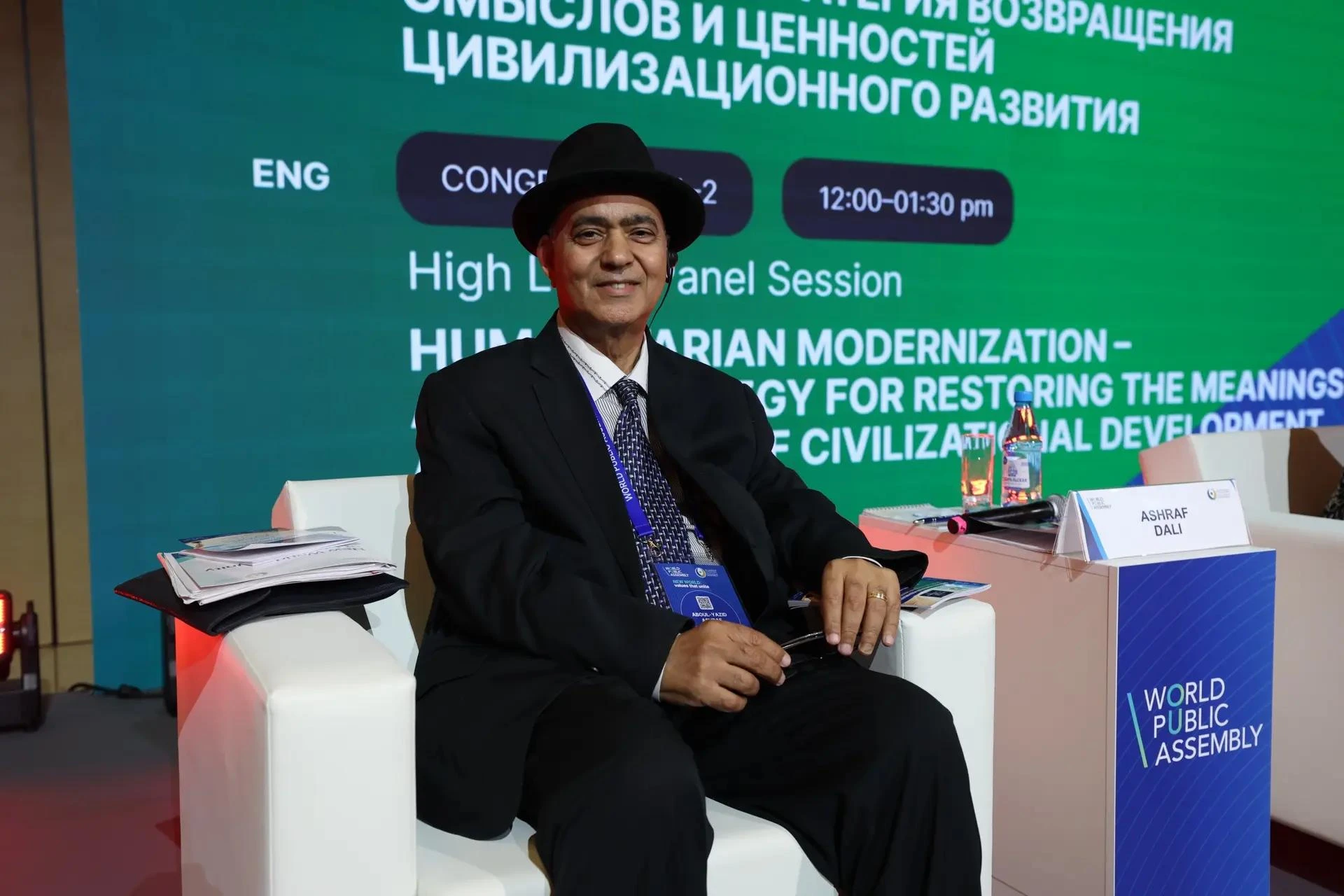
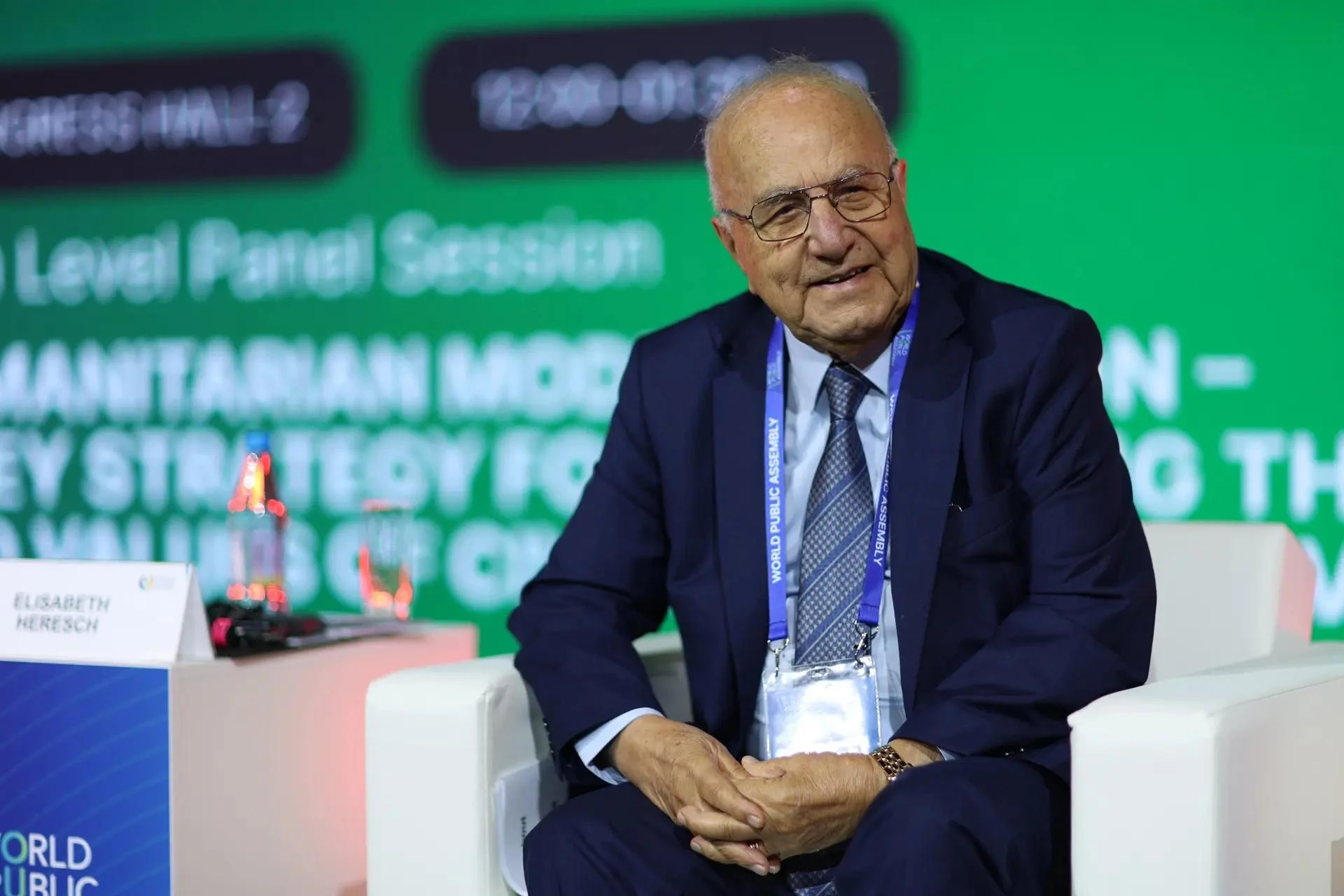
The High-Level Panel Session “Humanitarian Modernization as a Key Strategy for Restoring the Meanings and Values of Civilizational Development” took place on September 18, 2026, at the International Trade Center. The event was held as part of the Second World Public Assembly “New World: Values That Unite” in Moscow on September 18 - 19.
Participants discussed the crisis of the modern world order, the need for humanitarian modernization, the preservation of historical memory and cultural diversity, as well as the role of science, education and the arts in building a sustainable and secure future.
Guests of the event included representatives of international intergovernmental and non-governmental organizations, experts in culture, science, education and communication, writers and poets, representatives of scientific and educational institutions, and opinion leaders from different countries around the world.
The panel session was moderated by Alexandra Ochirova, Co-Chair of the Supreme Advisory Council of the World Peoples Assembly, UNESCO Goodwill Ambassador, member of the State Commission of the Russian Federation for UNESCO, Doctor of Philosophical Sciences and Yulia Petrova, Deputy Secretary General of the World Peoples Assembly, Professor at the Financial University under the Government of the Russian Federation.
Opening the meeting, Alexandra Ochirova noted that the world has become unified, but so complex that unipolar management no longer works. According to her, the main value of modern civilization is the human being, but without cultural continuity, upholding this priority is impossible.
Adnan Badran, Vice President of the Arab Peace Group, former Prime Minister of the Hashemite Kingdom of Jordan and former Deputy Director-General of UNESCO, in his welcome address called for humanizing science and technology so that they serve creation rather than destruction, and emphasized the need for international cooperation to address global-scale problems.
Alexander Zyagintsev, President of the Academy of Nuremberg Principles, Deputy Director of the Institute of State and Law of the Russian Academy of Sciences and Honored Lawyer of the Russian Federation, in his address turned to the lessons of the Second World War and the Nuremberg Trials. Recalling the decisive role of the Soviet Union in the victory over Nazism, the speaker expressed concern about the revival of this ideology in the modern world. As a countermeasure, he proposed supplementing international law with the concept of “national-cultural genocide,” which implies the prohibition of one’s native language, as well as the deliberate destruction of culture and historical memory.
Writer and publicist Elizabeth Heresh drew parallels between the destinies and works of Alexander Pushkin and Wolfgang Amadeus Mozart, showing how geniuses bring civilizations closer together.
UNESCO Artist for Peace, UNESCO Goodwill Ambassador, sculptor Amri Aminov presented the project for the monument “Faith, Hope and Love,” which is proposed to be installed in Russia as an international symbol of peace, humanism and the unity of humanity.
Poet, writer, Editor-in-Chief of the literary series “Silk Road,” President of the Asian Journalists Association Ashraf Abul-Yazid Eldali devoted his address to the role of translation in the dialogue of civilizations. He emphasized that translation is not merely a bridge between peoples, but the foundation on which mutual understanding is built, and memory and the spirit of cultures are preserved.
Poet, prose writer, screenwriter and translator, leader of the “Great Poetry” movement Cao Shui reminded those present that all modern people descend from common ancestors, and that the genetic difference between them is only 0.01%.
— We do not need either Western centralism or Eastern centralism. What we truly need is human centralism, — he stated.
Natalia Mikhalchenkova, Director General of the State Public Scientific and Technical Library, put forward three key initiatives for consideration: reviving international book exchange as a “humanitarian bridge,” developing joint scientific research and educational programs, and applying technologies to bring people and knowledge together.
Khristofor Konstantinidi, Scientific Supervisor of the International Scientific and Educational Center “Antique Heritage of Russia,” RAS expert, spoke about Russia as one of the unique centers of ancient culture. He recalled that the Bosporan Kingdom was located on the territory of the modern south of the country, and that Kerch (Panticapaeum) is recognized as the oldest city in Russia.
Gholamreza Soleymani, Head of State Insurance Affairs in Iran, raised the question of whether technical progress can guarantee happiness and justice. He emphasized that technology must be a means, not an end in itself, and that the development of civilization must be based on human dignity, justice and wisdom.
Concluding the meeting, Alexandra Ochirova noted that scientific and technological progress is outpacing humanitarian knowledge, and called for the search for universal human imperatives of development. Indeed, throughout the participants’ speeches ran the recurring theme that humanitarian modernization must restore to society the lost meanings and values of civilizational development, and that the dialogue of cultures, preservation of historical memory, and development of education and science must become the main tools for building a sustainable and secure world.
Additional information is available on the official website of the World Peoples Assembly and at media@world-assembly.org.