


Zambian Artist Mulenga Mubanga’s Exhibition “Through the Mask” Opens at MARCHI as Part of the World Public Assembly
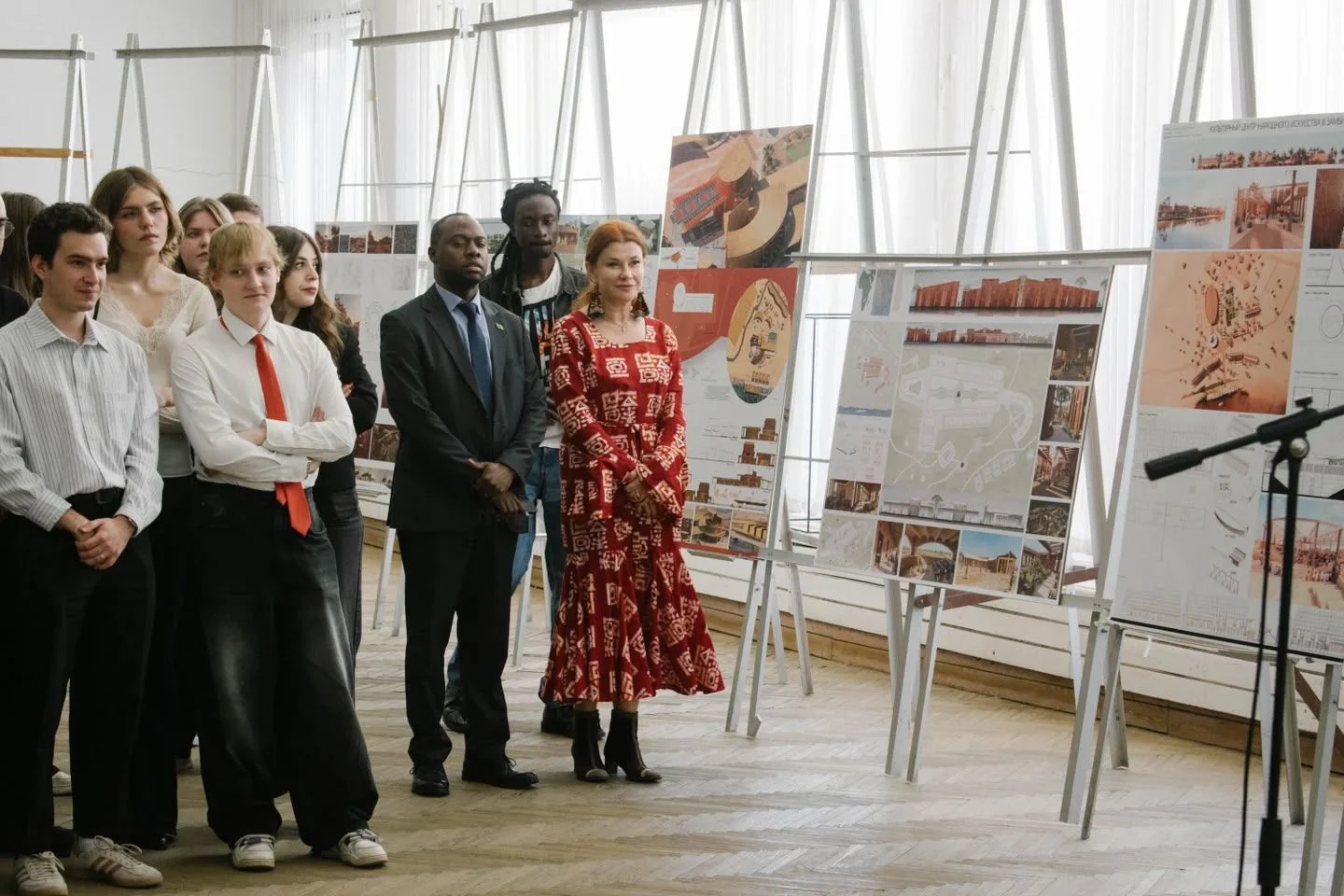
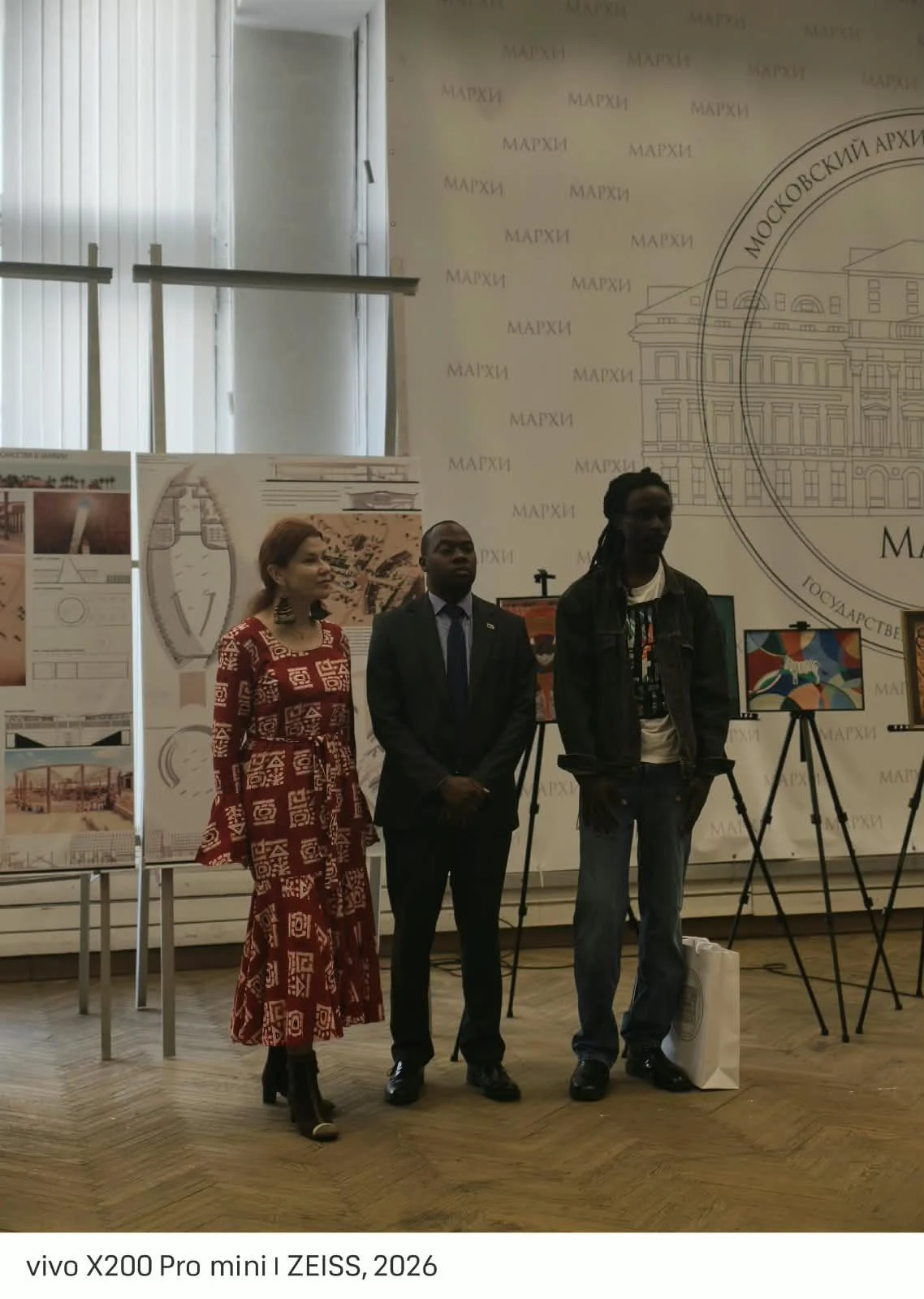
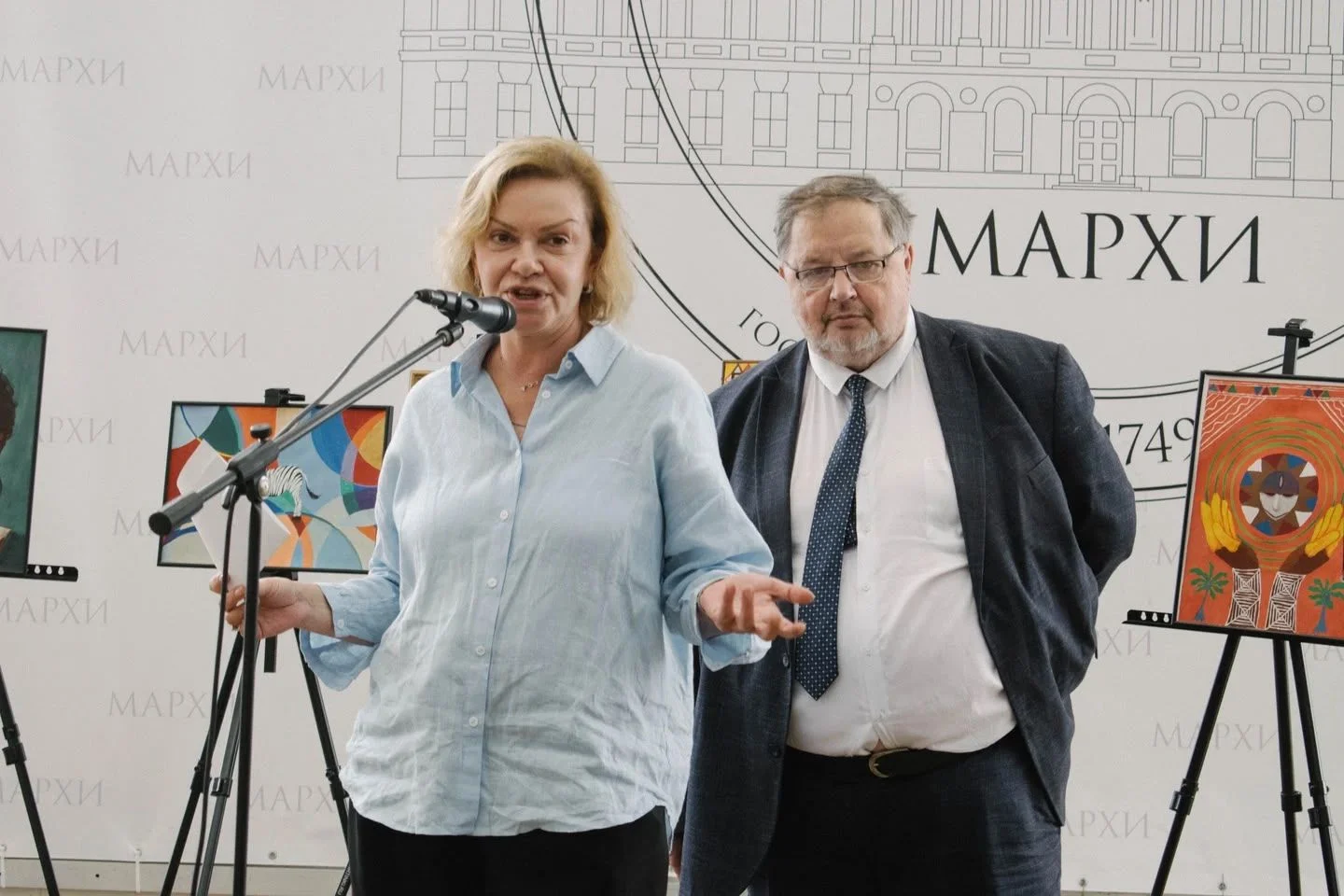
The Grand Opening of the solo exhibition of contemporary Zambian artist Mulenga Mubanga, “Through the Mask,” took place on 20 September 2026 in the White Hall of the Moscow Architectural Institute (MARCHI). The event is part of the Second World Public Assembly “New World: Values That Unite.”
Mulenga Mubanga is one of the most striking contemporary artists of Zambia. His works are recognizable for their expressive color, multilayered texture, and collage forms. In his canvases, the artist explores the human being as a bearer of spiritual, social, and bodily experience, as well as their connection to community, faith, and the surrounding world.
The opening ceremony was attended by:
Dmitry Shvidkovsky — Rector of MARCHI;
Svetlana Zabelina — Rector of the Moscow University of Humanities and Technology — Moscow Architectural and Construction Institute (MGTU-MASI);
Elijah Chimwemwe Sitali — First Secretary of the Embassy of the Republic of Zambia in the Russian Federation;
Mulenga Mubanga — the exhibition’s author, artist,
as well as numerous representatives of cultural organizations and the diplomatic corps, artists, architects, collectors, and other admirers of contemporary African art.
Mulenga Mubanga personally presented his works and explained why the tradition of masks of the Chokwe people, who live in northwestern Zambia, became the starting point for his new series.
— At the center of the exposition is the image of Mwana Pwo, a female mask associated with ideas of motherhood, fertility, continuation of the family line, and veneration of ancestors, — the artist said.
In traditional culture, this mask lives together with costume, music, dance, and movement. That is why for the artist, what matters is not so much its outward appearance as what happens to the meanings of the mask when it leaves the ritual context and becomes part of contemporary art. In the works of the series, acrylic painting is combined with fragments of chitenge fabric. The patterns of the fabric enter the composition and create a dialogue between tradition and modernity.
In his welcoming speech, Dmitry Shvidkovsky noted MARCHI’s long-standing connection with Africa and spoke about joint projects and practical architectural developments by MARCHI and African colleagues:
— It is no coincidence that the exhibition is taking place at MARCHI. Fourth-year students, under the guidance of T.V. Semenova, A.A. Sherekhor, and L.V. Vasilyeva, developed a project for a center of folk art in the Lower Zambezi. It is an architectural ensemble proposed to be built from local materials: at the center is a museum of folk art, surrounded by a restaurant, a pier, and apartments. The project is also presented in the White Hall, where the exposition is located.
Elijah Chimwemwe Sitali thanked the organizers and guests, noting that he was delighted by the initiative that was born within the walls of MARCHI and by the students’ work dedicated to the development of the Lower Zambezi:
— There is some amazing magical connection between Moscow and the Lower Zambezi, because it was precisely the students from Moscow who created an astonishing project for the Lower Zambezi.
The exhibition project was implemented in partnership with MARCHI and the Embassy of the Republic of Zambia in the Russian Federation.
The exposition continues the work of the World Peoples Assembly on developing cultural dialogue and humanitarian cooperation between Russia and African countries.
The exhibition “Through the Mask” is open to visitors in the White Hall of MARCHI (Moscow, 11 Rozhdestvenka St.) from 3:00 pm to 5:00 pm.
On September 22 and 23, Mulenga Mubanga himself will be present at the exhibition: visitors will be able to meet the artist in person and talk with him about his works.
Additional information is available on the official website of the World Peoples Assembly and at media@world-assembly.org.