

“Trust is the Main KPI”: Experts Discussed the Role of Culture and PR in Contemporary International Relations
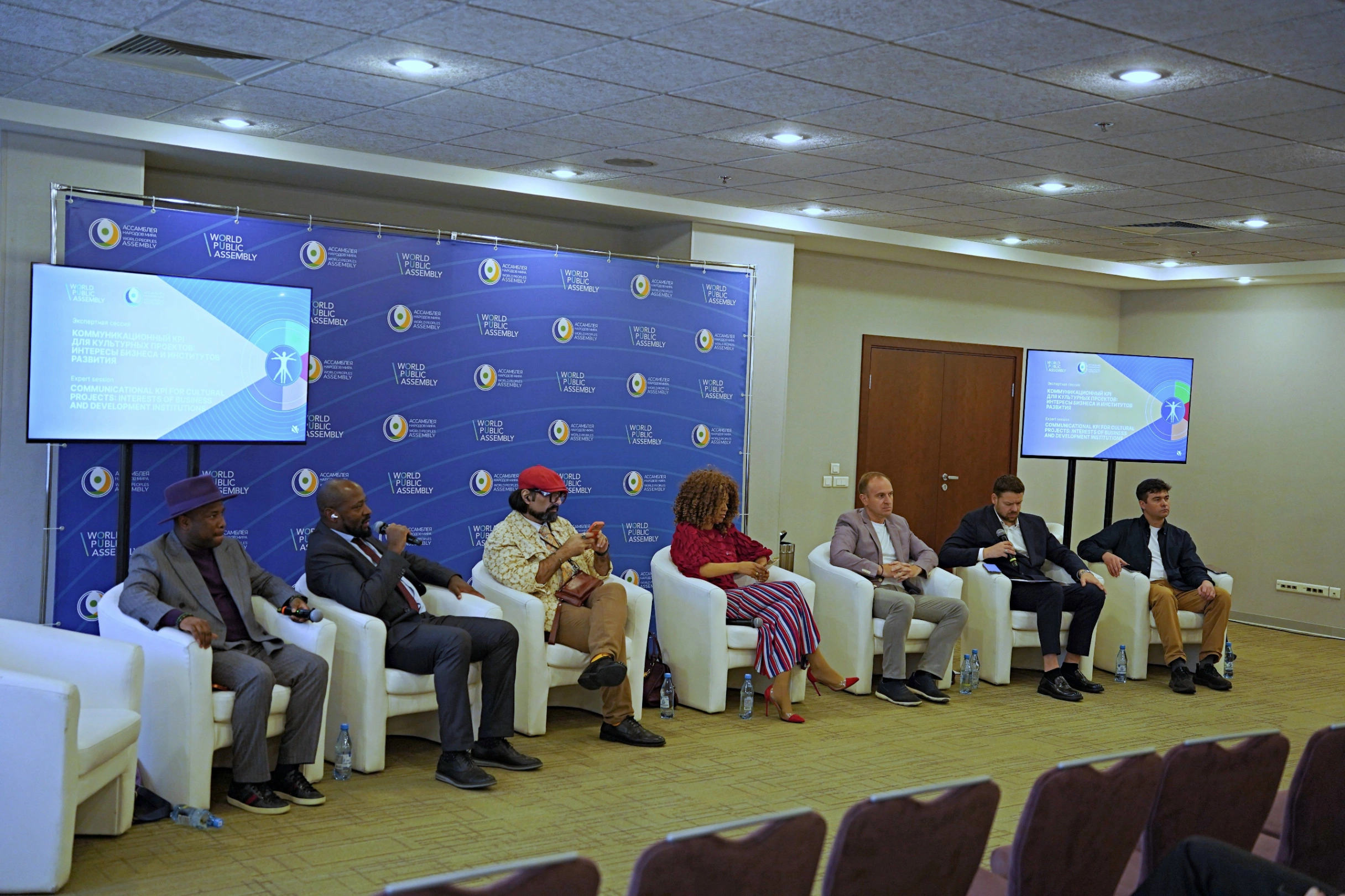
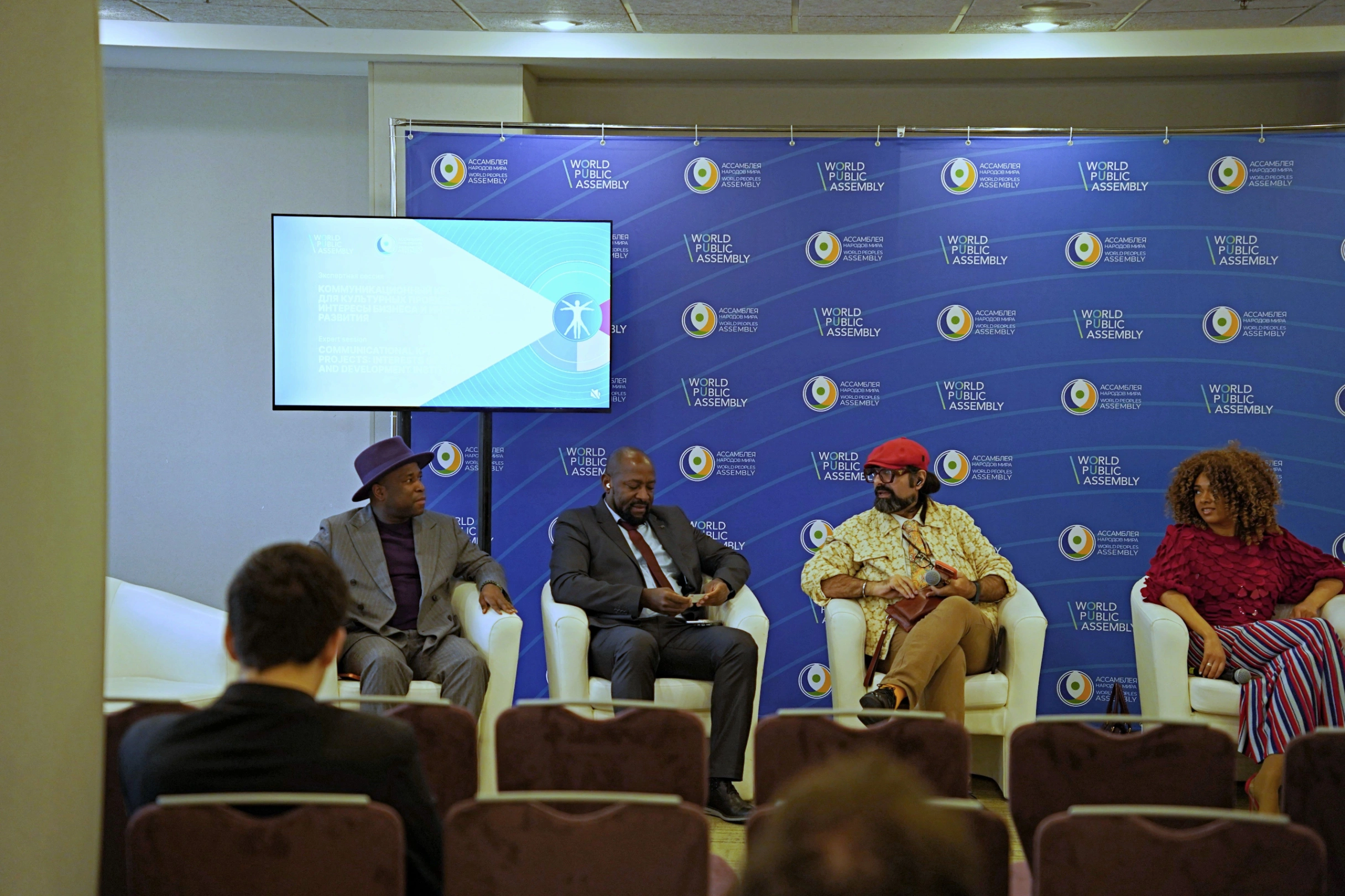
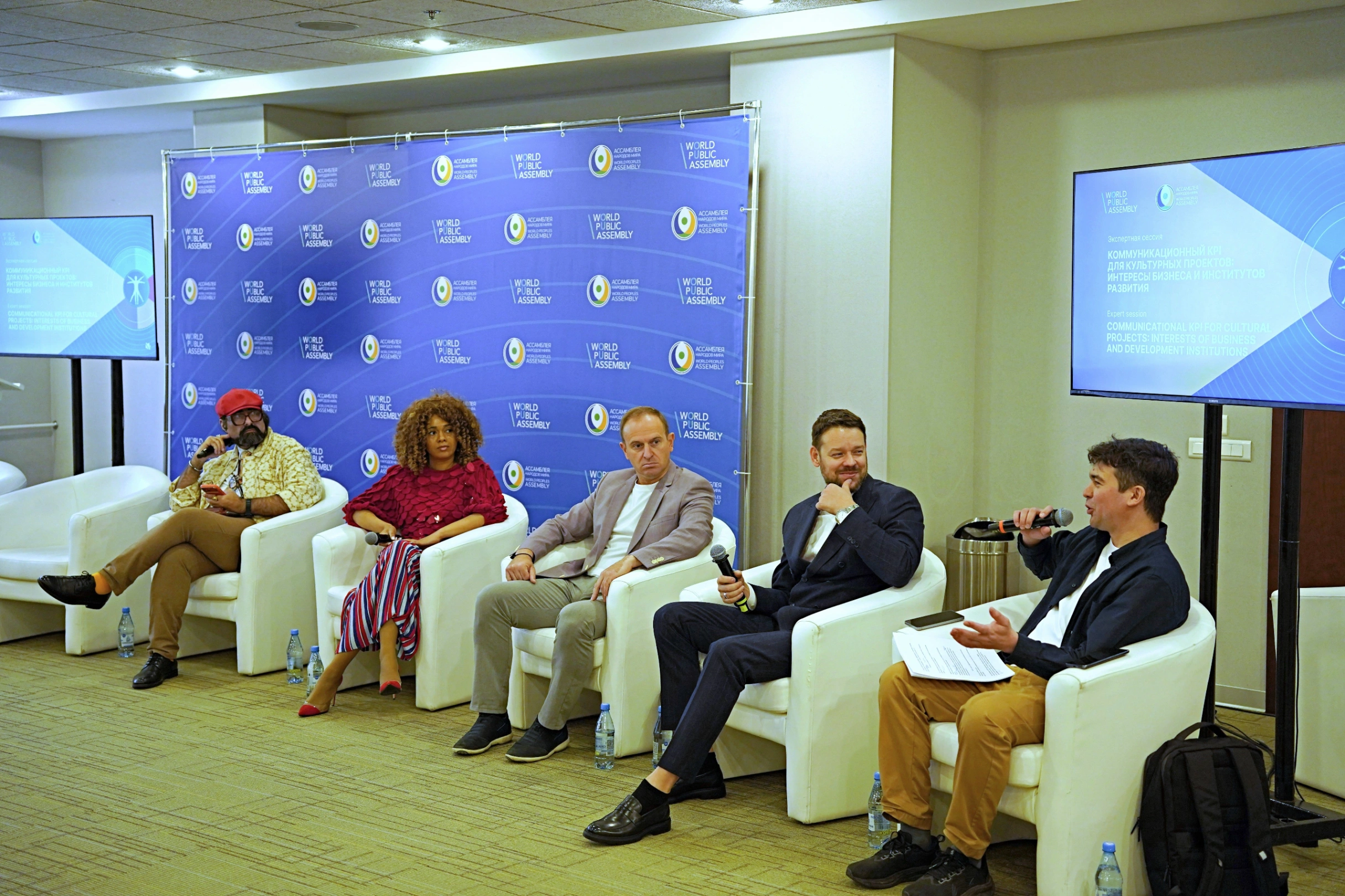
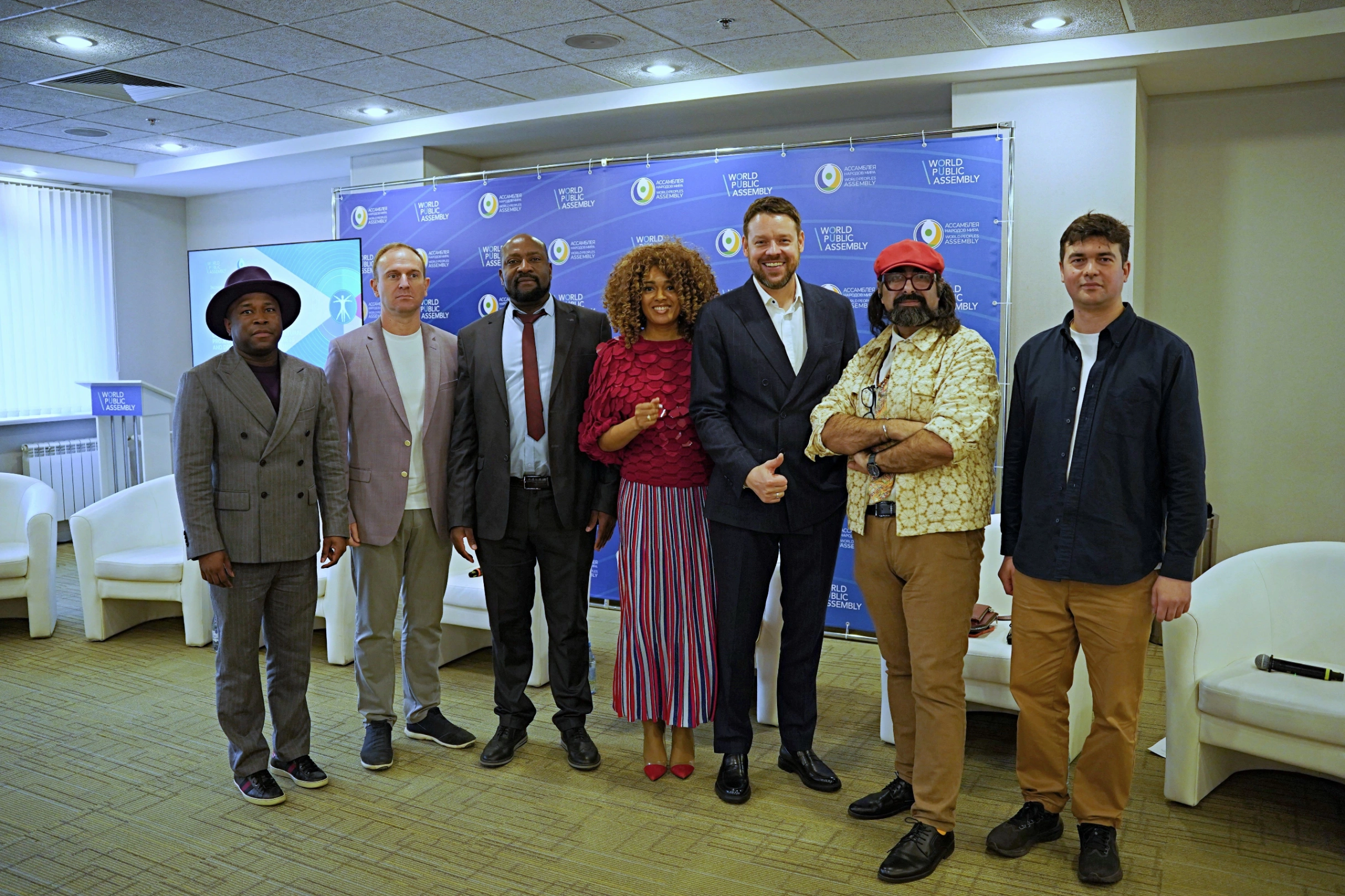
The expert session “Communication KPI for Cultural Projects: Interests of Business and Development Institutions” was held on September 18, 2026, at the World Trade Center. The event became part of the Second World Public Assembly “A New World: Values That Unite” held in Moscow in September 2026.
Participants discussed the search for universal performance metrics for cultural initiatives capable of synchronizing the goals of commercial business and development institutions. The key focus was on developing transparent communication KPIs that help assess the real social impact of projects, build trust between sponsors, the state and creative teams, and also make investments in culture more understandable, measurable and attractive for all parties.
The event was organized by the World Peoples Assembly and the Committee on International Cooperation of the Russian Public Relations Association (RPRA). The moderators were the Chairman of the RPRA Committee on International Cooperation, Andrey Andreev, and his deputy, founder of the “NEprosto PR” agency, Yuri Nesterenko.
In his opening remarks, Andrey Andreev emphasized that in today’s realities, classical diplomacy is no longer sufficient to build lasting international trust. PR comes to the fore, where culture, art and spiritual values become the main conduits of common meanings and civilizational codes. It is they that allow finding points of contact between different societies. In this regard, the speaker noted the urgent need, in his view, for a paradigm shift: the industry needs to move away from formal quantitative indicators – reach and number of publications – to assessing the real effect of creative projects.
Representative of the Russian-Iranian Center for Economic and Legal Cooperation, Abbas Mirzaei Ghazi (Iran), raised a fundamental question: does culture retain its independence or is it turning into merely “packaging” for political and commercial messages. According to the expert, promoting one’s own interests does not in itself destroy cultural exchange – the danger arises only when it begins to be treated exclusively as an instrument of influence. At the same time, in the context of Russophobia, personophobia and massive information attacks on Russia and Iran, culture becomes the most important channel allowing the world to be told about real life in these countries.
President of the African Business Club, Louis Gouend (Cameroon – Russia), focused attention on the need to measure the impact of culture on international relations.
- Without clear evaluation criteria, it is impossible to objectively judge the effectiveness of developing interstate ties, - the speaker noted.
Calling culture one of the foundations of international diplomacy, the expert regretfully noted that in many states it is still funded on a residual basis.
Director and screenwriter Kmel Ntsama (Cameroon) outlined the difficulties in creating joint Russian-African film projects, stating that the African industry is traditionally oriented toward the West, and cooperation with Russia is still sporadic:
- A film must leave an emotional trace. And much here depends on the sincerity and goals of the author.
As an example, the speaker cited work on the film “Matryoshka”: the idea came to him after encountering this toy on Nevsky Prospect. The project received support from producers, and filming is already underway. According to the director, the image of the matryoshka ideally reflects the idea of multinationality, which must and can be revealed through cinematic means.
Head of the African Bloggers Club, Denis Nyrkov, called cinema a universal platform for dialogue of cultures. Analyzing the experience of selecting Russian content for the African market, he noted that the classical strategy of exporting historical films about the Soviet Union does not work today:
- The modern African audience is closer to dynamic action and topical plots. As a successful example of a balance between entertainment and deep meaning, I can highlight the film “Sky” – the approval process for its full-scale distribution abroad is still ongoing.
Touching on the topic of digital technologies, the expert reminded that already by 2022 more than half of internet content was created electronically. He warned against the thoughtless development of neural networks: artificial intelligence is capable of quickly penetrating the depths of the human psyche, which requires special caution and ethical control from society.
Creator of the community of Russian-speaking representatives of the creative sphere in the Middle East, Mireille Zannou, noted that the world is tired of the monopoly of the Western cultural paradigm, which for a long time was tried to be passed off as the only possible one. According to the speaker, Russia offers an alternative path based on equality of cultures, their mutual enrichment and co-creation. She called for developing own platforms and digital spaces for joint creativity, since on others’ platforms one inevitably has to play by others’ rules.
Session moderator Yuri Nesterenko, in turn, expressed the conviction that in the era of rapid digitalization, human-centricity will become the key value, many times surpassing in significance any technological innovations: empathy and emotions are beyond artificial intelligence’s ability to reproduce in the foreseeable future.
- Already by 2035, up to 90% of mass digital content will be generated by neural networks, and the remaining 10% – authored, created by humans – will turn into an elite product of premium quality, – the speaker summarized.
Kmel Ntsama also shared his view on the impact of artificial intelligence on creative industries. According to his observations, the main driver of neural network adoption is economic: AI is massively used by that percentage of the population that cannot afford the services of professionals. For comparison: a monthly subscription to an AI service costs 1,000–1,500 rubles, whereas writing a professional screenplay in Russia can cost up to 3 million rubles.
- Even large corporations are switching to generations in advertising to optimize budgets. This process is already irreversible; however, we need to treat neural networks exclusively as a tool that must be under strict human control, and not replace humans, – the director urged.
Continuing the theme, Denis Nyrkov emphasized the importance of preserving cultural identity and native language. As a vivid example, he cited his experience working at the Moscow Cross Procession, where he encouraged seminarians from Africa to give comments in their native languages.
- Such an approach helps foreign students not lose connection with their roots and feel confident while in the Russian cultural environment, – the expert concluded.
Concluding the discussion, Abbas Mirzaei Ghazi shared a touching personal example of how culture erases borders: he admitted that every year he awaits the New Year’s screening of “The Irony of Fate” with particular impatience.
Summing up the session, Yuri Nesterenko summarized that the main goal of intercultural cooperation is the formation of a solid foundation of mutual understanding. It is this that in perspective transforms into growth in tourist exchanges, joint film projects, video game development, as well as the creation of effective international PR and advertising campaigns.
Additional information is available on the official website of the World Peoples Assembly, on its VKontakte and Telegram accounts, and at media@world-assembly.org.