

Human Capital as the Main Resource of the 21st Century: Horizons of International Cooperation were Discussed in Moscow
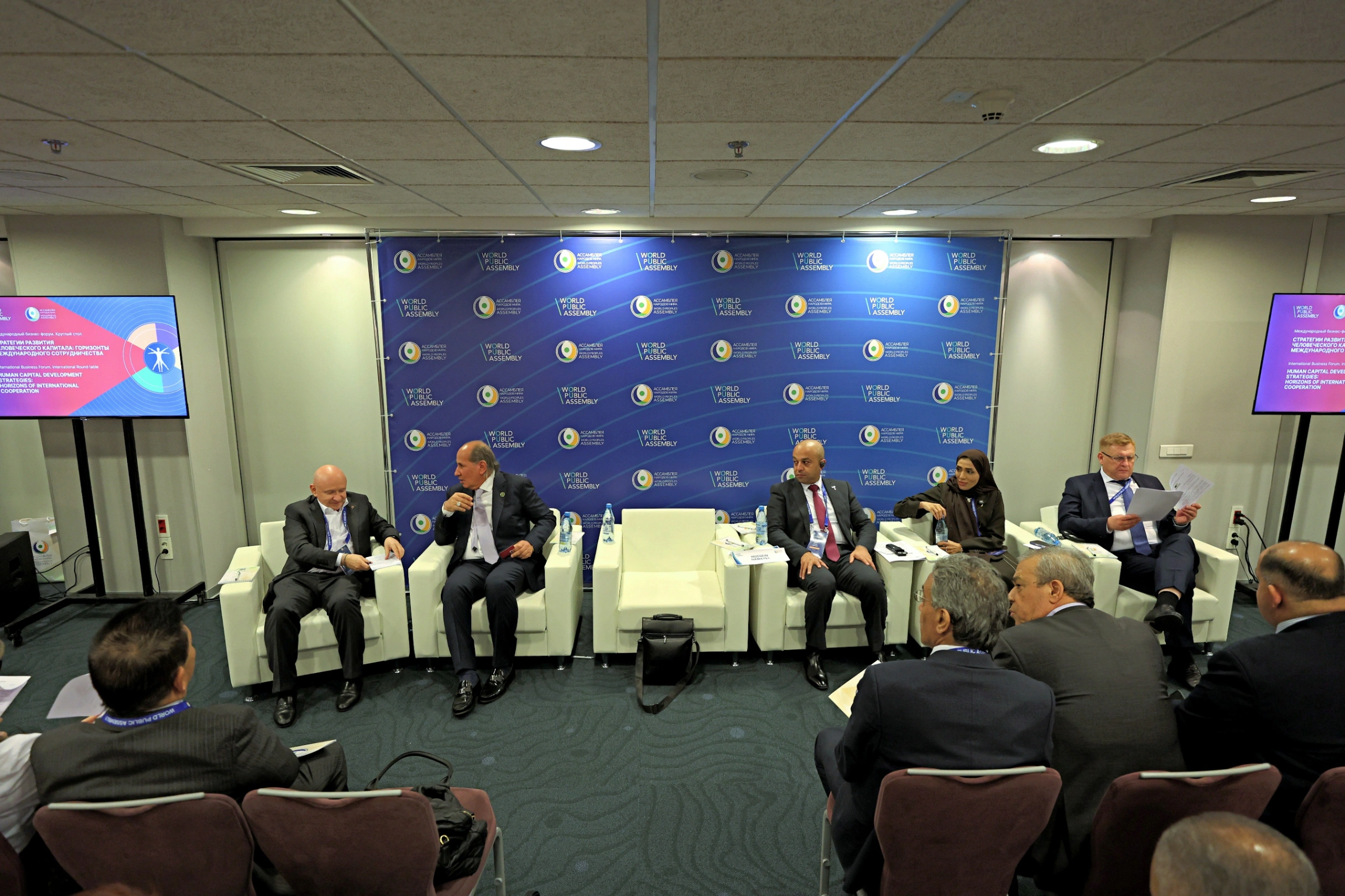
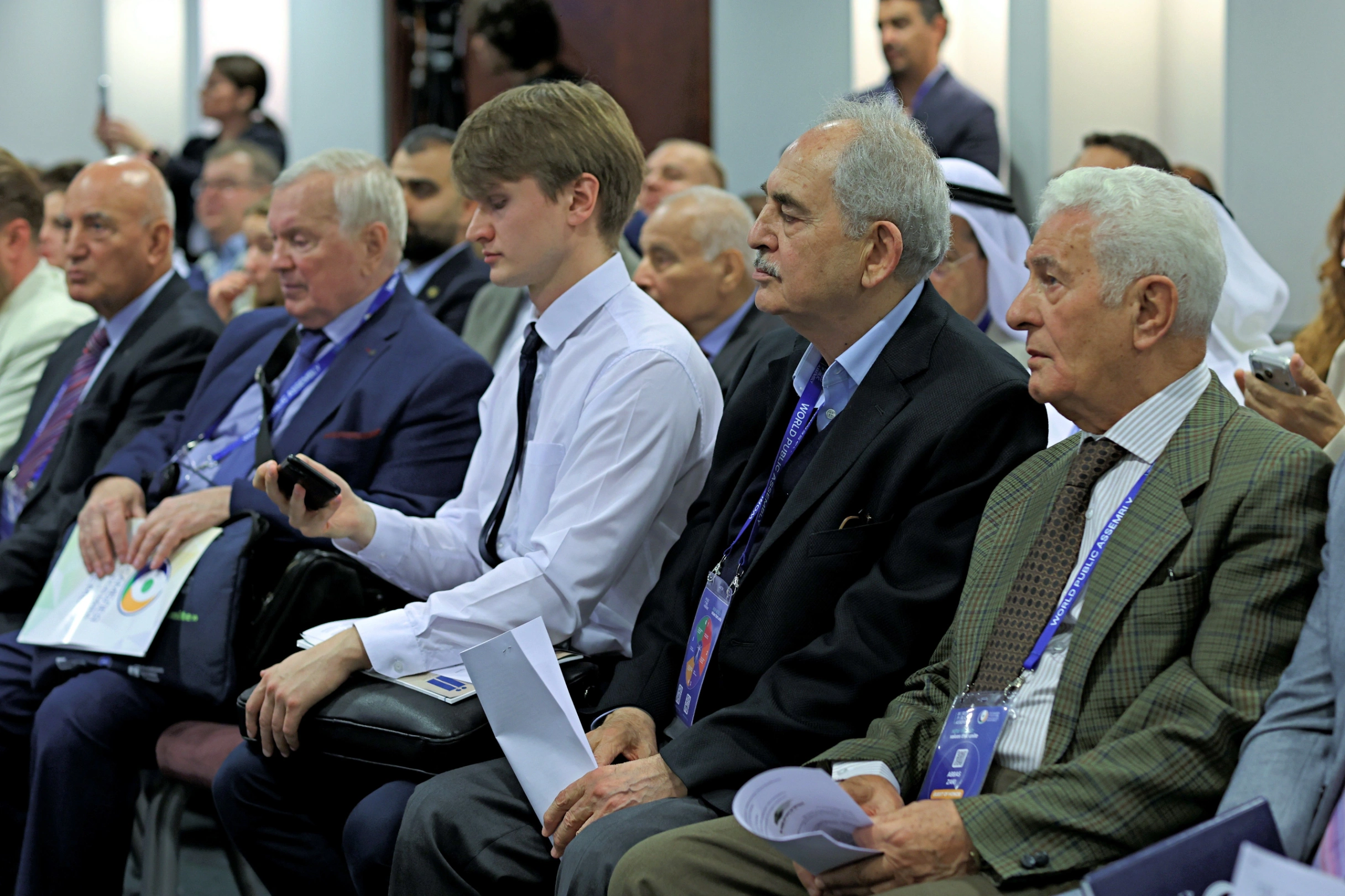
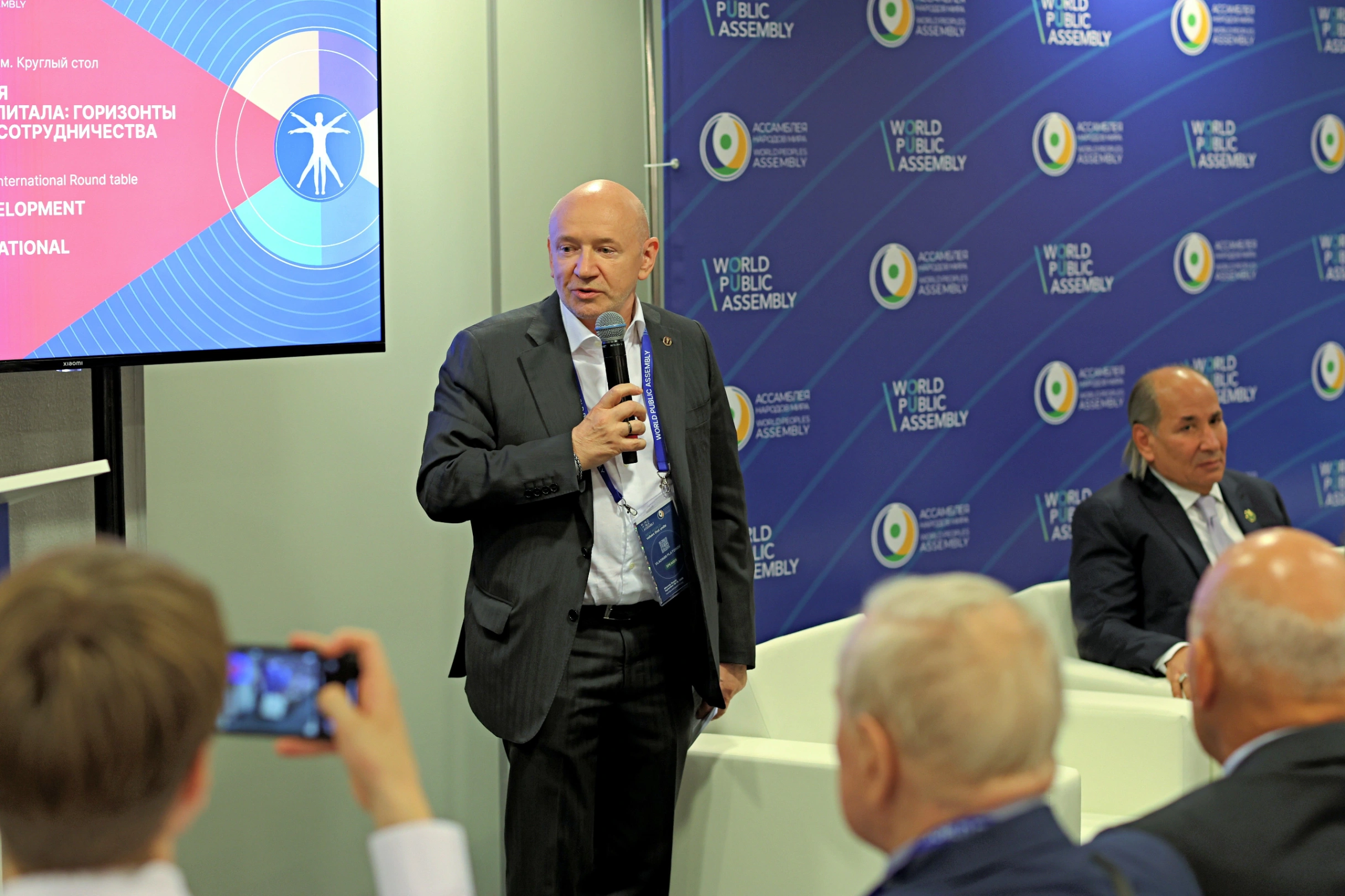
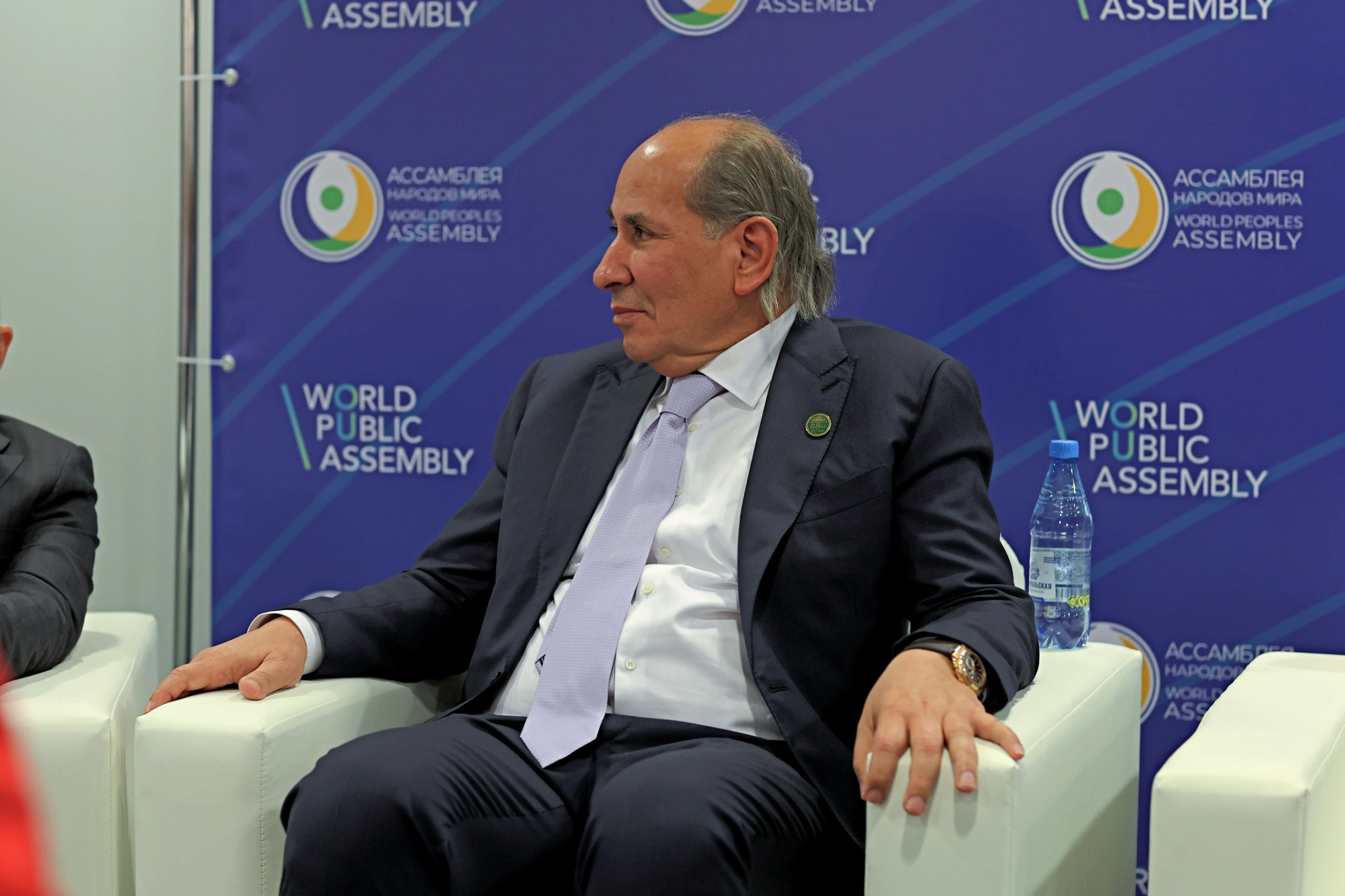
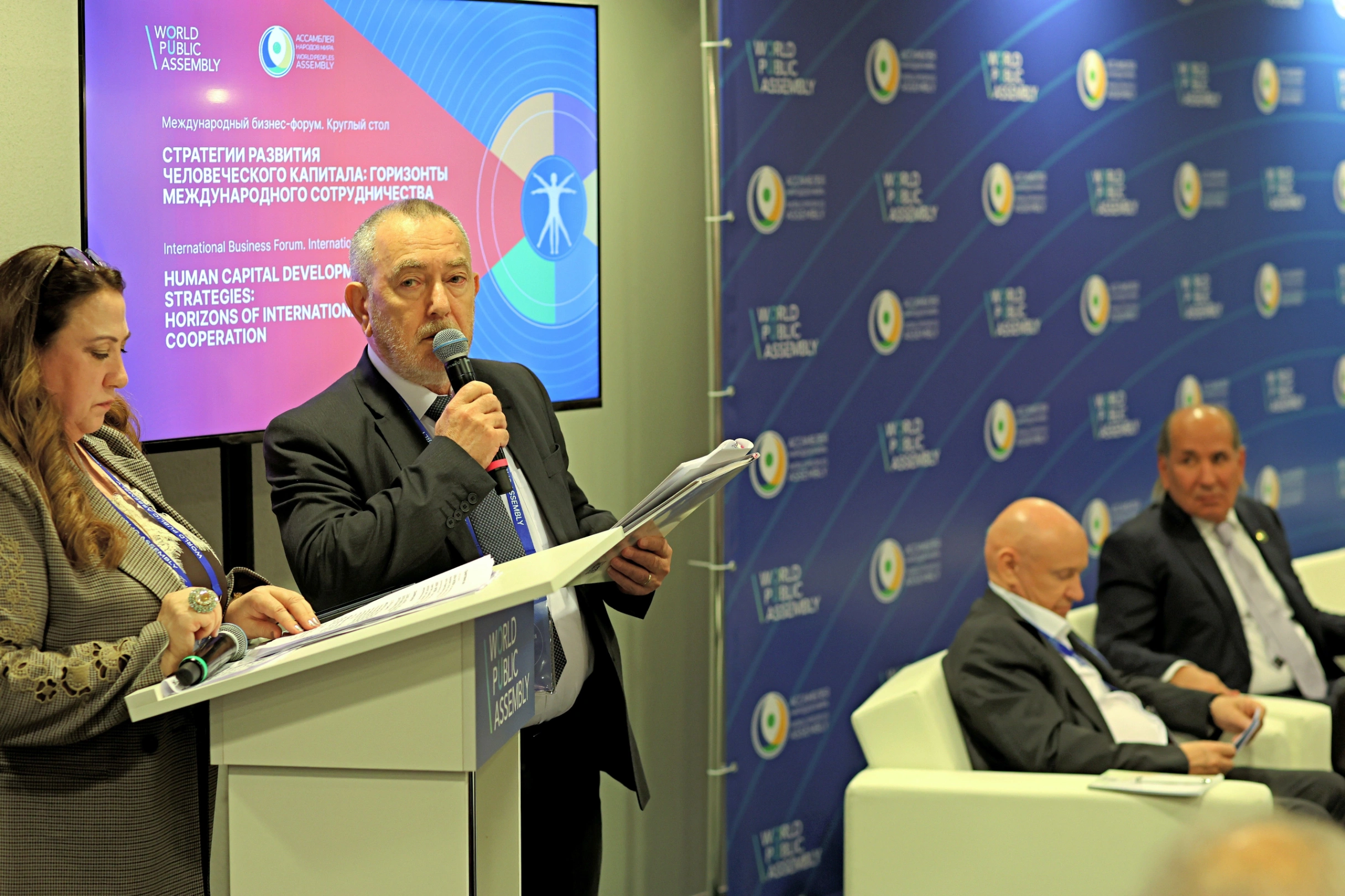
Round table "Strategies for the development of human capital: Horizons of International Cooperation" was held within the Second World Public Assembly "New World: Values that Unite", held in mid-September in Moscow.
The event brought together representatives of Russian and international businesses, business associations, industrial enterprises, innovative companies and public organizations. The experts discussed the key role of business in developing new professional competencies and retaining talent in the context of global digitalization, as well as the prospects for strengthening international business ties through joint projects, mobility of specialists and support for entrepreneurial initiatives.
Vladimir Platonov, President of the Moscow Chamber of Commerce and Industry, opened the meeting with a welcoming speech. He noted that the World Peoples Assembly is expanding the geography of its work every year:
- I am a graduate of Patrice Lumumba Peoples' Friendship University and I am proud of it. I am glad that we are increasingly developing international cooperation within the World Peoples Assembly: it started working in Europe and Asia, and today it covers the whole world. I am convinced that this is another step towards uniting all countries that know how to be friends and build relations on the right principles.
The event was moderated by Elena Matveeva, the President of the National Association of Successful Women "Mercury. Novoe Vremya" and Head of the Trade and Economic Committee of Russia and Egypt. Setting the tone for the meeting, she emphasized the importance of human capital in an era of global change:
- The competitiveness of companies and states increasingly depends on how well they are able to develop competencies, retain talents, support initiatives and create an environment for unlocking human potential.
According to Elena Matveeva, international cooperation in this area has long gone beyond government agreements - it is strengthened by joint projects, business ties, knowledge exchange, educational initiatives, and the development of women's and youth entrepreneurship.
Advisor to the Syrian Prime Minister Salman Hayan devoted his speech to the link between the development of human capital, the restoration of business activity and the expansion of international cooperation. He spoke with great pain about the events in the Middle East:
- Today, the world can be compared to a boiling pot. Why has the Middle East, which includes 22 states, turned into a region of wars? And what are the consequences of these changes for the Middle East and West Asia? The main result is a lag in the region's development, losses in production and economy, and an increase in terrorism.
Salman Hayan wished the World Peoples Assembly to continue to expand the circle of participants, involving representatives of an increasing number of countries, to establish a peaceful dialogue between peoples and states, relying on the power of logic rather than the power of weapons.
Egyptian Senator Khaled Qandil, basing on the millennial experience of Egypt, built his speech around the main idea: civilizations do not live by force, but by things that make life meaningful:
- The level of human development is determined by his humanity and humanism. Our world is going through an era of fear and division. In these new conditions, a professional cannot be allowed to become just a figure in the economic equation. We need people who not only know how to work, but also understand why they do it and what they promote with their competencies. And what they will eventually leave behind for humanity.
According to the politician, the deepest forms of cooperation are born where there is the courage to think together - through the exchange of knowledge and discoveries. "The world is moving towards a multipolarity, and violence and the lack of a culture of dialogue inevitably lead only to new crises," the politician concluded.
The adviser to the President of Palestine, Hussein Gavarnar, spoke about the pain and suffering of the Palestinian people and the entire Middle East - about tens of thousands of dead children and civilians, about burned schools, houses, churches and mosques:
- Where are the international organizations that are required to monitor the observance of the rights of the Palestinian people and the treatment of Palestinian prisoners? We adjusted our policies and did everything that was required of us in the matter of civil rights. I ask you to assist us at the level of your Governments so that we can finally hold parliamentary elections in Palestine.
Concluding his speech, Hussein Gavarnar expressed deep gratitude to the Russian people, Russian President Vladimir Putin and the country's leadership for their continued support for Palestine. The Adviser emphasized:
- In order to ensure lasting peace in the Middle East, it is necessary to solve the problem of the Palestinian people. It is obvious to all participants in the global political process that peace in the region will never happen without a solution to the Palestinian issue.
Alexander Ivanov, Co-Chairman of the Council on International Economic Affairs of the World Peoples Assembly, shared his thoughts on the fundamental role of trust in modern international relations. According to the speaker, the current geopolitical vector has reoriented the Russian economy towards partnership with the countries of Africa, Asia, South America and the Arab Gulf. In these circumstances, the World Peoples Assembly can act as a guarantor in the search for reliable partners: it helps to conclude direct, including long-term, contracts with government agencies and ensures the security of transactions.
- Companies are forced to rebuild logistics chains and look for new markets, paying special attention to food, environmental and energy security, - the speaker said, stressing that diversification is now a prerequisite for the economies and businesses of any country. At the same time, according to the expert, trust in business is born gradually - almost like in a relationship between a man and a woman.
- First, you request a company card, study it, analyze it, and sign a small pilot contract. And if everything goes well, you already sign an annual contract with the possibility of prolongation, - Alexander Ivanov summed up.
Manal Al-Braiki, Director of the Department of Strategy and the Future at the Anwar Gargash Diplomatic Academy, dedicated her presentation to the role of diplomatic academies in training specialists of the future, developing their key competencies and integrating artificial intelligence into the educational process.:
- A diplomat is not someone who predicts the future, but someone who acts wisely when it comes.
The speaker highlighted three key competencies necessary for a modern diplomat: strategic thinking, which allows making the right decisions in difficult situations, understanding cultural and regional peculiarities, and responsible use of artificial intelligence. At the same time, it is impossible to train personnel in isolation - close international cooperation is necessary: joint case analysis, exchange of experience and views. This is where, as Manal Al-Braiki emphasized, diplomatic academies and educational institutions are beginning to play an increasingly important role.
Speaking about ways to achieve peace, Hoda Yassa, President of the Arab Women Investors Union, put forward a bold thesis: it is not politicians who build a genuine dialogue between peoples, but people's diplomacy itself:
- I think economics determines politics. We should look for ways of rapprochement in the economic sphere. Civil society, the private sector and the state must work together - only by joining forces can we truly develop our countries.
Calling for broad international cooperation, the speaker highlighted the role of Africa and stressed that Egypt is rightfully considered a continental center of attraction for investments and advanced technologies.
Evgenia Kondrakhina, Chairman of the Commission on Sustainable Development and Ecology of the Russian Association for the Promotion of the United Nations, called human capital the main resource of the 21st century and called for the round table to be considered a vivid illustration of how business, government, the non-profit sector and universities should interact. According to her, the common goal for everyone is not to build disparate programs, but whole development chains: from high-quality education and decent employment to social security and continuous professional growth.
- In the conditions of the technological boom, the main competence of a person is the ability to constantly learn. Modern education provides not only basic knowledge, but also the ability to master new professions. It is this competence that is becoming key today, - the speaker assured.
Vladimir Platonov, President of the Moscow Chamber of Commerce and Industry, highly appreciated the level of work of the World Peoples Assembly. According to him, the participants of the meeting are united not only by general education, but also by the conviction that it is through cooperation that a multipolar world can be built:
- We are the guarantors of a wonderful present, and today all conditions are created for young people to share experiences and develop together.
Inviting to cooperate with the Moscow Chamber of Commerce and Industry, he spoke about the project "Start your business with Moscow". The program is open to both international and Russian students, as well as for joint international projects. Participants can come up with any idea - they are assigned a supervisor who helps them bring their idea to a full-fledged business project.
Natalia Demchenko, a member of the General Council of Delovaya Rossiya, spoke in her speech about business support and tax preferences available to foreign citizens in Russia. According to her, 12 innovation valleys have been created in the country, divided by industry. They are designed to promote the dynamic development of technology companies by providing residents with significant tax benefits. Innovative valleys are developing their activities not only in Russia, but also abroad.
- The country is interested not just in capital inflows, but in creating a full–fledged ecosystem where human capital can develop as efficiently as possible, - the speaker emphasized.
Nina Kuzmicheva, the founder of the Rozhdestvo company, spoke about the attempt to respond to the challenges of the time: to bring life back to rural areas and create a modern development model, while balancing the interests of business, the state and society. According to her, the essence of the proposed approach is to move from an economy of personal interests to an economy of agreed goals. In this model, the state is responsible for the development of the territory, business provides production, investment and jobs, and people receive not just land, but a real opportunity to participate in the creation and management of their living space.
As a practical example, the entrepreneur presented the project of a new city for 50,000 inhabitants in the Petushinsky district of the Vladimir region, where people invest in their project and then participate in its life.
- Russia is designed to become both an ark and a testing ground for new approaches to development. A competence center has already been created for this purpose, a master plan and a financial model have been prepared, and the developed methodology is ready for replication, including at the international level, - the speaker said, inviting all those gathered to participate in the project.
Wei Dong, President of Chongqing Dubail Import & Export Corporation, shared his experience in building international trade and investment. He presented the large-scale geography of his company's activities. The speaker noted that he represents the city of Chongqing with a population of 32 million people and his business has been running for 20 years. During this time, projects have been implemented in various regions: motorcycle factories in Syria, cooperation with Benin and other African countries, investments in cable production in Uzbekistan. The Russian direction is also actively developing in the fields of renewable energy sources, automotive industry and export-import operations in the field of computing, computers and chips.
Wei Dong stressed that the company is ready both for direct supplies of goods for specific demand, and for the organization of full-fledged production lines. The speaker expressed confidence that under the strategic leadership of Chinese President Xi Jinping and Russian President Vladimir Putin, relations between the two countries will continue to develop dynamically, opening up new business opportunities.
Vladimir Lischuk, President of the interactive platform Worldbrics Media, demonstrated another example of productive cooperation between Russia and China. The speaker presented a successful case study on the development of the fertilizer "Nectar bio. Izabion", which is already used in Chinese fields: one bottle of the drug treats two hectares.
- This is the only fertilizer in the world created jointly by Russian and Chinese specialists. This format of cooperation opens up significant commercial prospects for both sides, - concluded Vladimir Lischuk.
Tatiana Gubina, Deputy General Director for Personnel Management at Istok Engineering and Construction Company, devoted her speech to the issues of human resources potential and investments in human capital. The expert identified a key problem: in recent years, there has been a significant outflow of population to large cities, which has led to demographic losses in small and closed areas. Meanwhile, it is small towns that are becoming sites for the implementation of strategic facilities, and for their development it is necessary to attract qualified specialists.
- Since 2023, Rosatom Corporation has been implementing the People and Cities program, aimed at ensuring that 80% of residents are satisfied with their local lives by 2030. The program covers education, healthcare, the urban environment, and youth work: engineering classes are being opened, and state corporation funds are being invested in medicine and education, - said Tatiana Gubina.
Alexey Sechkin, Deputy General Director for Strategic Projects at Hightech Integration, suggested discussing the human dimension of technological capital. According to him, one of the key tasks for IT companies today is to ensure security, and in this area his company is actively using artificial intelligence technologies. Among the latest developments is the detection platform for unmanned aerial vehicles, which allows them to be detected at a distance of up to 20 kilometers. And, most importantly, detection takes place in a hidden way - using long-range thermal imagers and microphones.
Alexey Sechkin noted that such a system is in high demand. The company pays special attention to the safety of educational institutions - schools and universities, which are among the priority customers.
Alexander Boksha, Deputy General Director of the Genesis enterprise, said that the development of human capital cannot be considered separately from the health, nutrition and sustainability of rural areas. According to him, the cause of most conflicts on the planet is the struggle for resources. In many countries, a liter of drinking water already costs as much as a liter of crude oil. The depleted land needs to be restored, and if society does not begin to seriously discuss this problem, the consequences for future generations will be catastrophic.
- The current conflicts and wars will seem insignificant compared to what awaits humanity if we do not change our attitude towards the use of natural resources, - Alexander Boksha is convinced.
Security and investments in human capital were the topic of a speech by Michael Padilla Pagan Payano, Chairman of the Board of Directors and CEO of Al Thuraya Holdings. The expert noted that today there is a great demand for artificial intelligence technologies to support the elderly, and shared his personal experience: his 86-year-old father, who suffers from dementia, requires special care, and the family successfully uses AI agents in smartphones to ensure proper supervision.
- Nowadays, artificial intelligence acts as a tool for solving broader tasks: ensuring cybersecurity, developing empathy and communication, and strengthening international cooperation. Working with the younger generation is of particular importance, as it allows us to understand how to take care of the elderly most effectively, - the speaker believes.
Daria Averyanova, Executive Director of Petrovsky Bazaar, spoke about the human dimension of international relations using the experience of her organization as an example. The speaker clarified that when creating the bazaar, her team deeply studied the traditions of European markets and the task was to create a unique format - a synthesis of European traditions with the Russian culture of the market and fair. An independent laboratory was set up at the bazaar for this purpose.
- We are developing our own natural resources. We use methods of regenerative agriculture and rotational grazing, combining land, animals and production into a single system, - Daria Averyanova shared.
The speaker also noted that international cooperation opens up new opportunities for the development of human capital. It is people who combine the knowledge and experience of different countries, turning them into a joint result.
Natalia Kontyreva, Deputy Director for International Investments at Atlant, developed the same idea using the example of international investments. According to her, multifunctional interaction with the world makes it really close and understandable: in each country, the company develops business, maintains real estate, manages its own and third-party capital. The speaker admitted that she loves South America and considers this area promising for investment:
- The number of tourists in Rio de Janeiro has increased by 50% over the past year. To become a business owner there, you don't have to go to Brazil - now everything happens online, in ten days.
The discussion was also attended by:
Mudalal Khoury - a Syrian-Russian businessman and financier;
Saleh Al-Mutlaq - a former Deputy Prime Minister of Iraq.
Summing up the discussion, the participants came to the conclusion that human capital develops where people gain knowledge, the opportunity to act in a safe and supportive environment, as well as access to professional international contacts. For businesses, this means investing not only in technology, but also in the competencies, health, trust and quality of life of specialists, and for international cooperation, it means moving from common intentions to specific joint projects, exchanging practices and forming sustainable professional communities. The round table became a starting point for new business contacts and international initiatives.
Additional information is available on the official website of World Peoples Assembly or at media@world-assembly.org.