

New Delhi hosed the International Conference "UNESCO: Uniting Humanity for Shared Values and a Better Future"
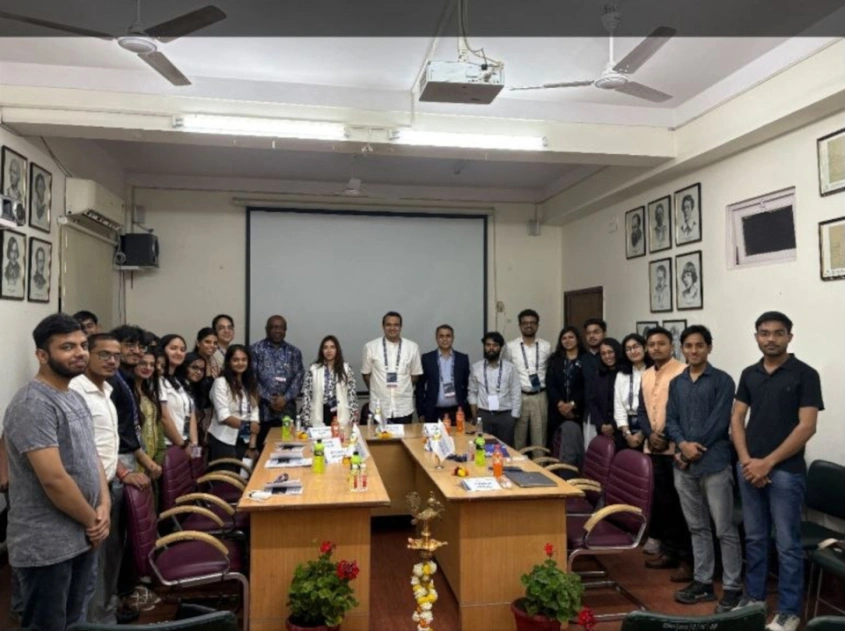
The International Conference "UNESCO: Uniting Humanity for Shared Values and a Better Future" was held on 24 March 2026 in New Delhi. The event held as part of the World Public Summit: India "New World: India in the Architecture of a Shared Future", was co-hosted by the World Peoples Assembly, the University of Delhi and the UNESCO Mahatma Gandhi Institute of Education for Peace and Sustainable Development.
The discussion was moderated by Professor Girish Munjal of the University of Delhi. Welcoming the participants, he emphasized that in an era of rapid change and complex challenges, the need for dialogue, mutual respect and shared goals is at its highest. He also noted that the World Peoples Assembly builds its activities in accordance with the fundamental UNESCO principles, implementing a model of multi-level social partnership of peoples based on spiritual and moral principles in the name of peace, harmony, and interethnic good-neighborliness.
The Secretary General of the World Peoples Assembly, Andrey Belyaninov, sent a welcoming message to the participants of the international roundtable. He emphasized the importance of consolidating international efforts to promote humanitarian values and noted the symbolism of holding the event in India, a country with a rich cultural heritage and long-standing traditions of philosophical thought. Andrey Belyaninov also noted that the delegation of the World Peoples Assembly took an active part in the UNESCO General Conference in Samarkand, which confirms the organization’s commitment to global dialogue.
Chairman of the Board of Trustees of the University of Jordan, former Prime Minister of Jordan, Deputy Director-General of UNESCO in 1990-1998, Adnan Badran, in his speech shared his reflections on the transformation of UNESCO, noting the unchanging relevance of its mission and the need to adapt to the new challenges of the modern world. He encouraged participants to build on the institutional experience accumulated so far, but to look boldly into the future, using dialogue as the main tool for building a more just world.
The Director of the UNESCO Mahatma Gandhi Institute of Education for Peace and Sustainable Development, Obijiofor Aginam, focused his speech on the central role of education as the basis of peace and sustainable development. He emphasized that the institute he leads follows the philosophy of Mahatma Gandhi, viewing education not just as the transmission of knowledge, but as a tool for transforming individuals and societies in a spirit of non-violence and mutual understanding. The speaker noted that in the context of growing polarization, it is educational programs focused on peace and sustainable development that can shape a new generation of leaders who are ready for dialogue and cooperation.
The representative of the Department of Culture and Dialogue of Civilizations of the Arab League (Egypt) Noha Sobhi Ayad emphasized the role of the Arab League as one of the oldest regional associations, which has been a key partner of UNESCO for many years in preserving cultural heritage, supporting multilingualism, and promoting dialogue between civilizations. She focused on the activities of the department she heads, which works at the intersection of tradition and modernity, promoting understanding between cultures both in the Arab region and beyond. The speaker emphasized that the dialogue of civilizations is not just an academic concept today, but a practical tool for building inclusive and harmonious societies.
In his speech, Professor Pandey Kumar of the School of International Studies at Jawaharlal Nehru University addressed the issues of international cooperation in the context of current geopolitical changes. He emphasized that UNESCO's values of peace, science, education, and culture remain universal guiding principles that enable countries with diverse political systems to find common ground. The speaker highlighted the role of public diplomacy and academic exchanges as mechanisms for building trust between nations.
In his speech, the founder and Secretary-General of the UN Society at the Pontifical Catholic University of Chile, Ulloa Savalla, emphasized the importance of involving young people in international organizations. He noted that student initiatives and youth associations can become drivers of change, bringing energy, new ideas, and a fresh perspective to UNESCO's agenda.
Madhish Parikh, Coordinator of the Heritage Program, which is part of UNESCO's World Heritage Volunteers program, shared his unique experience in the practical conservation of cultural heritage sites. He provided a detailed account of the program’s activities in India, emphasizing the crucial role of volunteer movements in engaging local communities and youth in the preservation of monuments. The speaker emphasized that participation in the World Heritage Volunteers program not only contributes to the preservation of sites, but also fosters a deep understanding of the value of cultural diversity and personal responsibility among participants.
Abhishek Tandon, Associate Professor at the Department of Operations Research at the University of Delhi and President of the ABVP Delhi Chapter, addressed the topic of collaboration between educational institutions and the public sector in achieving sustainable development goals. He emphasized that active citizenship is crucial for promoting the values espoused by UNESCO. The speaker also highlighted the importance of an interdisciplinary approach in education, which enables the training of professionals capable of tackling complex challenges.
In her speech, Alexandra Ochirova, UNESCO Goodwill Ambassador, provided a detailed overview of the UNESCO Recommendations on the Ethics of Artificial Intelligence, describing it as a historic achievement for the organization. She emphasized that technological progress should not be pursued in isolation from human values; on the contrary, it is the philosophical understanding of the consequences of the introduction of artificial intelligence that allows us to monitor and control progress. She also noted that UNESCO has a unique competence in setting ethical frameworks for the development of new technologies.
The series of presentations was concluded by Abyrlal Mukherjee, founder of the Universal Digital Education Initiative and Executive Director of the Vajpayee Research Foundation (India). In his speech, he presented his vision for the transformation of education in the digital age.
“Ensuring universal access to quality digital education is not only a technological challenge, but also a humanitarian one that is directly related to UNESCO’s mission,” he emphasized.
The speaker shared his experiences with initiatives he has implemented in universal digital education, noting that India, with its multi-million-strong student population, can serve as a model for many developing countries.
In his closing remarks, Girish Munjal highlighted the key messages from the participants’ presentations:
Education remains the basis of peace and sustainable development. The speakers unanimously emphasized the need for digital inclusion and universal access to quality education, as well as the importance of fostering a spirit of peace and non-violence.
Dialogue between civilizations and cultures is a prerequisite for building inclusive societies. The experience of international organizations demonstrates that mutual respect and the exchange of cultural values contribute to building trust between nations.
Science and technology should serve humanity based on strong ethical principles. The speech by the UNESCO Goodwill Ambassador Alexandra Ochirova and other participants showed that the development of artificial intelligence and digital technologies requires constant philosophical reflection and ethical regulation.
The UNESCO communication strategy of plays a crucial role in promoting its mission. The participation of media representatives in the discussion emphasized that high-quality, ethical, and accessible information content is necessary to maintain the relevance of the organization's values in the eyes of the general public.
The international roundtable in New Delhi became an important platform for a constructive dialogue between representatives of academia, international organizations, civil society institutions, and the media. The participants confirmed that shared values remain the basis that allows humanity to unite in order to solve the most complex challenges of our time, and that UNESCO's mission remains relevant and necessary in a rapidly changing world.
The World Peoples Assembly is an international union of non-governmental organizations that forms a humanitarian platform for cooperation between the peoples of the world based on trust, mutual respect and common values.
Media accreditation for the Summit, cooperation issues: media@world-assembly.org, +7 (985) 768-2053 (Oksana Leontieva).
More information is on the official website of the World Public Summit.