

Panel Session “Values and Principles of Positive Life-Construction (Intersection of Universes)” Held as Part of the Second World Public Assembly
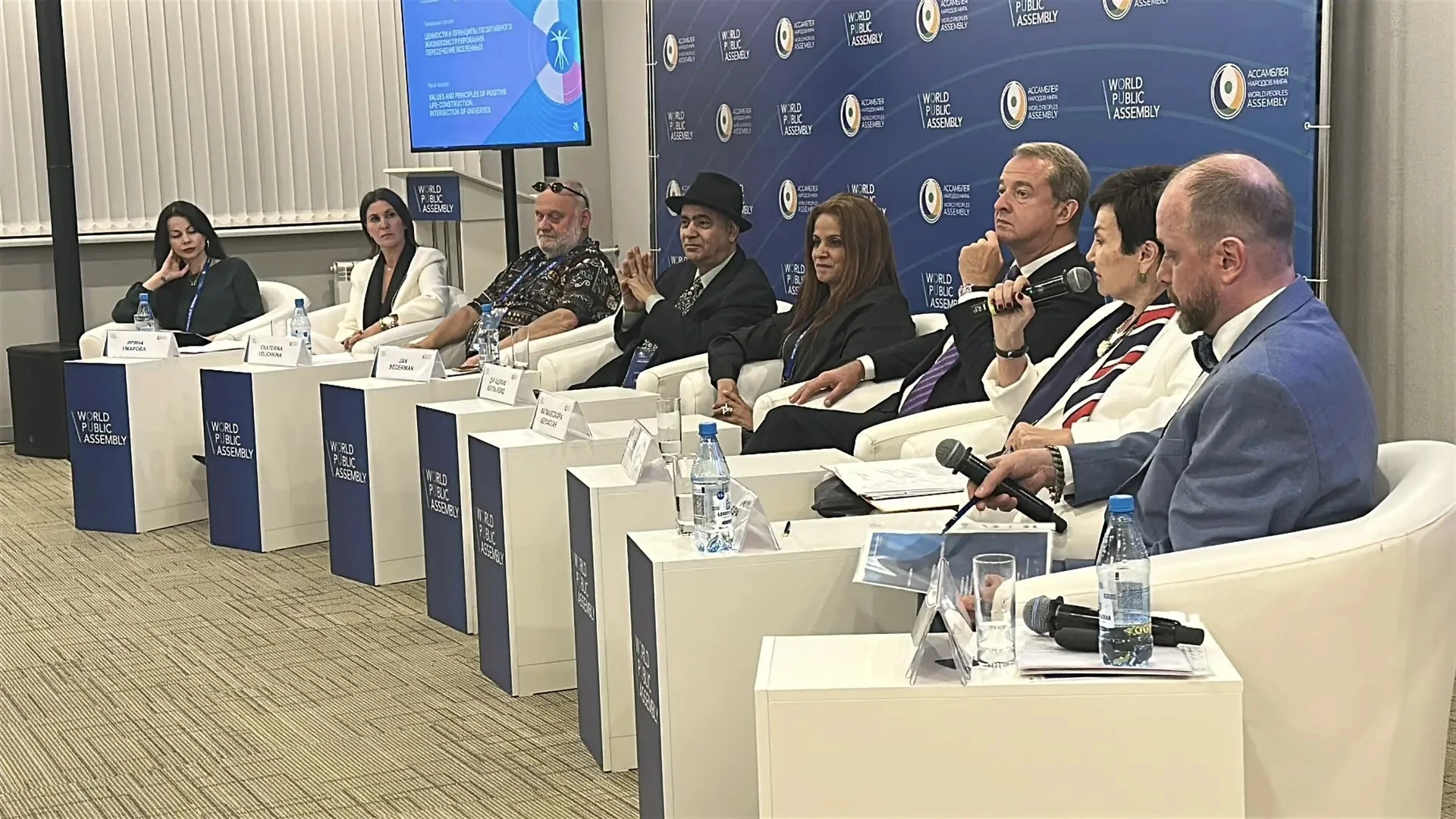
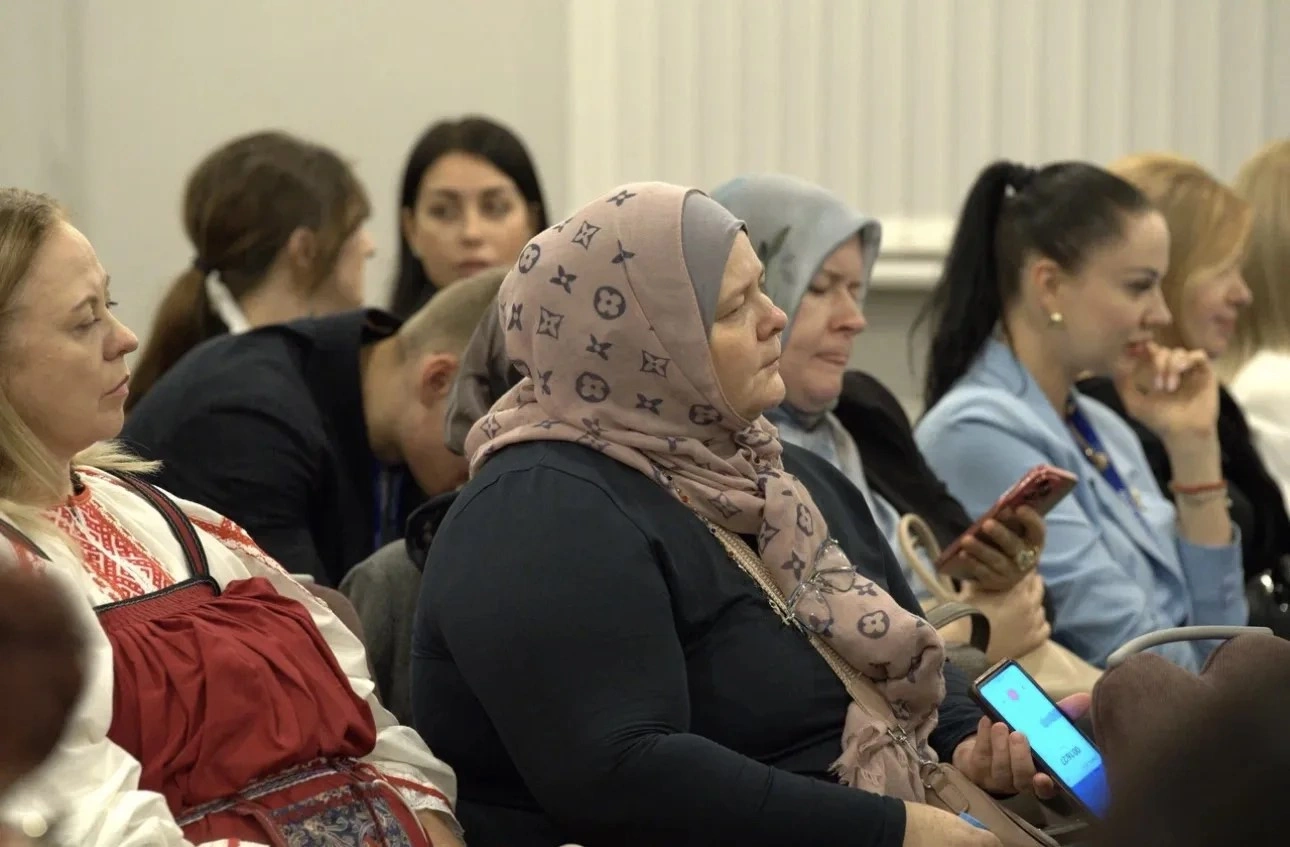
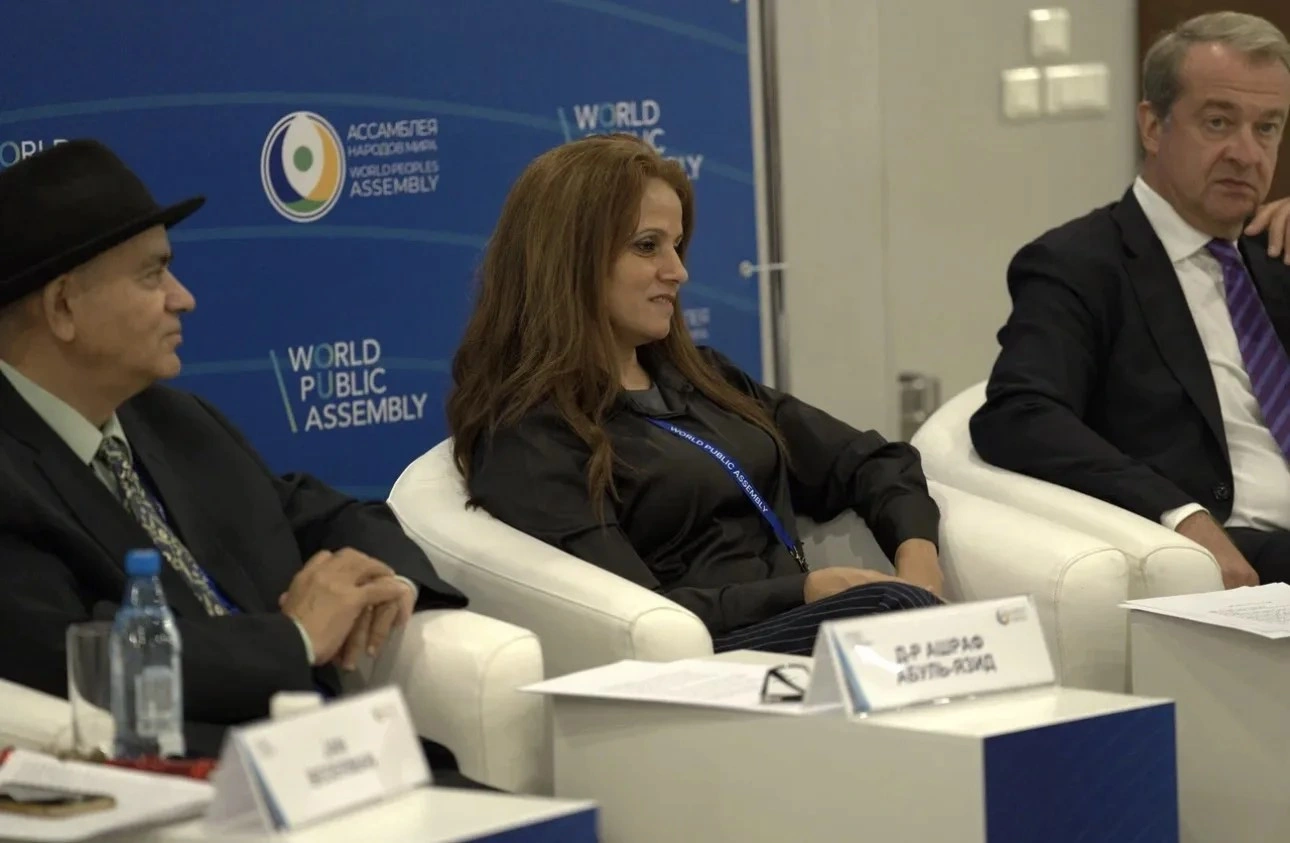
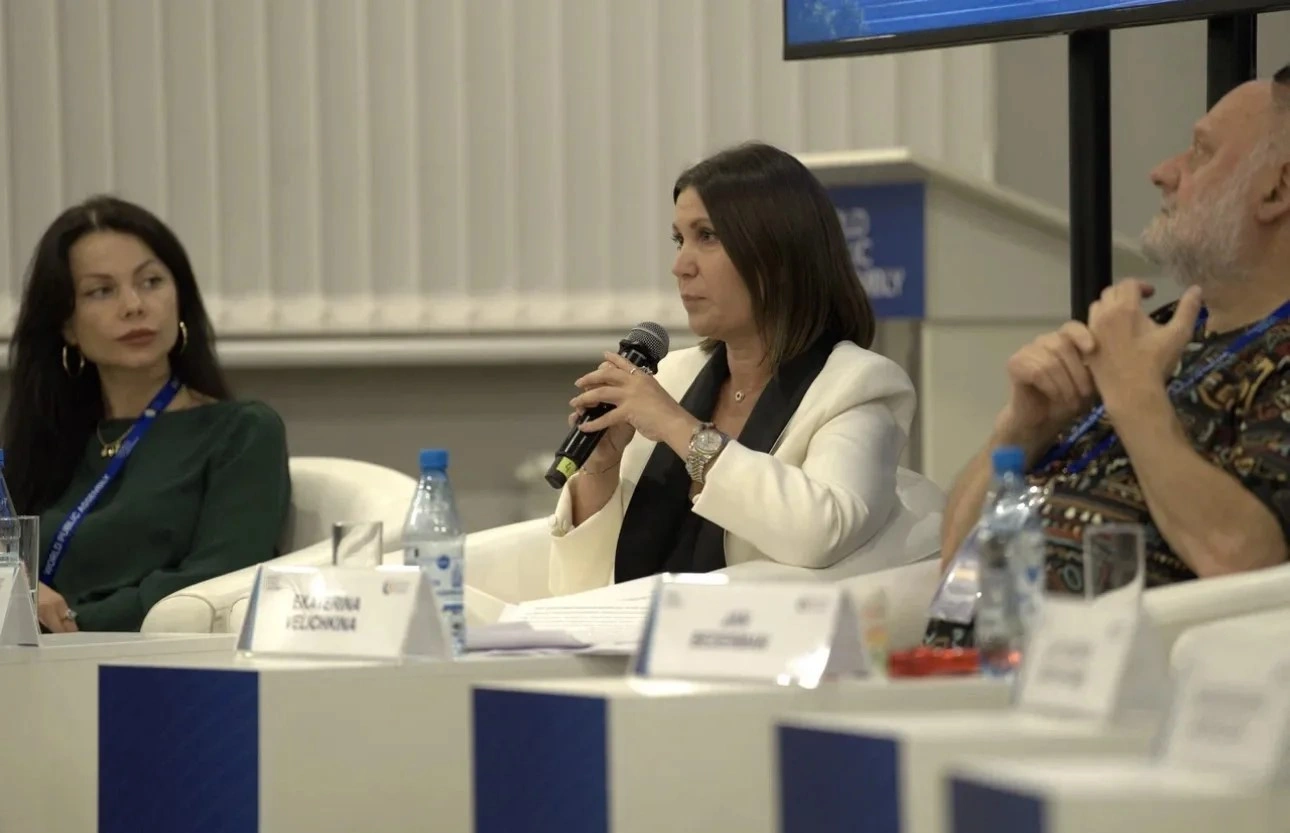
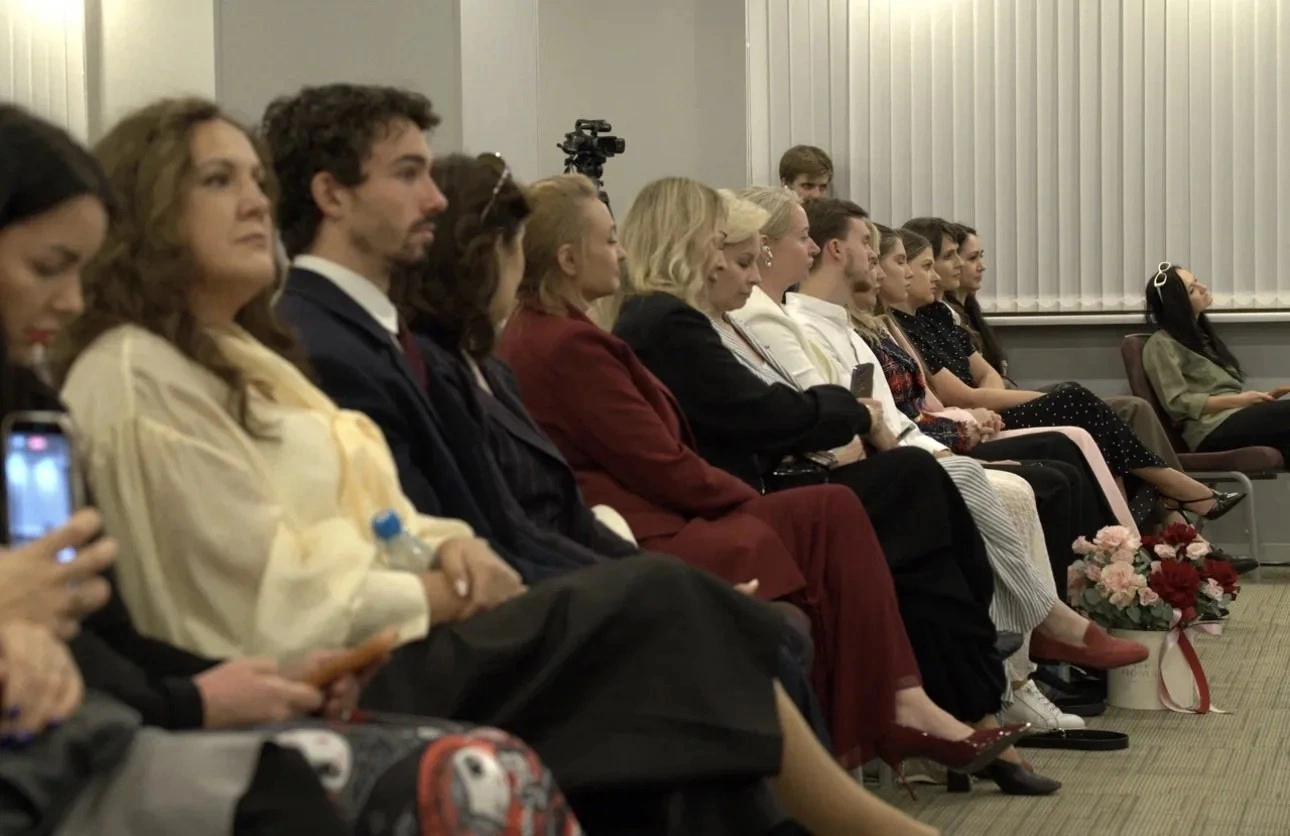
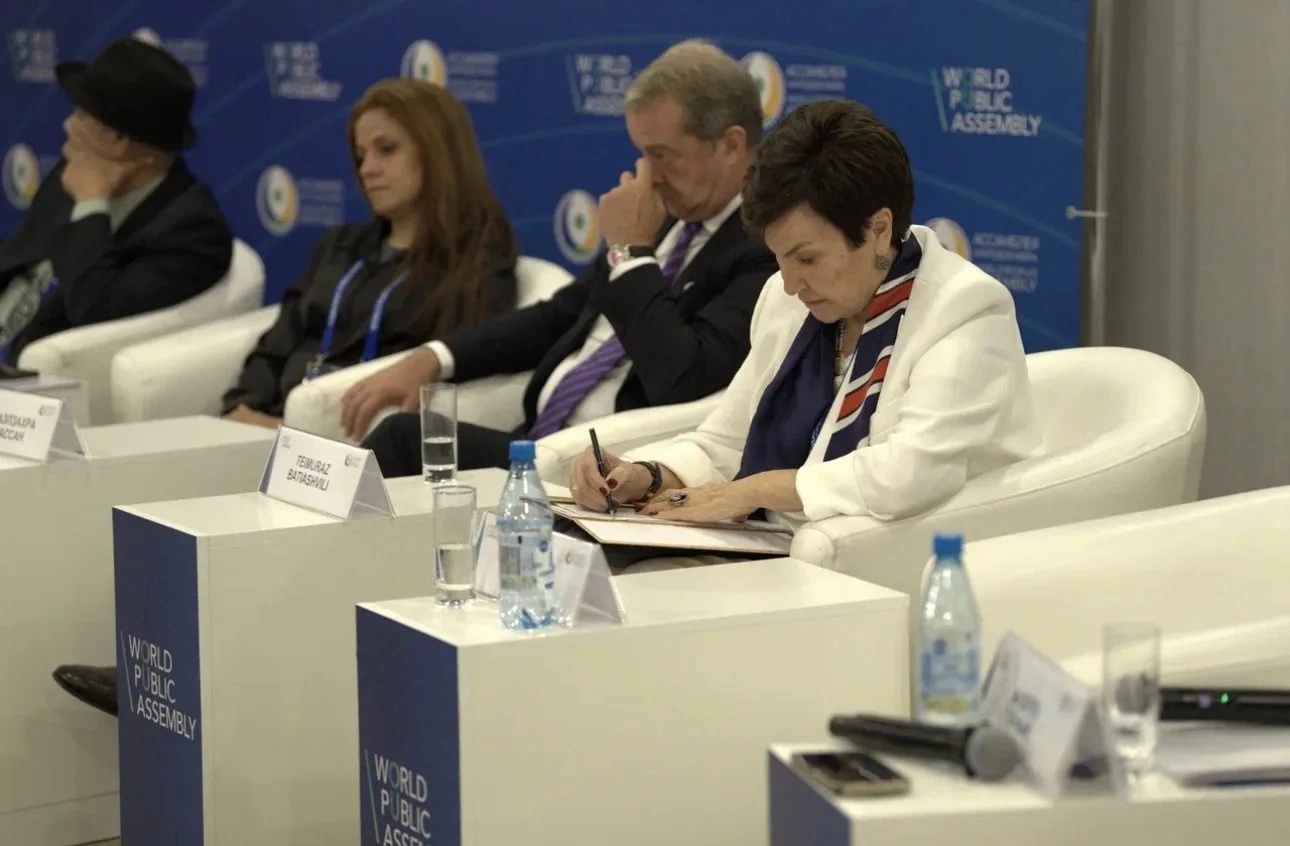
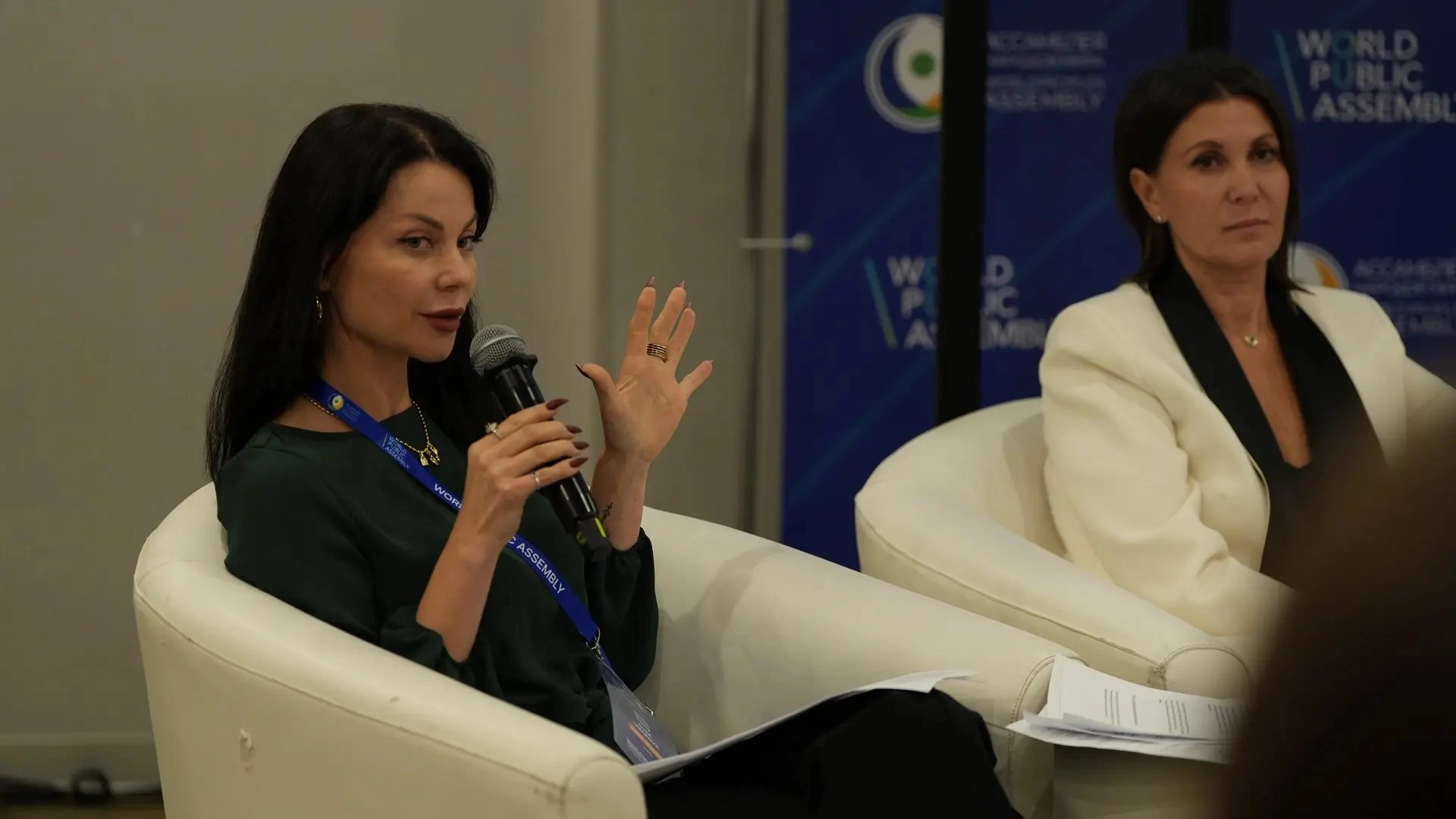
The Panel Session “Values and Principles of Positive Life-Construction (Intersection of Universes)” took place on September 18, 2026 at the World Trade Center. The event was part of the Second World Public Assembly “New World: Values That Unite,” held in Moscow on September 18 - 19.
The Session was moderated by Andrey Yavny, Advisor to the Chairperson of the General Council of the World Peoples Assembly, Doctor of Philosophical Sciences.
The following participants took part in the session:
Alexandra Ochirova (Russia) — Co-Chair of the Supreme Advisory Council of the World Peoples Assembly, UNESCO Goodwill Ambassador;
Teymuraz Batiashvili (Georgia) — entrepreneur, Candidate of Economic Sciences;
Ekaterina Velichkina (Russia) — public figure, blogger;
Irina Umarova (Moldova) — psychologist, specialist in working with existential crises;
Ashraf Abouelyazid Eldaly (Egypt) — poet, writer, editor-in-chief of the literary series “The Silk Road,” President of the Asian Association of Journalists;
Fatmaelzahraa Mohamed Hassan Abouhassan (Egypt) — television director and screenwriter;
Yan Bederman (Israel) — musician, psychologist, founder of the Orchestra of Intuitive Music.
The theme of the session — “Values and Principles of Positive Life-Construction” — is especially relevant in an era of rapid change, when a person regularly faces uncertainty, information overload, and the erosion of stable reference points.
Setting the tone for the discussion, Alexandra Ochirova emphasized:
— When we talk about life-construction, it is important to remember: this is not about an ideal plan for ten years ahead and not about the “successful success” from glossy stories. Life-construction is daily, sometimes quiet work to retain meaning in a rapidly changing world. It is the ability, in the flow of contradictory signals, to hear one’s own inner voice: “This is mine. This I will not betray. This I will protect.”
Drawing on her experience at UNESCO, the expert noted:
— Culture, education, and intercultural dialogue are not simply spheres of activity, but the infrastructure of resilience. They give a person support outside the race of consumption, help them not to lose themselves when external stimuli insistently suggest: “Buy! Be like everyone else! Catch up with the trend!”
One of the practical tools that Alexandra Ochirova herself actively uses is the “heritage map”:
— This concerns not only architectural monuments, but also the intangible: family stories, local traditions, personal memories, even the habitual rituals that we barely notice. When a person sees how many meanings are already built into their life, it is easier for them to separate what has been imposed from what is their own… Life-construction begins precisely here: with one conversation, one story, one conscious action. From such actions a stable life paradigm is formed… One cannot lock oneself into a personal scale: the life-construction of an individual always takes place within a larger system — society, culture, civilization. Today humanitarian issues must be understood as a global problem of preserving humanity. The key to the security of development lies in the humanitarian sphere.
Recalling Socrates: “Know yourself, and you will know the whole world,” Alexandra Ochirova reminded that, following this principle, humanity formed science, culture, art, traditions, and values. She also drew attention to the fact that “the unipolar model of governing a complex, diverse world is becoming a systemic contradiction and a threat: it is scientifically substantiated that the complexity of the subject of governance must never be inferior to the complexity of the object of governance.” Hence her conclusion about the need for humanitarian modernization:
— It must form a new humanitarian space where humanism becomes a genuine principle of personal development and the preservation of all cultures and peoples… Only a moral, understanding, and responsible person is the guarantor of the existence of human life and civilization with a human face. That is precisely why evidence-based dialogue platforms are so important: they form the infrastructure of strategic thought and make it possible to transform global risks and contradictions into priority development goals.
Concluding her speech, the speaker formulated the main idea of the session:
— The “Intersection of Universes” becomes not just a beautiful metaphor, but a real practice when culture, science, politics, and everyday life speak one common language of meaning. When every person, relying on their heritage and their values, can consciously build their life and at the same time participate in building a more sustainable and just civilization.
This thought was continued by Teymuraz Batiashvili:
— Values are not what we declare, but what we rely on when we make decisions. In business, this means: a strategy built on values turns out to be more sustainable than any race for profit.
Ekaterina Velichkina spoke about the role of media in shaping life guidelines:
— Today the media shape not just the agenda, but people’s very ideas about the “right life.” The task of responsible storytelling is not to impose glossy scenarios of success, but to show the diversity of real-life strategies.
Irina Umarova addressed the theme of crisis:
— An existential crisis is not a dead end, but a point of revision. In working with people experiencing a crisis, I see: resilience is born not when a person clings to the old, but when they find support in their own values and reassemble their life anew.
Ashraf Abouelyazid Eldaly reminded those present of the power of the word:
— The word is also an instrument of life-construction. Poetry and translation teach us to hear the meanings of other cultures and find a common language where, it would seem, there is none.
Fatmaelzahraa Mohamed Hassan Abouhassan continued the theme of media responsibility:
— Behind every story we tell from the screen there is a choice: to show a person an alternative or to subordinate them to a ready-made scenario. A responsible director chooses the former.
Yan Bederman concluded the round of speeches:
— Music is a language that does not require translation. In the Orchestra of Intuitive Music, people of different cultures and professions learn to listen to each other without words. This is the practice of resilience — the ability to be in dialogue without losing oneself.
Following the session, the manifesto “Values and Principles of Positive Life-Construction: Intersection of Universes” was presented, which states, in particular:
Values are the infrastructure of resilience. They do not cancel competition, profit, laws, or technologies, but they set the framework within which these forces work for people, not against them.
Meanings require translation. What in one culture is service, in another is care, in a third is freedom. The task is not to unify meanings, but to learn to hear them and translate them between contexts.
Resilience is a skill, not a state. It can be trained: through reflection, through dialogue, through practices that connect body, mind, and culture.
The Intersection of Universes is not a metaphor, but a method. Only when culture, business, medicine, art, media, and the state speak one common language of meaning does an ecosystem emerge in which a person can build life consciously.
A crisis is a point of revision. Not a reason to cling to the old, but an opportunity to reassemble strategy, relying on deep values.
The session participants proposed creating an international interdisciplinary research project, “Values and Principles of Positive Life-Construction: Intersection of Universes,” which will include field research in different countries and cultures.
Main areas of the research:
Mapping value models in different cultures
Identifying universal principles (dignity, care, responsibility) and their local variations; creating a “global map of values.”Practices of resilience in professional environments
Studying how values are embodied in real practices: in business, medicine, education, media.Mechanisms of intersection of contexts
Analyzing successful cases where different spheres work together: public laboratories, intergenerational projects, cultural initiatives.Tools of personal resilience
Collecting and testing practices that help withstand uncertainty: reflection, energy diary, “cultural compass,” the “Five Whys” technique, alternative narratives.The influence of digital environments on meanings
Studying how social networks, algorithms, and media shape ideas about the “right life” and which practices help preserve awareness and autonomy.
Following the discussion, proposals were formulated that will be published in the outcomes of the Second World Public Assembly “New World: Values That Unite.”
Additional information is available on the official website of the World Peoples Assembly and at media@world-assembly.org.