


Roundtable on Happiness: 4 Hours, 89 Participants, 11 Countries, One Foundation
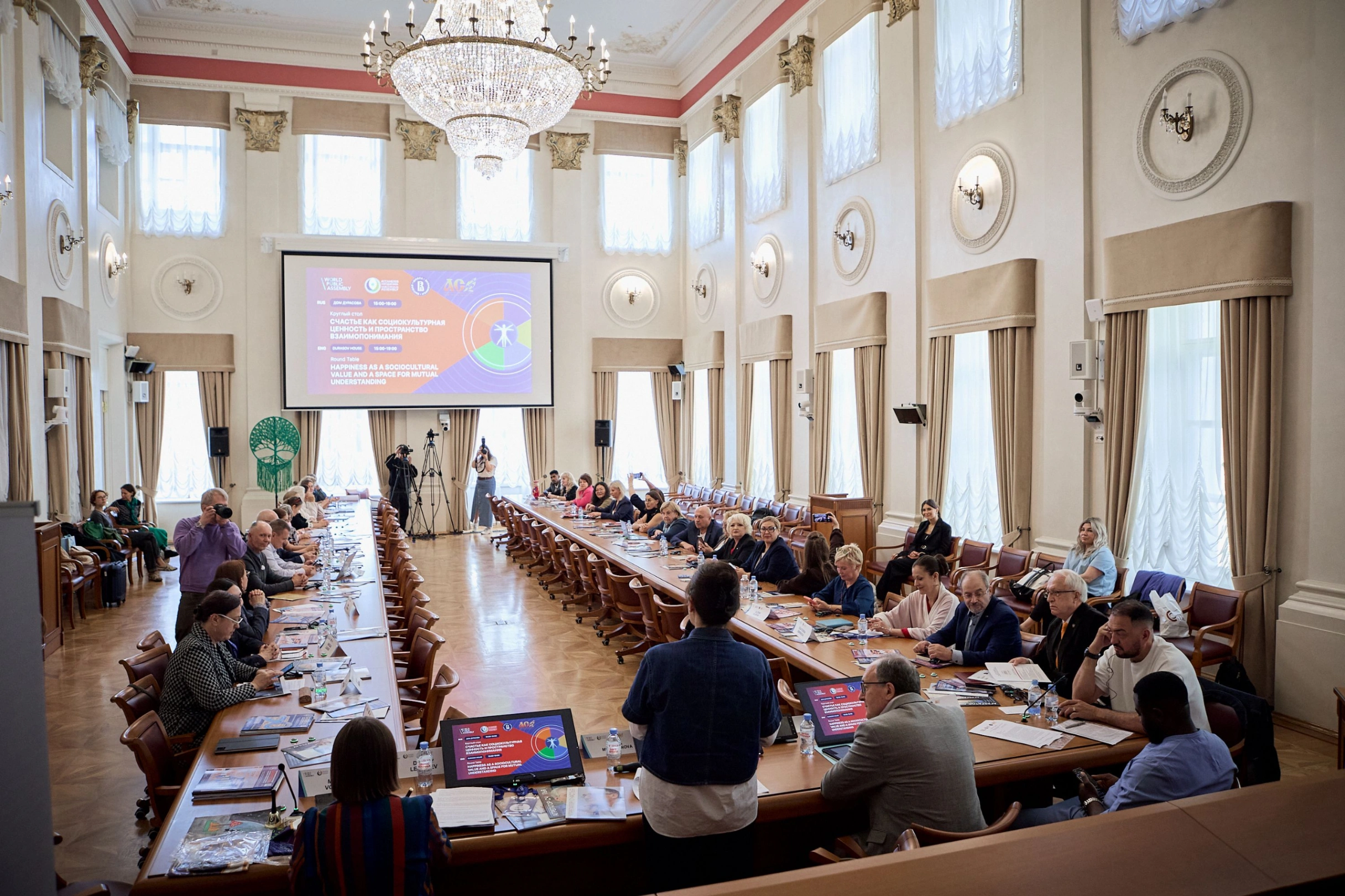
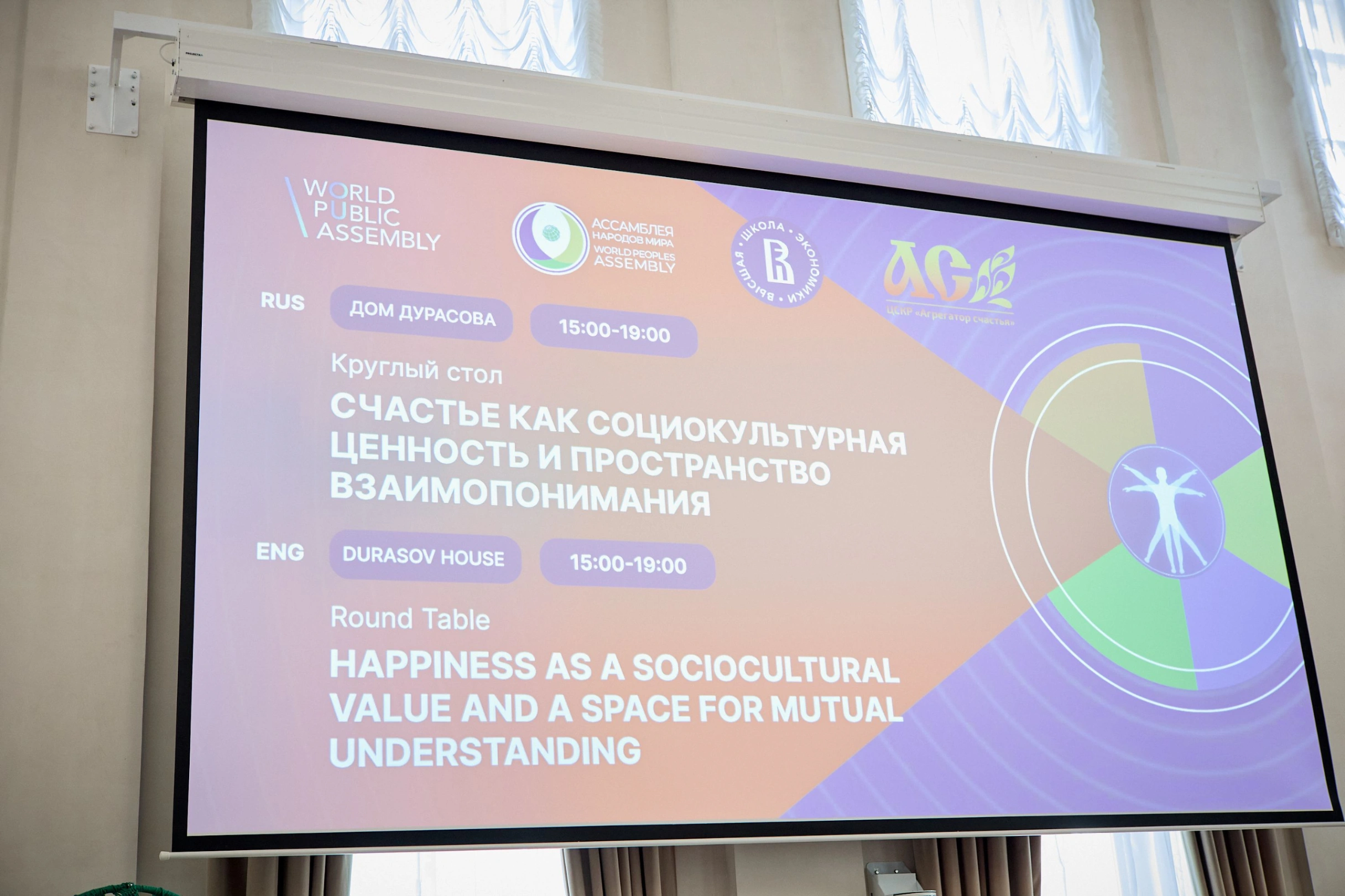
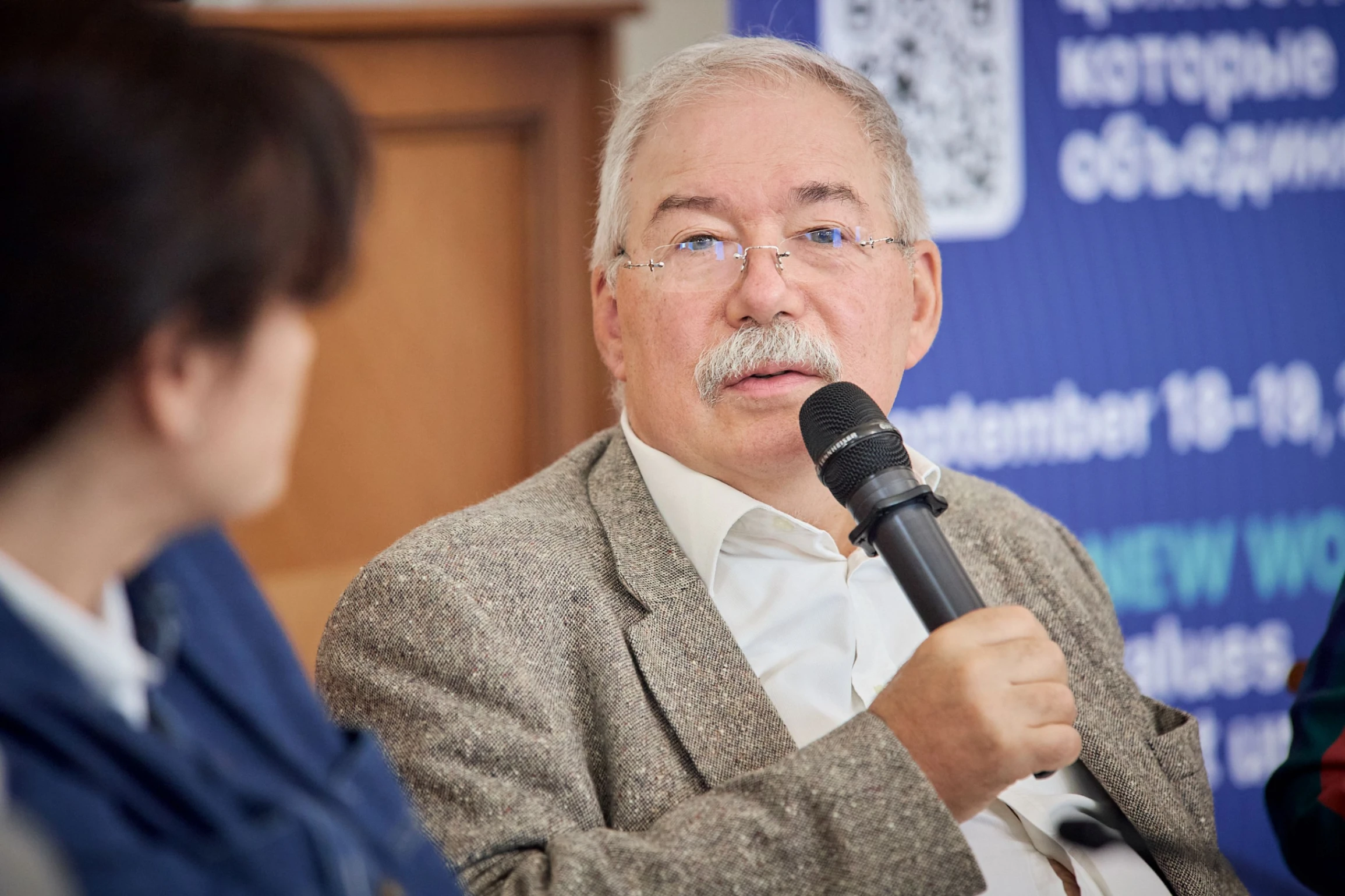
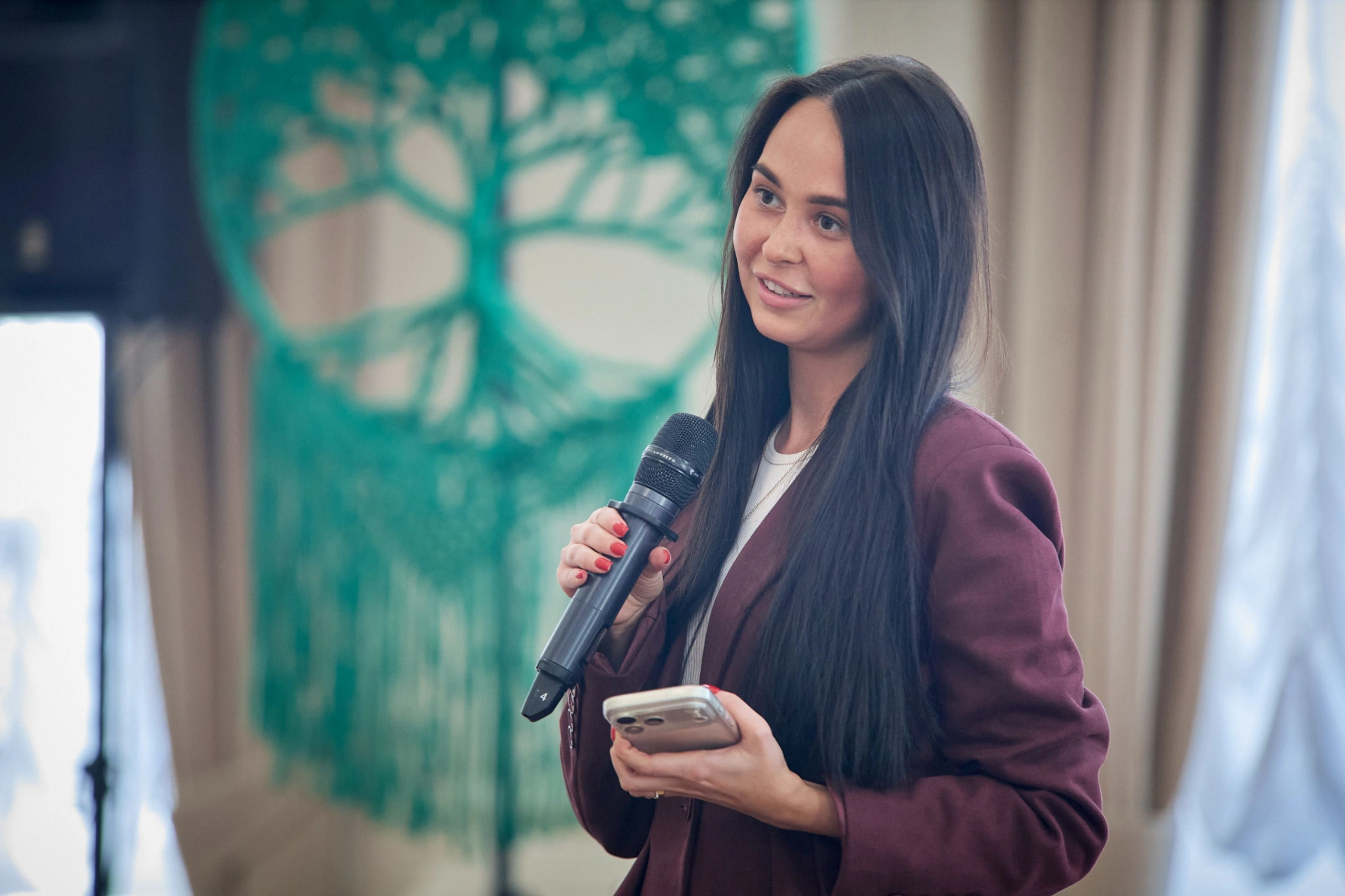
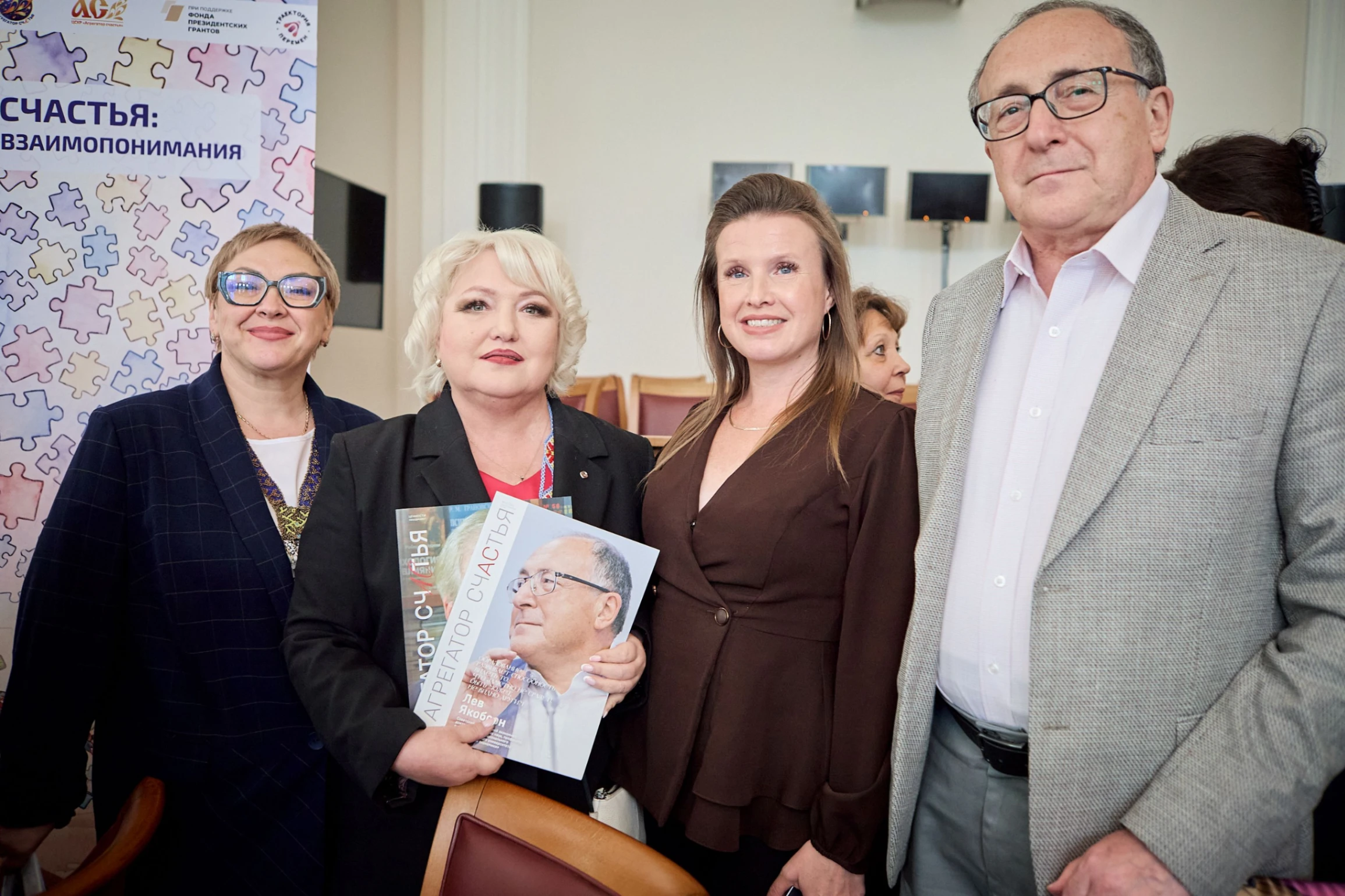
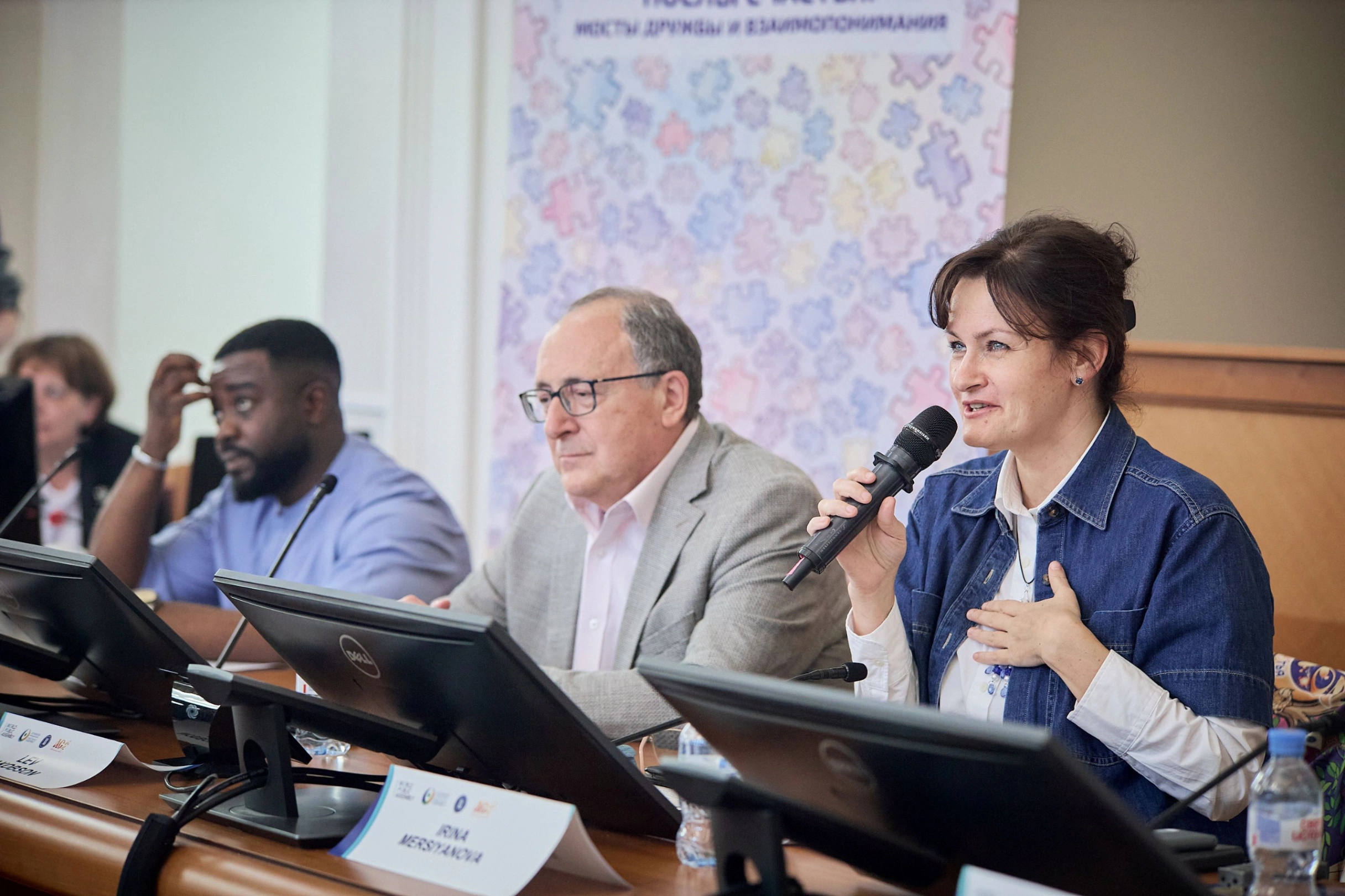
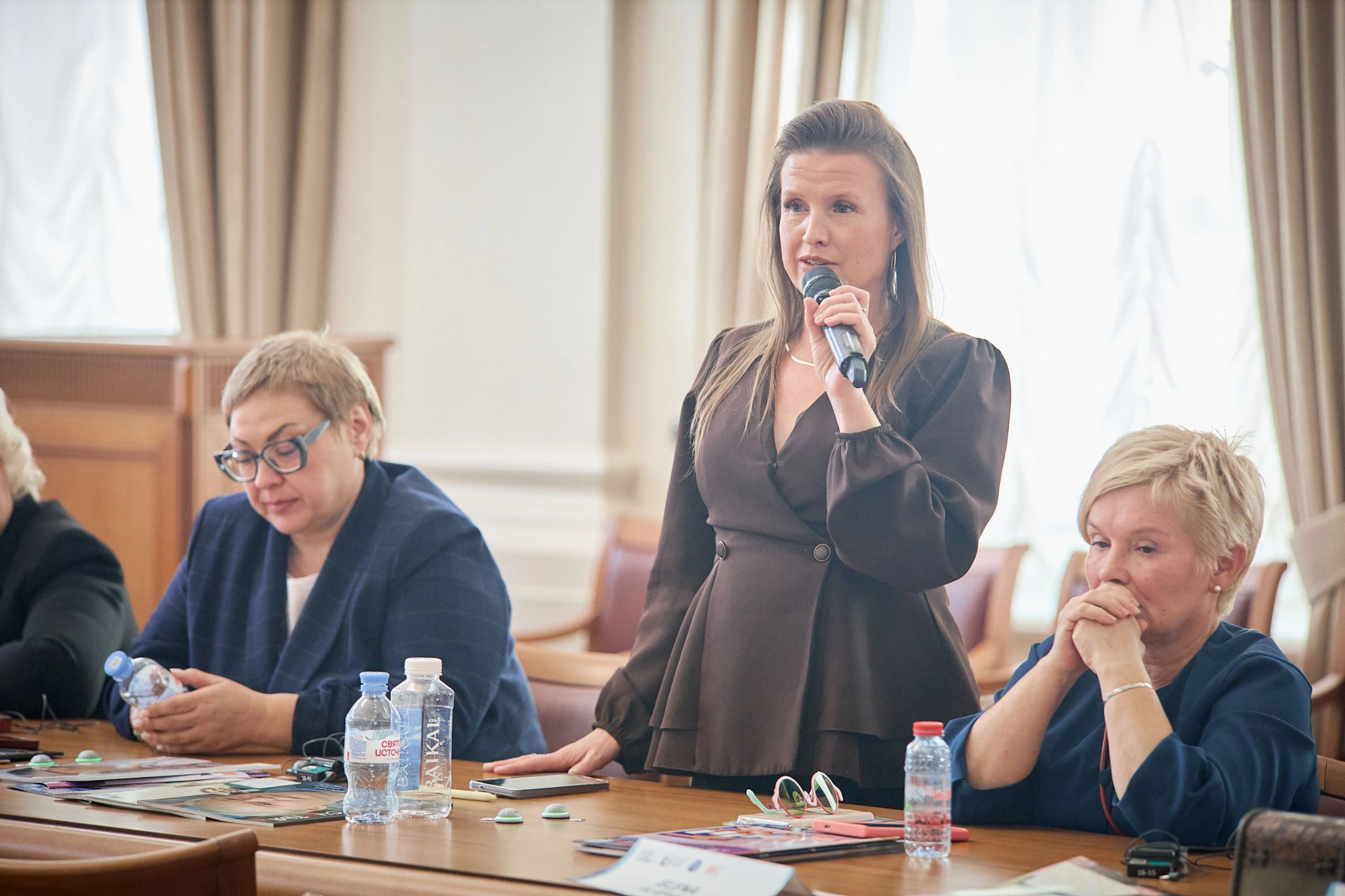
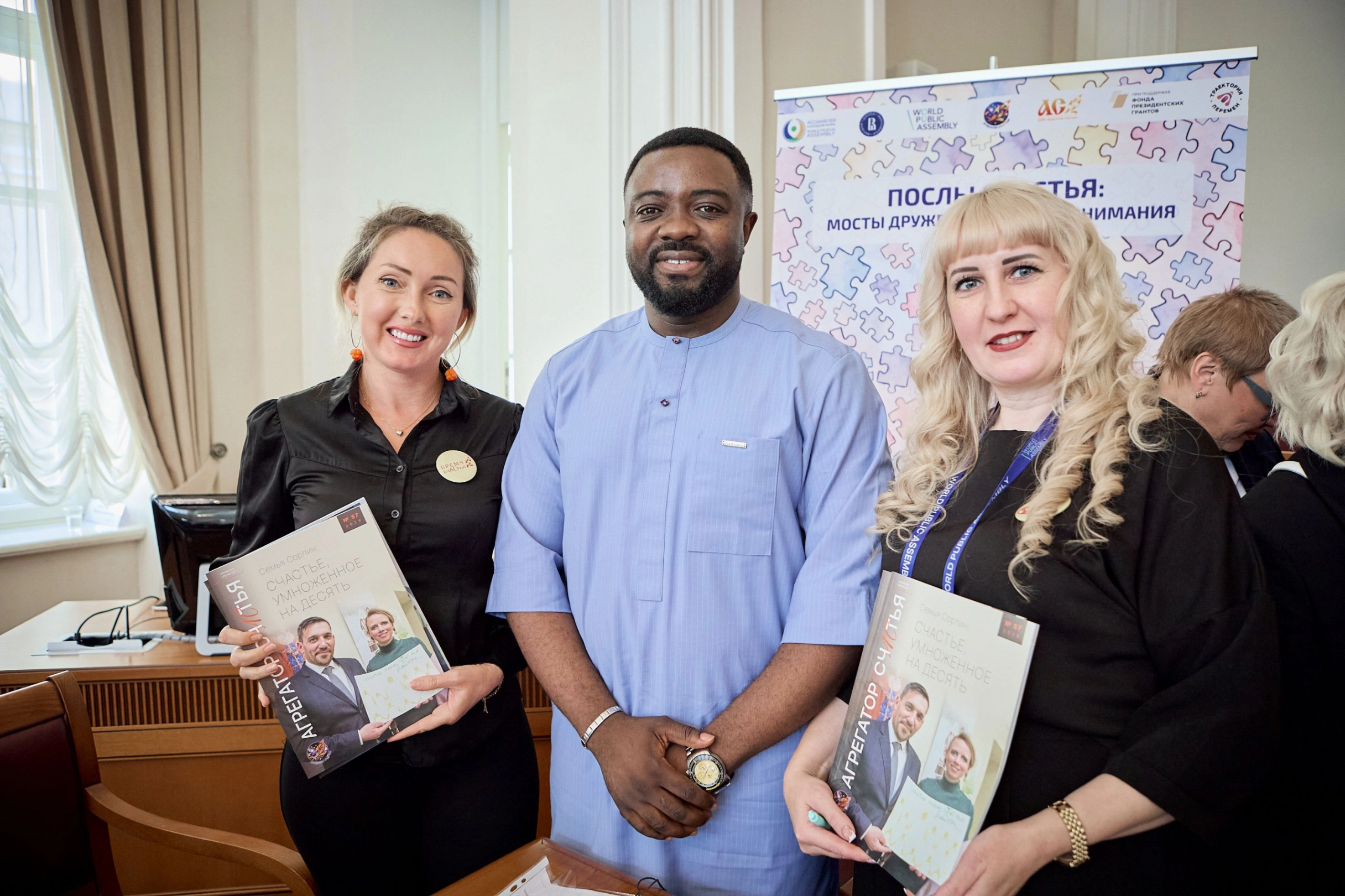
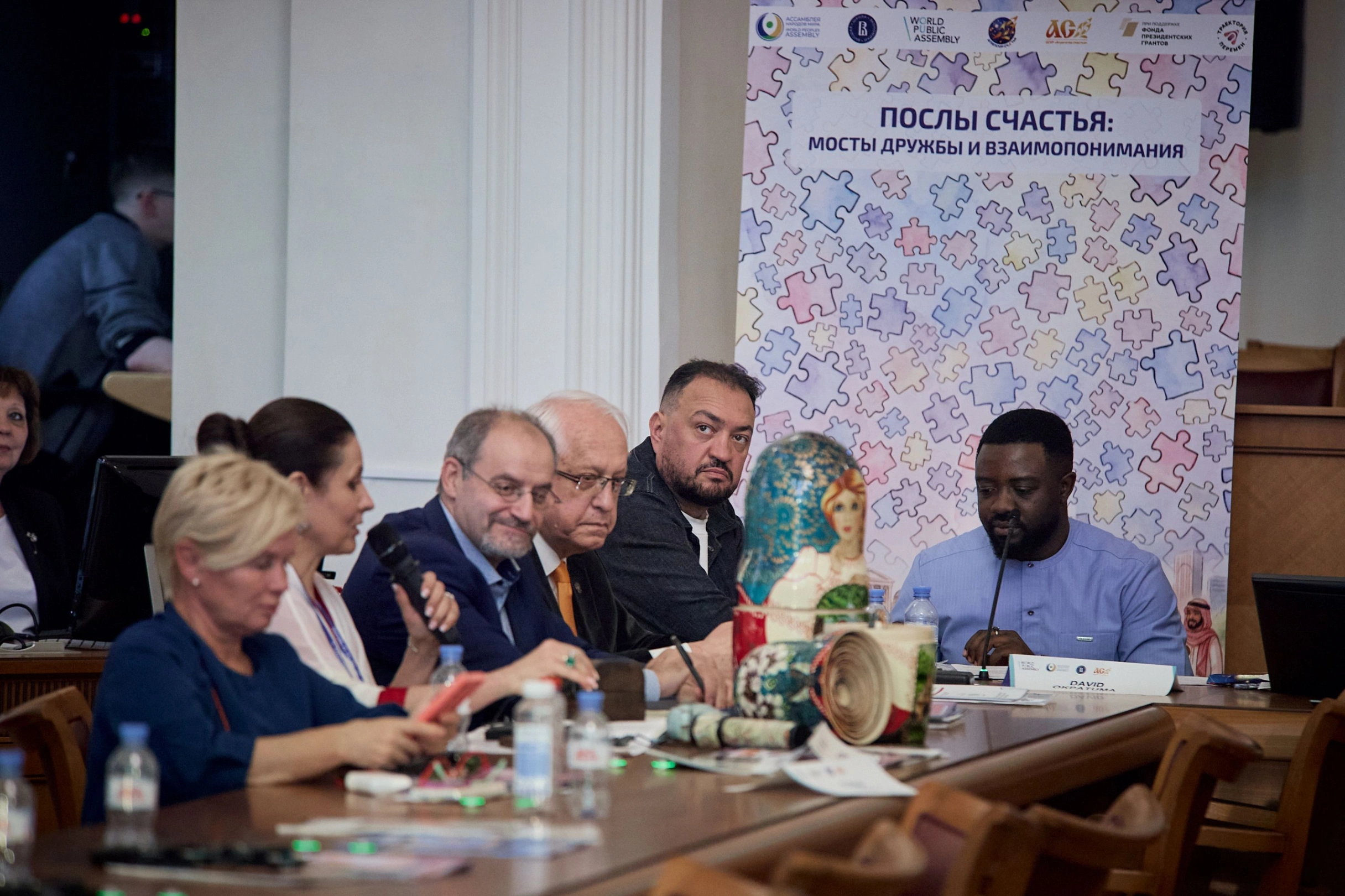
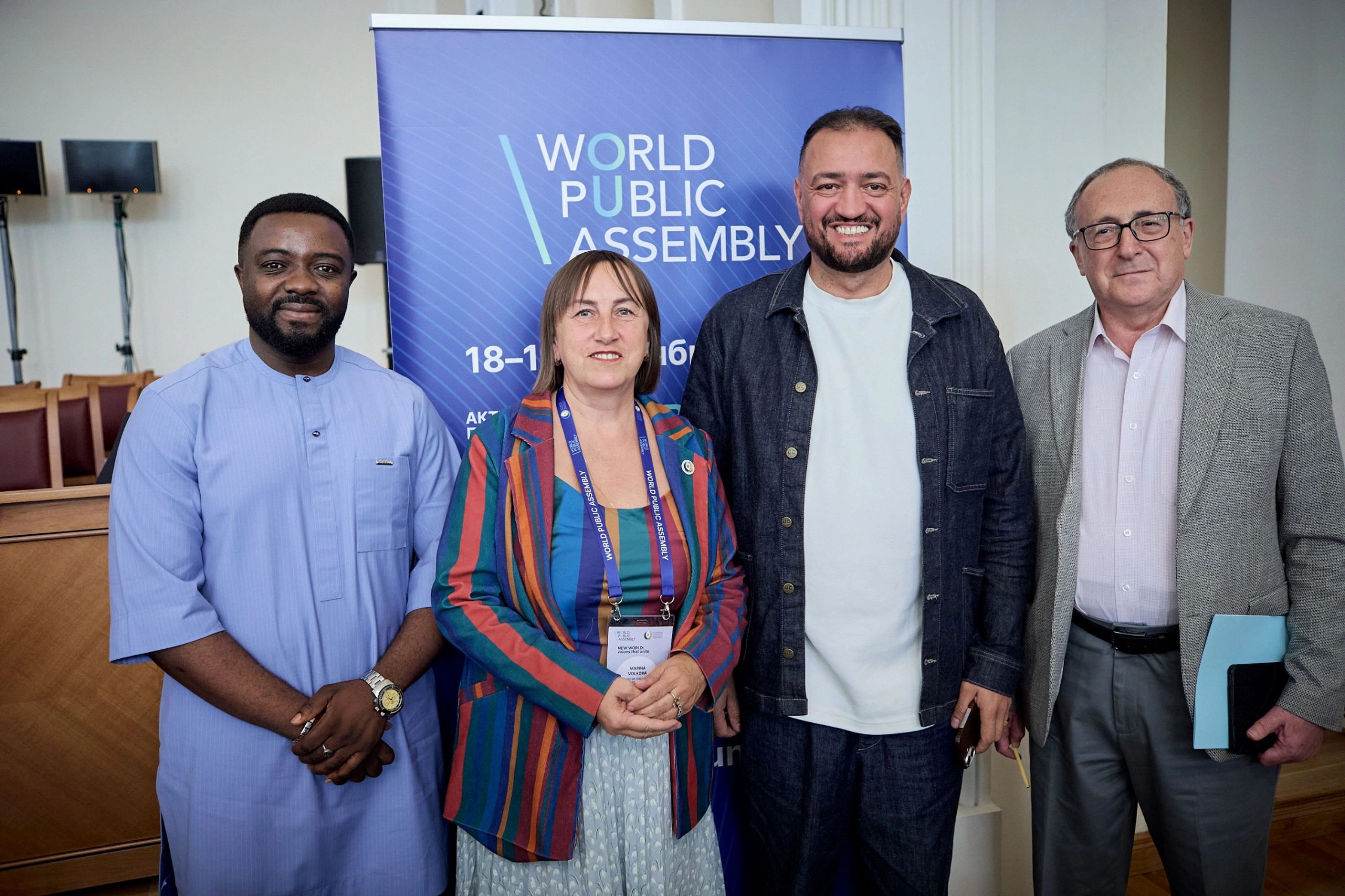
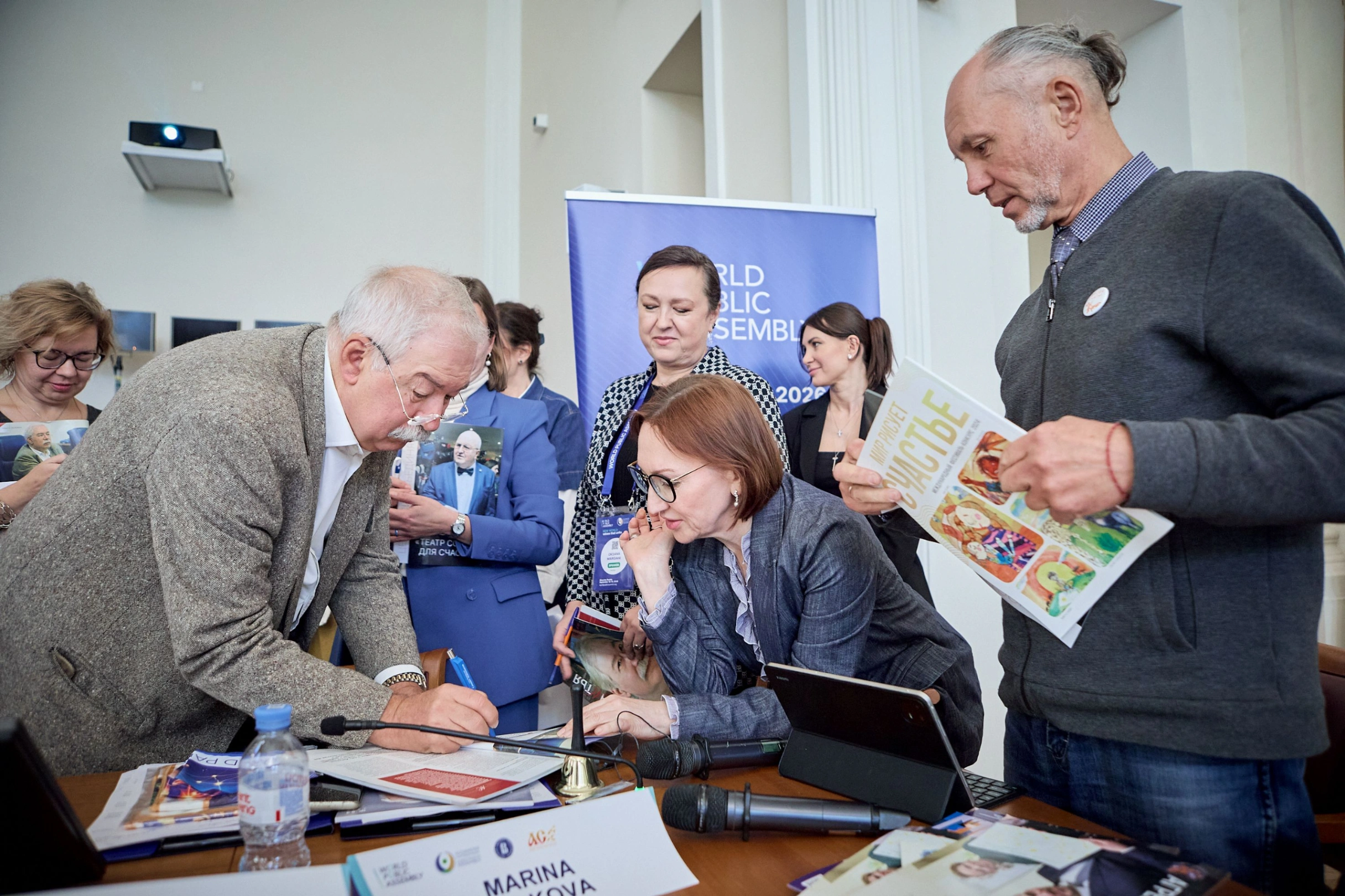
The International Roundtable "Happiness as a Sociocultural Value and a Space for Mutual Understanding" was held on September 17, 2026, at the Durassov House of HSE University. The event preceded the program of the Second World Public Assembly "New World: Values That Unite" which took place in Moscow from September 18 - 19.
Four hours, 89 in-person and online participants from 11 countries, dozens of reports and discussions that exceeded the time limit — the meeting showed that the topic of happiness does not fit within the framework of an academic session and requires continuation.
The roundtable was organized by the World Peoples Assembly, the Center for Studies of Civil Society and the Non-Profit Sector at HSE University, and the Center for Sociocultural Rehabilitation and Development "Aggregator of Happiness" with support from the Presidential Grants Fund.
In conditions of growing alienation and value divides, happiness becomes that very semantic anchor which helps find common ground between people. This is precisely what the roundtable participants spoke about, building the discussion from theory to concrete practices and back.
The moderators of the meeting were:
Irina Mersiyanova — Director of the Center for Studies of Civil Society and the Non-Profit Sector at HSE University, Candidate of Sociological Sciences;
Marina Volkova — Head of the Department of Happiness of the World Peoples Assembly, Head of the Center for Sociocultural Development and Rehabilitation "Happiness Aggregator";
David Okpatuma (Nigeria) — co-founder of the African Development and Cooperation Organization DevCA.
The program included three thematic blocks that consistently revealed the phenomenon of happiness from different sides, but sometimes the discussion went far beyond their framework.
An Interdisciplinary View of Happiness
The first block was devoted to theoretical approaches to the phenomenon of happiness. Distinguished Professor of HSE University, Doctor of Economic Sciences Lev Yakobson, in his report "Is the Economy a Factory Producing Happiness?" showed how economic mechanisms create conditions for well-being: the growth of the common "pie," fair distribution, and expansion of choice. At the same time, he emphasized that the economy does not provide ready-made scenarios for well-being: "Economic science (and science in general) is useful for 'producing happiness,' but it does not offer ready-made recipes!"
Tenured Professor of HSE University, Doctor of Psychological Sciences Dmitry Leontiev revealed the psychological side of the issue, distinguishing between "acute" (momentary) and "chronic" (sustainable) happiness. He emphasized personal responsibility for one's well-being: "Learn to be happy at your place of registration!" According to the expert, wherever we go, we take our inner world with us.
Irina Mersiyanova presented data from an all-Russian survey of 2025: 89% of Russians to one degree or another consider themselves happy. Important factors of well-being turned out to be not only material situation, but also trust, a sense of cohesion, pride in the country, and involvement in public activities.
Sergey Korchagin also spoke about the economics of happiness, complementing the picture with an applied view of how economic instruments can work with the category of well-being not abstractly, but as a real managerial resource.
The discussion showed that happiness is formed at the intersection of several levels: the economy sets external conditions, psychology explains how a person experiences them, and sociology records systemic processes. Hence follows a practical conclusion: to assess quality of life, comprehensive indices are needed that consider not only GDP but also social, cultural, and emotional parameters.
The Voice of Africa and the Demand for Measurable Indicators
A special resonance was given to the discussion by the presentation of David Okpatuma (DevCA, Nigeria), who focused attention on how the topic of happiness manifests itself in conditions of limited resources and rapid social change. According to him, in the African context, happiness is primarily the resilience of community and trust between people. DevCA bets on practices that strengthen this resilience: local volunteer networks, intergenerational cultural projects, and platforms for inter-community dialogue. It is precisely such initiatives that become "working tools" turning the abstract value of happiness into measurable changes in people's lives. David Okpatuma identified an important practical question: which indicators most reliably reflect whether a society creates conditions for the happiness of its citizens, especially in resource-limited and multicultural contexts? And how can this data be turned into clear guidelines for national strategies and intergovernmental programs, so that they really change people's lives rather than remain at the level of academic metrics?
This question set an important vector for the entire discussion: how to connect living practice with measurability and managerial decisions? David Okpatuma also spoke about acmeology — the science of the flourishing of personality and the achievement by a person of their peak not only in profession but also in personal awareness and the ability to be a support for others.
Ekaterina Smirnova — psychologist, acmeologist, architect of meanings — continued the theme. Her report "The Cultural Code of a Happy Personality and Producing the Cultural Code of a Happy Family: The Architecture of Meanings and Practices of Intergenerational Continuity" was devoted to how a sustainable cultural code is formed from values, stories, and roles within the family, which is then passed on. An important idea of the presentation: this code can not only be observed but also consciously built, turning family and cultural meanings into a resource for well-being and continuity.
Family as the First Cultural Bridge
The theme of family happiness and intergenerational continuity was raised by a mother of ten children, holder of the highest state award of the Russian Federation — the Order "Mother Heroine" — Isabelle Sorlin (France — Russia). She was unable to attend in person but sent an address which was read out to the participants. Isabelle Sorlin called the family the first cultural bridge that people build, often without thinking about it. In her home, both French and Russian are heard, as well as children's languages understandable only to their family. It is in this interweaving that a special space of trust is born. When ten brothers and sisters argue, make up, and tell each other stories about grandparents from different countries, they are not studying intercultural dialogue from a textbook — they are living it. Thus, from simple everyday moments, the ability to hear the other, respect their memory, and share one's own is formed. As Isabelle Sorlin noted, intergenerational dialogue in the family is the "quiet foundation" of happiness: not loud achievements, but the opportunity to say "I understand you," even if loved ones speak about different things. Elders pass on not only recipes and memory of important dates but also a sense of support: "You are not alone; a whole history is behind you." The younger ones return this support in a new sound: "We remember, and we will do it our own way." This is exactly how tradition becomes alive rather than museum-like.
For Isabelle Sorlin, the Order "Mother Heroine" represents not only a personal award but also recognition of the value of the labor of millions of women who every day build bridges between generations, cultures, fears, and hopes. She passed the baton to the participants: let the conversation at the roundtable become another thread connecting people seeking common meanings.
Voices from Different Countries
Peace Ambassador of the "Universal Peace Federation," Honorary Member of the Russian Creative Union of Cultural Workers, member of the international organization United Forces, the International Committee Humanity Rights, the World Business Council (UAE), and the leadership of the Association of Russian-Speaking Women in Israel Irina Markova-Shagal (Israel) gathered reflections on happiness from children from different countries. They became another confirmation that happiness sounds differently in each culture, but its foundation, formed by a sense of connection, belonging, and understanding, is universal.
Practices of Measuring and Constructing Well-Being
In the second block of the discussion, participants discussed how to measure happiness and which metrics allow accounting not only for income but also for health, access to culture, inclusivity, level of trust, and participation in various communities. The key question was whether existing tools are sufficient or whether new approaches are needed that can reflect the sociocultural specificity of well-being. Experts agreed that it is important not to reduce measurement to formal reports but to preserve living human meaning in the data, to take into account how people themselves describe their state and what they consider important.
"Happiness Ambassadors" and Applied Projects
The third block of the discussion was devoted to real practices that turn the idea of happiness into a tool for bringing people closer together. The focus was on cultural initiatives, volunteering, creative exchange, and work with diasporas — that is, practices capable of overcoming political barriers and creating "bridges of mutual understanding."
Representative of the non-profit organization "Well-Deserved Rest" Elena Alieva spoke about a project based on couchsurfing — free exchange of hospitality for the older generation and residents of small settlements. She shared how participation in the exchange changes people's self-perception and strengthens connections between different territories.
Editor-in-Chief of the magazine "Happiness Aggregator" Oksana Margiani presented the publication as a media platform gathering voices of different generations and supporting family values.
Head of the "Southern Happiness Aggregator" Alla Kukina highlighted the experience of introducing well-being practices in the school environment and forming a supportive atmosphere in an educational institution.
Head of the Department of External Relations of VolgGMU of the Ministry of Health of Russia Natalya Alshuk emphasized the importance of systematic work with foreign students and the development of academic exchange. In her opinion, this not only strengthens the international image of the university but also creates a multicultural educational environment where students learn to interact in a diverse team, and this is a key skill for future physicians.
Head of the "Northern Happiness Aggregator" Natalya Tozik shared her experience of creating sustainable local communities in the North, where connections between people become an important resource for well-being in harsh conditions.
An Invitation to Action
Marina Volkova invited all participants of the roundtable to join the World Community "Happiness Ambassadors" — a network of people and organizations that turn the value of happiness into real practices of solidarity, cooperation, and joint action. This is an open community that anyone can join who is ready to be a bearer of unifying energy and build "bridges of friendship and mutual understanding" in their environment.
Outcomes and Prospects
The roundtable lasted four hours, but even this turned out to be not enough. The discussion was lively, more questions remained than answers, and many topics required continuation. Participants analyzed happiness not as a decoration of the agenda but as the foundation on which trust and resilience of communities are built. A common conceptual framework was developed, possible measurement approaches were outlined, and a collection of practices working as a tool for mutual understanding was gathered. Special attention was paid to the involvement of young people: it was proposed to consider them as active co-authors of projects shaping future well-being, rather than as passive heirs of the experience of the past. Following the meeting, it is planned to prepare a package of practical recommendations for the resolution of the Second World Public Assembly. The focus will be on areas of public diplomacy, educational and cultural programs, development of the "Happiness Ambassadors" network, and scaling of successful local initiatives.
An important semantic result of the discussion was the refutation of the myth that happiness is a finite resource: participants came to the conclusion that happiness that is shared does not diminish but multiplies. Irina Mersiyanova, in concluding the meeting, expressed hope that the proposed ideas will find practical application and will help make the lives of more people fuller and happier.
Additional information is available on the official website of the World Peoples Assembly and at media@world-assembly.org.