

Writer Yuri Polyakov on the Importance of Documentary Cinema, Film Festivals and the Problem of Artificial Intelligence in Creative Work
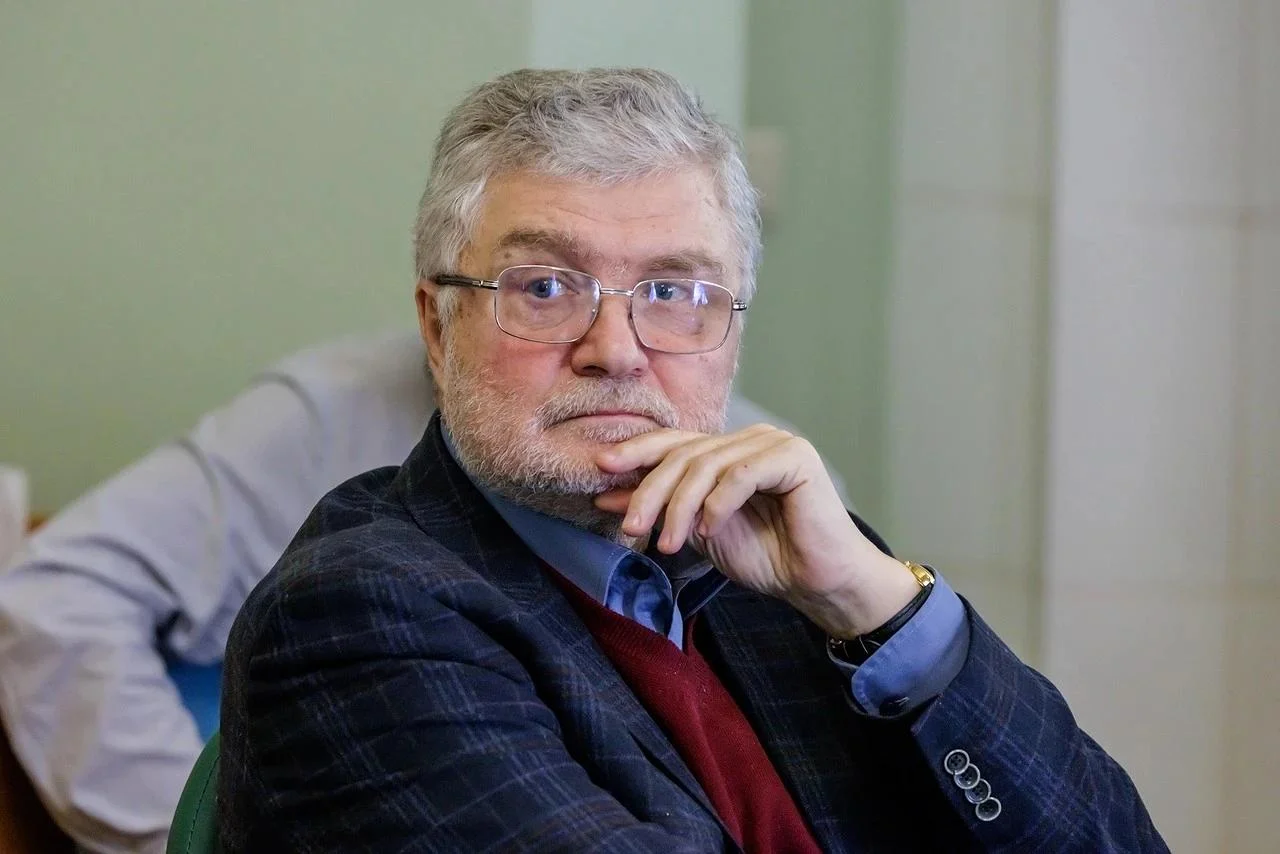
Yuri Polyakov is a writer, poet, playwright, screenwriter and public figure, Chairman of the National Association of Playwrights, Chairman of the Editorial Board of the "Literaturnaya Gazeta" until 2021 and Editor-in-Chief of the "Literaturnaya Gazeta". He is a holder of the Order of Friendship and the Order of Honor. His literary works have been adapted into the films "The Voroshilov Sharpshooter", " Emergency Incident of a District Scale", " 100 Days Before the Command", " Sky of the Fallen", which have gained wide renown and won the love of audiences.
Film critic Elena Ulyanova spoke with the writer during the 21st Vladimir Menshov International Film Festival "Won Together".
– Yuri Mikhailovich, you have been at this festival for several years now, including as a jury member. What were your expectations for the 2026 program and did they come true? What does the "Won Together" festival generally mean to you?
– I believe the festival program has been assembled very competently. It includes films that differ in theme and artistic techniques. There was a period when documentarians strove to make something unlike anything else, as far removed as possible from Soviet documentary filmmaking and they indulged in quite a few oddities. That never ended well. But the films presented in the program of the "Won Together" festival are traditional in the good sense of the word and at the same time adapted to the new times, new tasks and new themes. These films broaden one's horizons and understanding of what is happening, without avoiding the tragic sides of our current life. Just consider the film about Crocus City Hall that was shown at the opening ceremony!
– And have there been any changes in the program over the years?
– Sometimes one theme fades away while another, on the contrary, takes off and vice versa. Overall, the festival reached a certain level of program quality several years ago and hasn’t dropped below that level since, and it is quite high.
– Many documentary filmmakers say that the festival is the only place where one can watch documentary cinema and communicate with audience and with each other. What can you say about this and about festivals in general? Are they really so necessary for authors and audience?
– Festivals are undoubtedly necessary. On the one hand, they provide direct interaction with audience and opportunities for professionals to meet informally, and a chance to watch their colleagues' works, compare it with one's own and draw conclusions. Even I, not a filmmaker, return home after a festival feeling somehow enriched, with a sense that my inner universe has expanded and my understanding of certain things has deepened. Festivals are very good. They are needed and one should not skimp on spending money on them. We have plenty of things on which we could save money on, but film and theater festivals and book fairs are not something to economize on. Such events are very important as drivers of culture.
I cannot watch documentary films without sadness, because I know they will not reach a wide audience. Why does this happen? Why do our TV channels operate according to certain rules that they themselves have invented and that have nothing in common with the interests of society as a whole and the film community in particular? I do not understand. The television schedule is incomprehensible to me. It is filled with an excessive number of mediocre series, instead of good documentary films that could be shown. People would watch them with great pleasure, because they are genuinely well made, interesting, spectacular and informative. The television community seems to have accused the mass audience in advance of being unable to understand deep themes, believing that it needs something light and sensational.
Good documentary cinema shapes a patriot-citizen by immersing them in reality and in history. And as long as distribution issue remains unresolved, film festivals play a major role in popularizing such films, especially festivals like "Won Together" – with its resonance and systematic screenings in educational institutions across Russian cities.
– There is a lot of talk now about the dominance of artificial intelligence in books, in cinema, everywhere. What do you think about this?
– Artificial intelligence? People who lack talent but have wormed their way into the profession are precisely what artificial intelligence is. They simply copy what others have done well. This problem needs to be solved at the legislative level. A law should be adopted against the dominance of artificial intelligence in creative work. Something similar could be done on the model of the law on the percentage of foreign films in distribution, to increase the number of Russian films. Many were opposed, but the law was passed (though only when things got really bad). Perhaps we should not wait for something to happen, but take measures right now?
Let us remind that the 21st Vladimir Menshov International Film Festival "Won Together" is being held in Moscow and Sochi from September 14 to 24, with the participation of documentarians from more than 40 countries and 39 Russian cities, whose works reveal the themes of victory in various spheres of life, peacemaking, religious tolerance and humanism.
The organizers of the film festival are the World Peoples Assembly, the Production Center "Integration", the Eurasian Academy of Television and Radio and the Company "Intellectual Resource", with the support of the Ministry of Culture of the Russian Federation.
Read about the results of the screening on the official websites of the Film Festival and the World Peoples Assembly.
Additional information is available at media@world-assembly.org.