

 Back to news
British Director and Screenwriter Nicholas Rooney on Russian Culture, Documentary Cinema and His Trilogy on Relations Between Russia and the West
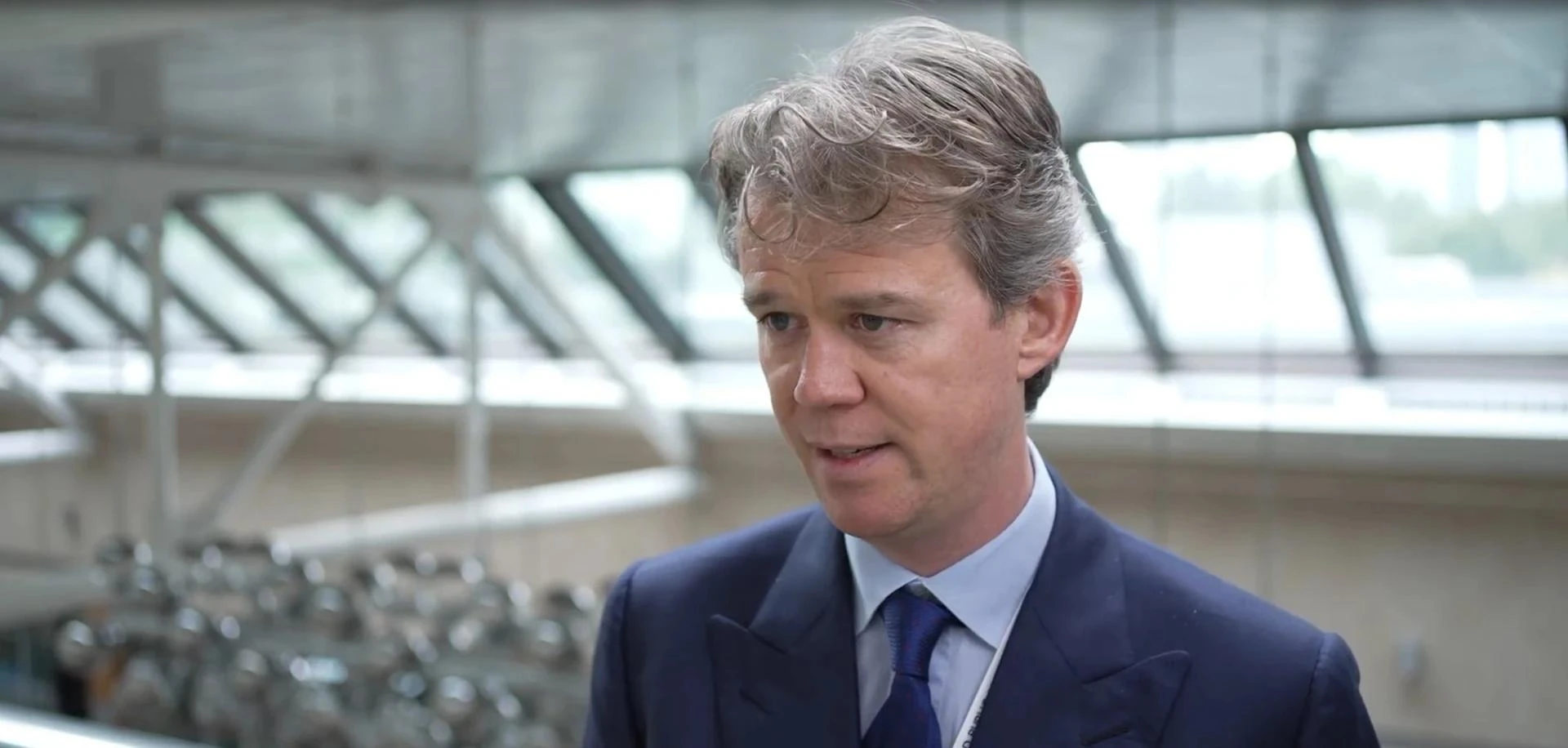
British director and screenwriter Nicholas Rooney – a member of the jury of the International Student Film Competition at the XXI Vladimir Menshov International Film Festival "Won Together"- discussed the festival, held in Moscow and Sochi on September 14 – 24, 2026, with the host of the cinema section in the journal "International Affairs," Aida Soboleva, a member of the press jury of the IFF "Won Together."
- In your work, especially in the conversation film with Alexander Dugin "The Wolf in the Moonlight," one senses a keen interest in Russia and its philosophical quests. Where does it come from?
- My interest in Russia and its culture arose long ago: I have always been deeply moved by Russian opera and ballet. In Europe, while studying Latin and Greek philosophy, I simultaneously took courses in Russian literature, immersing myself in the works of Chekhov, Turgenev, Dostoevsky, and Tolstoy. About 15 years ago, already holding a master's degree in philosophy and diplomacy, I decided to take a year off to learn various languages, including Russian. I applied to St. Petersburg University, was accepted, and ultimately spent two years studying at the Faculty of International Relations. I have always felt that one of the main threats to modern security lies in the difficult relations between Russia and the West. I wanted to understand how this conflict could be smoothed over by peaceful means. After working as a diplomat at the OSCE, I came to the conclusion that formal diplomacy is powerless in this situation. Then I thought: "What if the key to the solution lies in the sphere of cultural and public diplomacy?" And the most effective instrument here, it seems to me, is cinema.
- How many films have you created so far, having chosen this path?
- I started with documentary cinema: I made two feature-length films and am currently working on a third. In addition, I have two narrative films to my credit. One is a short film; the other is a little over an hour long.
- How did your history with the documentary film festival "Won Together" begin, and how many times have you participated in it as an author or jury member?
- Initially, I was drawn to the very idea embedded in the festival's name, "Won Together." In our interdependent world, genuine and long-lasting success can only be achieved by taking into account a multitude of viewpoints, even opposing ones. The festival creates an important semantic tension around this issue. Ten years ago, I submitted my first film here - the documentary "Pillars of Paradise" (2017), which was conceived as an attempt at an impartial, independent investigation. The film was accepted. I left the diplomatic service and, at my own expense, together with a cameraman, traveled across the whole of Ukraine from west to east - from the Carpathians to Donetsk. We talked to all sorts of people who had become hostages of geopolitics. Even then we knew about thousands of dead, understood that the count of refugees ran into the millions. I wanted to understand the roots of this conflict in the very heart of the Christian world. Completely polar opinions were voiced, mutual accusations of lies and disinformation, but I still hoped for a speedy end to the bloodshed and peace in the Donbass.
The next work was the film "The Wolf in the Moonlight" (2020). I managed to meet with the Russian philosopher and political scientist Alexander Dugin and record a long, extremely candid interview with him, which formed the basis of the picture. As an apologist for Eurasianism, the philosophy of the "Russian Logos" and a multipolar world, Alexander Dugin expressed profound thoughts that shed light on the centuries-old ideological confrontation between Russia and the West. This film was shown out of competition at "Won Together" in Volgograd in the autumn of 2022. I was unable to come myself, but I was told that the film aroused great interest and lively discussion. The running time of the picture is almost two hours, but even that did not include everything: there were also purely cinematic, almost mystical in atmosphere episodes. The full version of my conversation with Alexander Dugin was published later, in 2023, in the form of the book "Talking to the Wolf," which is now available online.
And finally, the film I am working on now completes this trilogy devoted to the problem of relations between Russia and the West. Drawing on my more than ten years of experience, I talk with professional diplomats, writers, military personnel, humanitarian workers, and ordinary people. I reflect on war and peace, on how we can build peace together, but I do this not from a political but from a philosophical and religious point of view. After all, if we speak of love, then true love is love of one's enemy, even of those who do you harm. Without the forgiveness of sins, there can be no moving forward, no attainment of peace, and no building of a common future.
- At the current "Won Together" festival, you were on the jury of the student works competition. What can you say about their level?
- The selection this year was indeed strong - there were no frankly weak works at all. Students from film schools not only from Russia but also from Portugal, Serbia, Israel, and Central Asian countries took part in the competition. But I was especially impressed by the film "The Circus of Happiness," a Macedonian-Russian production directed by Miroslav Blazheski. It is a very well-produced and excellently shot work - with vivid characters and a touching story of the realization of a childhood dream.
- And what is your impression of the city of Sochi?
- A very cozy city on the Black Sea coast. True, on this trip I did not manage to walk around much - the screening program was too packed. But several years ago, I was here in winter and skied in Krasnaya Polyana. It was wonderful!
- This year the "Won Together" festival took place in parallel with the Second World Public Assembly, you also took part in its work.
- Yes, I was there. I was struck by the huge number of participants from the most diverse countries. It was especially curious to see a large American delegation.
- In our interview, you can say everything you would like to convey to the Assembly's audience.
- I think I would rather say it in my new film. I hope it will soon be seen in Russia as well. Perhaps even at the next "Won Together" festival.
- And then the last question. Today in the West there is increasingly talk of the inevitability of war with Russia. Do you think such a grim scenario can be avoided?
- I am sure it can. If there is good will and wise leadership, war can be avoided. And it must be avoided.
Recall that the XXI Vladimir Menshov International Film Festival "Won Together" brought together documentary filmmakers from more than 40 countries and 39 Russian cities, revealing in their works the themes of victory in various spheres of life, peacemaking, religious tolerance, and humanism.
The organizers of the film festival are the World Peoples Assembly, the Integration Production Center, the Eurasian Academy of Television and Radio, and the Intellectual Resource company, with the support of the Ministry of Culture of the Russian Federation.
More detailed information about the event can be found on the festival's official website.
Additional information is available on the official website of the World Peoples Assembly, on its VKontakte and Telegram accounts, and at media@world-assembly.org.