

 Back to news
The Foundation of Global Happiness: The Role of Family as the Basis of Social Stability and Intercultural Dialogue Was Discussed at the Summit in Amman
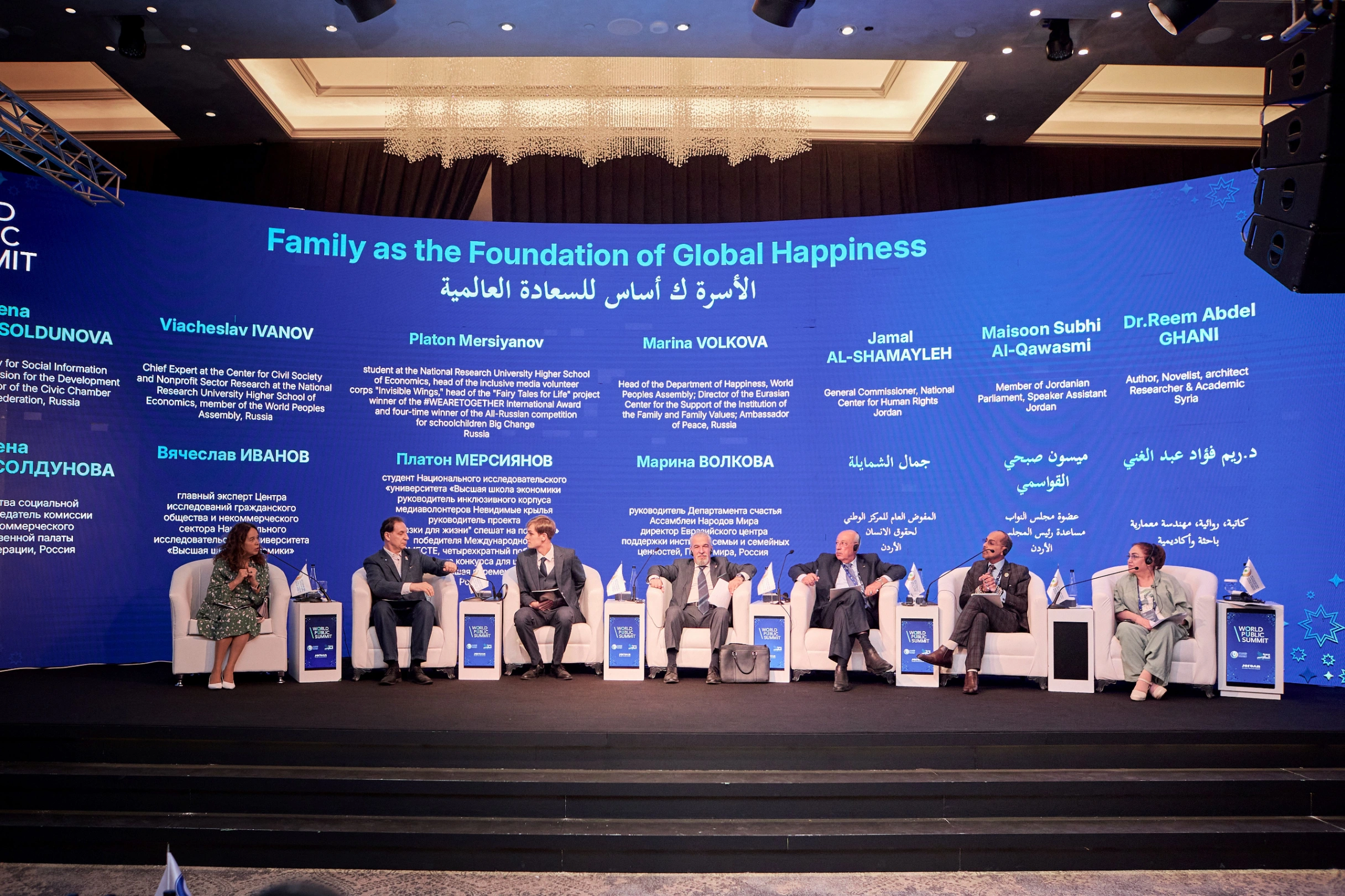
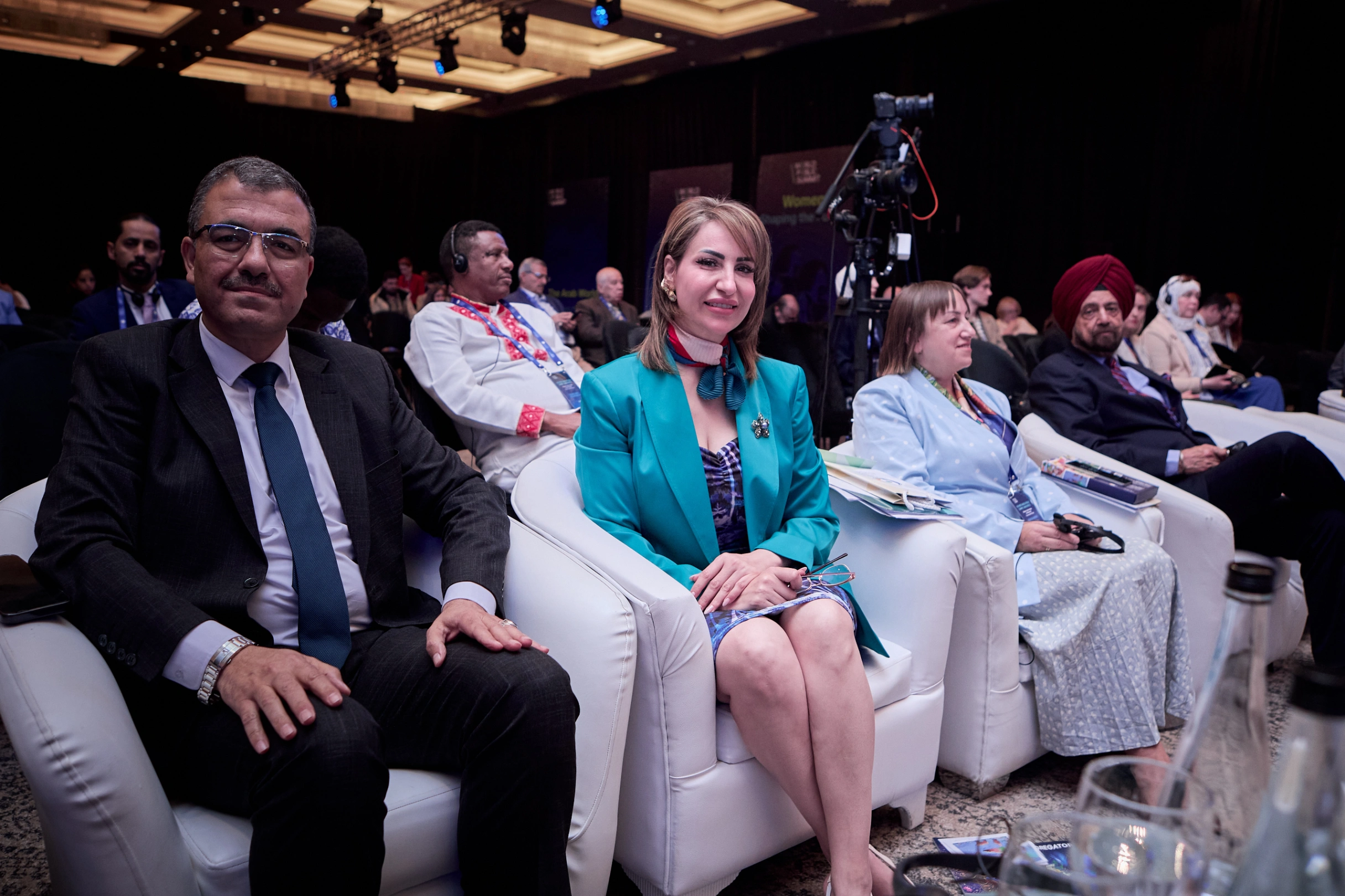
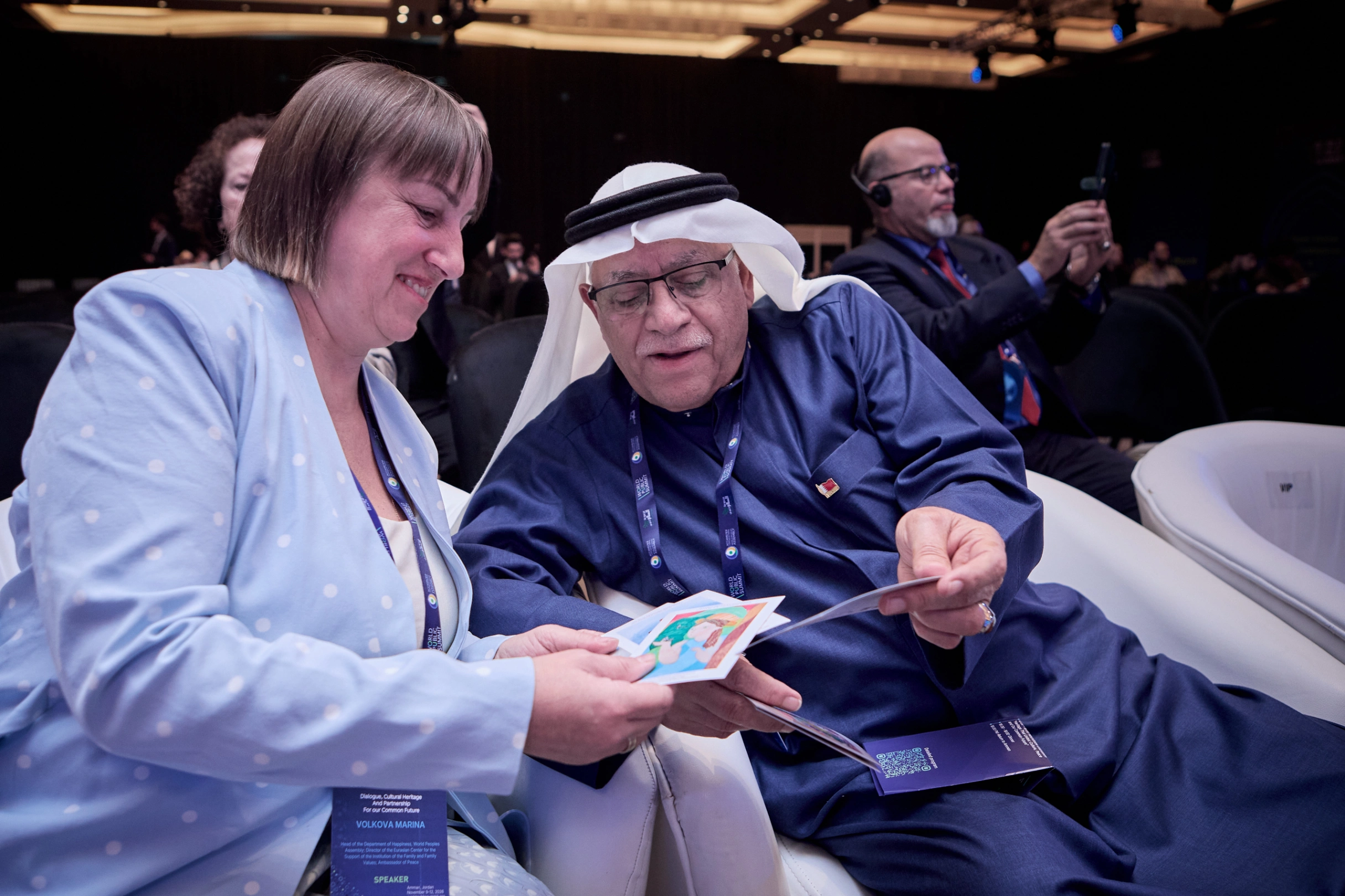
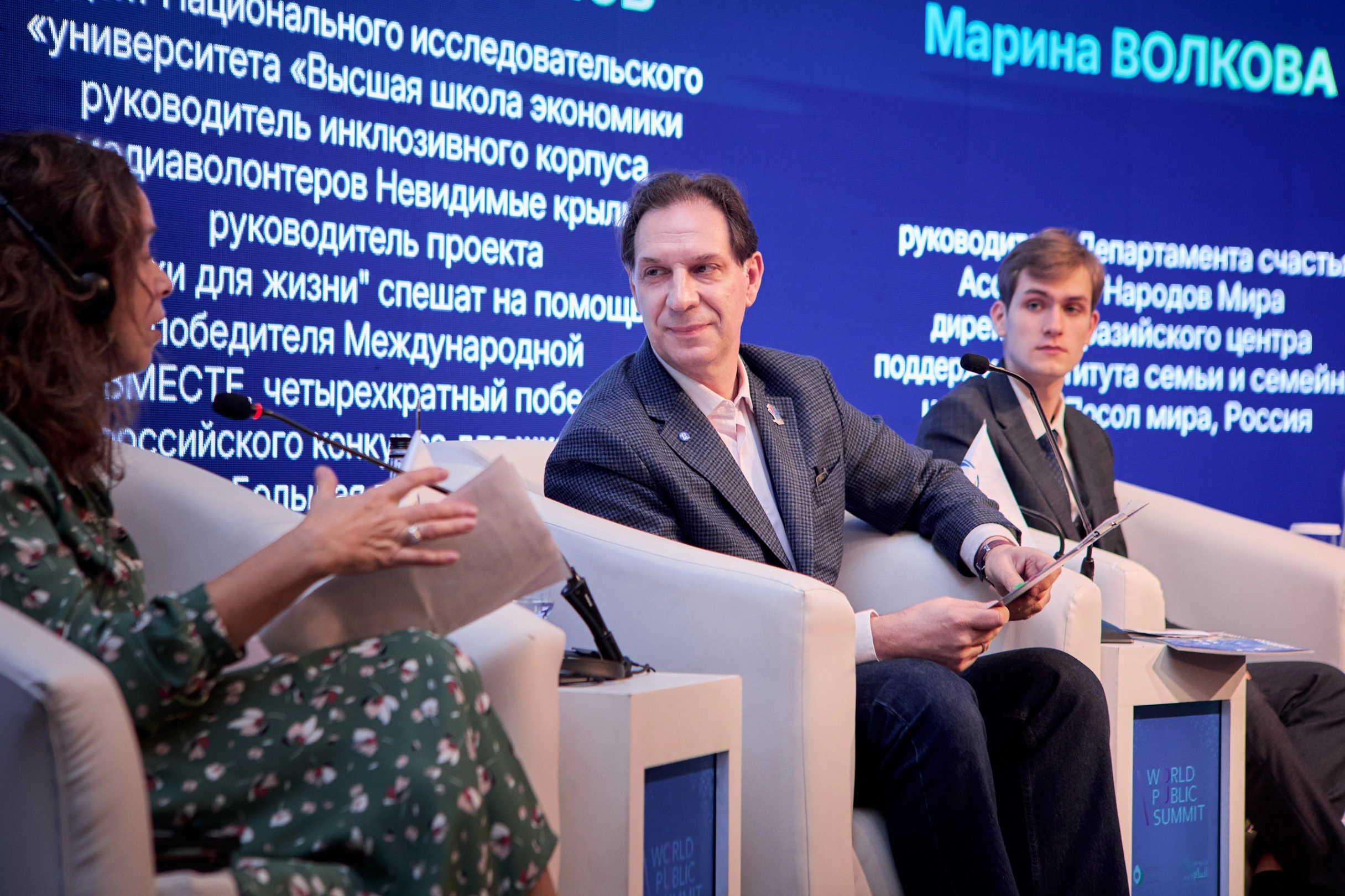
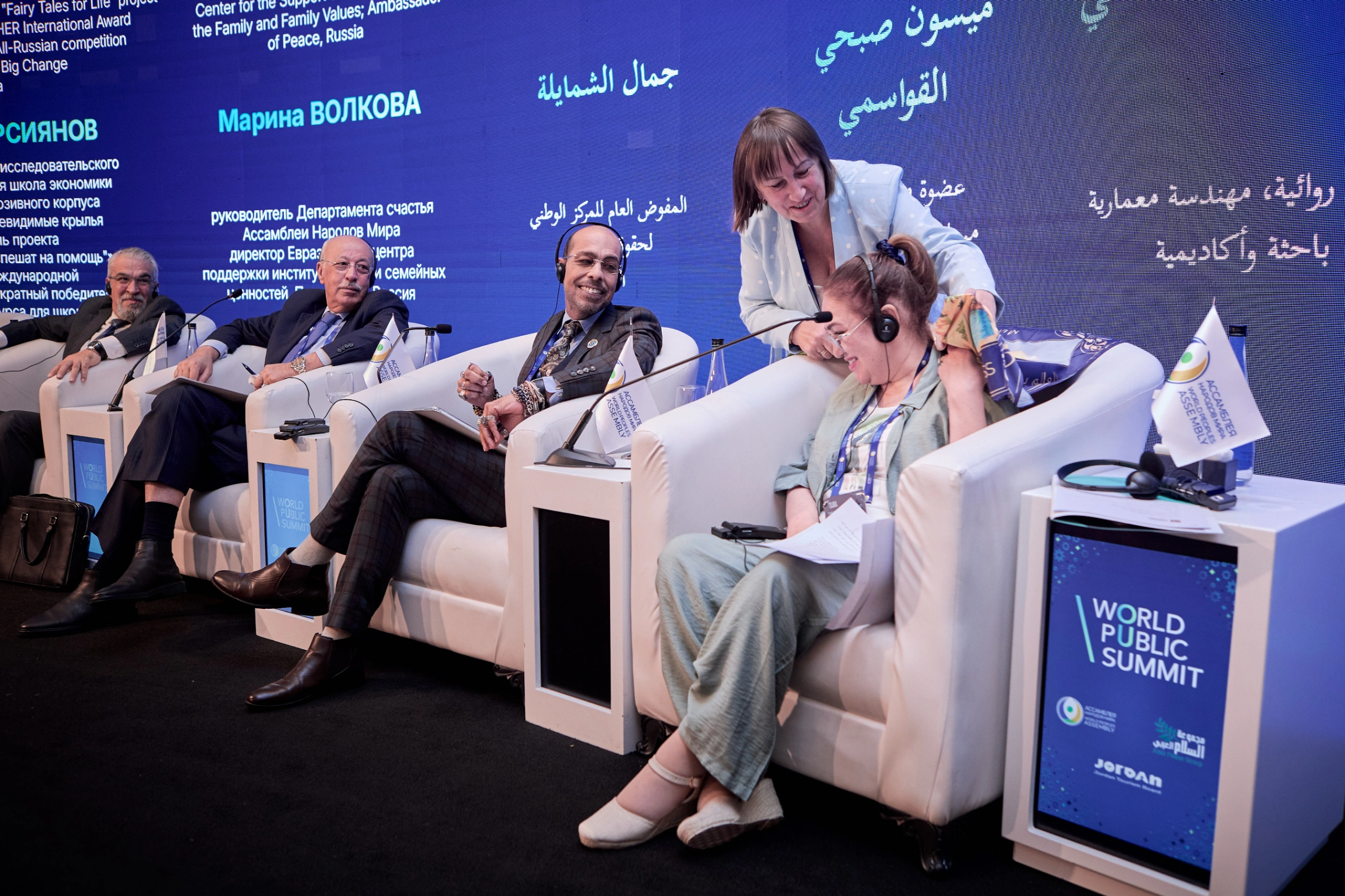
The Panel Session “Culture as a Language of Trust” was held on November 10, 2026, in Amman (Jordan) as part of the First World Public Summit: The Arab World “Dialogue, Cultural Heritage and Partnership for a Shared Future”. The event was organized by the World Peoples Assembly and the Arab Peace Group, with support from partners in Jordan, Russia and other countries.
The primary focus of the discussion has been why families are a reliable pillar of global wellbeing, and what challenges families around the world face today. International experts examined in detail the role of the family as an essential public good, underpinning social stability, human capital formation and intercultural trust.
Particular attention was paid to the importance of the family institution in the Arab world, where traditions of kinship, respect for elders and collective responsibility have historically remained an unshakable pillar of society.
Session participants noted that, in the Islamic tradition, the family is a key space for moral education, the transmission of cultural codes and the formation of a sense of security. The opportunity and necessity of conveying these profound meanings into the global agenda of sustainable development and well-being were emphasized.
Leading specialists presented their expert assessments during the session.
Director of the Agency for Social Information and Chair of the Commission for the Development of the Nonprofit Sector of the Civic Chamber of the Russian Federation Elena Topoleva-Soldunova (Russia) outlined the main threats facing the modern family, from geopolitical conflicts to the challenges of global digitalization. She called on participants to find effective mechanisms for preserving this vital unit of society as the foundation of global well-being.
President of the Tarim Centre for Architecture and Heritage Reem Fouad Abdel Ghani (Syria) reminded the audience that happiness is not merely a state, but a culture that must be consciously and carefully passed on to children and grandchildren.
The Panel Session was attended by a Russian family: Chief Expert of the Center for Civil Society Research and the Non-Profit Sector of NIU "Higher School of Economics" Vyacheslav Ivanov, Director of the Center for Civil Society Research and the Non-Profit Sector of NIU "Higher School of Economics" Irina Mersiyanova and leader of the youth movement of the International Movement "Ambassadors of Happiness", head of the volunteer corps "Invisible Wings", student of the NIU Platon Mersiyanov.
Platon Mersiyanov (Russia) presented the perspective of the younger generation.
- The family is an opportunity to do everything together. But this opportunity does not arise on its own - it must be purposefully created, and it requires an effort that is especially difficult for young people. It is social projects that help foster interaction within the family, providing conditions for all its members to participate together. It is therefore important to develop and support such initiatives at the international level, - the expert stated.
The speaker spoke about practical initiatives that strengthen family ties: the “Ambassadors of Happiness” movement; the International Festival “The World Paints Happiness” (during which children’s drawings are transformed into “Letters of Happiness”), as well as the magazine “Happiness Aggregator”, created for the exchange of practices for developing happiness as a universal value, including its first English-language issue, and the project “Fairy Tales for Life”, which comes to the rescue.
Vyacheslav Ivanov (Russia) highlighted the importance of international academic exchanges as a tool for developing effective family strategies and scaling up the world’s best practices.
Commissioner General of the National Centre for Human Rights of Jordan Jamal Al-Shamayleh shared his views on the impact of technological progress on family ties. He emphasized that civil society institutions should use technology as consciously as possible, so that it does not replace genuine humanistic values.
- The dialogue gap between generations leads to a loss of patriotism and cohesion; therefore, we need initiatives that bring together young people and the older generation, – the speaker concluded.
Director and Secretary General of the Socio-Economic Council of Curaçao Raul Jose Enriquez focused on the basic socio-economic conditions for family well-being.
- I represent the State of Curaçao. We are convinced that the welfare of the family is something that should be supported by the state in the first place. A family should have a stable income and enough time for joint leisure, because it is the hours spent together that make it really strong, - the expert said.
As a mechanism for systematic work, Raul Jose Henriques proposed using the platform of the Assembly of the Peoples of the World for regular discussion of these issues. In his opinion, the key objectives of this format should be:
the exchange of relevant information;
comparison of national practices;
assessment of the cost of implementing initiatives;
analysis of the potential of their replication in other countries.
Secretary General of the International Association of Economic and Social Councils and Similar Institutions Apostolos Xirafis (Greece) focused on differences in the perception of the family institution across different regions of the world. He expressed support for the multigenerational family model in the Arab society and emphasized that the family must remain the unshakable foundation of society in order to preserve civilizational values.
Member of the Parliament of Jordan Maysoun Subhi Mohammad Alkuabeh, was unable to attend the session in person, but she sent a welcome message to the meeting calling for family issues to be established as a top priority of world politics.
- Building global peace begins with family peace, and building strong societies starts from home, where love, respect, justice, and solidarity reign. As a member of the Jordanian House of Representatives, I am convinced that protecting the family and strengthening its stability is a shared responsibility, - said the speaker.
In the MP’s view, there is now a need to move from talking about the importance of the family to actively working for it - through fair legislation, educational programs, and economic and social policies that enhance families' ability to confront modern challenges.
Marina Volkova, Head of the Department of Happiness of the World Peoples Assembly and Peace Ambassador, summarized the discussion. She noted the importance of discussing standards and the safety of childhood as a starting point for systemic change.
According to the expert, the documents adopted within the framework of the World Public Assembly - the "Declaration on Happiness" and "Socio–cultural standards of childhood safety as the foundation of happiness and well-being" - are an excellent springboard for moving from words to concrete actions.
The panel session became an important platform for intercultural dialogue, affirming the family as the foundation of global happiness. Participants confirmed the need to move from theoretical discussions to concrete actions, including:
developing targeted social projects;
strengthening the legislative framework for family support;
implementing comprehensive educational programs;
expanding formats of international cooperation.
The adopted documents and announced initiatives provide a solid basis for further work on international platforms. The projects presented during the session clearly demonstrate how successful local practices can be scaled up and have a real impact on the global agenda of well-being and happiness.
Additional information is available on the official website of the World Peoples Assembly, on its VKontakte and Telegram accounts, and at media@world-assembly.org.
Photographer: Mikhail Denisov