

Media Bridge Between Peoples: Experts Adopt Declaration at International Forum "Media in Service to Humanity"
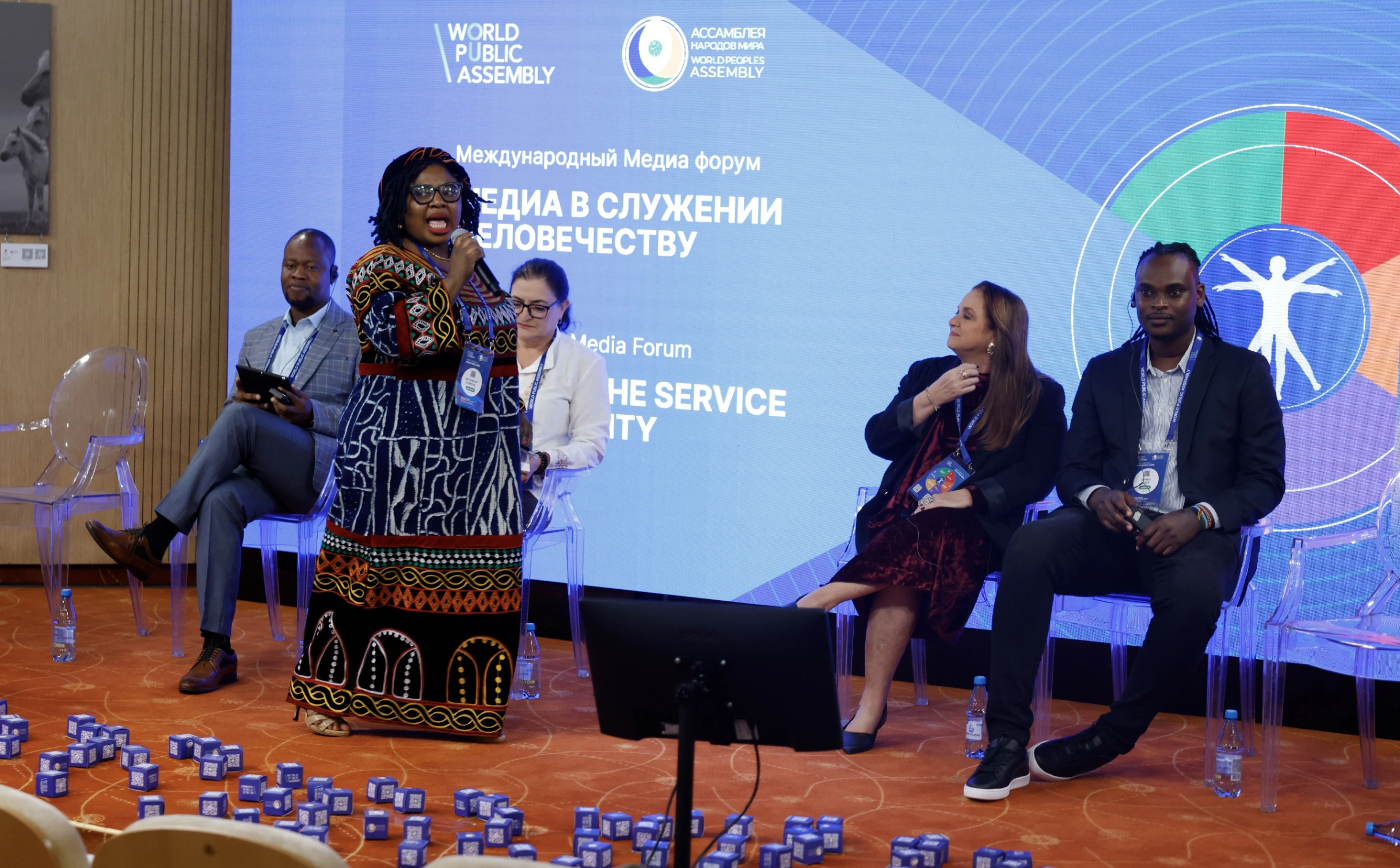
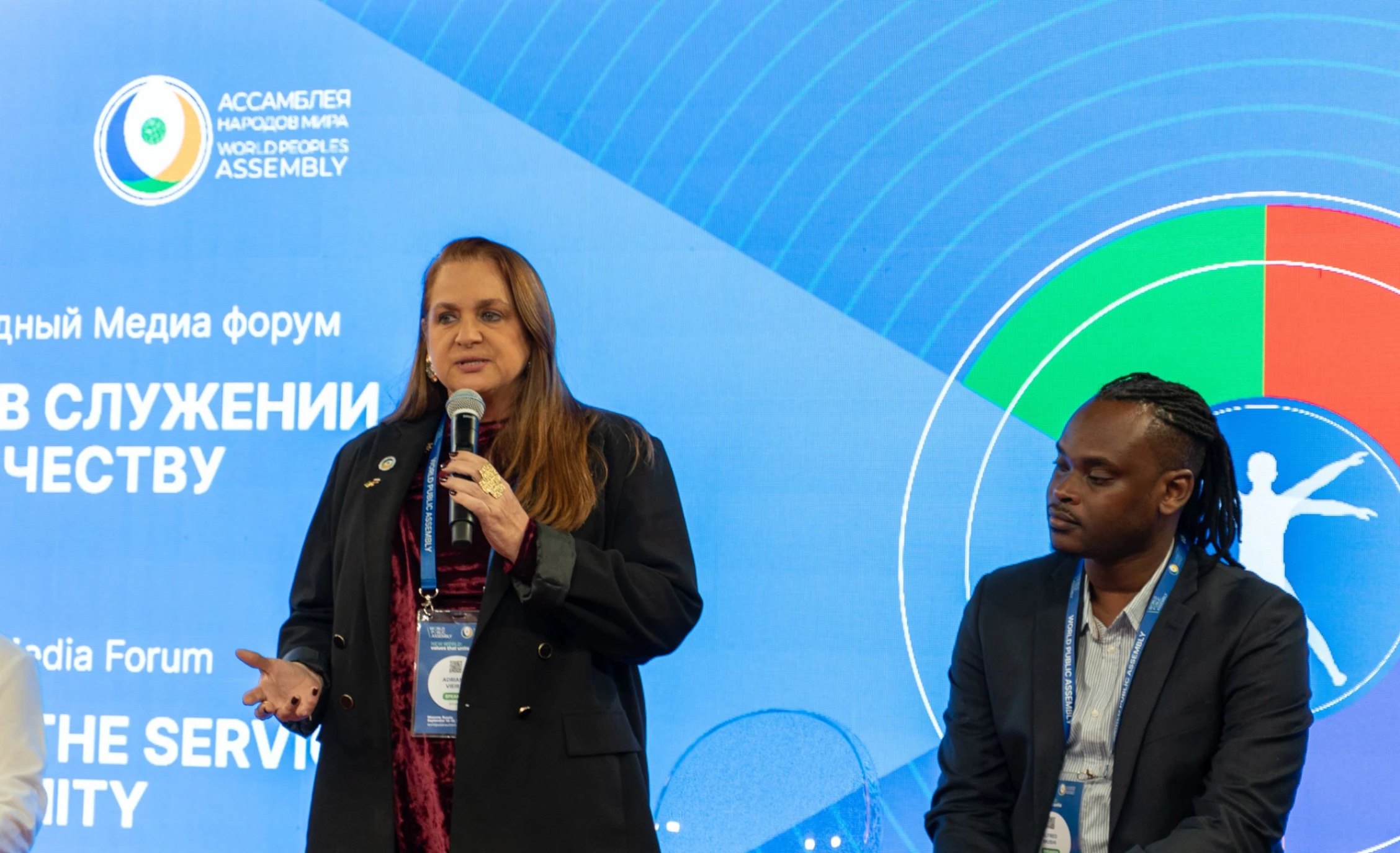
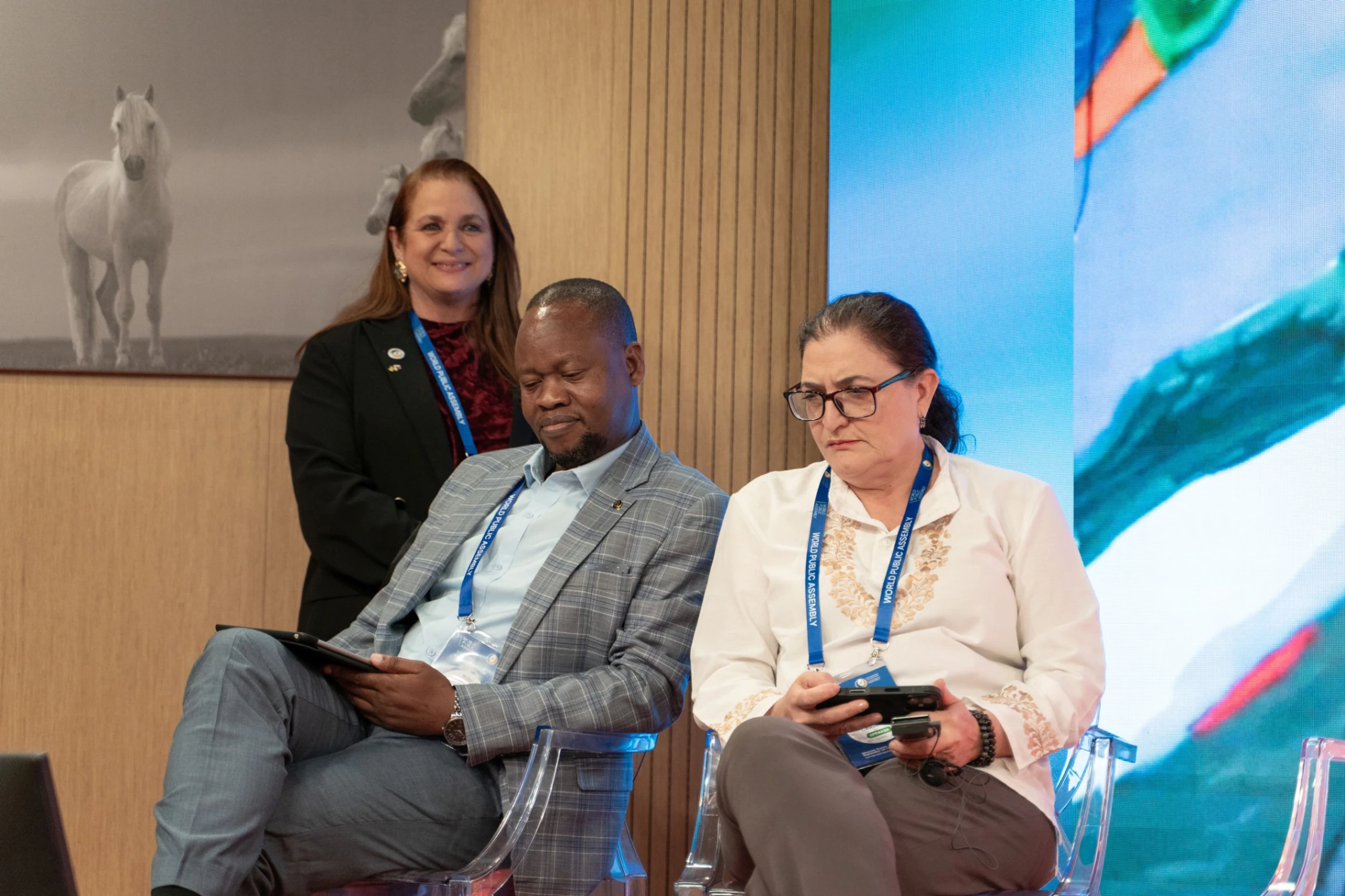
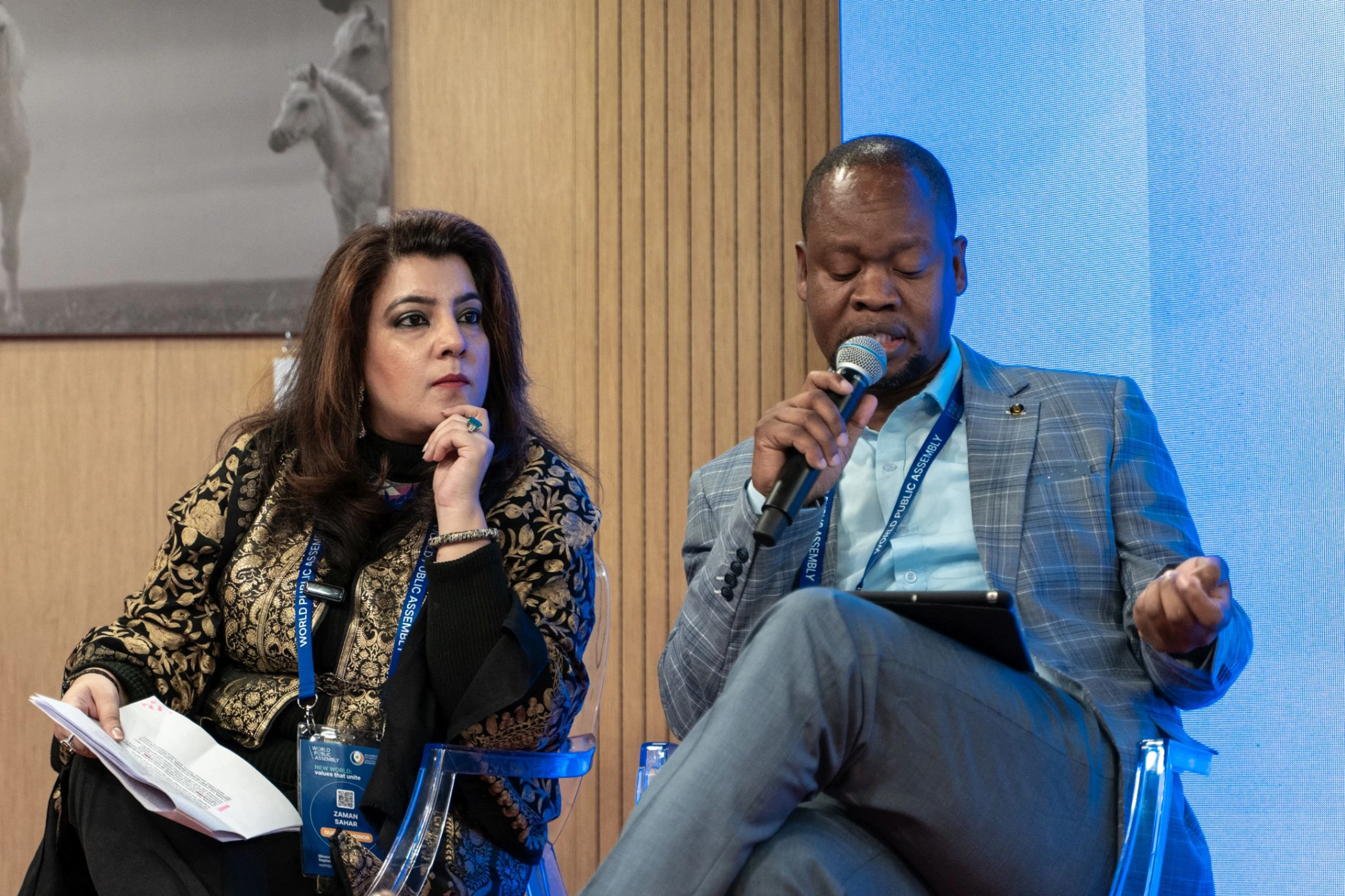
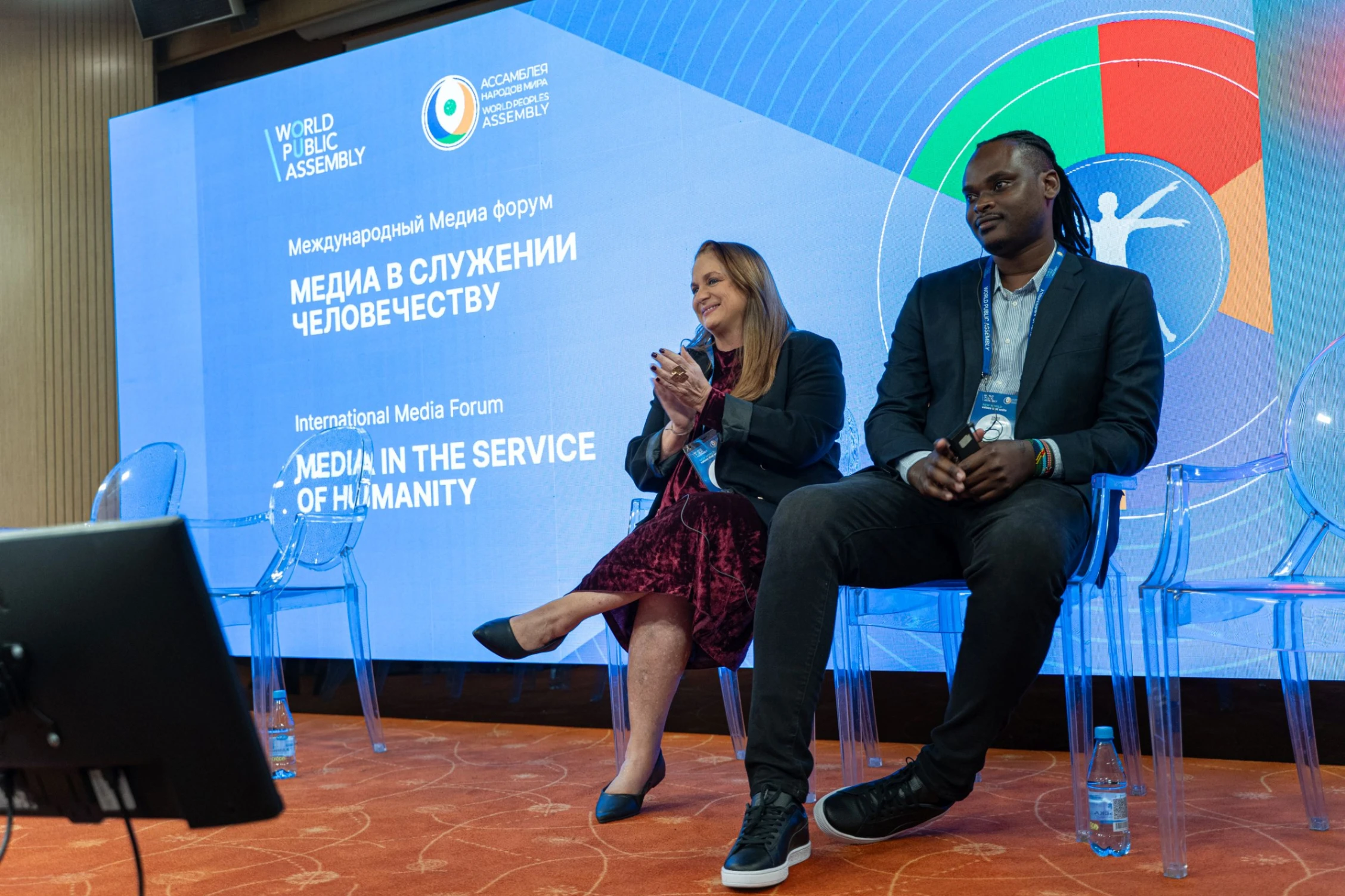
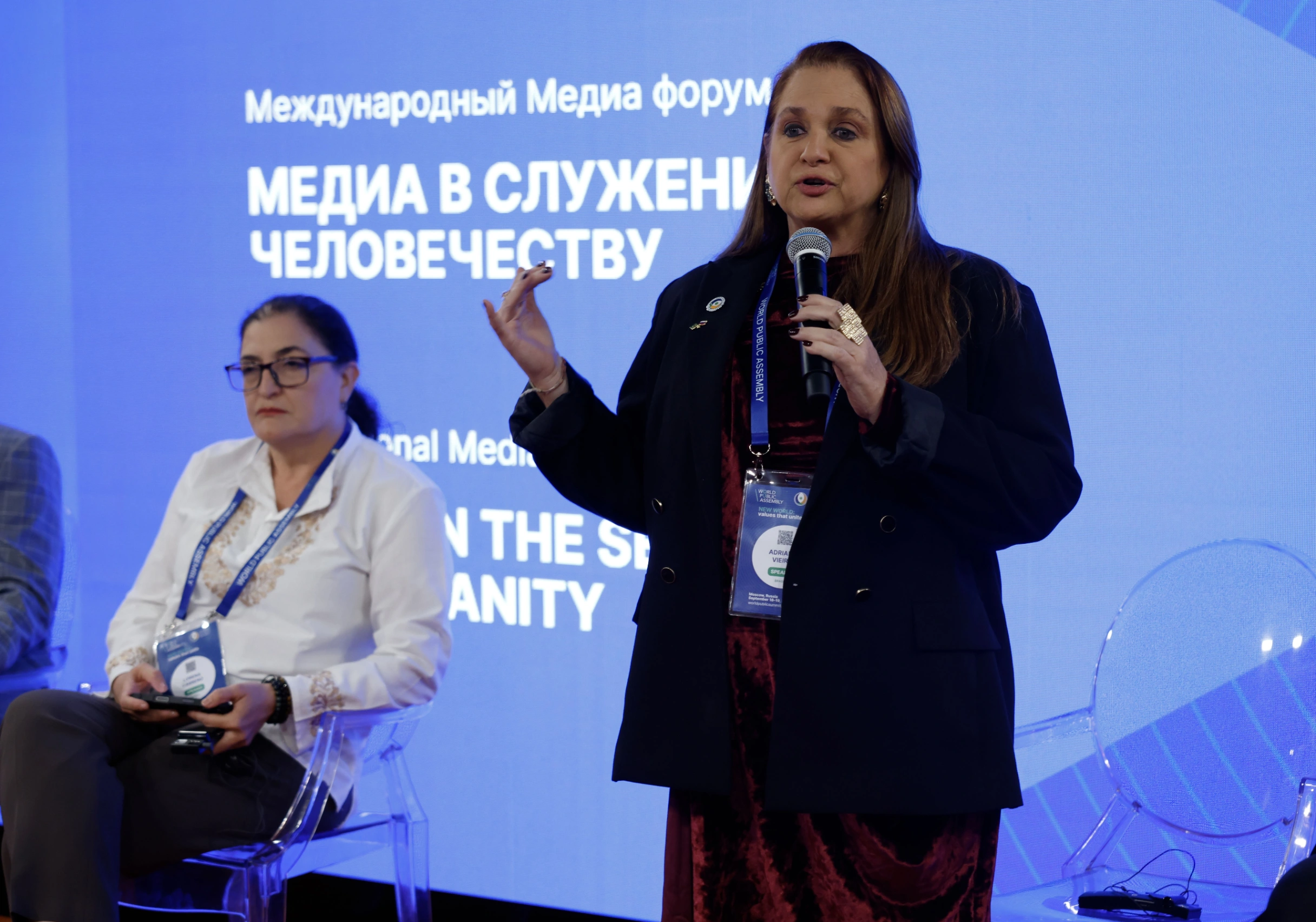
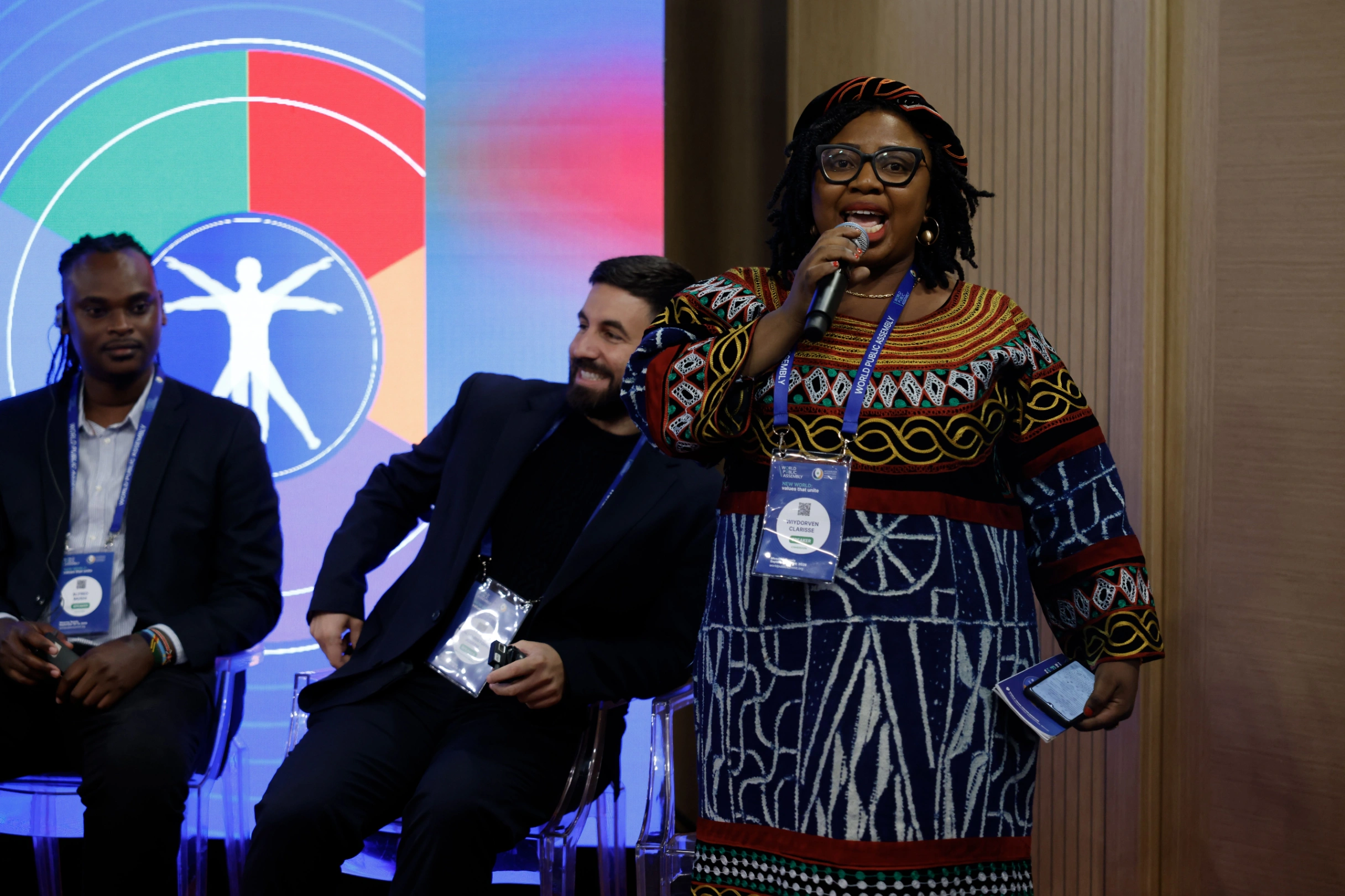
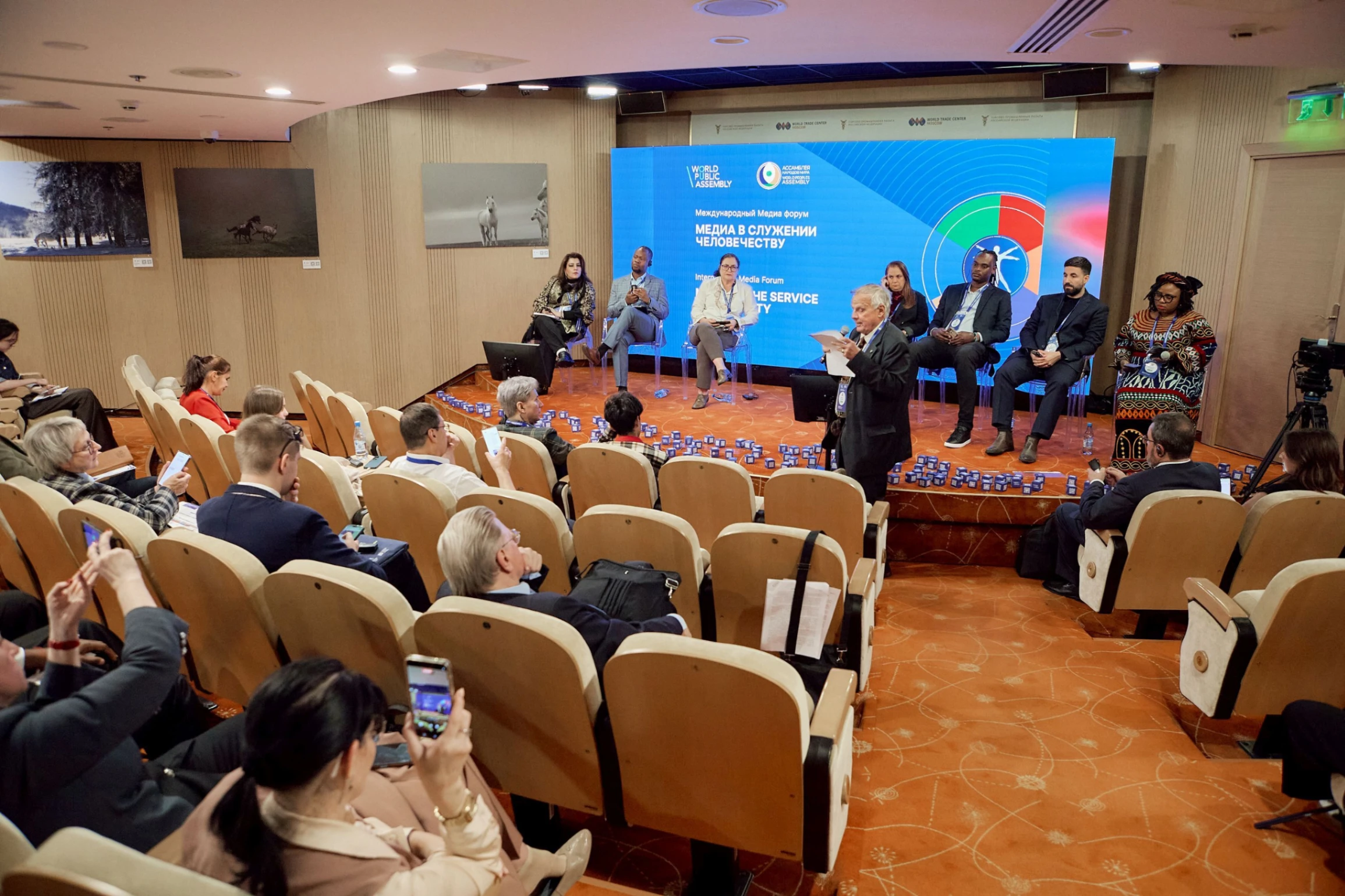
The International Forum "Media in Service to Humanity" was held on September 18, 2026, at the World Trade Center. The event was part of the Second World Public Assembly "New World: Values That Unite," held in Moscow on September 18 - 19.
Journalists, editors, media managers, and experts from Europe, India, the United States, and African states took part in the discussion on the responsibility of modern journalism to the individual and society. The Forum was moderated by a journalist and host of the international analytical program Global Insights on Pan African Media TV, Clarissa Weidorven (Cameroon).
— Today, the media are becoming one of the main instruments of international communication. They do not simply tell people about what is happening — to a large extent, it is the media that shape our perception of one another, of other countries, cultures, and peoples. Therefore, the task of modern journalism is far broader than simple informing. The media must help people understand each other better, popularize the values and traditions of the peoples of the world, preserve cultural diversity, and create space for open international dialogue, — noted in her welcoming address the Chairperson of the General Council of the World Peoples Assembly and member of the Council under the President of the Russian Federation for Interethnic Relations, Svetlana Smirnova.
Alfred Mushi (Tanzania), a journalist for Daily Mail Tanzania and founder and chairman of the Kili Voices Foundation, raised the topic of the need to verify information in the era of artificial intelligence and the risks of spreading AI-generated content. He was supported by Eric Biegone (Kenya), a journalist for Kenya Broadcasting Corporation, reporter, and expert in multimedia formats, who noted that such issues must be regulated by professional ethics and be a matter of responsibility for every media professional.
— The development of digital technologies raises the requirements for the reliability of information, professional ethics, and responsibility for published content, — the expert noted.
The topic of media dependence on owners and political institutions was discussed separately, as was the possibility of creating collectively managed media infrastructures, including within the framework of BRICS.
The President of the Mexican Association of Media and Marketing, Lorena Carreño (Mexico), said that international cooperation among media outlets is the main key to creating a space of trust and professional dialogue. During her speech, she provided several examples that illustrate and clearly prove this idea.
Independent journalist Christopher Helali (USA) outlined the key thesis of the discussion:
— The media must serve humanity, not the oligarchy. But how can we do this when the media infrastructure itself belongs to the same oligarchy that we are trying to hold accountable? One could say that the future is quite uncertain and we are in a period of monopolization and consolidation of media infrastructure. This is the main danger.
The experts named several key tasks of the media:
giving a voice to those who do not have direct access to a broad audience;
ensuring trust not through declarations, but through truthful description of real deeds;
supporting human dignity and respect in every word.
A lively discussion was sparked by the conversation about the nature of the journalistic profession — complex, dangerous, and far from always compensated by worthy material reward. Public figure, CEO of InterMídia Comunicação Integrada, and finalist of the V International Competition "Leader of Public Diplomacy" Adriana Vieira (Brazil) emphasized that journalism must be viewed as service to society, and nothing else — and such a responsible attitude toward the profession must certainly be passed on to new generations.
The head of the Media Center of the World Peoples Assembly and editor-in-chief of the InterMedia news agency, Evgeny Safronov (Russia), proposed taking a closer look at the very formulation of the question of what service to society means and to what extent certain elite groups represent the interests of societies. All elites claim in words to be guided by the interests of societies, peoples, and nations, but how close this is to the truth is far from always possible to understand. In this case, a guideline could be the Charter of Professional Ethics of Journalists, adopted in France immediately after World War I and updated in Munich in 2011.
— A journalist adheres to a critical approach: truthfulness, accuracy, honesty, fairness, impartiality — all of this lies at the foundation of journalistic activity, — noted in his speech public figure, journalist, and chairman of the associations "France — Urals" and Stop Russophobie, Dmitry de Kochko (France).
The speaker quoted from the Charter of Professional Ethics of Journalists: "...a journalist adheres to a critical approach, truthfulness, accuracy, honesty, fairness, impartiality, which form the foundations of journalistic activity; considers that unproven accusations, intent to cause harm, falsification of documents, distortion of facts, improper use of images, lies, manipulation, censorship and self-censorship, and lack of fact-checking are the most serious professional offenses..."
— To be a journalist means to bear responsibility before everyone, to see oneself as an intellectual professional striving to participate in the formation of a civic, that is, informed, democratic society, without imposing any models, — Dmitry de Kochko concluded his speech.
Participants agreed that the most outstanding representatives of the profession are those who are passionately devoted to their work. However, society must create conditions under which such work will not be in vain.
— An intellectual and responsible approach by journalists to their work will promote mutual understanding between peoples, — summarized the results of the discussion journalist, TV presenter, communications specialist, founder and director of HunarTV Sahar Zaman (India).
According to Top News journalist Anil Singh (India), journalism is capable of creating space for dialogue, helping society make sense of what is happening, transmitting unifying values, and shaping an image of a common future — and in this both the speakers and the audience agreed with him.
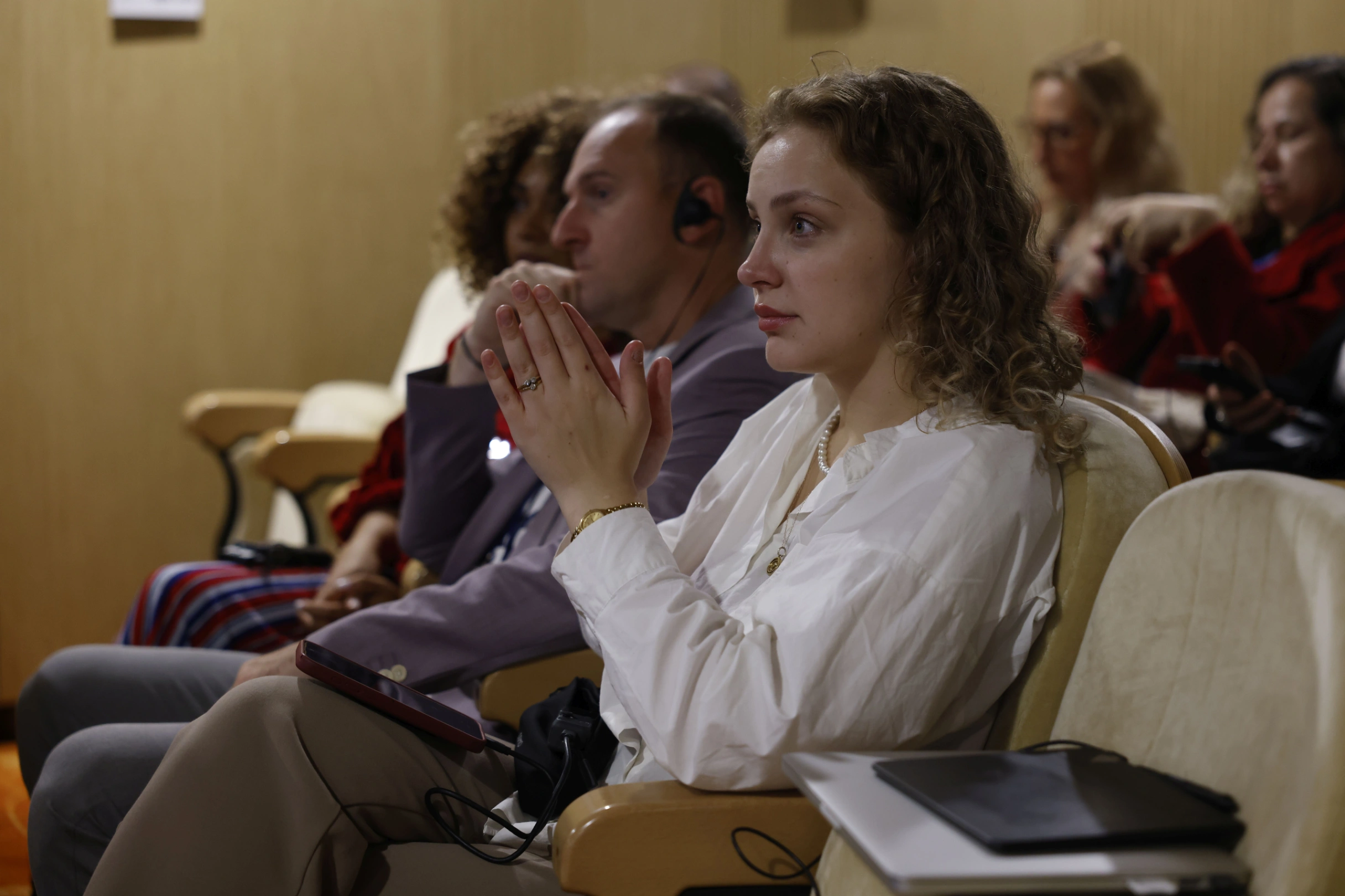
The meeting aroused enormous interest among all those present — virtually all the audience members became participants in this conversation, demonstrating the unity of the professional community on the key challenges facing modern journalism and the ways to fulfill its professional tasks.
The media forum became a continuation of the professional dialogue of the International Media Club of the World Peoples Assembly, which began in 2026 at the World Public Summit in India and was further developed at summits in Brazil and Africa.
The Media Forum adopted a Declaration, the full text of which is provided below.
DECLARATION OF THE MEDIA FORUM
OF THE SECOND WORLD PUBLIC ASSEMBLY
"MEDIA IN SERVICE TO HUMANITY"
We, the participants of the International Media Forum "Media in Service to Humanity" of the Second World Public Assembly "New World: Values That Unite," representatives of the media community from various countries of the world, adopt this Declaration.
In the context of the rapid development of digital technologies and artificial intelligence, particular importance in the media is acquired by:
truthfulness,
accuracy,
honesty,
fairness,
impartiality,
fact-checking,
respect for human dignity,
responsibility for published content.
These principles acquire particular significance today, when information spreads at unprecedented speed, new digital formats emerge, and artificial intelligence becomes part of media production.
We consider it important to preserve and pass on to new generations the best professional and ethical traditions of the media, as enshrined in the Charter of Professional Ethics of Journalists.
In every country and culture, there are journalists, editors, publicists, and other representatives of the media community whose names remain in professional and public memory thanks to their responsibility to the individual and society, their fidelity to professional principles, and their ability to strengthen trust and mutual understanding. Their experience shapes the standards of the profession and becomes a guideline for new generations.
The media are capable of seeing long-term processes behind the events of the day, finding unifying meanings, and creating space for conversation about what we want the world to be like for future generations.
Professional dialogue among media representatives from different countries is capable of creating a space of trust based on mutual understanding, respect for cultural diversity, and a joint search for solutions. We regard international media cooperation as an important part of the culture of peace and cooperation among peoples.
We appeal to all who shape the modern information space with a call to strengthen the culture of professional responsibility, mutual respect, and international cooperation.
We call upon the media community to:
place the reliability of information and fact-checking at the foundation of professional activity;
be guided by the principles of professional ethics and personal responsibility for the content created and disseminated;
respect human dignity, cultural diversity, historical memory, and the identity of peoples;
promote the strengthening of trust, mutual understanding, and mutual respect between people of different countries and cultures;
preserve and expand space for open public and professional dialogue;
responsibly use the capabilities of artificial intelligence and new technologies, preserving the leading role of humans in making professional and ethical decisions;
pay attention to creation, cooperation, socially significant initiatives, and people whose work serves society and humanity;
preserve professional heritage and pass on to new generations the experience of media representatives whose work has become a moral and professional guideline;
develop international media cooperation, professional exchange, and joint projects among representatives of different countries;
take into account the interests of future generations and the responsibility of the media for the values, meanings, and image of the future that they transmit to society.
We believe in media that help people understand the world and each other. In media that preserve human dignity, give space to different voices, transmit unifying values, and help society look to the future with responsibility for the next generations.
Moscow, September 18, 2026
Additional information is available on the official website of the World Peoples Assembly and at media@world-assembly.org