

 Back to news
Saving the Caspian: Experts Discuss Ecology, Investment and Cooperation in the Region
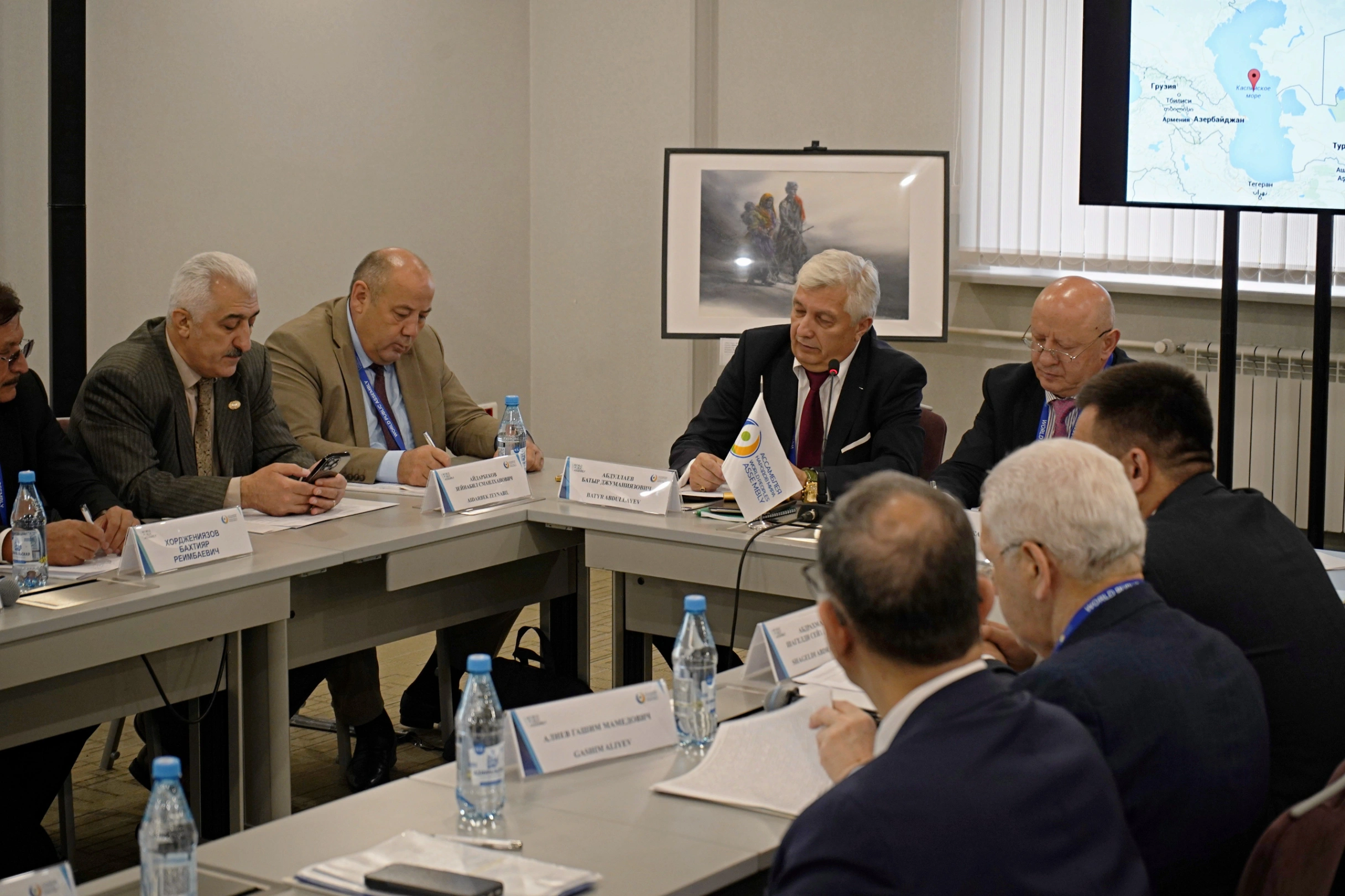
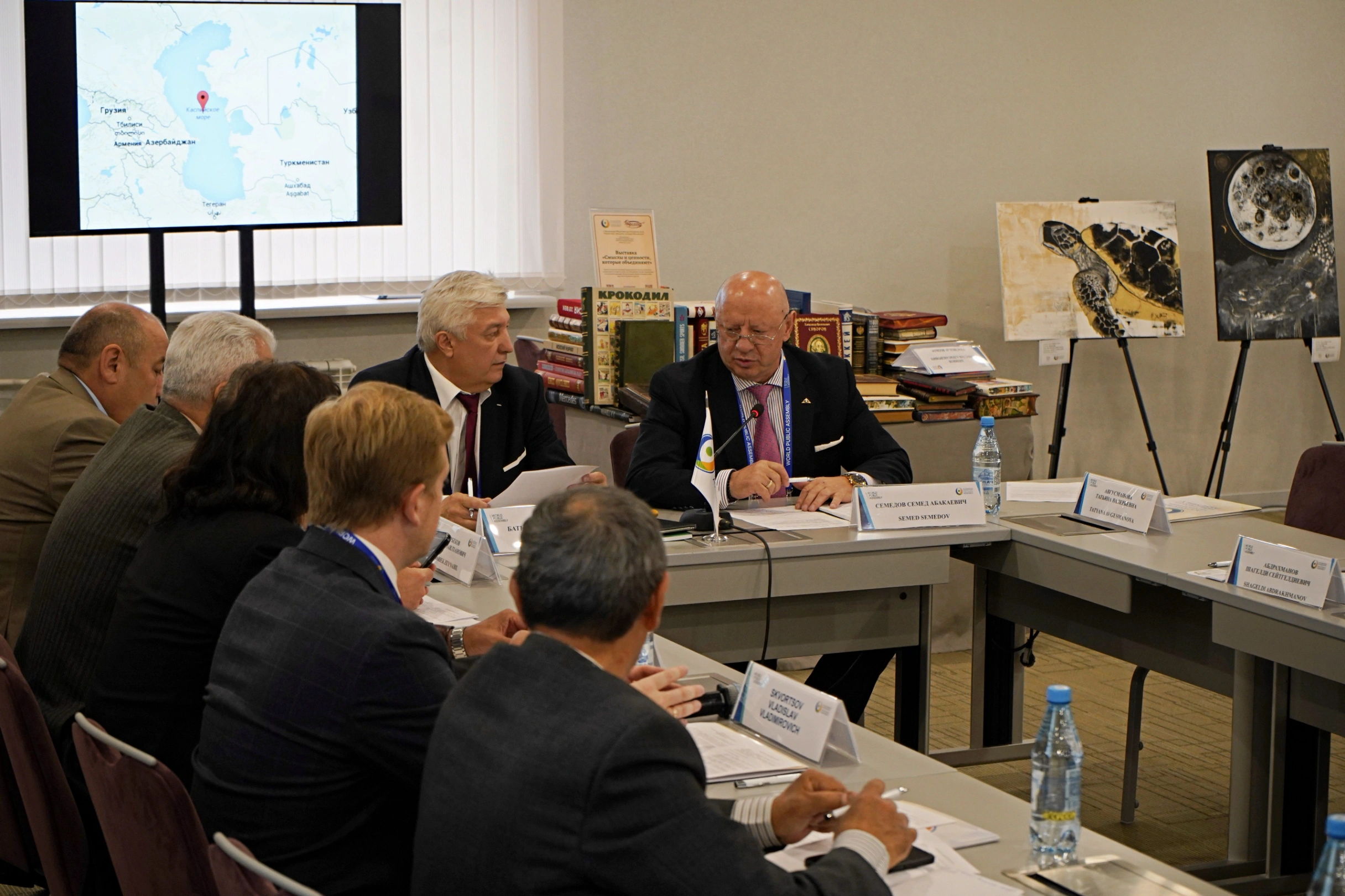
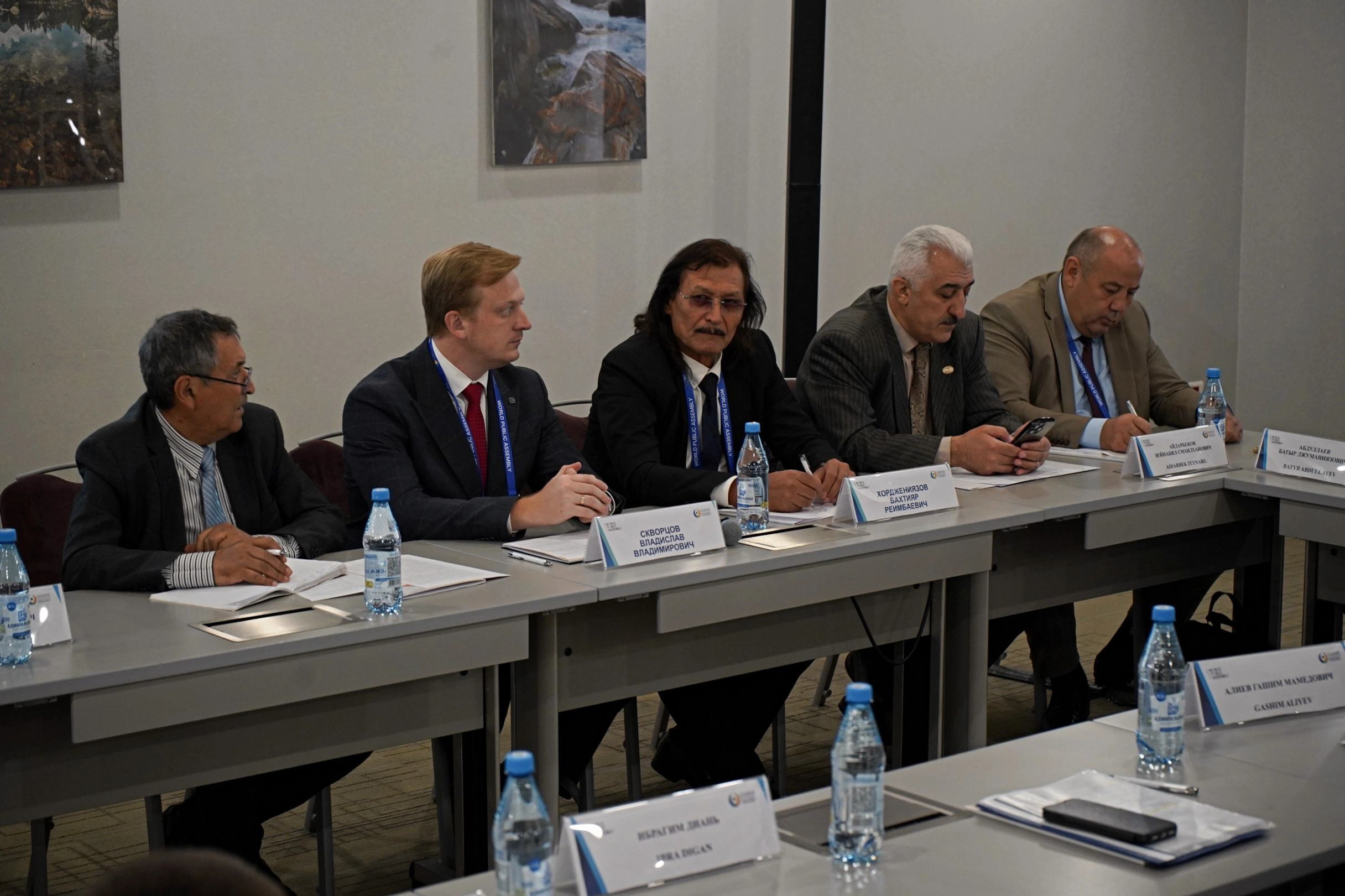
The Panel Session “Innovation and Sustainability as the Foundation of Universal Peace in the Caspian Countries” was held on 19 September 2026 at the Centre for International Trade. The event was part of the Second World Public Assembly “New World: Values That Unite,” which took place in Moscow in September 2026.
Participants discussed key areas of work on the preservation and development of the Caspian. The conversation touched on the development of mechanisms for scientific, educational, environmental and humanitarian projects, the search for effective solutions to preserve the marine ecosystem and biodiversity, and the expansion of information engagement of the Caspian states in protecting this unique water body. Special attention was given to possible options for integrating sustainable development programs and international commitments into the national projects of the countries of the region.
The moderators were Semed Semenov, Head of the Department of International Cooperation at the Faculty of the Institute of Management and Marketing of RANEPA, Doctor of Philosophy, Professor, and Batyr Abdullaev, Chairman of the Business Communications Council of the World Peoples Assembly.
Opening the meeting, Semed Semedov noted that the Caspian Sea exceeds the territory of Great Britain in area, while the Caspian region faces environmental threats that are exacerbated by human impact.
- The scientific community needs to develop mechanisms and recommendations for solving these problems for the leadership of the Caspian countries, - the moderator said.
Batyr Abdullaev added that the session would become the first step towards a large international scientific and practical conference planned to be held in the Caspian region in 2027.
Professor at Al-Farabi Kazakh National University and Vice-President of the Association of Universities and Consulting Companies of the Silk Road Countries, Zeynabi Aidarbekov, began his speech with an alarming assessment.
- The Caspian today is in a distressed state. Global warming of just one and a half degrees in landlocked Central Asia is felt two to three times more acutely, the speaker stressed.
The expert drew attention to the rapid melting of glaciers, which creates critical risks for water supply across the entire region. He described the problem of consumption culture as equally acute: according to his data, in Kazakhstan alone, an average of 250 litres of water per person per day is consumed. As a way out of the situation, Zeynabi Aidarbekov proposed changing the paradigm and shifting the focus from diplomacy to science:
- We need to move this problem from the political plane to the scientific and technological one and turn the threat itself into a space for cooperation.
Murad Geraev, Counsellor-Envoy of the Embassy of the Republic of Azerbaijan, identified an important trend: the number of forums devoted to Caspian problems is steadily growing, and the topic itself is rapidly moving beyond the regional agenda. International institutions and experts not only from the Caspian states but also from Europe and countries further afield have joined the discussion.
The speaker paid special attention to an aspect that is often overlooked.
- The Caspian is not only a water source but also a crucial source of energy resources, and this factor cannot be ignored when developing strategic decisions, - Murad Geraev concluded.
Shageldy Abdurakhmanov, General Director of Naibashi Sayahat, identified the key principle on which a lasting peace between the countries should be built: innovation and sustainable development. According to the speaker, Turkmenistan views the Caspian precisely as a territory of such a unifying principle:
- Peace in the Caspian is not merely the absence of conflicts, but sustainable development, mutual trust and joint solution of common tasks.
Drawing on the 2018 Convention on the Legal Status of the Caspian Sea, the speaker proposed a number of concrete steps to strengthen regional cooperation:
create a permanent platform for exchanging innovative solutions in ecology, transport and energy;
harmonize national sustainable development strategies;
develop educational and youth exchanges;
strengthen early warning mechanisms for emergencies;
consider creating UNESCO geoparks on the Caspian coast.
Vladislav Skvortsov, Head of the Science and Innovation Foundation, cited discouraging figures: today 22,000 square kilometers of the Caspian water area have become shallow, with the bulk of the losses falling on the Kazakh sector. According to scientists’ forecasts, by the end of the century this fate threatens the entire North Caspian.
- The main point we are silent about is the issue of investment. No project can be implemented without money, the speaker stated, stressing that the root of the problem lies not in ecology but in economics.
The expert also recalled that the foundation had already put forward ideas for attracting “green” bonds to finance environmental and infrastructure initiatives. At the same time, Vladislav Skvortsov warned: if the problem is left unattended today, tomorrow the region will face serious consequences – mass emigration of the population, loss of the fishing industry and loss of crucial trade routes.
Gashim Aliev, a member of the Business Communications Council of the World Peoples Assembly, proposed looking at the Caspian ecology through a systemic approach. He used the concepts of synergetic, homeostasis and entropy to show that “nature is a fragile mechanism on the threshold of qualitative changes, and any major anthropogenic change inevitably harms it.” As an example, the expert cited the risks of the region itself: the environmental threat from storing industrial waste (in particular, sulphur) and the danger of polluting the water body with oil products during tanker transportation.
Gashim Aliev paid separate attention to economic issues. According to him, the high costs of the market model and the colossal cost of treatment facilities (up to a third of all capital investments) only aggravate the environmental crisis. Gashim Aliev sees a way out of this vicious circle in the large-scale development of environmental education and awareness.
Nizami Mamedov, Professor at RANEPA, UNESCO expert, Doctor of Philosophy, called the Caspian “a living and mysterious sea” whose level has historically always fluctuated, but current rates of change are cause for serious alarm:
over 30 years, the level has dropped by 2.5 metres;
in the last 5 years, a decrease of 7 centimetres annually;
by the middle of the 21st century, the depth in the northern sections may not exceed 5 metres.
At the same time, the scientist allows that in the coming decades the trend may reverse. Among the causes of what is happening, the expert singled out reduced river flow, climate change, rising sea surface temperatures, as well as tectonic fluctuations of the seabed and the activity of mud volcanoes.
According to Nizami Mamedov, a serious specialized institute is needed for the strategic study of the Caspian - existing structures are too focused on current tasks to cover the problem comprehensively.
Evgeny Malyavin, Head of the Centre for Energy and Technology Development, presented the capabilities of his organization, which supplies technological solutions from Russia and friendly countries, including China. The speaker clarified that a week earlier in Azerbaijan, together with SOCAR, the issue of creating a similar center in the republic had been discussed. The expert invited representatives of other Caspian states to cooperate.
Nazim Kurbanov, Candidate of Technical Sciences, member of the International Academy of Systemology, focused on one of the key causes of the Caspian’s shallowing - elevated temperature. The expert presented an experimental technology for converting low-potential heat into electricity, noting its particular relevance for Kazakhstan and Turkmenistan.
The discussion gradually moved from diagnosing problems to concrete initiatives.
Violetta Chernaya, Candidate of Geographical Sciences, Associate Professor at the Skryabin Academy of Veterinary Medicine and Biotechnology, proposed creating an international scientific institute or research group that would address Caspian problems. One of the primary tasks of such a structure is the development of unified standards for permissible concentrations, since they differ greatly across the countries of the region.
Vladimir Mantusov, Deputy Secretary General of the World Peoples Assembly, Doctor of Economics, noted that the five coastal states have still not determined the status of the Caspian. He called for fixing the proposals voiced in a document and sending them to the leaders of these five countries and to the entire world community.
- We will do this once, twice, 125 times. On the 126th time we will achieve our goal, the speaker stressed.
Nizami Mamedov developed the theme of international scale. The scientist proposed involving the UN in the Caspian agenda and intensifying international environmental cooperation.
The discussion was also attended by:
Bakhtiyar Khojaniyazov - Honored Art Worker of Turkmenistan;
Pasha Sadykhov - Candidate of Economics, Head of the International Department of the Institute of Scientific Information for Social Sciences (INION) of the Russian Academy of Sciences;
Ariz Gezalov - Candidate of Philosophy, Leading Researcher at the Institute of Sociology of the Federal Research Sociological Center (FRSC) of the Russian Academy of Sciences;
Gulnabad Tekaeva - Chair of the Board of the Society of Turkmen Culture;
Samir Akhmadov - Commercial Counsellor of the Embassy of the Republic of Azerbaijan;
Ariz Gezalov - Russian and Azerbaijani scientist, Candidate of Philosophy;
Malik Kerimov - political scientist, coordinator of the Inter-Parliamentary Friendship Group (Russia – Turkey).
The meeting concluded with an awarding ceremony. Sergey Krents, Chairman of the Council of the Central Asia Entrepreneurship Support Fund and member of the World Peoples Assembly, presented the award “For Contribution to International Cooperation” to Tatiana Avgusmanova, Head of the Directorate for Sustainable Development of the Assembly, thanking her for organizing the event.
Summing up the discussion, Semed Semedov expressed gratitude to all speakers and proposed fixing the key initiatives in the final resolution of the session with subsequent transmission to the leadership of the World Peoples Assembly.
Participants unanimously concluded that the future of the Caspian is built on joint scientific research, harmonization of environmental standards, the search for sustainable financial mechanisms and the development of international scientific and technological cooperation among the countries of the region.
Additional information is available on the official website of the World Peoples Assembly, on its VKontakte and Telegram accounts, and at media@world-assembly.org.