

“To Preserve the Planet’s Blooming Garden”: New Practices of Public Diplomacy and the Role of the Civic Chamber of the Russian Federation in Building Partnerships Discussed in Moscow
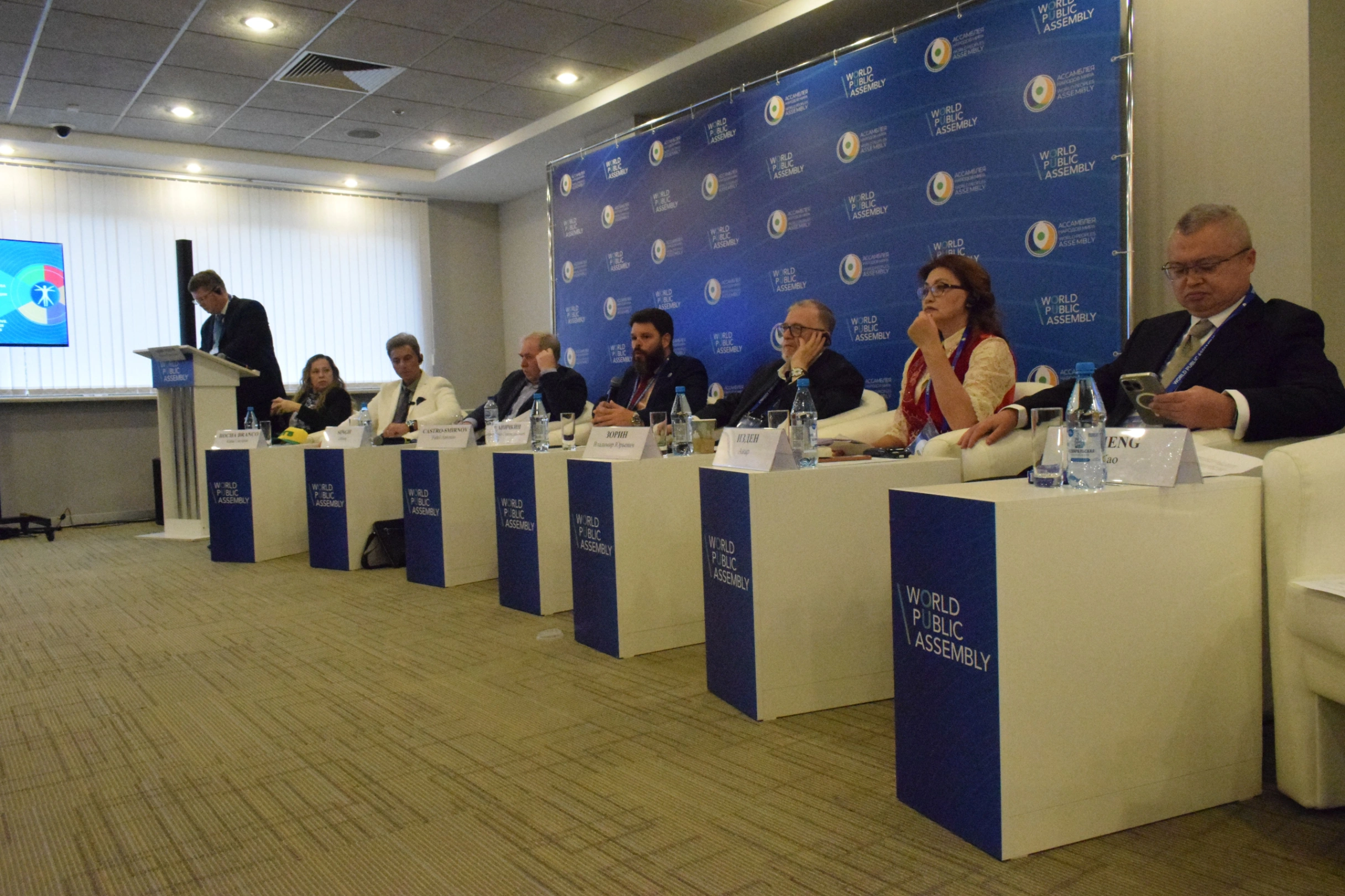
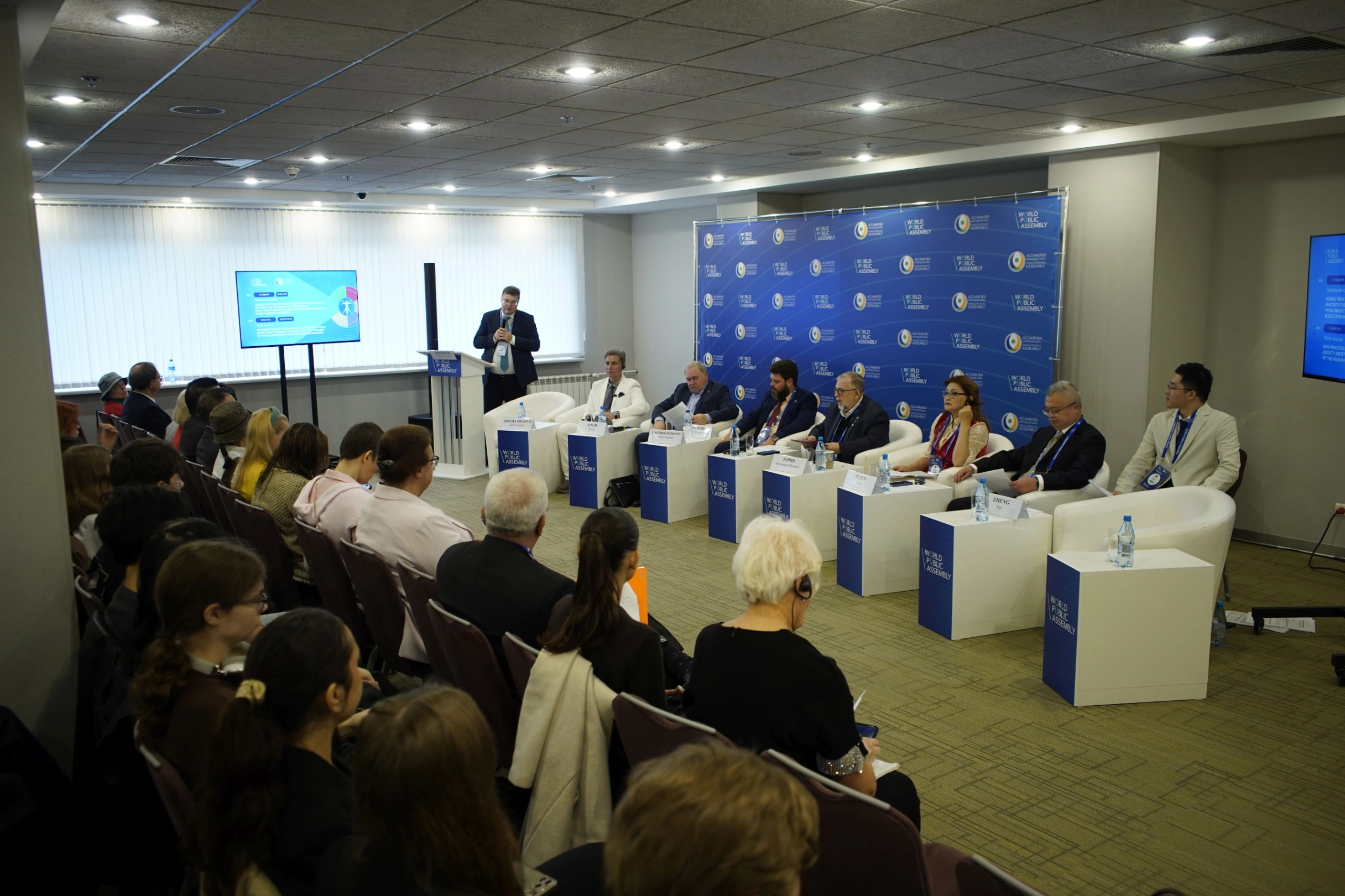
The Panel Session “New Practices of International Cooperation of Civil Society Institutions: The Role of the Civic Chamber of the Russian Federation in Building Partnerships” was held on September 19, 2026, at the World Trade Center. The event was part of the Second World Public Assembly “New World: Values That Unite”, held in Moscow in September 2026.
Participants discussed the growing role of civil society in the development of public diplomacy, the importance of non-profit organizations as a crucial factor in social partnership, the creation of a BRICS civil society association, and the prospects for developing international public initiatives designed to strengthen trust and mutual understanding among peoples. Particular attention was paid to the Civic Chamber of the Russian Federation as a unique example of civil society consolidation.
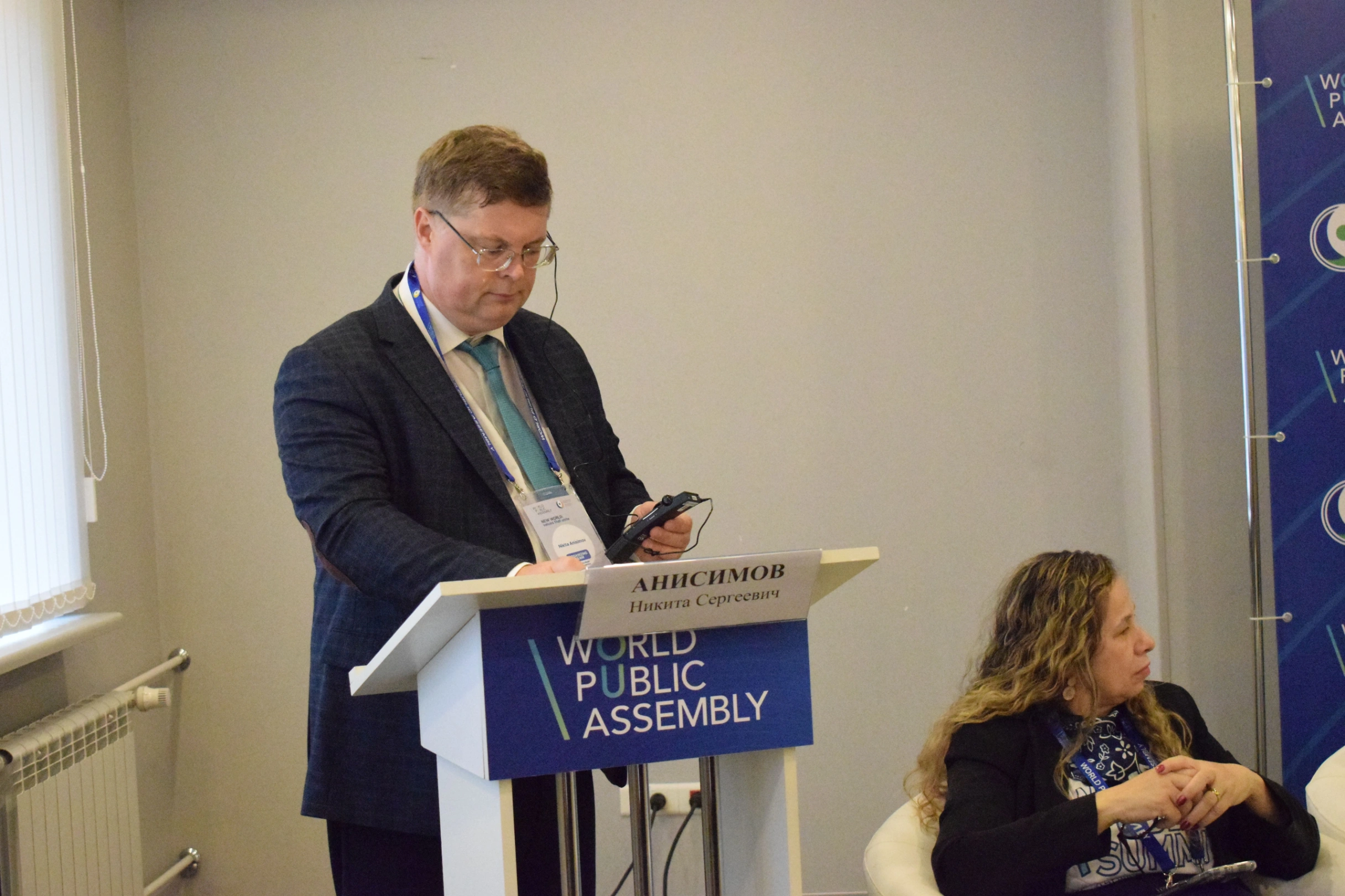
The meeting was moderated by Nikita Anisimov, Advisor to the Secretary General of the World Peoples Assembly and Director General of the Center for International Humanitarian Research and the Promotion of Public Diplomacy “Multipolar World.” Opening the session, he outlined the key vector of work: developing cooperation at the level of civil society, opinion leaders, and representatives of public diplomacy. The advisor emphasized that it is precisely in such spheres as education, culture, science, and sports that strong international contacts are laid, and the World Peoples Assembly serves as a unifying platform enabling people from different countries to interact effectively.
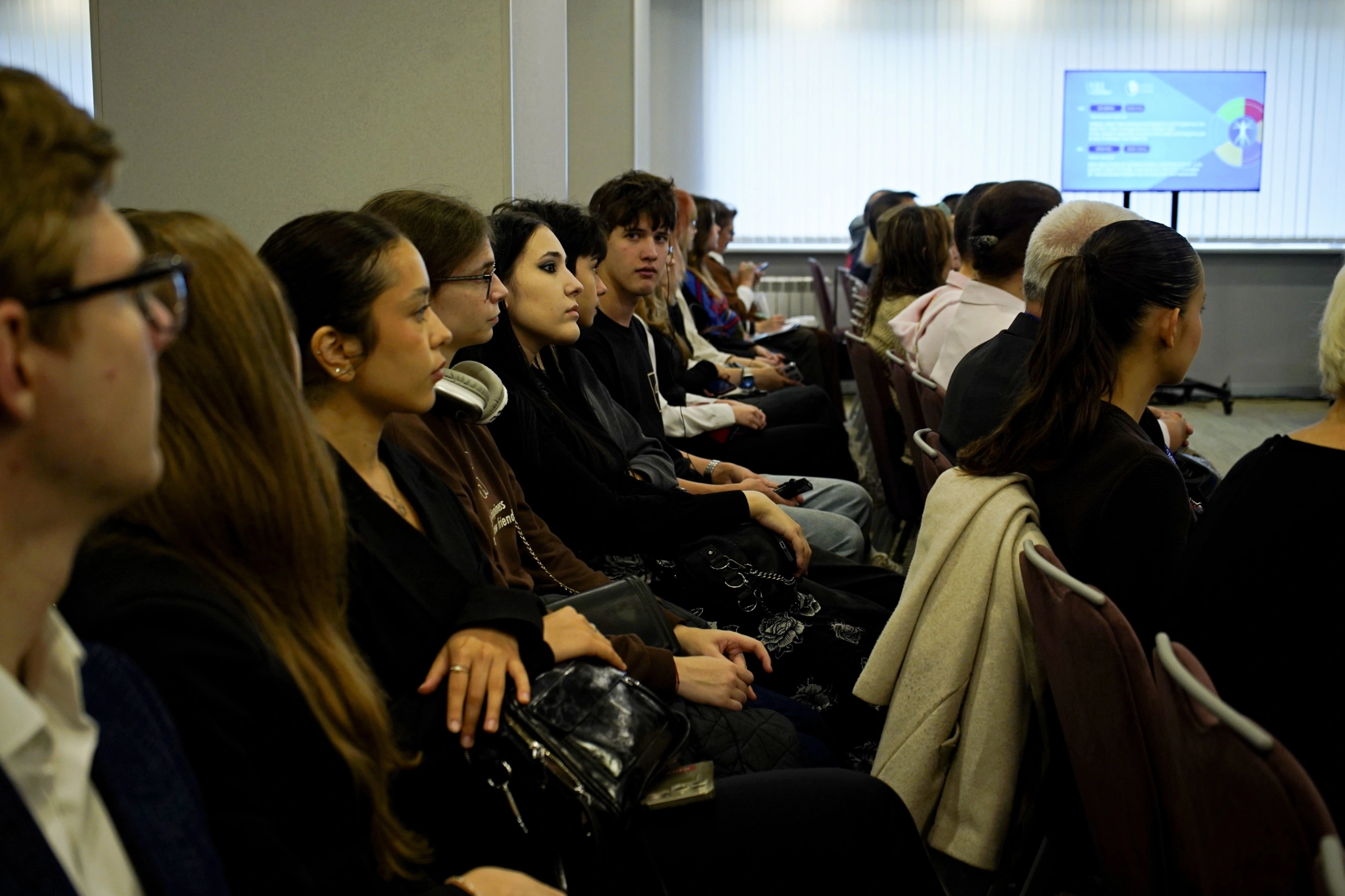
Nikita Anisimov particularly noted the active participation of young people in the discussion, in particular students from the Russian State University for the Humanities, Moscow State Linguistic University, MGIMO University, and Moscow State University. He expressed confidence that the younger generation would have to take up the baton of constructive dialogue, since the activities of the World Peoples Assembly are largely focused on supporting students. The speaker also recalled that the event is held jointly with the Civic Chamber of the Russian Federation:
- This is an institution unique on a global scale, uniting representatives of the public and opinion leaders, which actively promotes the development of civic projects, - the advisor noted.
Welcoming the participants of the meeting, Deputy Secretary of the Civic Chamber of the Russian Federation, Chairman of the Coordinating Council of the Civic Chamber of the Russian Federation for International Cooperation Alexander Shkolnik noted in his video address that the Second World Public Assembly brought together more than 5,000 participants from 153 countries. According to him, these are not just numbers, but an indicator of public interest in mutually beneficial cooperation based on respect, trust, and the desire to strengthen friendly and businesslike relations between peoples. He called civil society institutions the driving force of this work, as they form sustainable ties and fill international dialogue with real content.
Alexander Shkolnik emphasized that the Civic Chamber of the Russian Federation helps unite the efforts of thousands of non-profit organizations, experts, volunteers, and activists implementing projects and initiatives for the benefit of civil society and people’s quality of life. He also noted that open and frank dialogue, as well as joint humanitarian projects, are the best way to counter propaganda myths and political speculations imposed from outside:
- Today, civil society institutions have finally consolidated their status as full-fledged players in Russian diplomacy, building bridges where official contacts are difficult. Russia has traditionally advocated respect for cultural diversity, justice, and equal partnership - these very principles underlie our international work, - the expert assured.
The speaker also noted that in the emerging architecture of international relations, the role of public diplomacy will only grow. Therefore, joint discussions on the contribution of education, youth, media, and business to building a just future are acquiring particular importance. Alexander Shkolnik expressed confidence that the Second World Public Assembly and the panel session would become another step toward forming a space of trust and mutual understanding among peoples, and wished the participants substantive discussions, fruitful work, and new initiatives in the name of strengthening peace, solidarity, and just development.
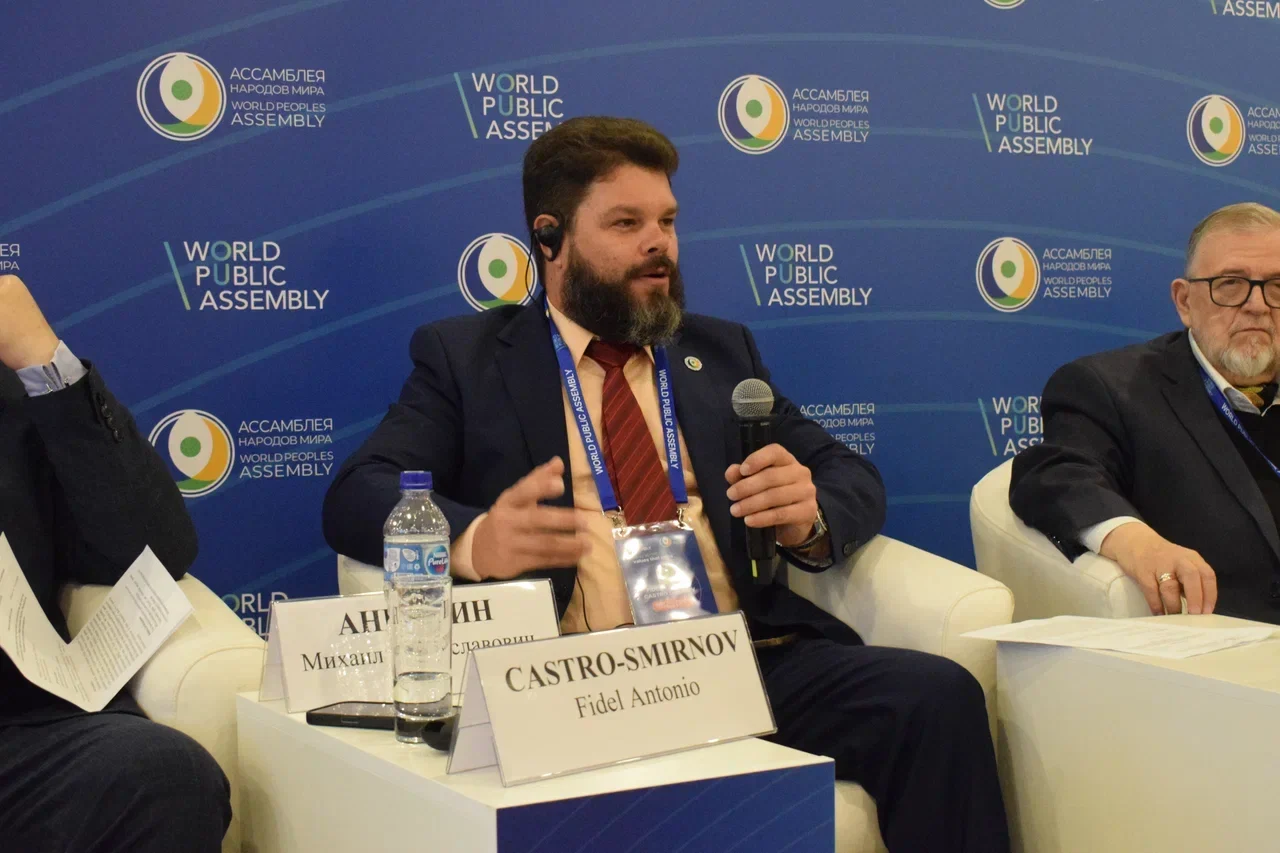
Addressing those gathered, Deputy Secretary General of the World Peoples Assembly, Academician of the Cuban Academy of Sciences, and representative of a new generation of international public leaders Fidel Antonio Castro-Smirnov shared reflections on the Bolivarian model of cooperation and the eternal values bequeathed by Fidel Castro. With particular pride, he noted that the upcoming 2027 summit in Havana would be a landmark event timed to the centenary of his grandfather.
The speaker called the search for the right model of interaction the unifying theme of the meeting, proposing the Bolivarian Alternative for the Americas as a benchmark. This large-scale project, created by Hugo Chávez and Fidel Castro, united Latin American states not merely through trade agreements but through deep solidarity. According to Fidel Antonio, such cooperation rests on the legacy of Simón Bolívar, who dreamed of a great union of states - a union primarily of ideas, not only economic.
Continuing the thought, he turned to his grandfather’s ideas, recalling his famous definition of revolution, voiced on May 1, 2000:
- Revolution is a sense of the historical moment, a readiness to change everything that requires change, to defend one’s values at the cost of any sacrifices; it is a striving for genuine equality and freedom, a humane attitude toward people, emancipation relying on one’s own strength; it is altruism, solidarity, and heroism; it is an intelligent and courageous struggle, in which deception is inadmissible, but there is a deep confidence that everything possible has been done to defend justice; ultimately, it is a struggle for dreams - not only of Cuba, but of the whole world,” the speaker summarized.
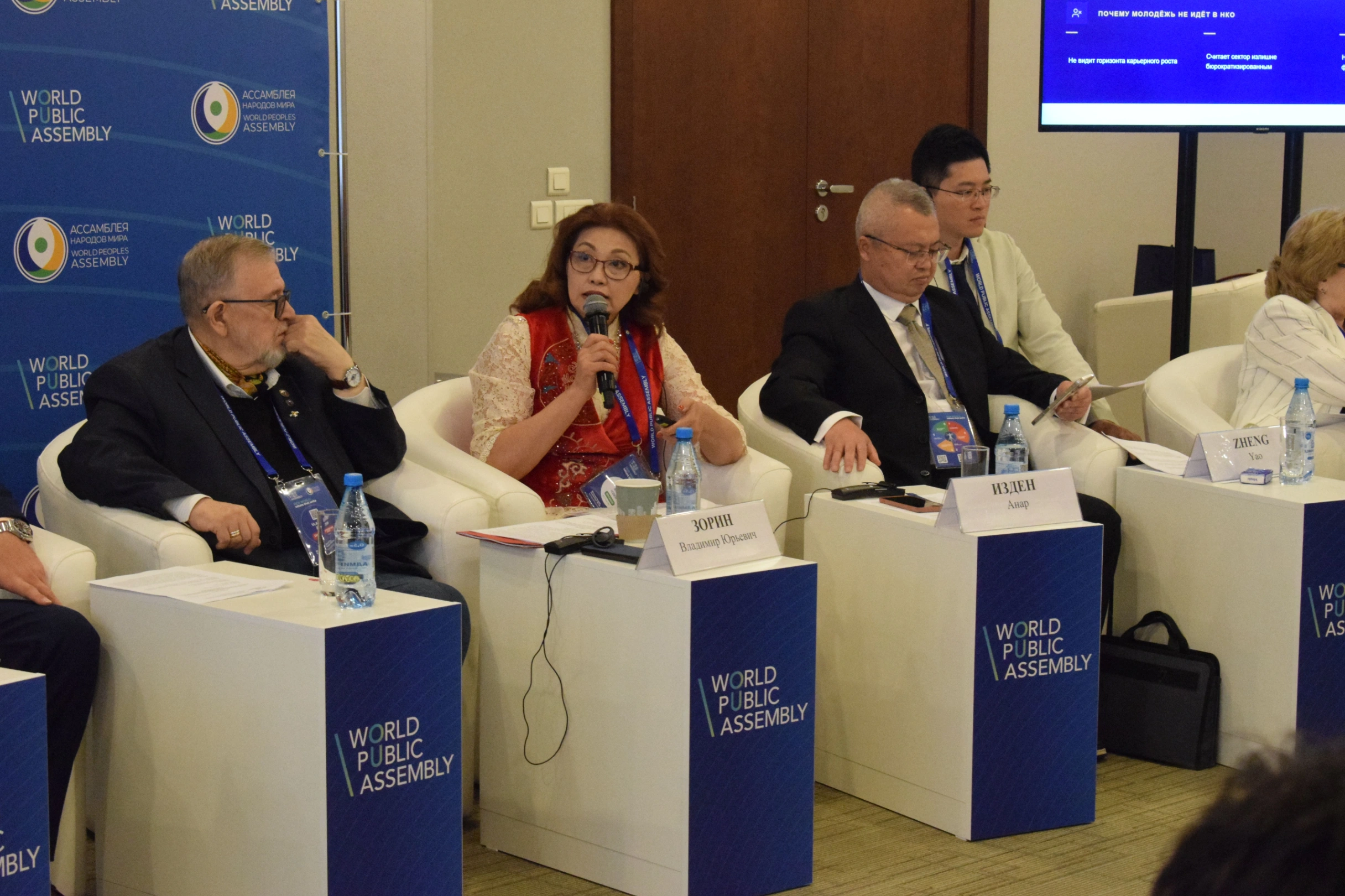
Executive Director of the Qorqyt International Cooperation and Development Agency Anar Izden devoted her speech to the crisis trends that civil society institutions face today and ways to overcome them. Representing Kazakh public and research organizations, she proposed looking at the deep processes occurring within the civil sector. The speaker focused on two key problems relevant to almost all countries.
The first trend is institutional deformation and the risk of non-profit organizations turning into an analogue of small business. Carried away by the pursuit of funding, many NGOs imperceptibly lose their original mission, transforming into grant-dependent contractor structures. In such conditions, the main goal becomes the survival of the organization and the preservation of administrative resource, rather than real changes in society.
The second alarming trend is the shortage of young personnel: young people do not strive to enter the non-profit sector, considering it overly bureaucratized, detached from modern formats, and not offering clear horizons for career growth.
To overcome these challenges, Anar Izden proposed pooling the research and expert potential of the participating countries and expressed hope that, on the basis of the Civic Chamber of the Russian Federation or the World Peoples Assembly, it would be possible to conduct a joint study to develop a modern system for assessing the viability of NGOs - a kind of “well-being indicator” for non-governmental organizations.
- This large-scale work must answer three practical questions: how to measure the real value of NGOs for society, how to preserve the sustainability of the non-profit sector without sliding into pure commerce, and what new models of motivation will attract young people to public initiatives. Digitization of data on these parameters will make it possible to obtain an objective picture of where the civic sector is genuinely developing and where it is merely simulating vigorous activity, - the speaker summed up.
Chairman of the Commission of the Civic Chamber of the Russian Federation on the Harmonization of Interethnic and Interreligious Relations, member of the Presidium of the Council under the President of the Russian Federation for Interethnic Relations Vladimir Zorin focused in his speech on the development of public diplomacy. He emphasized that strengthening the unity of the multiethnic people of Russia while preserving ethnocultural and linguistic diversity is today a priority of state national policy. Its essence lies in the voluntary and conscious cohesion of different peoples and cultures around a common historical destiny and traditional values.
- Russia does not seek to assimilate peoples or erase differences, but harmoniously integrates diversity into a single whole, where unity has been tempered by centuries of trials. On the international stage, Russia promotes this concept as a foundation for a truly multipolar world based on sovereign and equal interaction among centers of power, - the expert clarified.
Vladimir Zorin emphasized that the model is based on traditional Russian spiritual and moral values, which shape citizens’ worldview, are passed from generation to generation, and underlie the all-Russian civic identity and a single cultural space. Among them are: human life and dignity, patriotism and civic consciousness, service to the Fatherland, a strong family, hard work, the priority of the spiritual over the material, humanism, mercy, justice, historical memory, continuity of generations, the unity of the peoples of Russia, and respect for the culture, languages, and religious traditions of all nationalities. This is officially enshrined in Decree of the President of the Russian Federation No. 809 of November 9, 2022, “On Approval of the Foundations of State Policy for the Preservation and Strengthening of Traditional Russian Spiritual and Moral Values.”
The speaker noted that such values are shared by about 90% of the 194 states belonging to the UN. Therefore, they have common basic significance for dialogue, communication, and interaction, forming a spiritual space where representatives of different peoples feel themselves part of a single whole. A special role here is rightly assigned to civil society institutions, in particular the Civic Chamber of the Russian Federation and regional civic chambers. These platforms ensure constructive public dialogue; through them, contact is maintained among youth movements, national-cultural autonomies, and volunteer projects, and public accord is built, which makes the country united and strong.
- Russia is open to exchanging experience and is ready to share with foreign partners successful practices of public control and expertise, which have proven themselves to be effective tools for developing legal culture, - Vladimir Zorin noted.
Addressing the theme of responsibility for the future, the speaker noted that preserving cultural and linguistic diversity for future generations is a common task, and a special role here belongs to young people as bearers of continuity and guardians of traditional values:
- The energy of young people, their openness to dialogue, and their striving for creation are the guarantee that the unity of the peoples of Russia will continue to strengthen. The Russian experience of interethnic interaction may become in demand in international public dialogue.
Vladimir Zorin recalled that representatives of the Shanghai Cooperation Organization are participating in the Second World Public Assembly. This indicates that the participants are in the megatrend of large and important work to strengthen public diplomacy, which plays an increasing role amid a certain crisis of traditional diplomacy. It is precisely such values as respect for cultural diversity, justice, equal partnership, and trust that are capable of uniting humanity in the 21st century.
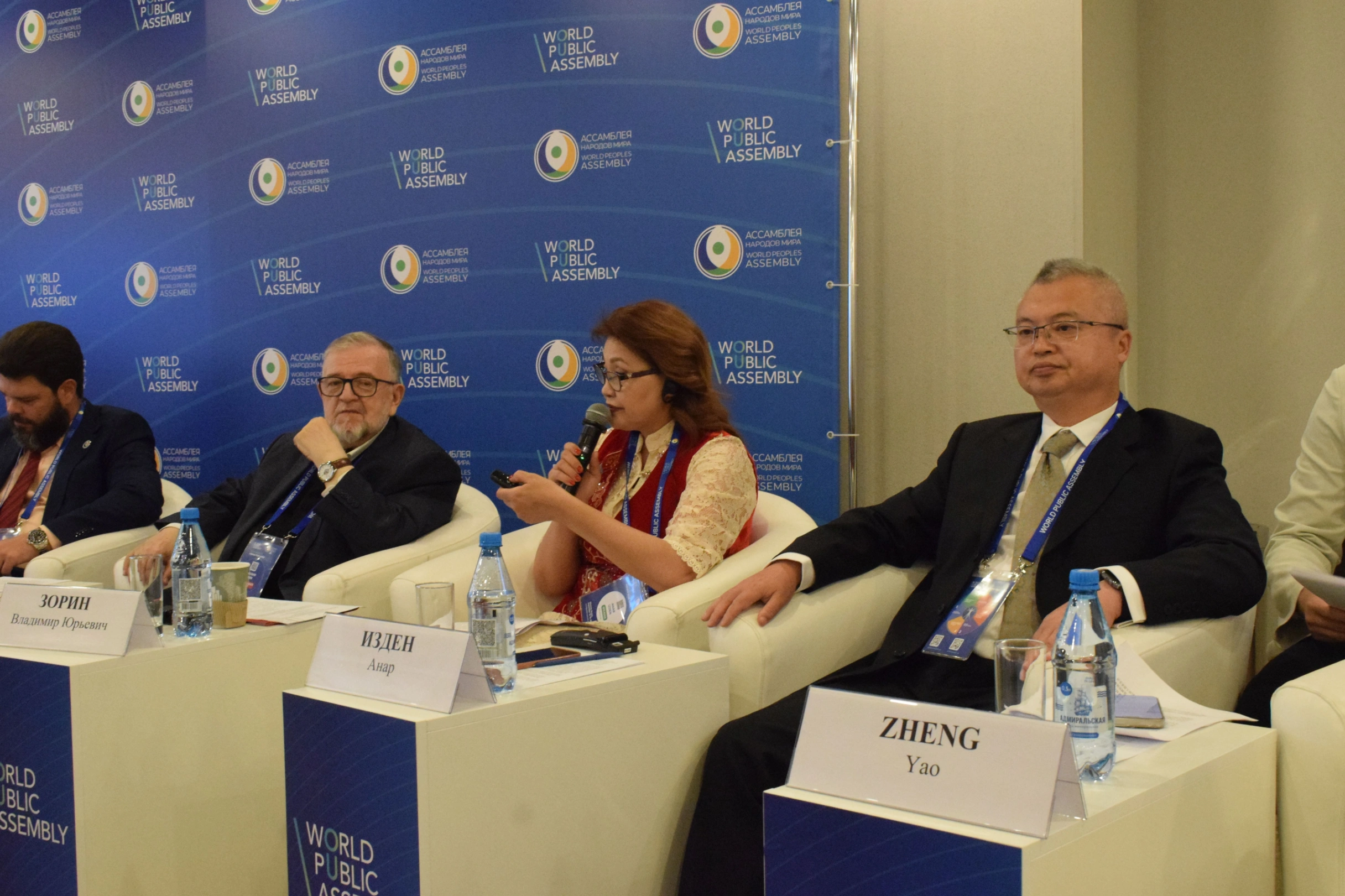
Yao Zheng, Professor of the Communication University of Zhejiang shared creative reflections on Chinese documentary cinema:
- China, like Russia, has a rich historical memory; both countries have gone through the hardships of wars and social transformations. Thanks to this, our documentary cinema organically combines unique national experience and deep universal themes.
The speaker raised questions that, in his view, deserve joint study: how to correlate the scale of history and personal fate, how to maintain a balance of reason and feeling in an era of great change, and how to achieve sincerity of dialogue in an international context.
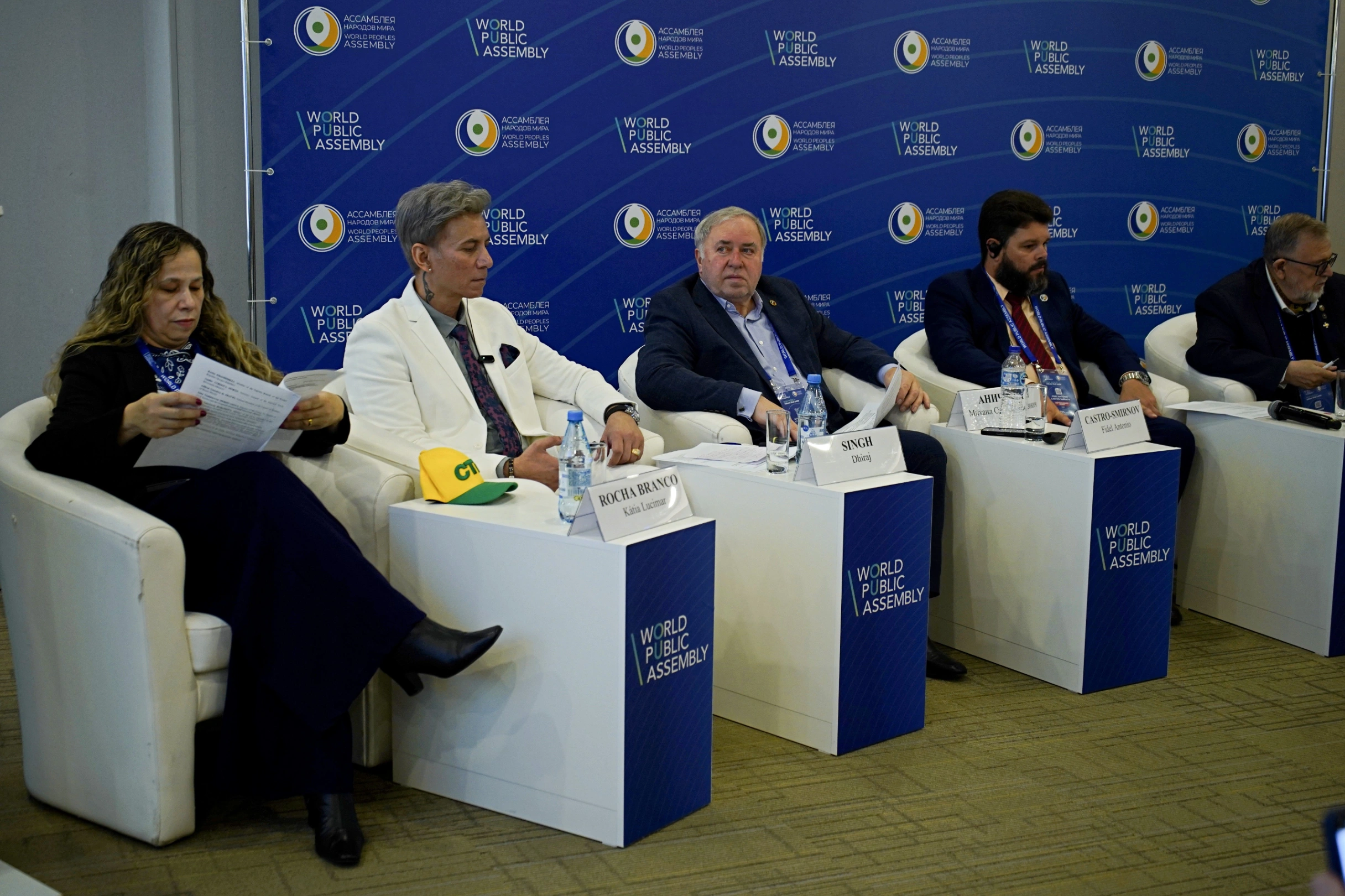
Deputy Dean of the School of Media and Head of the Center for Media and Technology at Bennett University Dhiraj Singh spoke about the development of civil society and India’s legislative achievements in 2005–2013. He proposed learning from each other’s best practices:
- India’s example can bring new ideas and also help convince legislators to adopt certain laws in order to ease the lives of millions of people and solve their problems.
Deputy Chairman of the Commission on Security and Interaction with Public Observation Commissions Mikhail Anichkin spoke in his address about new steps of Russian public diplomacy in Africa and counteraction by former colonial powers. He noted that Russia is returning to world public diplomacy after a long-forced pause. According to him, forces promoting the globalization of society and fighting for a unipolar world do not particularly welcome the development of public diplomacy, especially when broad masses of the population are involved in this process. In this regard, the speaker shared personal experience:
- Our structures have been working since 2009 in high-risk countries: in Africa, Asia, Latin America, and the Middle East. And I see what opposition is offered to everything connected with Russia’s promotion of its values. It has been forgotten, and only now understanding is returning that many countries of the world gained independence only thanks to the Soviet Union, to the strength and persistence with which the USSR defended the interests of national liberation movements, especially in Africa and Asia.
Touching on practical aspects, the speaker spoke about current projects to promote the Russian language and cultural heritage. Over three decades without an active Russian presence, former metropoles successfully redrew the zones of their influence, as a result of which the modern African often has a very vague idea of Russia. As a vivid example, Mikhail Anichkin cited the opening of Yuri Gagarin streets in Djibouti and Uganda. The name of the first cosmonaut remains one of the few Russian symbols truly recognizable on the African continent.
In conclusion, the expert emphasized that Russian public organizations face tough resistance from former colonial powers. These countries are not interested in developing equal relations with Russia, since the awakening of public diplomacy destroys their traditional influence and threatens the monopolar model of the world. A period of large-scale constructive work and responsible decisions has arrived.
- Success in these historical tasks directly depends on how effectively it is possible to consolidate the efforts of public representatives of various countries around shared constructive goals, - Mikhail Anichkin stated.
The importance of partnerships in the work of non‑profit organizations was emphasized in her report by Evgenia Mikhalyova, Director of the Resource Center for National Relations. Building such alliances today is not just a trend, but a serious challenge on which the future directly depends. The speaker noted that in today’s reality, public diplomacy often works much more effectively than traditional formats:
- It is the live dialogue between people united by common values that can yield truly significant results.
Evgenia Mikhalyova went into detail about the resources that become available thanks to partnerships. In addition to the obvious material and administrative benefits - financial support, premises, methodological materials, and an influx of volunteers - the speaker identified strong human support, motivation, and the ability to convey common ideas as key assets. The synergy of these factors enables non‑profit organizations to create more vibrant and effective initiatives with maximum social impact.
As a successful practical tool for identifying such initiatives, the speaker cited the example of the All‑Russian competition of the best practices for youth employment.
- In 2026, the competition will be held for the ninth time; we are taking a confident step onto the international stage and have introduced a special category for the best practices of public diplomacy. All conferences and award ceremonies are traditionally held at the reputable venue of the Civic Chamber of the Russian Federation, and the key partner in this work is the Commission of the Civic Chamber of the Russian Federation on interethnic, interreligious relations and migration, - the expert concluded.
In her speech, Katia Lucimar Rocha Branco, the national secretary for women workers at the Central Union of Workers of Brazil (CTB), spoke about the struggle to reduce the working week in Brazil. Her organization unites more than nine million workers who are currently carrying out important work. Its main focus is to overcome the six‑day working week, what trade unions rightly consider to be an extremely exploitative form of labour organization. Speaking on behalf of women, the speaker emphasized the serious social consequences of such a schedule:
- With such a heavy workload, a woman, upon coming home, cannot find time for her child, cannot take him to the doctor, and she has no time left for her family. With only one day off, she doesn’t understand how to spend it and how to juggle all the tasks. Despite the fact that the six‑day workweek has already been officially abolished at the legislative level, we continue to work towards its complete eradication in practice.
Concluding her speech, Katia Lucimar Rocha Branco expressed her belief in the victory of the trade union movement and in the success of the social policy.
Opening the second part of the panel session, Vladimir Rogov, Chairman of the Commission of the Civic Chamber of the Russian Federation for Support of Compatriots and Development of Public Diplomacy, devoted his speech to the role of the Civic Chamber of the Russian Federation as an operator of public diplomacy and to the significance of the ideas of the great Russian philosopher and historian Vladimir Danilevsky. The speaker reminded that it was Vladimir Danilevsky who is the author of the civilizational approach, which was later creatively reinterpreted by Toynbee, Spengler, Huntington, and Fukuyama.
- Chinese, Indian, and Russian civilizations are different, and this is not a flaw, but a huge advantage that allows us to learn from each other and view the world from different angles. True progress does not consist in everyone moving in the same direction, but in humanity mastering the historical field by following different paths, - Vladimir Rogov emphasized.
The expert drew attention to the fact that globalization has brought about a certain unification of consciousness and culture. Film production, images, and meanings are increasingly being imposed from single centers, and some countries, representing a minority of the planet’s population, arrogate to themselves the right to call themselves a civilized community, relegating the rest to the so‑called “jungle.” The speaker is convinced that this approach should not exist.
Vladimir Rogov expressed concern that today we are witnessing “dehumanization, prohibition, and attempts to cancel entire cultures,” which is making it increasingly difficult for people to understand one another. And when humanity loses the ability to understand one another, it inevitably moves closer to war. The speaker noted that Western media are increasingly writing about the inevitability of a global conflict.
- As a representative of Russian civil society, I say that we do not want any war, and that is precisely why we are engaging in dialogue with people of goodwill who want to hear and listen to each other, not just to express their own point of view. We need to respond to the growing challenges of our time. Our task is to preserve for future generations the flourishing garden that is our planet, - Vladimir Rogov concluded his speech with these words.
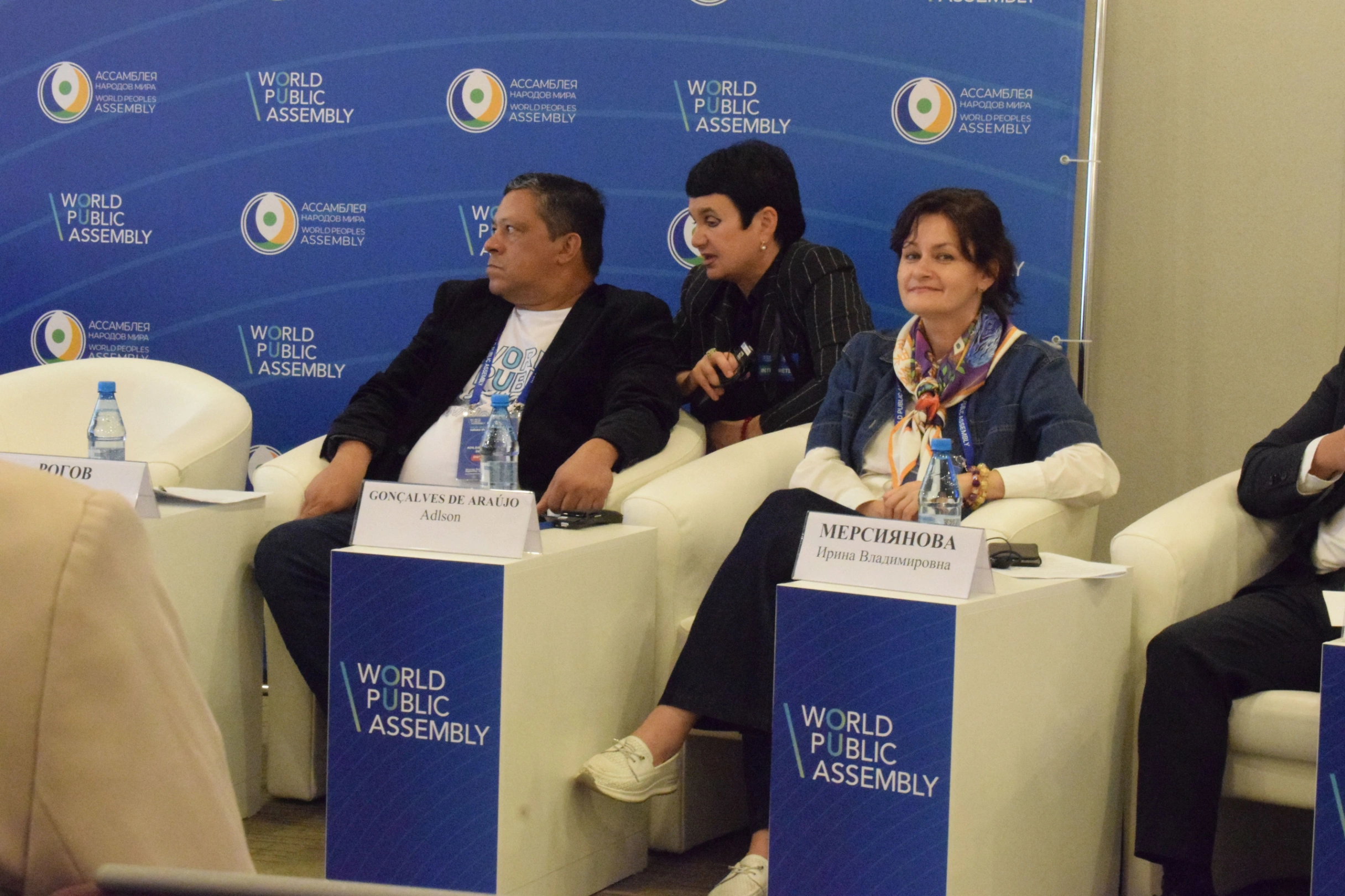
Continuing the discussion about the role of the Civic Chamber of the Russian Federation as an operator of people’s diplomacy, Irina Mersiyanova, Director of the Center for Research on Civil Society and the Non‑Profit Sector at the Higher School of Economics, spoke about the scale of the analytical work that has been carried out. The center she heads has been monitoring the state of civil society in Russia for 21 years: the involvement of the population in social projects, volunteer activities, and charitable donations.
Turning to the question of the relevance of the Civic Chamber of the Russian Federation as the main interface between civil society and the state, the expert turned to fundamental sociology:
- According to data from an all‑Russian study of non‑governmental, non‑profit organizations, which the Center for Research on Civil Society and the Non‑Profit Sector at the Higher School of Economics has been conducting regularly since 2006, the level of awareness among NGO leaders about the activities of the Civic Chamber is quite high: 67 % trust it, and 36 % rate its activities highly. The share of those who rate the Chamber’s activities low is statistically insignificant.
Given the authority of the Civic Chamber of the Russian Federation in the eyes of Russian non‑profit organizations, the role of an operator of public diplomacy is undoubtedly in demand. This is especially relevant against the backdrop of the growing demand for international activities from Russian NGOs, of which there are about 220,000 in the country.
- Socially oriented organizations, which are daily engaged in addressing pressing issues, need qualified support and guidance on the international stage more than ever today, - Irina Mersiyanova concluded.
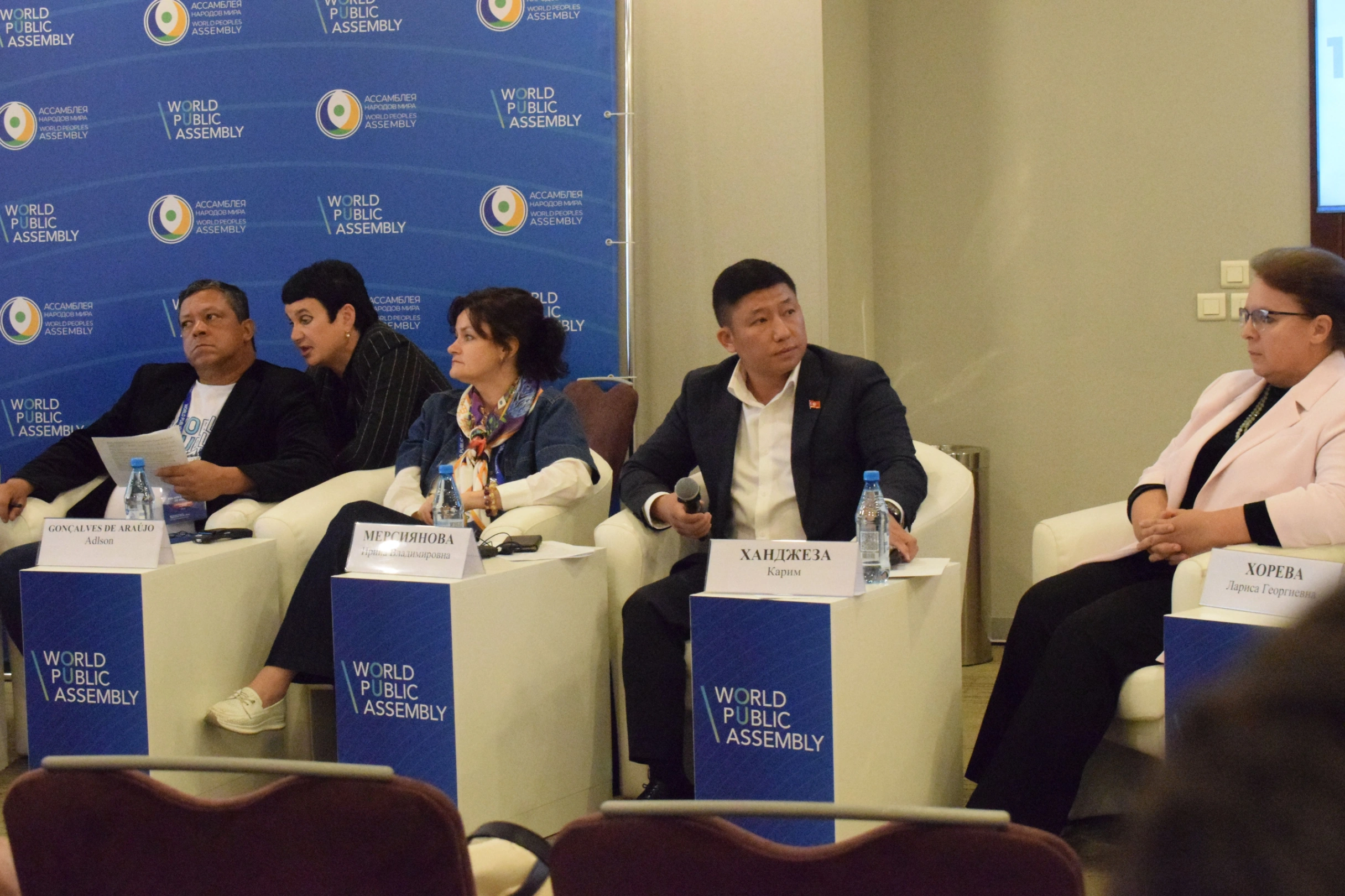
Karim Khanjeza, a deputy of the Jogorku Kenesh of the Kyrgyz Republic, spoke about the importance of working towards specific results and moving from a simple exchange of contacts to building sustainable relationships. According to him, the World Peoples Assembly has already created a broad space for interaction, and at the stage of the Second World Public Assembly, the participants face a new task - to make these relationships more long‑term.
The speaker proposed developing the accumulated experience through the creation of permanent bilateral and multilateral partnerships. As specific formats, he mentioned the formation of working groups: for example, a Kyrgyz‑Russian one focused on international dialogue and work with diasporas. Karim Khanjeza also advocated for a regular exchange of delegations, with the formation of a joint annual agenda and the expansion of the network of national representative offices and ambassadors of the World Peoples Assembly.
Special attention during the discussion was paid to the youth track and thematic work. The speaker proposed creating permanent international teams that would jointly develop and implement projects over the course of a year, achieving tangible results. Furthermore, it is planned to form thematic clusters that bring together representatives from several countries in areas such as cultural heritage, interethnic harmony, and sustainable development of territories.
The key idea of the presentation was to launch a mechanism “from contact to partnership.” This initiative, implemented with the support of the World Peoples Assembly and the Civic Chamber of the Russian Federation, is intended to transform the acquaintances made into sustainable joint projects.
- True partnership is born not in the role of the host country, but in the process of joint work, when participants immerse themselves in each other’s traditions and characteristics. This is precisely how trust is formed - the most solid foundation for long‑term relationships, - the speaker noted.
The expert assigned an important role in strengthening these ties to the Civic Chamber of the Russian Federation as an authoritative institution capable of helping public organizations from different countries find common ground. In turn, Kyrgyzstan expressed its readiness to become an active participant in this process, proposing to share its rich experience in the work of national‑cultural associations and diasporas, which preserve cultural diversity and strengthen the unity of society on a daily basis.
Concluding his thought, Karim Khanjeza expressed confidence that international cooperation among civil society will become increasingly in demand:
- Today, it is critically important that not only official but also genuine human relationships be established between countries. I hope that the current meeting will become a starting point for new acquaintances, joint initiatives, and a truly sustainable international dialogue.
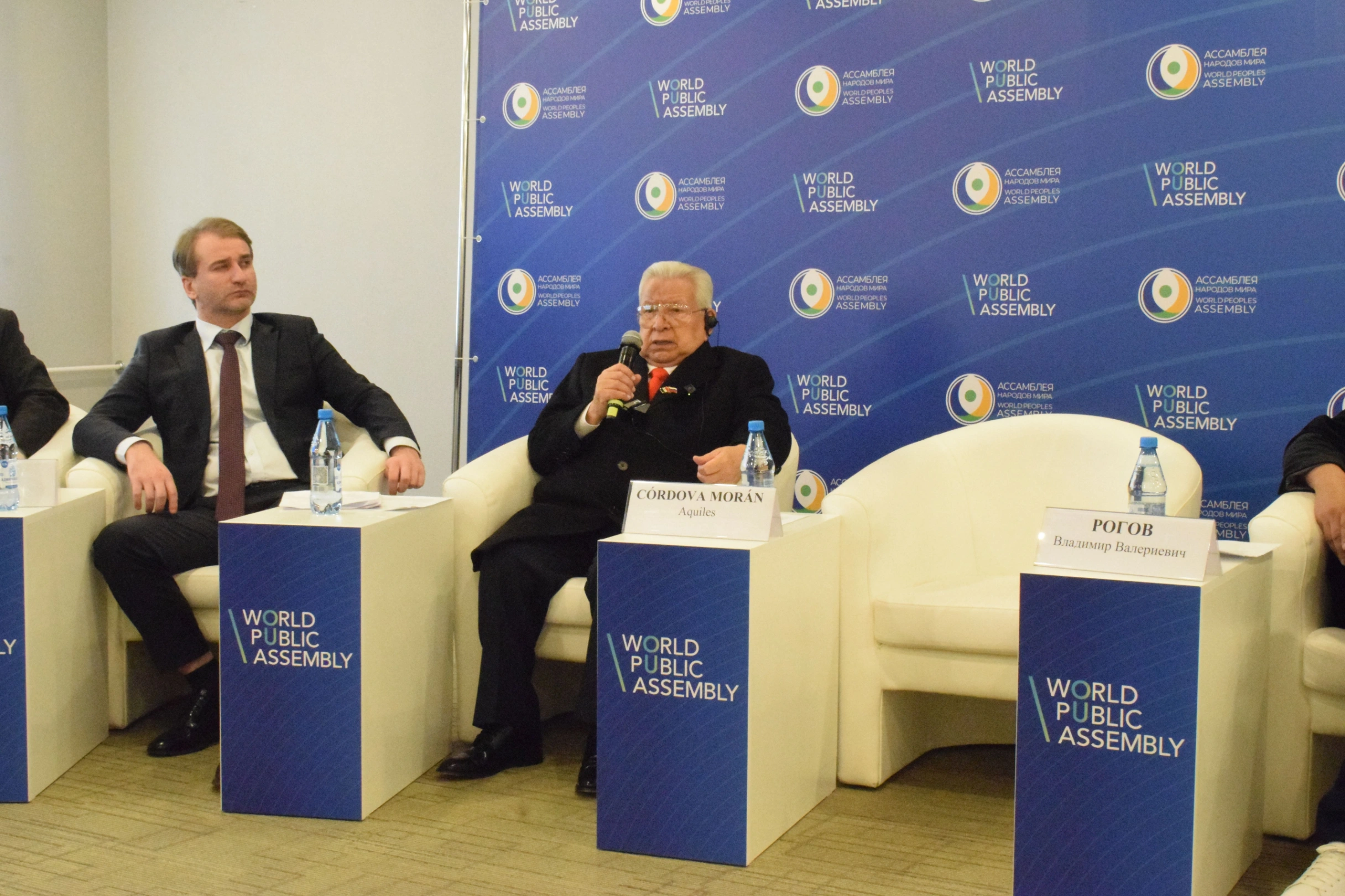
The General Secretary of the National Torch Movement “Antorchista,” Áquiles Córdova Morán, devoted his speech to the fight against poverty and the search for ways to build a more just society in Mexico. He outlined the scale of the challenge facing his people:
- Out of Mexico’s 130 million inhabitants, about 100 million are in one way or another in a state of poverty or on the brink of it. The time is coming when the marginalized strata of society are capable of uniting and creating a better future. However, to achieve this, it is necessary to set an ambitious goal for oneself – to seize political power, but not for the sake of forming new privileged elites, but in the interests of the working people. At the same time, it is equally important to think through the mechanisms for keeping this power in the hands of the people.
Aquiles Córdova Morán bitterly noted that in Latin America, political development resembles the movement of a pendulum: short periods of democratic progress are followed by setbacks, which often turn out to be more significant than the successes achieved. According to him, this pattern is characteristic of the entire region, including Mexico.
The speaker called for making the most of the opportunities offered by international platforms such as the Assembly. The peoples of Latin America must “organize themselves and develop a strategy not only for gaining power but also for retaining it.” Special attention was paid to the social sphere:
- Support for sports, culture, healthcare, and education should work for the benefit of the entire country, not just serve the interests of the ruling elites. Otherwise, the lives of ordinary working people will not change, - Aquiles Córdova Morán said.
The speaker expressed deep gratitude to Russia, which he called “the country that saved the world during the First and Second World Wars, thanks to whose courage and sacrifice humanity was not enslaved by fascism, and for which the peoples of the world will always be grateful.”
In his report, Adilson Gonçalves de Araújo, President of the Central Union of Workers of Brazil, spoke about the significance and prospects of BRICS in the current geopolitical situation. He noted that the current reality is complicated by the aggressive actions of a number of states and the imposition of their own standards by Big Tech giants. Combined with ongoing military conflicts, these factors seriously hinder progress towards a just and prosperous world. The speaker identified the consistent struggle for sustainable, solidarity‑driven, and inclusive development as the main challenge that could ultimately lead to a brilliant outcome.
Highlighting the enormous economic potential of the BRICS countries, Adilson Gonçalves de Araújo proposed conceptualizing closer ties between the World Peoples Assembly and the BRICS association, since together they represent the interests of 40% of the planet’s population:
- This alliance can have a decisive impact on building a friendly world.
Adilson Gonçalves de Araújo called on the participants to take a sober look at the current challenges. He reminded them that behind any charm there is a price, and he wished everyone present a conscious path to happiness and well‑being.
René González Barrios, director of the Fidel Castro Heritage Preservation Center, spoke about the participation of the Cuban people in revolutionary diplomacy:
- As early as the 1895 war of independence, Cubans were fighting not only for their own freedom but also against the imperial policy of the United States, which aimed to subjugate the countries of Latin America. Our path began with the desire to extend a helping hand to other peoples of the world.
According to the speaker, Cuban foreign policy is based on three unbreakable principles: solidarity, independence, and anti‑imperialism. He cited the example of the civil war in Angola, in which more than 300,000 Cubans fought for the independence of the African country, and the end of apartheid in South Africa. This, according to René González Barrios, is genuine public diplomacy - the direct participation of citizens in global processes.
The expert paid particular attention to Cuba’s humanitarian mission; he recalled the medical teams that were the first to arrive at the epicenters of epidemics, whether it was Ebola or cholera outbreaks in Africa; he also spoke about the joint operation with Venezuela, Milagro (“Miracle”), under which free medical care was provided to two million people; he separately mentioned educational initiatives, in particular the “Island of Freedom” project, launched in 1967 and aimed at supporting representatives of indigenous peoples. According to the speaker, all these manifestations embody the spirit of solidarity that Cuba shares with the world.
Concluding his speech, René González Barrios emphasized that the people of Cuba do not merely support revolutionary diplomacy - they are directly involved in it, making international solidarity an integral part of the national identity.
Astamur Akhsalba, head of the Abkhazia representative office of the World Peoples Assembly, shared his vision of the role of intercultural dialogue and international cooperation in the current context. He stressed the need to consolidate the efforts of the states and peoples of the region.
- The key task remains to normalize relations between the Republic of Abkhazia and Georgia, as well as between the Republic of South Ossetia and Georgia. The consequences of the 1992-1993 war left deep wounds in people’s hearts, destroyed families and communities, and the continued maintenance of confrontation is unacceptable.
In this context, the speaker assigned a key role to public diplomacy, which is capable of mitigating political disagreements and paving the way for a peaceful settlement. He called on the Georgian side - the leadership, public figures, and young people - to resume direct dialogue.
- We should not be talking about negotiations from a position of strength or ultimatums, but about seeking compromises and mutual respect for sovereignty. Only an equal dialogue between independent actors can lead to lasting peace in the region, - Astamur Akhsalba said.
The expert addressed the Secretary‑General of the World Peoples Assembly, Andrey Belyaninov, and all participants with an initiative to hold a Caucasus Summit and involve civil society institutions in it: The Civic Chamber of the Russian Federation, the Civic Chamber of the Republic of Abkhazia, and the civic chambers of other regions of the Caucasus.
- I propose to establish an active Council of Elders of the peoples of the Caucasus on the basis of the World Peoples Assembly. Its tasks will include promoting public dialogue, strengthening trust between peoples, developing public diplomacy, mediating in public initiatives, and preserving the spiritual and cultural heritage of the region. Furthermore, I propose creating a Youth Council of the Caucasus, bringing together representatives of the youth from Abkhazia, South Ossetia, North Ossetia, the Chechen Republic, Dagestan, Kabardino‑Balkaria, Karachay‑Cherkessia, Adygea, Georgia, Ingushetia, Armenia, and Azerbaijan. The future of the region belongs to the younger generation, and it is important to involve them in these processes from the very beginning, - Astamur Akhsalba concluded.
Concluding his speech, the speaker noted that the past cannot be changed, but through joint efforts it is possible to create a peaceful future for peoples, and the World Peoples Assembly provides a unique opportunity to join forces for peace and creation.
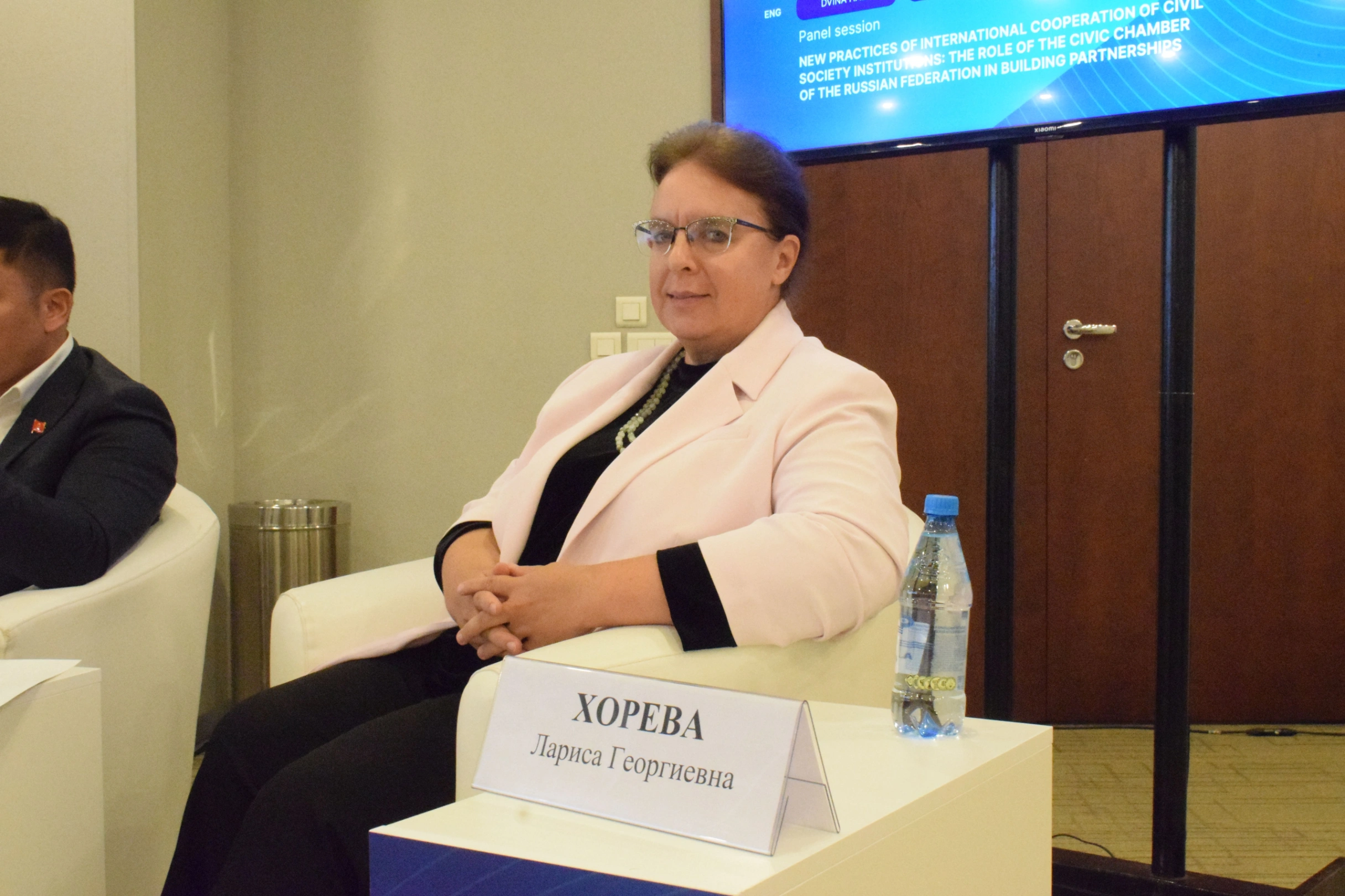
In her speech, Larisa Khoreva, Associate Professor at the Faculty of World Politics at Lomonosov Moscow State University, Associate Professor at RSUH, Associate Professor at the Higher Attestation Commission, and Candidate of Philological Sciences, focused on the importance of personal contacts and the prospects for the development of network universities. She noted that the education system is currently undergoing a global transformation, that the public is facing new challenges, and that personal contacts are becoming the scarcest resource. According to the speaker, it is live human contact that can work real miracles. A vivid example was the visit to RSUH by a Brazilian delegation led by Adilson Araújo.
- The students became so interested that they demanded that the study of modern Brazilian history be introduced, and now the dean’s office is literally swamped with applications. This clearly demonstrates how one‑off internships and joint publications by teachers are giving way to a new vector of public diplomacy, where personal contact plays a huge role, - the expert said.
Larisa Khoreva also emphasized that the format of education itself has changed:
- You no longer need to focus within your own field, country, or single discipline. Globalization dictates its own rules, and network universities are emerging.” In Russia, a network university has already been launched with Brazil, and there is hope to continue this cooperation with Cuba and Mexico. There is a huge demand for double and triple diplomas, when credit units and exams are standardized, and thesis and term papers are written under joint academic supervision. Representatives of Cuba see how great students’ interest is in the history of their country, in particular in Fidel Castro, who is constantly discussed in lectures.
The following also took part in the discussion:
Natalya Bogdanova - Chairperson of the Coordinating Council of Organizations of Russian Compatriots in Panama (Russia);
Sandra Baldiviello - Activist in the movement of women from the indigenous peoples of Bolivia.
Summing up the session, Nikita Anisimov thanked the participants for their diverse and informative presentations. Saying goodbye to his colleagues, he urged them not to rest on their laurels and to continue working actively together.
- The main task today is to create, to build something new, and to ignite the hearts of young people – this is precisely the approach that, according to the moderator of the panel session, will be the key to the success of all initiatives and the further development of public diplomacy.
Additional information is available on the official website of the World Peoples Assembly, on its VKontakte and Telegram accounts, and at media@world-assembly.org.