

 Back to news
"Who to Trust" and "How to Work" Became the Key Topics at the Meeting of the International Media Club of the World Peoples Assembly in Addis Ababa, Held as Part of the World Public Summit: Africa
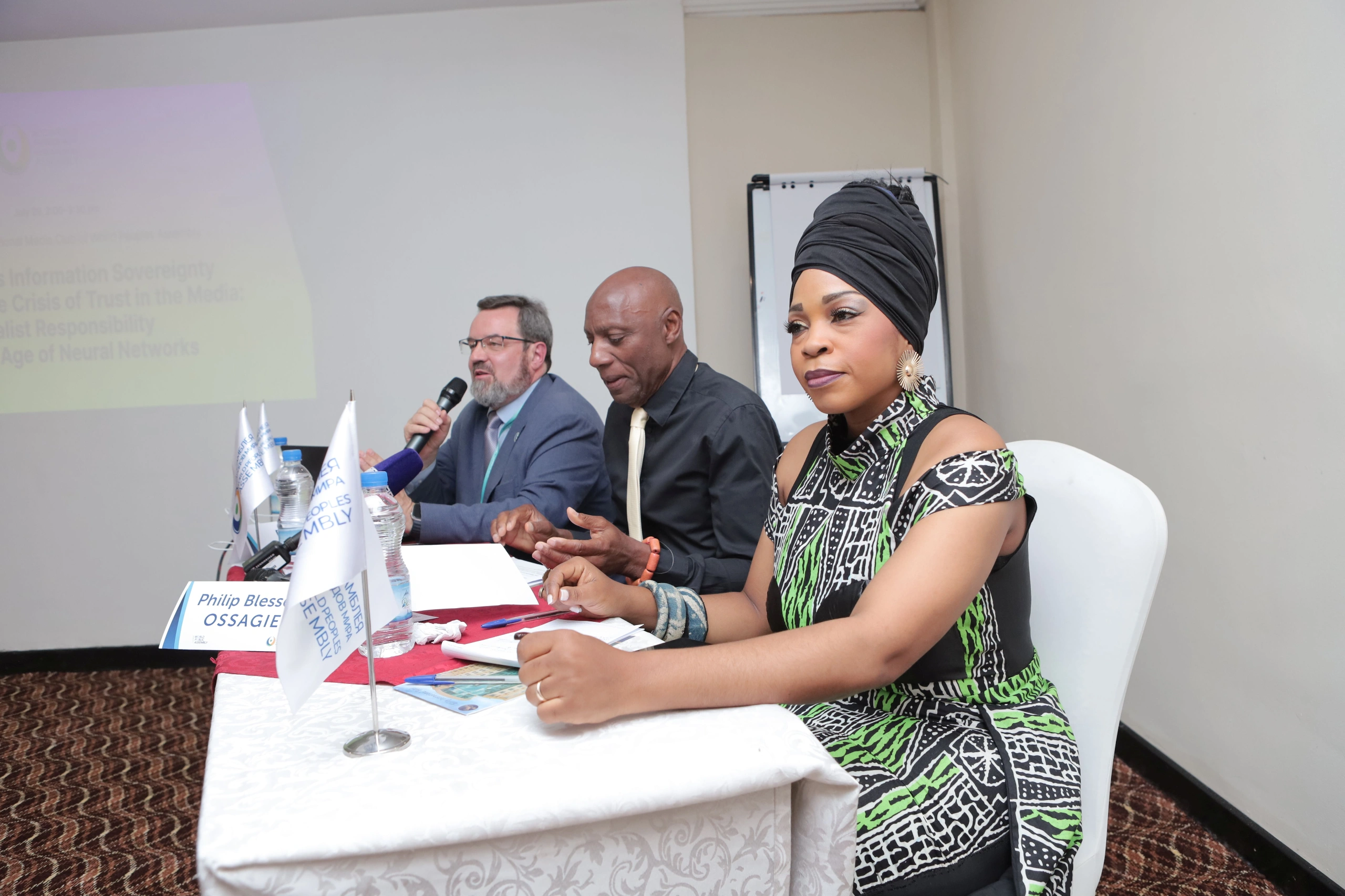
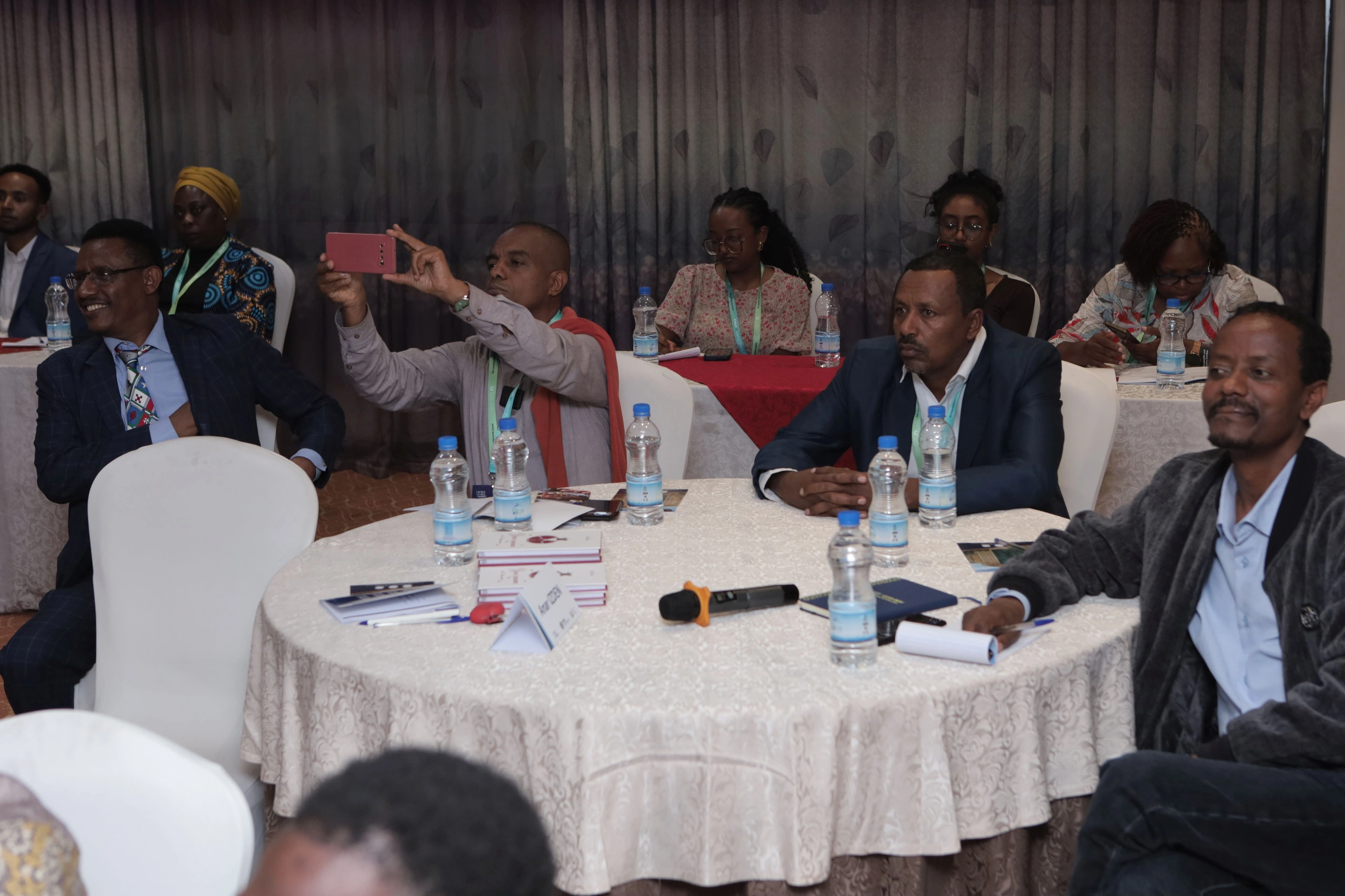
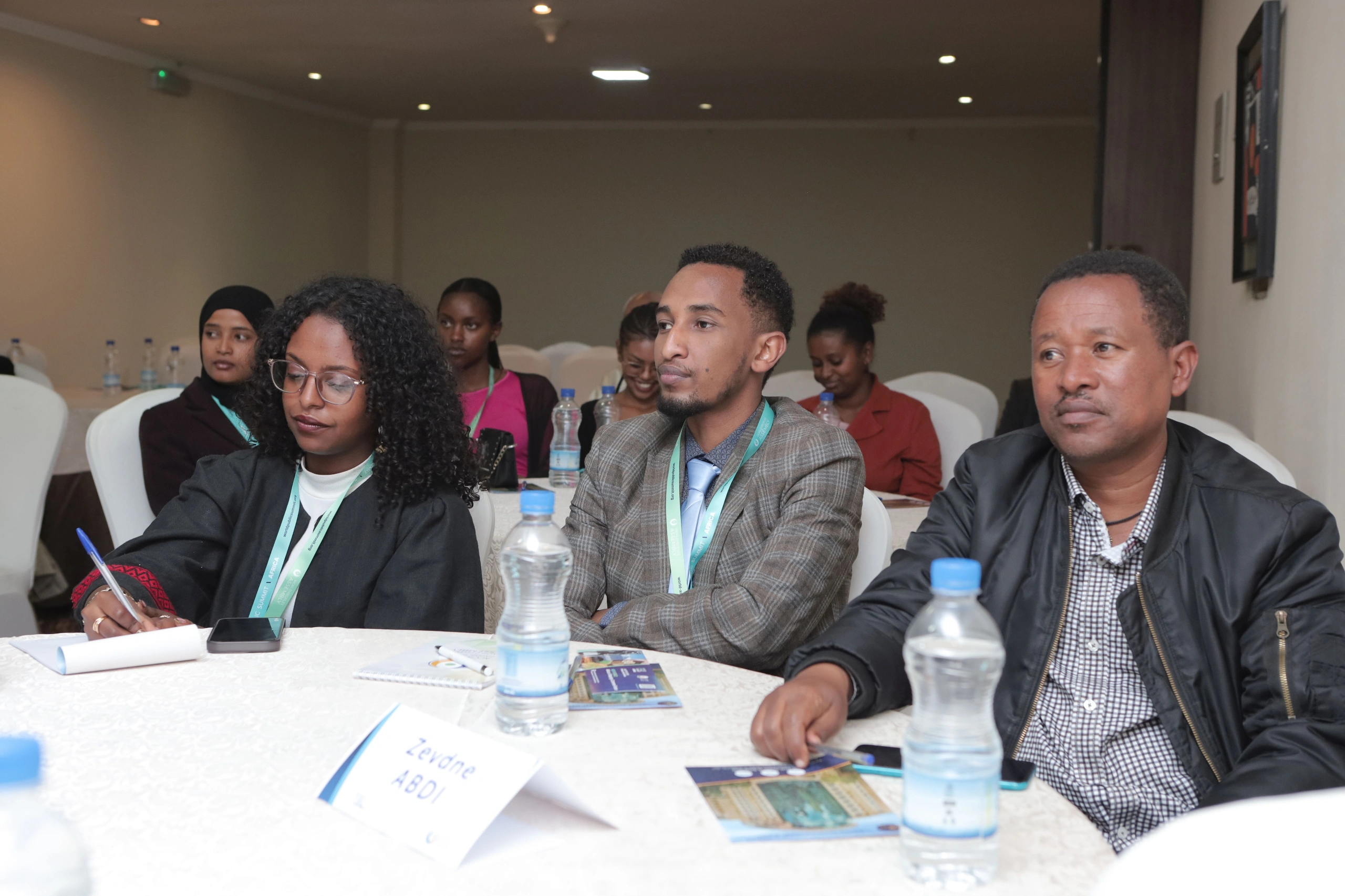
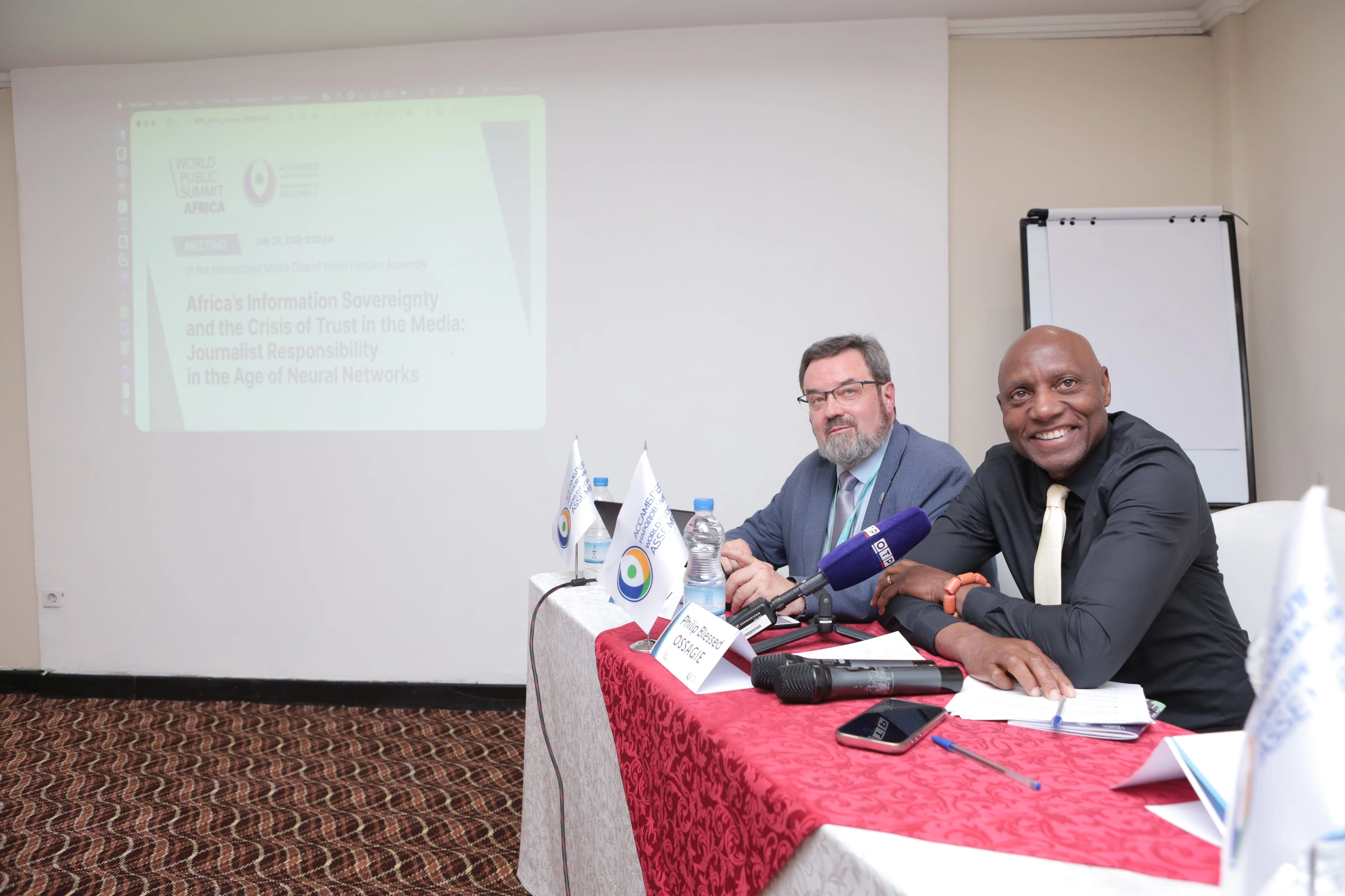
A meeting of the International Media Club of the World Peoples Assembly took place on July 29, 2026, in Addis Ababa, within the framework of the World Public Summit: Africa "New World: Africa in Shaping a Common Future." The third meeting of the Media Club was dedicated to the theme "Africa's Information Sovereignty and the Crisis of Trust in the Media, Journalists' Responsibility in the Age of Neural Networks" and continued the discussions previously initiated in New Delhi (India) and Salvador (Brazil).
The session was moderated by Philip Blesed Osagie, founder and strategist of JSP Communications (Nigeria). Opening the discussion, he reminded the audience that the focus today is on issues of trust, independence, and media responsibility, as well as ensuring that the African voice is present in the global agenda:
- Our discussion today is about trust, independence, responsibility, and about making Africa's voice heard loud and clear – and as truthfully as possible.
Participants in the Media Club included:
Evgeny Safronov – journalist, analyst, head of the Media Center of the World Peoples Assembly, founder of the InterMedia news agency (Russia);
Alfred Lastick Mushi – founder and chairman of the Kili Voices foundation, journalist at Daily Mail Tanzania (Tanzania);
Eric Biegon – trustee of a charitable foundation, journalist at Kenya Broadcasting Corporation (Kenya);
Tariku Negash – representative of Serve Global (Ethiopia);
Zewdne Abdi – senior reporter at Addis Media Network;
Eyasu Zakaria – journalist at Capital Newspaper;
Netsanet Jemal – journalist at Addis Media Network, FM 96.3, PR and corporate communications specialist;
Tesfaye Getnet – editor of the Fidelpost.com portal;
Assefa Wossenseged – correspondent for Sputnik-Ethiopia;
Clarissa Weidorven – journalist, strategic communications specialist, co-founder and host of Global Insights (Cameroon);
Sisay Lucas – representative of the Youth Wing of the Global Black Centre, software developer, HISA scholar at Oxford University (Ethiopia);
Marlise Njangha – editor‑in‑chief of Added Values magazine, co-head of media at Taxes.com Group, president of Global Horizon Group (Cameroon);
Margarita Tverdova – special correspondent for Public Television of Russia (Russia).
At the very beginning of the discussion, the organizers proposed simplifying the session's theme – "Africa's Information Sovereignty and the Crisis of Trust in the Media, Journalists' Responsibility in the Age of Neural Networks" – by reducing it to one core question: "Who to trust?"
Evgeny Safronov opened the discussion with a report on the state of modern global media:
- 40–50 years ago, one of the main narratives in the public sphere was the battle of supposedly free (read: Western) media against censorship raging in socialist countries. At that time, it was claimed that the full truth could only be obtained from Western media.
Now let's listen to Elon Musk: 'Citizens have no idea – even remotely – how powerful censorship is in the United States. As soon as we lifted censorship on the X network, we came under systemic attacks.'
And further: 'Traditional media lie as easily as they breathe. The worst of them at the moment is Reuters.'
So, he is saying this about one of the oldest and most reputable news agencies. What then can be said about the rest?
On the one hand, it is clear that the owner of the largest new media is thus fighting competitors in the media space. But we hear roughly the same thing from many, including representatives of the highest elites: trust is declining, and a century-long history and huge budgets are no longer a guarantee of impartiality.
It would seem that this is about a global loss of trust. But it is a great illusion to think that it used to be any different. Let us recall a line from the poem 'Silentium' by the Russian classical poet Afanasy Fet – 'A thought once uttered is a lie.'
What does that mean? A brief theoretical remark. Media is commonly understood as the means and technologies of transmitting information. But what is information? It is a description of phenomena and events, created by living beings for living beings. Only by the living and only for the living. From this alone it is clear that information by definition cannot be absolutely accurate and complete. And if information is created by man – the crown of creation, possessing powerful intellect, a unique capacity for figurative thinking, and at the same time driven by all sorts of desires and passions – it becomes clear that objectivity in the full sense is impossible.
Add to this that media owners are closely tied to national and international elites, whose goals do not always align with the public good. And the elites of the 21st century already possess neural networks, which exponentially expand the possibilities for manipulating facts.
That is precisely why fact‑checking should play a special role today – both in international media and in national ones, which do not always have the resources for in‑depth verification of information. International fact‑checking networks, such as the Global Fact‑Checking Network, are actively developing today, helping media in different countries to understand events faster and more accurately.
The participants agreed with the speaker and concurred that the main challenge for the media today is not so much technology as the crisis of trust. Information spreads rapidly, and audiences increasingly doubt what they see and read. Against this backdrop, journalism is forced to operate in conditions where speed of publication often outweighs careful verification, and any message – true or false – can reach millions within seconds.
Today, anyone with a smartphone effectively becomes a news source, leading to a rise in fakes, rumours, and deliberate disinformation. In such an environment, the journalist often loses the speed race: while he verifies documents, interviews witnesses, and checks details, the news story has already spread across the web and shaped a lasting opinion among the audience.
Speakers separately noted that Africa must shape its own information image, rather than remain an object of external interpretations. In the participants' view, information sovereignty means the ability to tell one's own story accurately, independently, and responsibly. In this logic, a special role is given to young journalists, content creators, and public media, who can change how the continent is perceived around the world.
The Media Club participants devoted a substantial part of the discussion to artificial intelligence. It was described both as a useful tool and as a new threat to the profession. On the one hand, neural networks speed up content production, help work with large data sets, and simplify information retrieval. On the other hand, they increase the risk of errors, substitution of original work, and dissemination of false information. Participants unanimously noted that a professional in the 21st century must verify every fact and not shift responsibility onto algorithms.
Another important focus was on the legal restrictions that media face in several African countries. The participants discussed censorship, arrests of journalists, license revocations, and pressure from authorities. In this context, it was stressed that laws and political barriers – not just technology – prevent journalism from fulfilling its function. If a journalist is not free, he cannot properly investigate, criticize, or explain events to society.
The participants arrived at a common formula: without trust, there is no journalism; without freedom, there are no investigations; and without its own perspective, Africa will continue to be described by foreign voices.
Evgeny Safronov summed up the discussion:
- Let us not forget that we serve society. We can and should use all tools to improve the efficiency of our work, including AI, but we must also understand our responsibility for every word we say.
The meeting of the International Media Club in Addis Ababa, held as part of the World Public Summit: Africa, became a platform where African and international journalists openly discussed information sovereignty, trust in the media, and the role of new technologies in professional practice. The positions and theses expressed will form the basis for the further program development of the International Media Club of the World Peoples Assembly and joint media projects aimed at strengthening trust and shaping an honest narrative about Africa in the common information space.
Additional information is available on the official websites of the World Public Summits and the World Peoples Assembly, as well as at media@world-assembly.org.